Parlour Palm
Chamaedorea Care Guide

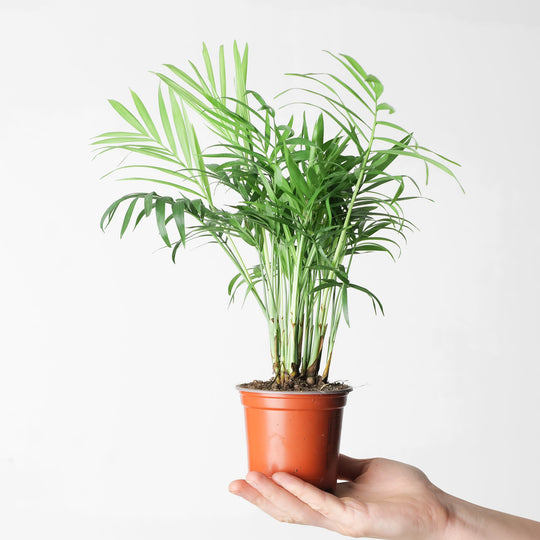
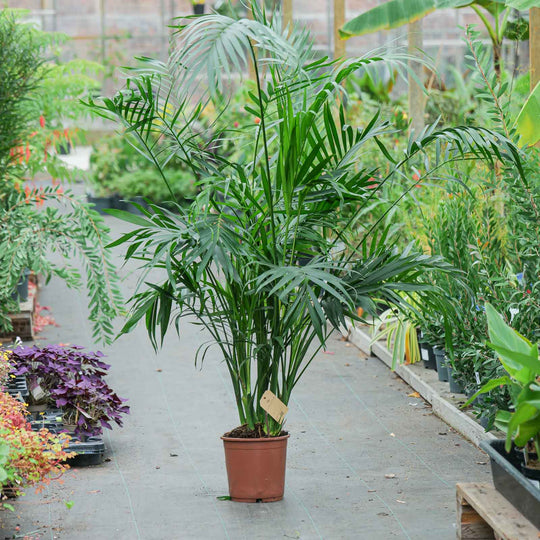
Chamaedorea is a genus of small, tropical understorey palms native to Mexico and Central America. The most common species in UK homes is Chamaedorea elegans, the parlour palm: a soft, multi-stemmed plant that copes with low light, central heating, and the kind of inconsistent care most palms refuse to tolerate. The single most useful thing to know is that they evolved under a forest canopy. They want filtered light, even moisture, and steady warmth. They do not want bright sun.
This guide covers the practical detail: how to water, light, feed, and repot Chamaedorea, what species are worth knowing, and the few problems that crop up indoors.
Light Requirements
Ideal light: bright, indirect light. Translated for UK homes, that is somewhere with plenty of daylight but no direct sun on the leaves. An east-facing window, or 1 to 2 metres back from a south or west-facing one, is exactly what they want.
Parlour palms are unusually tolerant of lower light, which is why they end up in offices, hallways, and north-facing rooms. They will grow in light too dim for most palms, but they grow more slowly, and the foliage thins. If you have a corner that gets only a few hours of soft daylight, parlour palm is one of the few palms that will hold up there. For a wider list of plants for shadier spots, see our low light houseplants collection.
Signs of too much light: bleached, yellowed leaflets, crispy brown patches on the upper fronds, sometimes a faded silvery look. Move the plant back from the window. Signs of too little light: long, thin, sparse new fronds; growth almost stops. Move it closer to a window or supplement with a grow light during winter.
How Often to Water Parlour Palm
The rule: Keep the substrate evenly moist in the growing season, slightly drier in winter. Never let the rootball go bone dry, and never let it sit in standing water.
In a UK home, that usually means watering every 5 to 10 days from April to September, and every 10 to 14 days from October to March. The variables are pot size, light, and temperature: a parlour palm in a 17cm pot near a bright east window will dry out faster than the same plant in a 25cm pot in a dim hallway. Check by pushing a finger 2 to 3cm into the compost. Water when the top feels dry but the middle still holds moisture.
How to water: Drench the pot until water flows out the base, then tip away anything sitting in the saucer. Standing water on the roots is the fastest route to root rot.
Signs of overwatering: Yellowing fronds from the base up, a sour smell from the soil, fronds collapsing despite damp soil, soft brown stem bases. Signs of underwatering: crispy brown leaf tips, fronds curling inwards, the whole canopy looking dry and dusty. Brown tips can be cosmetic, but if the whole plant is going crisp, the watering rhythm needs work. Our short guide on brown leaf tips covers the diagnostic process in more detail.
Soil and Potting Mix
Use a free-draining, slightly moisture-retentive houseplant mix. Standard quality houseplant compost is fine; we usually amend it with about 20% perlite and a small handful of coir or fine bark for structure. Cactus mix is too sharp; pure peat-based compost holds too much water.
Our Premium Houseplant Substrates include a general-purpose tropical mix that suits Chamaedorea well. If mixing your own, the test is simple: water should drain through within 10 to 15 seconds, but the substrate should still feel damp 24 hours later.
Repotting
Parlour palms have shallow, fibrous root systems and prefer to be slightly pot-bound. Repot every 2 to 3 years, ideally in spring as new growth begins.
Go up only one pot size. A pot that is too large holds too much wet soil around the rootball, which leads to rot. Plastic pots are fine, but heavier plants can topple, so a clay or stoneware pot in a wider base helps stability. Browse our plant pot range for sizes and styles.
Repotting steps:
- Water lightly the day before. A slightly damp rootball slides out cleanly and reduces transplant stress.
- Tip the pot, support the base of the canes, and ease the rootball out.
- Tease away the outer 1cm of old compost. Trim any black, mushy roots with clean scissors.
- Position the plant at the same depth as before. Burying the canes encourages rot.
- Backfill with fresh mix, firm gently, water in slowly until water drains out the base.
Hold off on feeding for 4 to 6 weeks after repotting. Fresh compost has enough nutrients to cover that period, and feeding stressed roots can scorch them.
Propagation
Most parlour palms sold in the UK are clumps of multiple seedlings grown together. A mature, healthy clump can be divided. Tip the plant out, gently work the rootball into two or three sections, and pot each section into its own pot. Each division needs at least 4 to 6 stems with their own roots to establish well. Spring is the best time. Keep divisions warm, slightly humid, and out of direct sun for the first 4 to 6 weeks while they settle.
Stem cuttings do not work. Leaf cuttings do not work. Seed propagation is possible, but slow, and not realistic in a UK home: seeds need consistent warmth (around 26 to 30C), high humidity, and patience over 6 to 12 months.
Common Problems When Growing Chamaedorea
Brown leaf tips
The most common Chamaedorea complaint by a long way. Causes, in order of likelihood: low humidity, fluoride or chlorine in tap water, sporadic watering, accumulated salts from over-feeding. Trim the brown ends with sharp scissors at the angle of the leaf, then look at the cause. UK tap water is usually fine, but in hard water areas a switch to rainwater helps. Flush the pot through with plain water once every 2 to 3 months to wash out salt buildup.
Yellowing fronds
Old fronds yellow naturally over time and can be cut at the base of their stem. If most of the canopy is yellowing at once, the plant is either overwatered or, less commonly, severely underwatered for an extended period. Check the rootball. Soft and dark = overwatered. Bone dry and shrunken = underwatered.
Pests
Spider mites are the most reliable Chamaedorea pest, especially in warm, dry indoor air. Look for fine webbing in the joints between leaflets and a stippled, dusty appearance to the fronds. Treat with a thorough rinse in the shower, then weekly applications of neem oil or insecticidal soap until clear. Mealybugs and scale show up less often. Spot-treat with 70% isopropyl alcohol on a cotton bud.
Fronds collapsing
Usually root rot. Tip the plant out, inspect for black, mushy roots. If more than half the root mass is intact, trim the rotten parts back to firm tissue, repot into fresh, slightly drier mix, and water sparingly for a month. If the rot has reached the canes themselves, the plant is unlikely to recover.
Feeding Chamaedorea
Light feeders. A balanced liquid feed at half strength every 4 to 6 weeks from April to September is plenty. Stop feeding from October to March. Slow-release pellets in spring also work well and reduce the risk of accidental over-feeding.
Browse our plant care range for liquid and slow-release options.
Why we love Chamaedorea
Parlour palms travel well, settle in quickly, and forgive the kind of inconsistent care most palms cannot. We see fewer problem queries about Chamaedorea than almost any other palm we sell. They suit the specific conditions of UK homes: lower winter light levels, central heating, and the occasional missed watering. Pair one with a few other reliable plants from our easy care collection for a low-fuss, green corner that holds up year-round.