Why Hostas Belong in Every Shade Garden
The Hosta is arguably the most rewarding shade perennial in cultivation. Where most plants sulk in a north-facing bed or under the canopy of a mature tree, Hostas thrive, producing bold, sculptural leaves in a colour palette that runs from deep blue-green through chartreuse and gold to cream and white. They are long-lived, low-maintenance and improve every year as clumps mature, which makes them the cheapest structure you can buy for a difficult corner. They sit within our wider Outdoor Plants range as the workhorse of the shady end of the garden.
How Hardy Are Hostas in the UK?
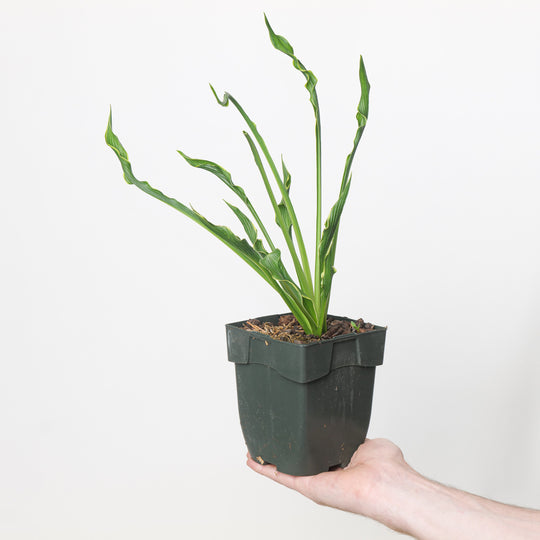
Very. Every hosta on this page is listed RHS H7 on its own product page, the top band of the Royal Horticultural Society scale, which covers the coldest gardens in the country. That means no fleece, no wrapping and no lifting. What surprises new growers is the disappearing act: hostas die back completely in autumn and leave bare soil all winter, then push up tight cones called pips in April. A pot that looks empty in March is almost always fine. Mark the spot so you do not dig into a dormant crown by mistake.
Choosing the Right Hosta
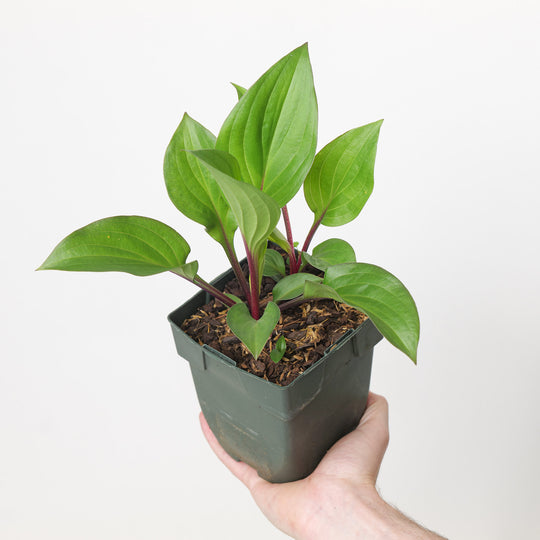
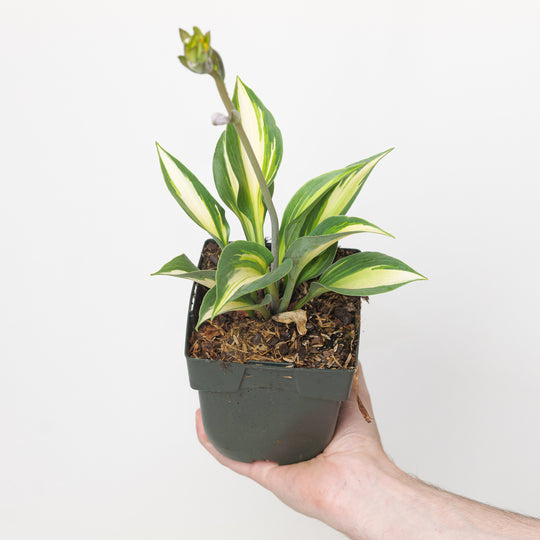
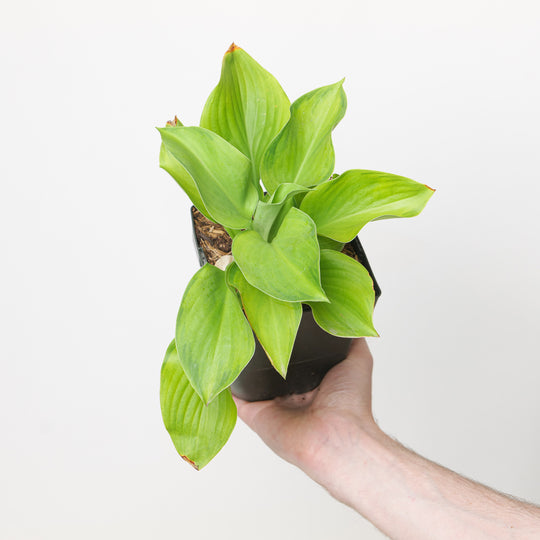
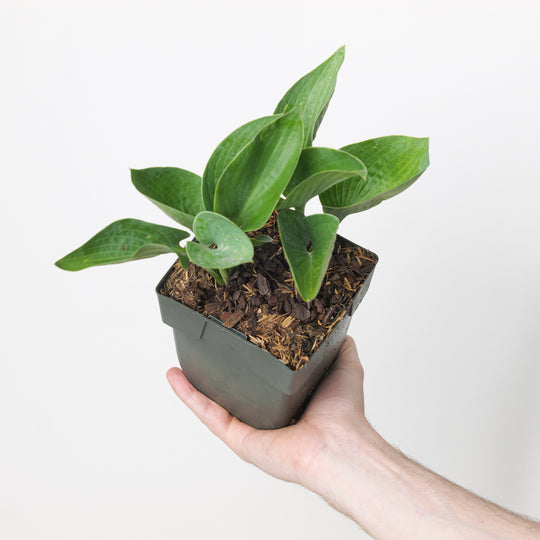
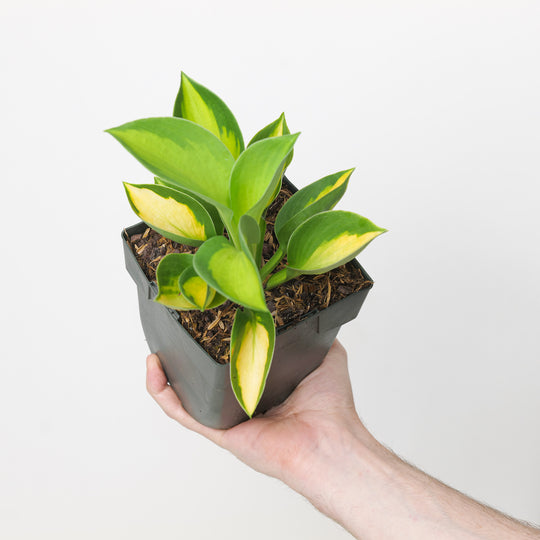
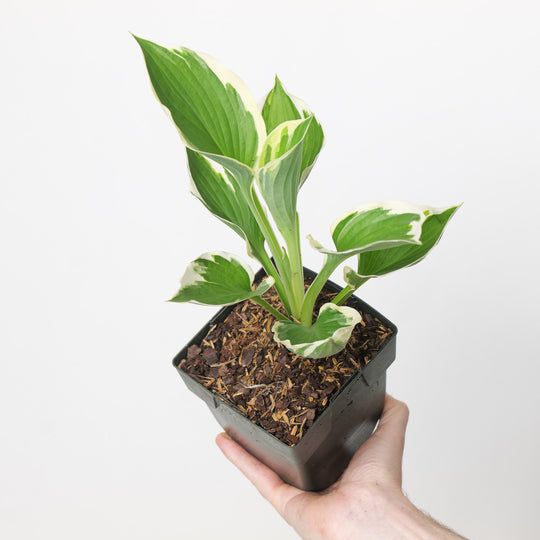
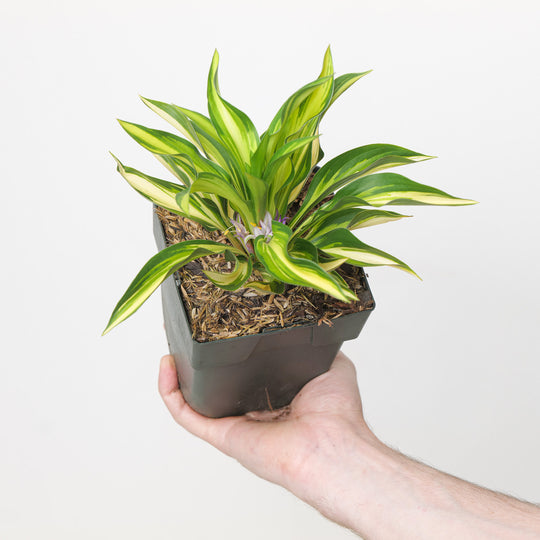
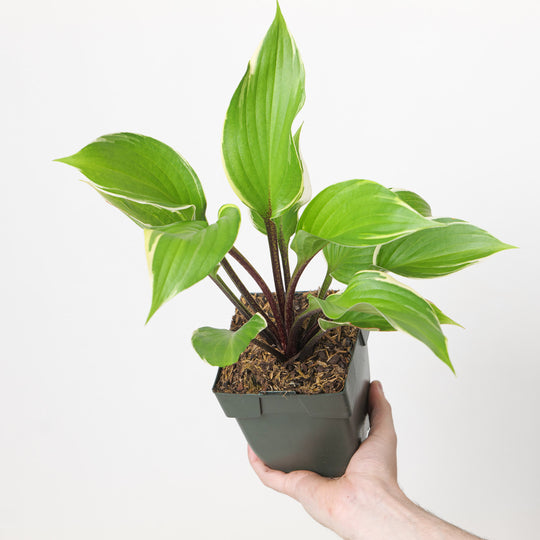
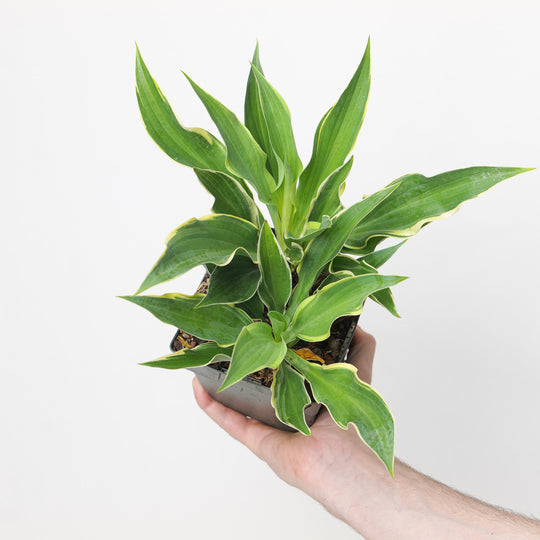
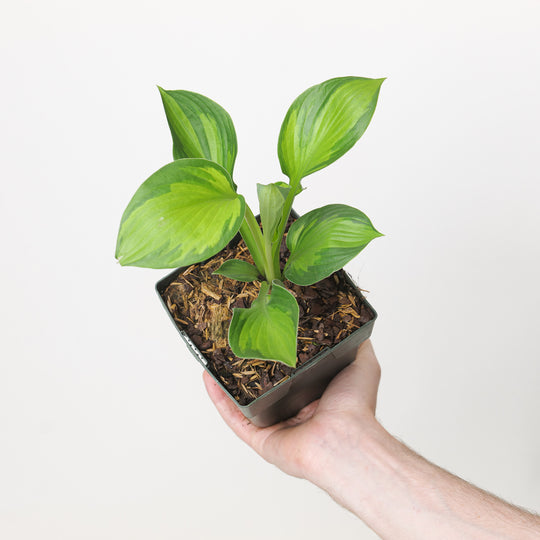
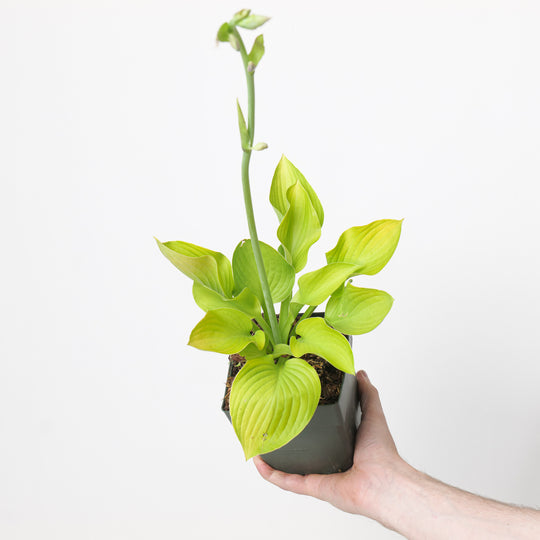
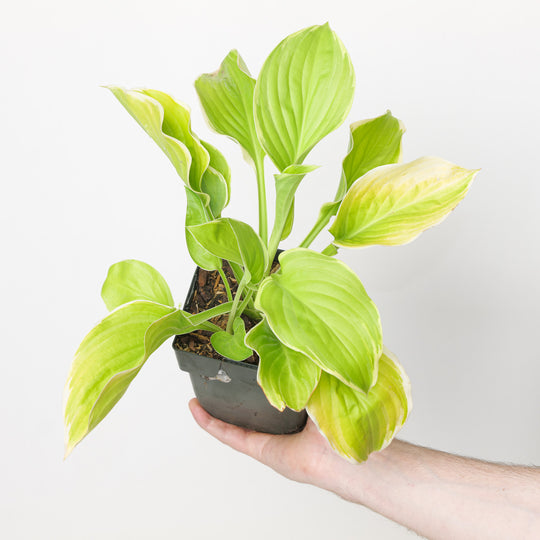
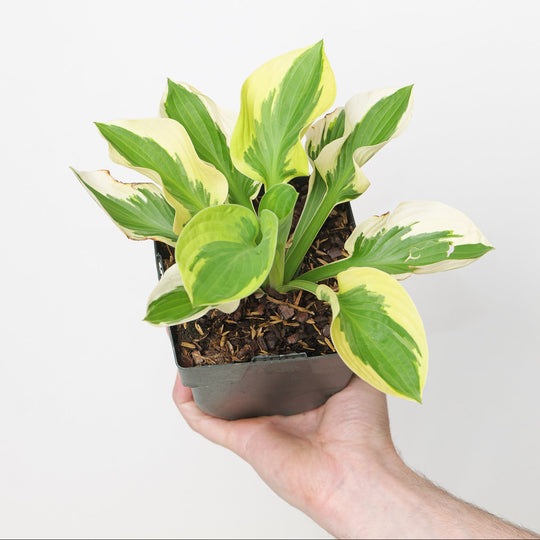
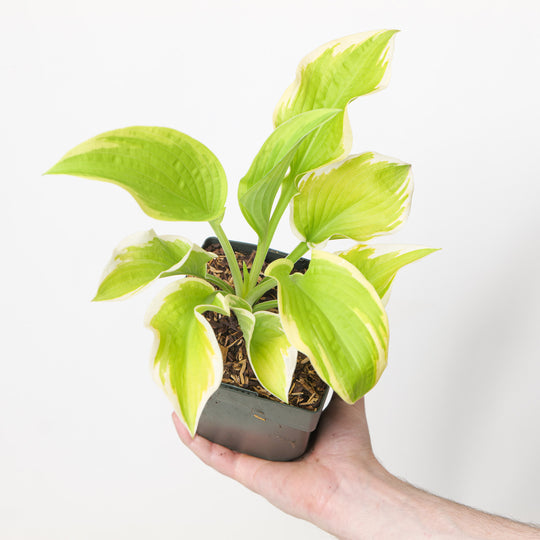
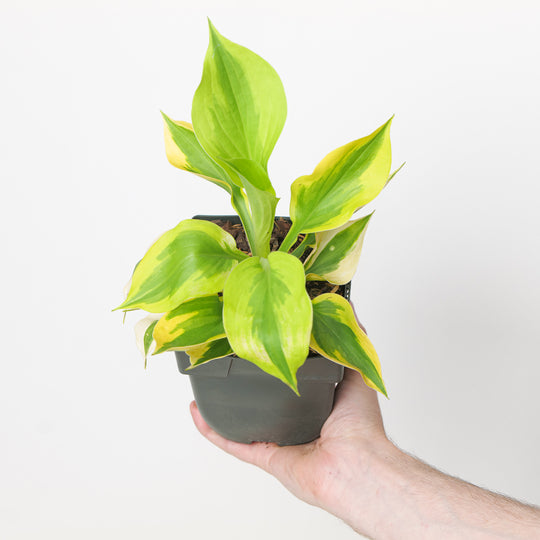
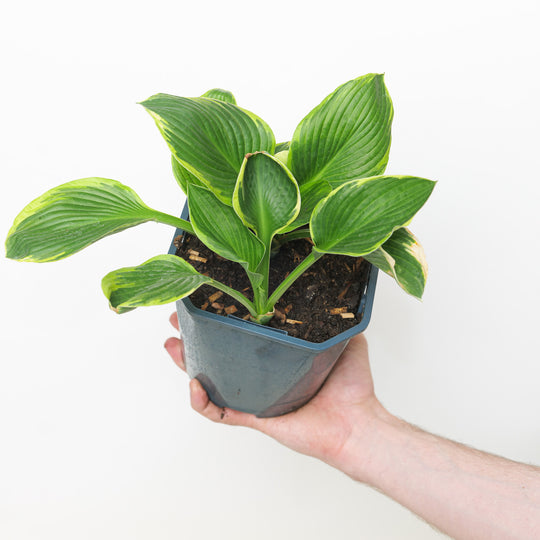
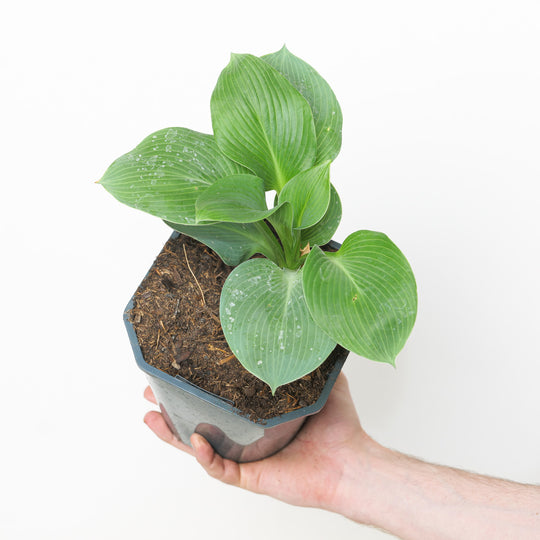
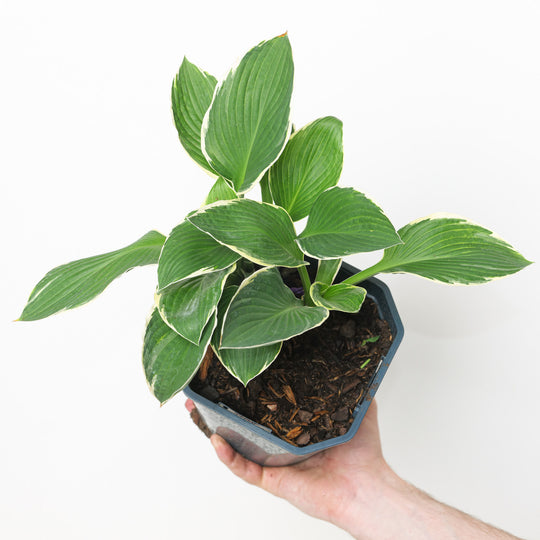
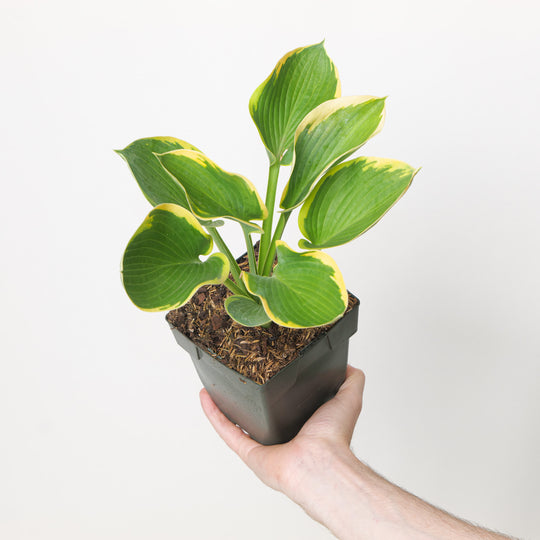
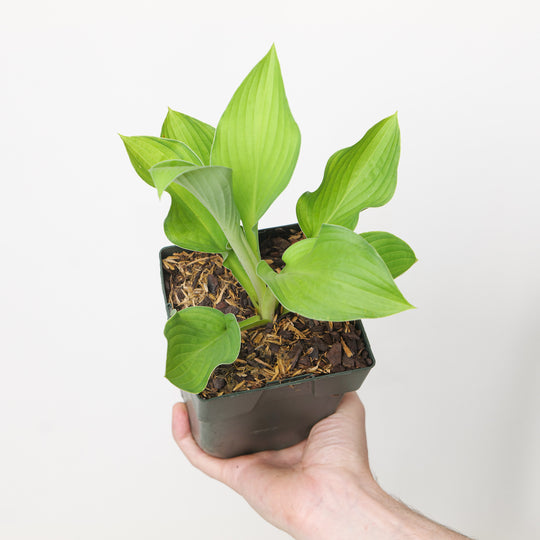
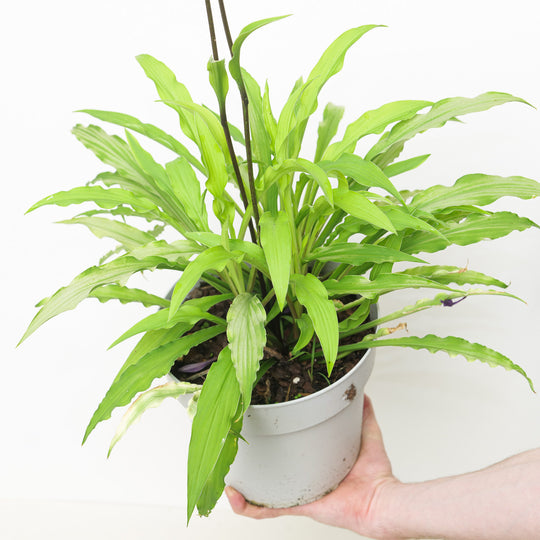
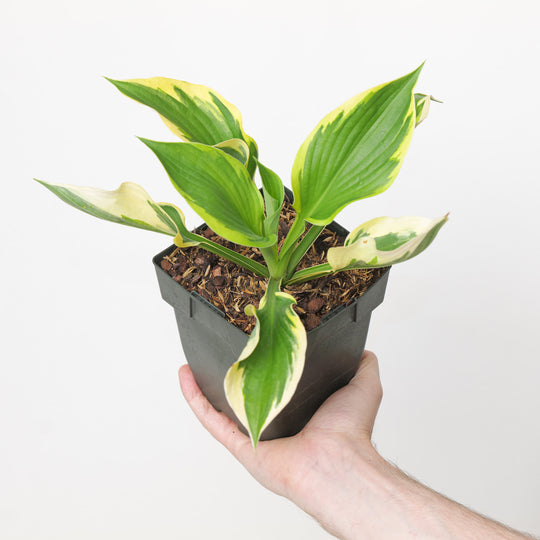
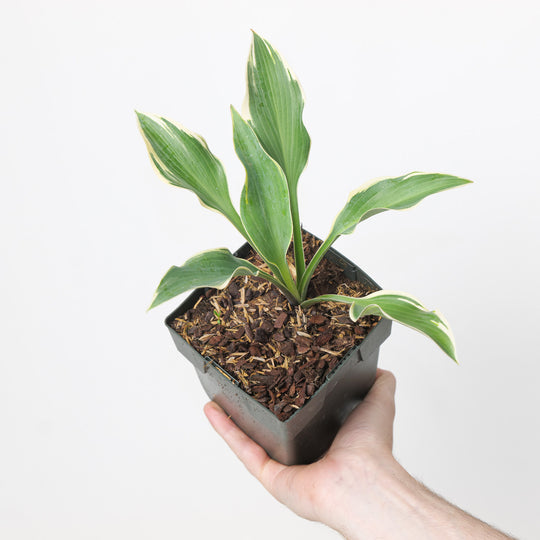
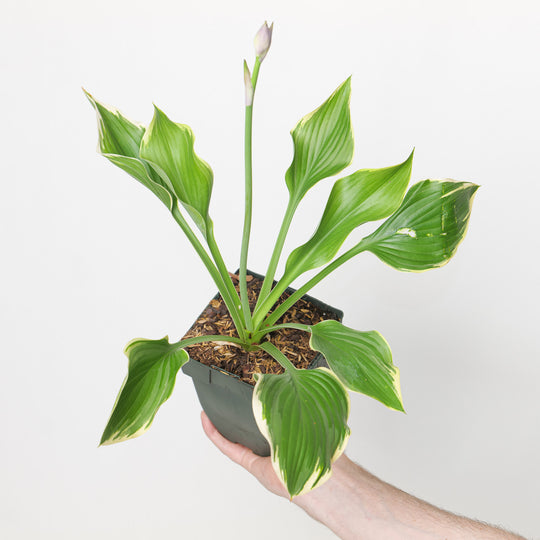
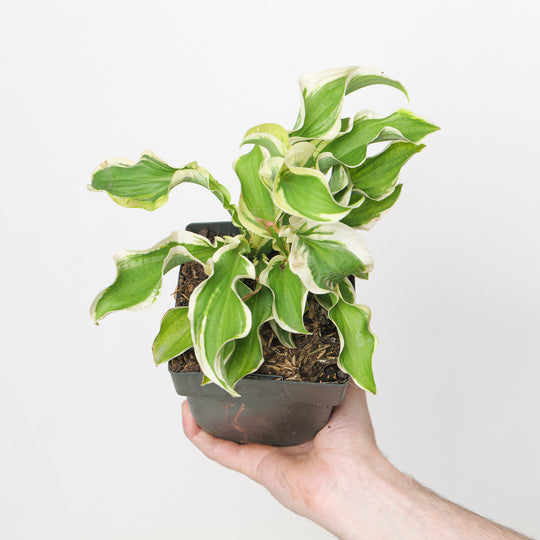
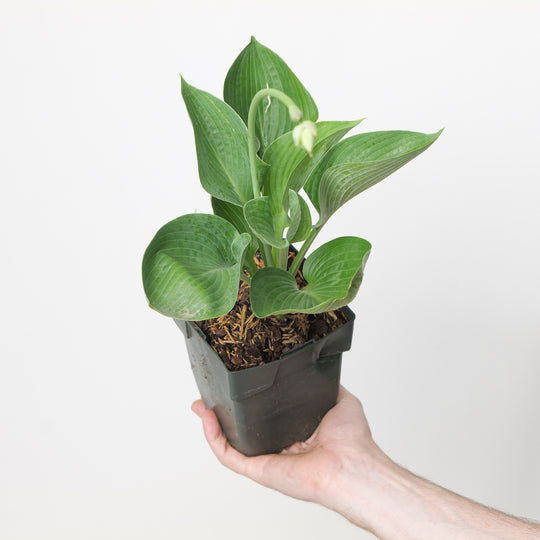
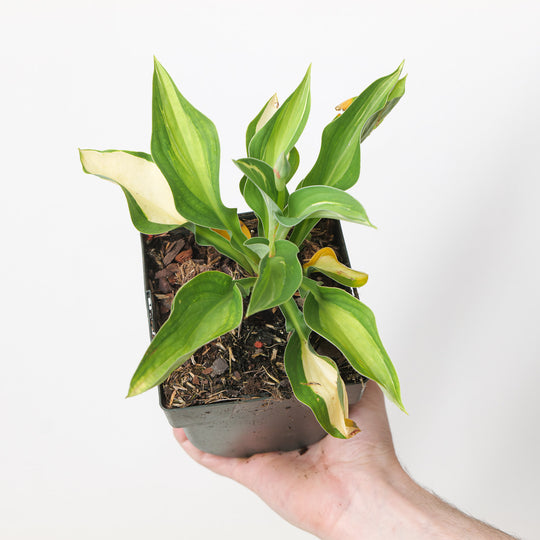
Consider three variables. Leaf colour: blue-leaved varieties such as Hosta 'Elegans' and 'Abiqua Drinking Gourd' need shade to hold their glaucous bloom, while gold and variegated varieties such as 'Francee', 'Patriot' and Hosta 'Gold Standard' take dappled morning sun for their brightest colour. Size: giants like 'Elegans' and 'Big Daddy' anchor a border, medium cultivars work in mixed planting, and miniatures like 'Lakeside Little Tuft' shine in a trough. Slug resistance: thicker-leaved, puckered blue varieties shrug off slugs far better than thin-leaved greens.
Hosta Care Essentials
- Position: Part to full shade. Gold and variegated forms want a little morning sun to hold their colour, blues want none and keep their bloom better without it.
- Soil: Rich, moisture-retentive and humus-heavy. Mulch annually with leaf mould or garden compost and they will ask for very little else.
- Hardiness: RHS H7 across the whole range, shown on every product page. Fully hardy, dies back in winter, no protection needed.
- Watering: The one thing to get right. Hostas droop dramatically when dry and bounce back quickly once watered thoroughly, but repeated wilting checks their growth.
- Feeding: A slow-release balanced fertiliser in early spring and again in early summer. Stop after August so growth hardens off before dormancy.
Hostas for Exotic and Woodland Borders
In an exotic border, hostas make an outstanding understorey beneath Trachycarpus palms, Musa banana and Tree Ferns, their broad, tropical-looking leaves adding a layer of texture without competing with the canopy. This is what earns them a place in a Plants for Tropical & Exotic Borders scheme rather than a conventional one. In classical woodland planting, pair them with Hardy Ferns and the silver-marked Brunnera macrophylla 'Silver Heart' for a rich shade tapestry. For the full range of companions, see Plants for Shade & Woodland.
Growing Hostas in Pots
Some of the finest hosta specimens in the country are container-grown. A large pot of rich, moisture-retentive compost supports a bigger, healthier clump than poor ground ever will, and it lets you put a punchy shade planting exactly where you want one. Water daily through summer, feed regularly, and move the pot somewhere sheltered during the harshest freeze-thaw weeks so the rootball is not repeatedly frozen and thawed.
Managing Slugs and Snails
Slugs and snails are the single biggest challenge hosta growers face. Choose thicker-leaved, blue and puckered cultivars for the best natural resistance, then back that up with copper tape around pots, wool pellets on the soil surface, or nematodes applied in spring. Evening patrols during the wettest weeks of spring, when the leaves are unfurling and at their most vulnerable, make a bigger difference than any other single intervention. Our short guide on how to care for hostas covers the seasonal routine in full.
Explore the Hosta Range
The named cultivars in stock here run from giants that anchor the back of a border to miniatures that suit a trough on a shaded step. Clumps thicken every year and lift and split easily once established, so one plant becomes several over time: our guide on when to divide hostas explains the timing and the method. All plants are shipped directly from our nursery to your door.