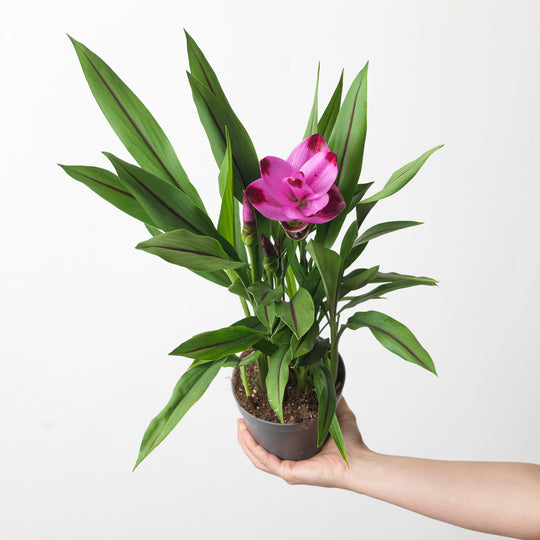
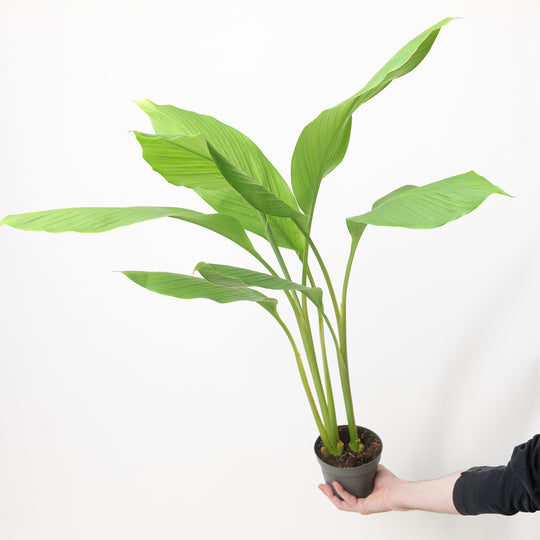
Siam Tulip
Curcuma Care Guide

Curcuma is a flowering tropical ginger that grows from a rhizome, throws up striking bracts in summer, then dies back and rests over winter. That yearly dormancy is the single most important thing to understand: when the foliage collapses in autumn, the plant is not dying, it is going to sleep. Often sold as the Siam tulip, Curcuma alismatifolia and its relatives are pet-friendly, undemanding in growth, and genuinely rewarding once you work with their seasonal rhythm rather than against it.
This guide covers light, watering, soil, the winter dormancy, repotting and propagation for Curcuma, plus the varieties we grow. If you like a plant that does something dramatic and then bows out gracefully, this one is worth a spot.
Light Requirements
The ideal light for Curcuma is bright, indirect light. Good light drives strong flowering through summer. Curcuma tolerates a slightly shadier position than many flowering plants, which is why we tag ours as happy in lower light, but blooms are best near a bright window out of harsh midday sun.
How Often to Water Curcuma
In active growth from spring to early autumn, keep the compost consistently moist and water when the top 2 to 3cm feels dry. Curcuma is a heavy drinker in summer heat.
The critical change comes in autumn. As the leaves yellow and die back, reduce watering steadily, then stop almost entirely once the foliage has gone. A dormant rhizome sat in wet, cold compost will rot. Start watering again only when new shoots appear in spring.
Soil and Potting Mix
Use a rich, free-draining mix. Our peat-free Simply Houseplant potting mix is a sound base, opened up with a handful or two of coarse perlite for the drainage the rhizome needs. In full growth Curcuma is a hungry plant, so feed fortnightly with a balanced liquid feed from our plant nutrients range through spring and summer.

Temperature and Placement
Curcuma is a warm-season plant that grows hardest through the heat of summer. Keep it above 18C while in active growth and it will flower freely. It has no interest in cold, draughty spots, so keep it away from an open winter window or an unheated hallway. A bright kitchen, conservatory or living room windowsill suits it well through spring and summer. Because it grows from a rhizome and disappears entirely in winter, it also works well as a seasonal feature you can move to the front of a shelf when it flowers and tuck away while it rests.
Dormancy and Winter Care
This is where most Curcuma are lost. From roughly October the plant will naturally yellow and collapse. Cut back the spent foliage, move the pot somewhere cool but frost-free, around 10 to 15C, and keep it almost completely dry until spring. You can leave the rhizome in its pot. Overwatering a dormant Curcuma is the classic mistake, and it is why we always flag the winter rest to customers who buy one in flower.
Repotting and Propagation
Repot in early spring as growth restarts, which is also the moment to propagate. Lift the rhizome, brush off the old compost, and divide it with a clean knife so each section has at least one growth point. Pot the divisions individually into fresh, free-draining mix, water lightly, and keep them warm to wake them up. This division is far more reliable than seed for a home grower.
Common Problems When Growing Curcuma Indoors
Curcuma is relatively straightforward to grow indoors when it has the right balance of light, warmth and moisture. Most problems come down to watering, light or the plant's natural seasonal cycle. Before reaching for the watering can or fertiliser, check what your Curcuma is trying to tell you.
No flowers
If your Curcuma produces plenty of leaves but no flowers, too little light is often the culprit. Curcuma needs bright light during its growing season to produce healthy growth and flowers. A position close to a bright window is ideal, provided the plant is protected from harsh, scorching midday sun.
Lack of feeding during the growing season can also affect flowering. Once your Curcuma is actively growing, feed it fortnightly with a balanced houseplant fertiliser to support healthy foliage and blooms.
If it still refuses to flower, give it time. Curcuma grows from underground rhizomes and needs a good growing season to build up the energy needed for flowering.
Yellowing leaves
Yellowing leaves in autumn are usually nothing to worry about. As Curcuma naturally prepares for winter dormancy, its leaves will gradually yellow, wilt and die back. This is part of its normal growth cycle rather than a sign that something has gone wrong.
Yellowing during summer is a different story. If the plant is actively growing and its leaves are turning yellow, particularly alongside persistently wet compost, overwatering or poor drainage is more likely to blame. Allow the compost to dry slightly between waterings and make sure the pot has adequate drainage.
Drooping or wilting leaves
Curcuma leaves can droop when the plant is thirsty, particularly during warm weather when it is actively growing. Check the compost before watering. If the surface feels dry and the pot feels noticeably lighter, give the plant a thorough drink and allow the excess water to drain away.
If the compost is already wet but the leaves are still drooping, resist the temptation to water again. Constantly wet compost can leave the rhizomes struggling to breathe and may eventually lead to rot.
Brown or crispy leaf edges
Brown, crispy edges usually point to dry conditions. Curcuma appreciates consistent moisture during active growth, so allowing the compost to become bone dry repeatedly can leave the foliage looking a little worse for wear.
Dry indoor air, particularly in centrally heated homes, can also contribute. Keep the plant away from radiators and draughty spots, and focus on consistent watering rather than keeping the compost permanently wet.
Root or rhizome rot
Soft, dark or unpleasant-smelling rhizomes are a sign that Curcuma has been kept too wet. Poor drainage, oversized pots and frequent watering during dormancy can all increase the risk of rot.
Always use a pot with drainage holes and a free-draining growing mix. During the growing season, water when the compost has started to dry, then reduce watering considerably as the plant enters dormancy. Once the foliage has died back completely, the rhizome needs far less moisture.
Curcuma dying back
If your Curcuma gradually loses its leaves towards the end of summer or in autumn, do not panic. This is part of its natural dormancy and does not necessarily mean the plant is dying.
Once the foliage has completely died back, reduce watering and allow the rhizome to rest somewhere warm and dry. New shoots should appear when the plant naturally comes back into growth the following season. Think of it less as a houseplant giving up and more as it taking a well-earned winter nap.
Want to shop our Curcuma collection?
Ready to bring a little tropical colour home? We stock Curcuma throughout spring and summer, when these flowering gingers are actively growing and ready to put on a show. Keep an eye on our collection for seasonal availability and find your next Curcuma to add to your indoor jungle.