Welcome to the Lab
Welcome to the Lab
WE WON GOLD AT RHS CHELSEA FLOWER SHOW 2026🏅
WE WON GOLD AT RHS CHELSEA FLOWER SHOW 2026 🏅
Free shipping on all orders over £60
7-Day Live Arrival Guarantee
Welcome to the Lab
Welcome to our Pre-Order Tissue Culture Event! We’ve been working behind the scenes to bring highly sought-after houseplant varieties to you in a wallet-friendly way. Our carefully curated collection includes Philodendron Gloriosum Variegated, Monstera Devil Monster, and Anthurium Ace of Spades Variegated.
Secure some prized rare tissue culture plants today and grow your collection with confidence.
119 products
Tissue culture plants are grown from tiny fragments of plant tissue in a sterile laboratory environment. Rather than propagating from cuttings or seed, a small piece of meristematic tissue is placed on a nutrient-rich agar medium and multiplied under controlled temperature and light. Every plantlet that leaves our lab is disease-free and genetically identical to the parent plant.
This technology allows Growtropicals to produce varieties that would be impossible to propagate by conventional means. Highly sought-after forms such as Alocasia Black Velvet Albo and Anthurium Ace of Spades Variegated can be reliably multiplied in quantity, making these species accessible to collectors who would otherwise wait years for a cutting.
The Lab focuses on genera with the greatest collector demand and the most striking mutations. Alocasia forms the largest section, with over 30 varieties including albo, aurea, and gold variegated forms of species such as Black Velvet, Sinuata, Silver Dragon, and Azlanii. Anthurium hybrids from specialist breeders include dark-foliage crosses with velvet leaf textures. Monstera varieties such as Monstera Yellow Marilyn represent rarer colour forms unavailable through standard nursery trade.
Philodendron species such as Philodendron Splendid and the critically rare Spiritus Sancti sit alongside Platycerium, Anoectochillus jewel orchids, Homalomena, and Schismatoglottis. The range updates each month as new varieties complete their propagation cycle.
The Lab operates on a monthly pre-order cycle. Each month, a new batch of TC plantlets is released once the laboratory confirms sufficient numbers are ready for dispatch. You place your order and we ship your plantlets at the scheduled dispatch date. Pre-orders are strictly limited to available stock: if a variety sells out, it is removed from sale until the next batch.
Plantlets arrive in their sealed laboratory containers, ready for the acclimation process. Shipping is carefully timed to minimise transit stress, and all orders are packed to maintain the humid conditions the plantlets require during transport.
TC plantlets are delicate in the first weeks after arrival. They have spent their entire life in a sterile, humid environment with no exposure to the microbes, air currents, or variable humidity of a normal home. Acclimation bridges the gap between the laboratory and your growing conditions. The Tissue Culture Acclimation Starter Kit and Tissue Culture Domed Acclimation Set include everything you need: a humidity dome, a suitable substrate, and guidance on the gradual transition process. Most plantlets establish within four to eight weeks.
The key principles are straightforward: high humidity (80% or above initially), indirect light, clean substrate, and patience. Avoid repotting too quickly, and do not fertilise until the plantlet has produced at least one new root outside the agar.
Growtropicals develops and sources TC plantlets exclusively from reputable laboratories with which we have established long-term relationships. We do not collect from the wild. Every variety is assessed for stability and viability before joining The Lab. Many of the rarest varieties on our list are produced by specialist breeders who work exclusively with Growtropicals on UK distribution.
For collector-grade established plants beyond TC, our Rare and Unusual Plants collection carries a wide range of unusual species ready to grow on immediately.
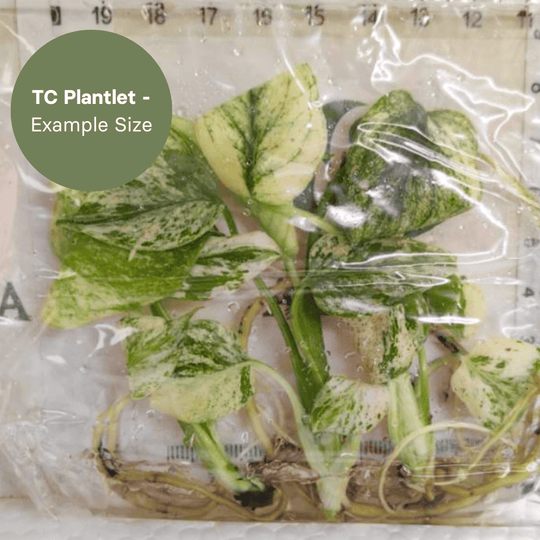
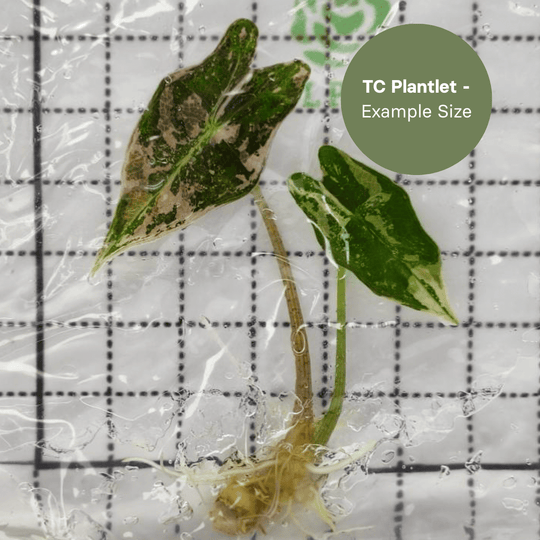
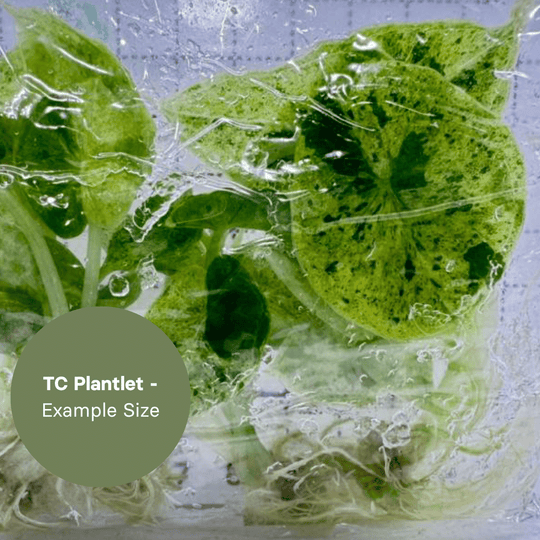
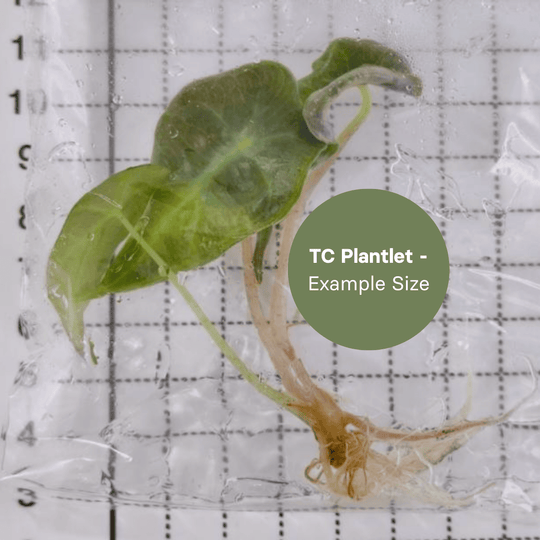
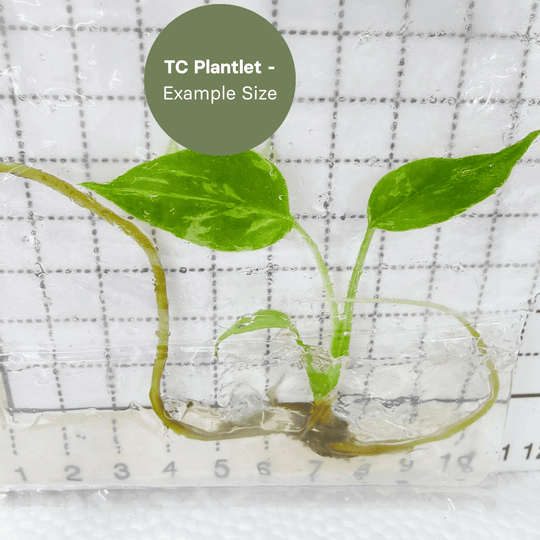
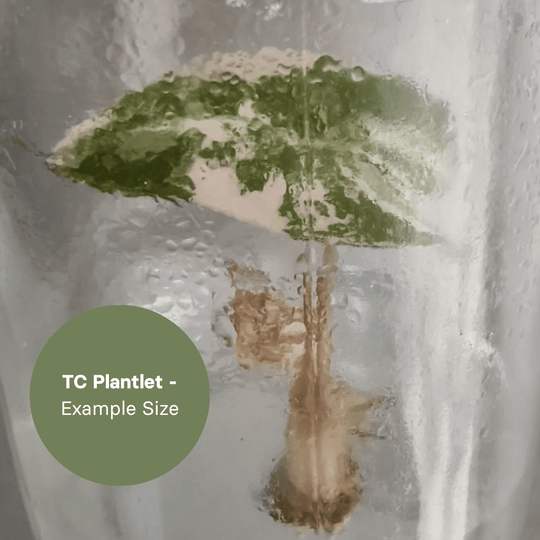
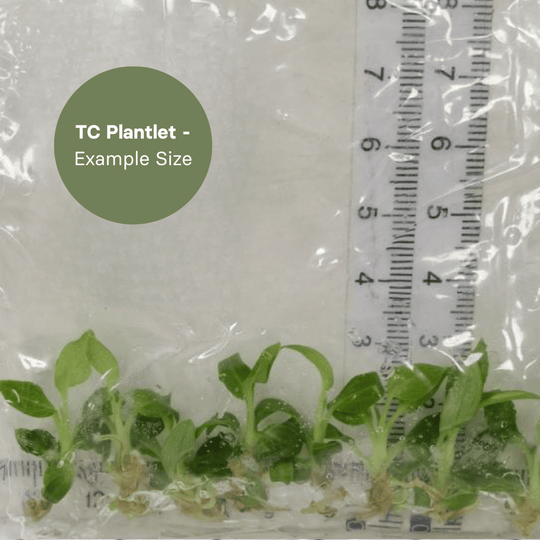
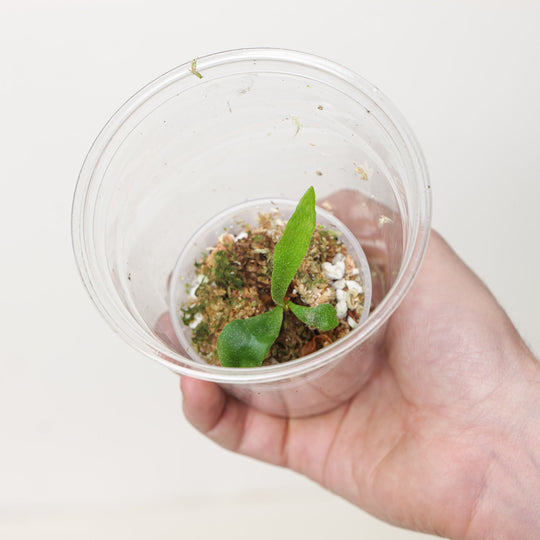
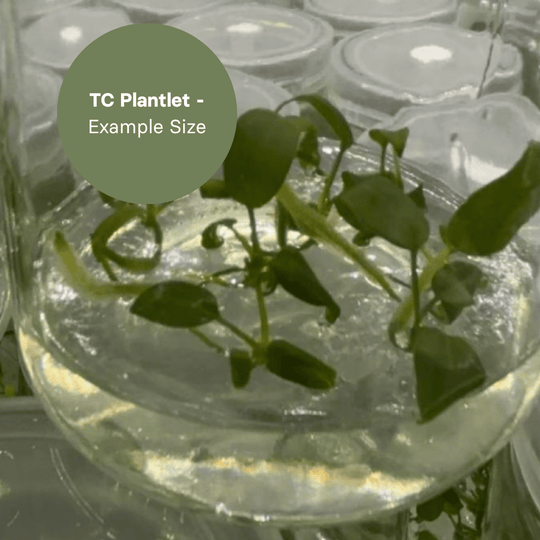
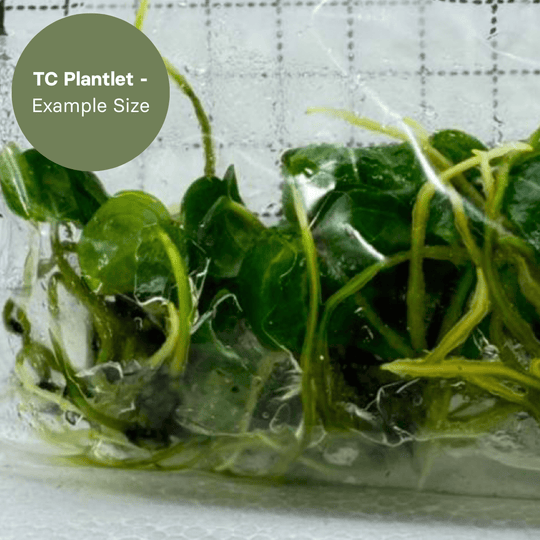
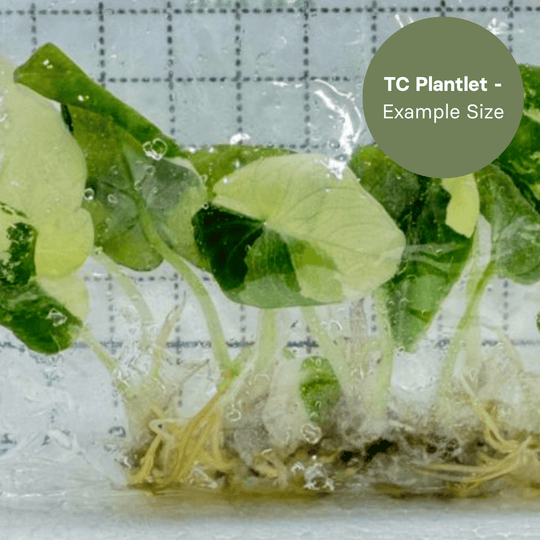
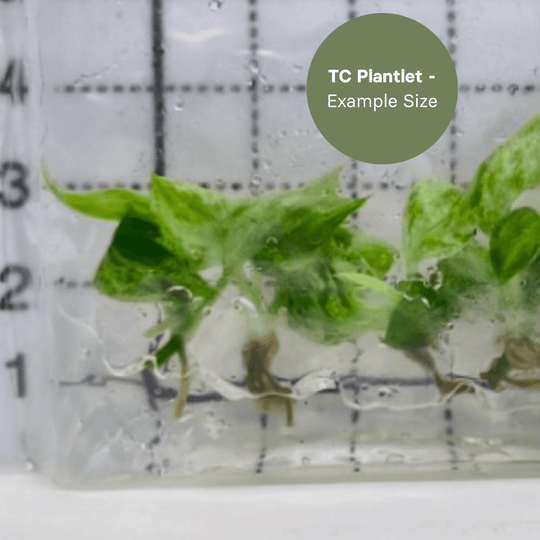
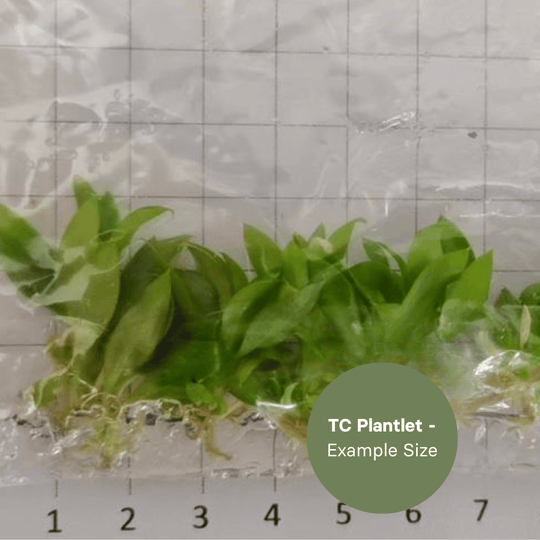
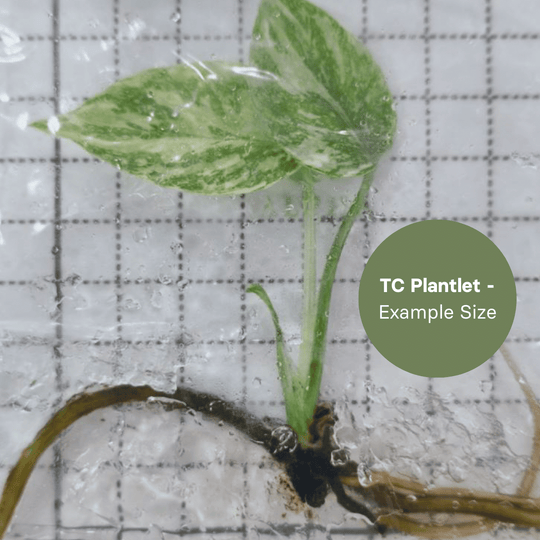
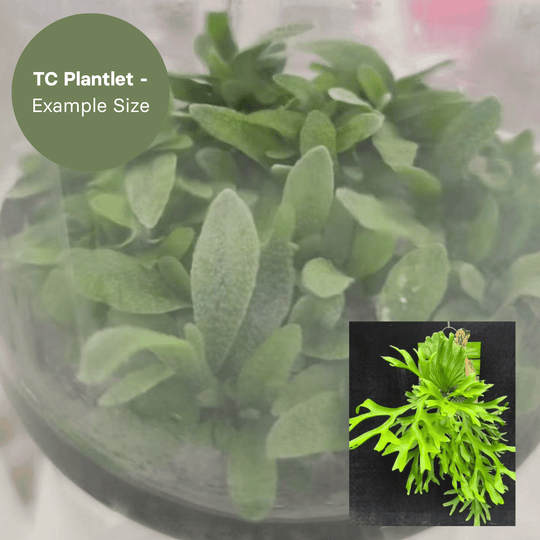
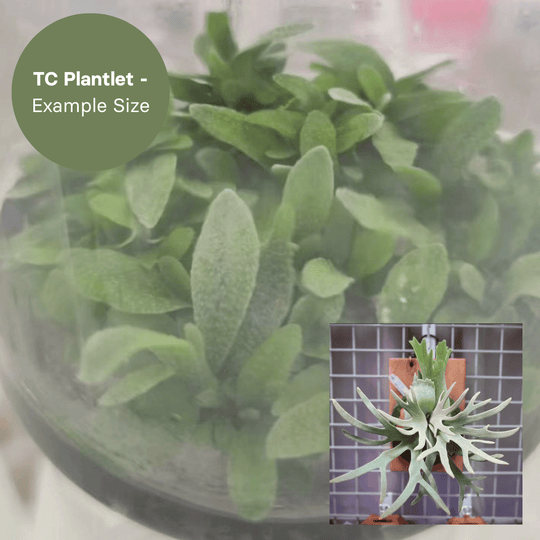
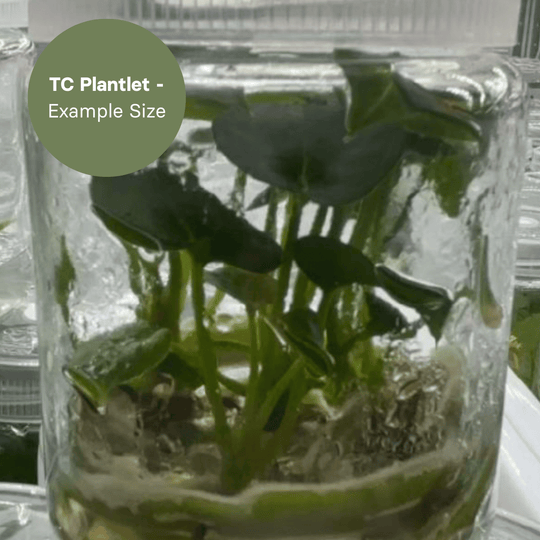
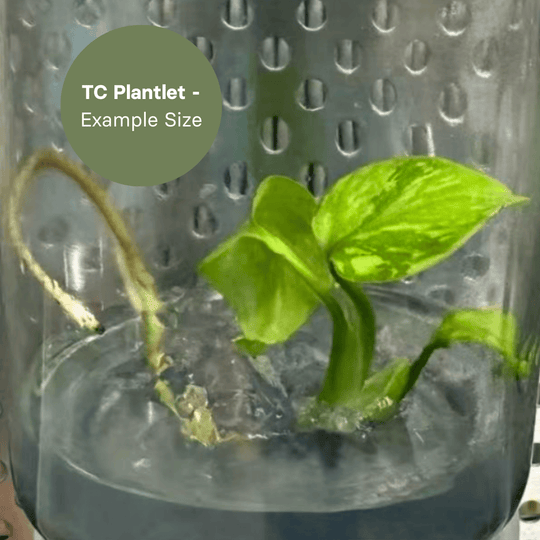
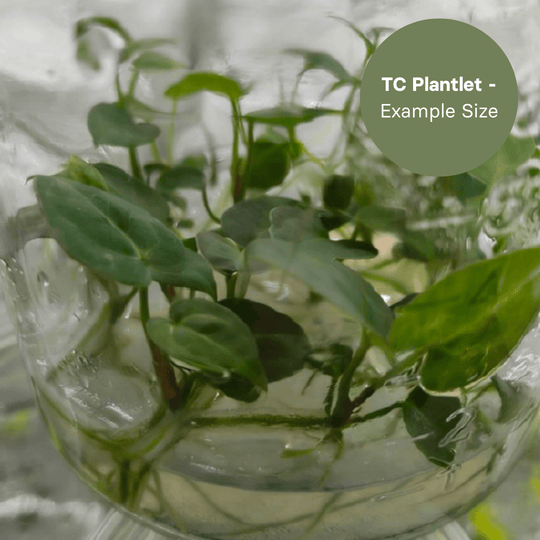
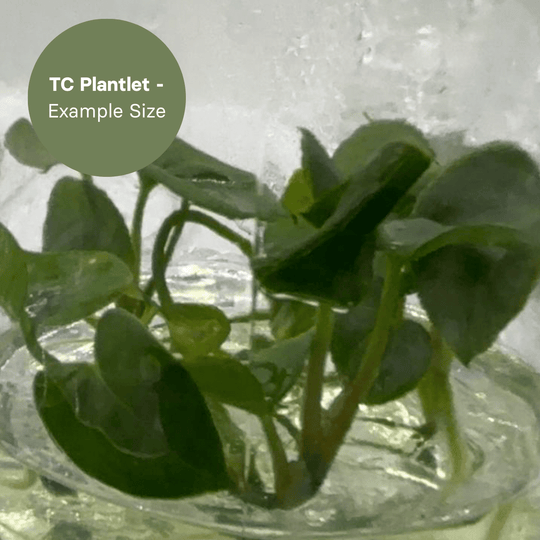
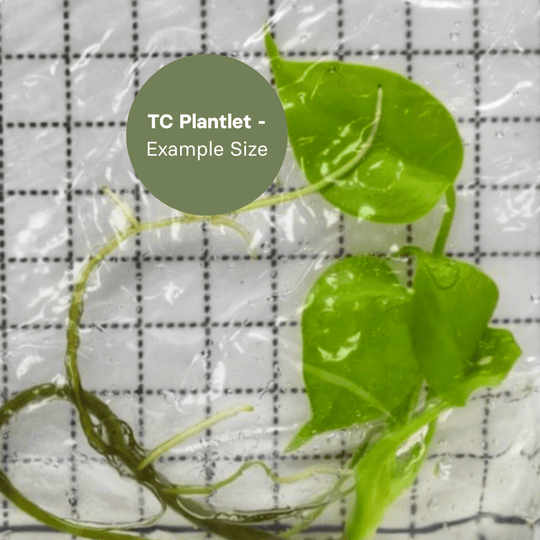
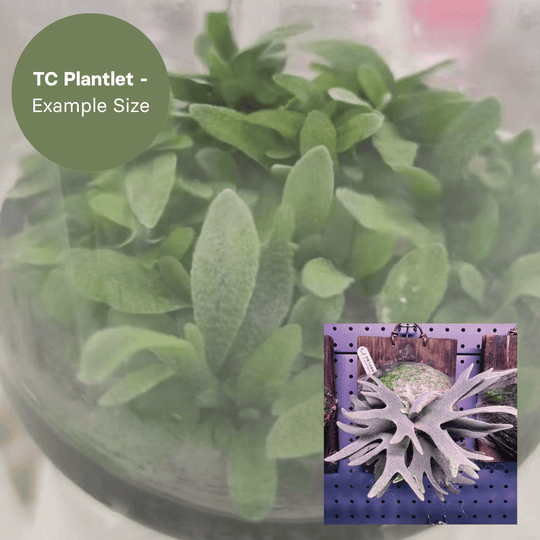
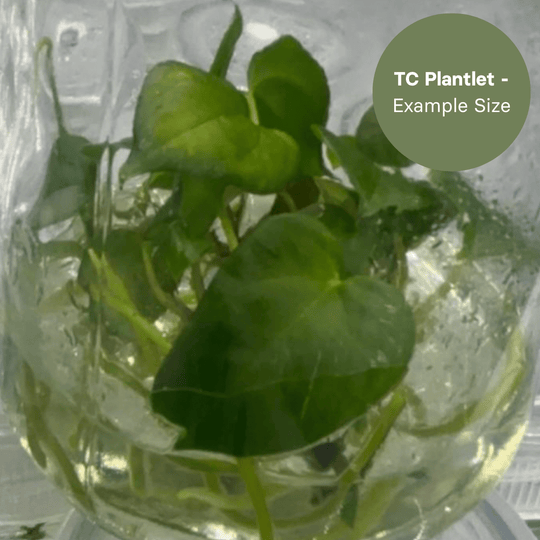
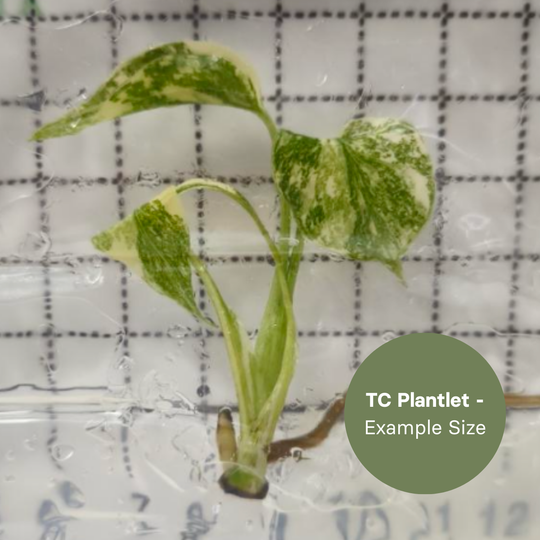
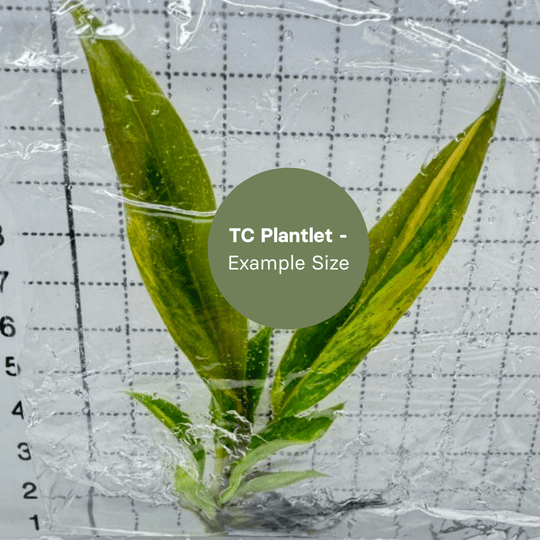
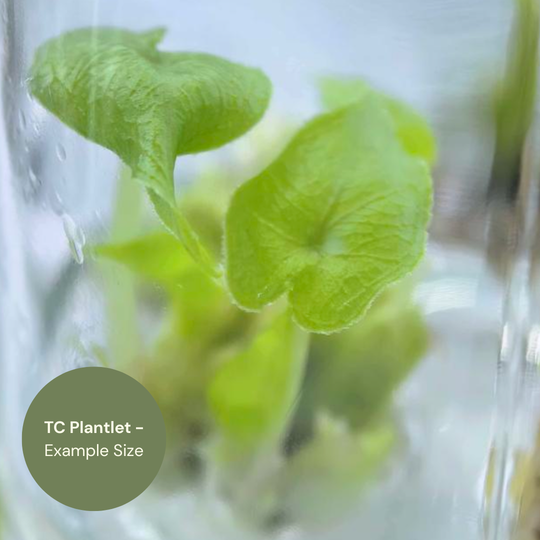
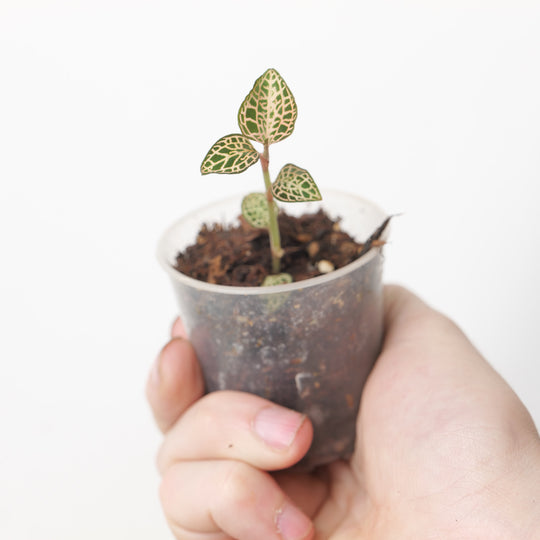
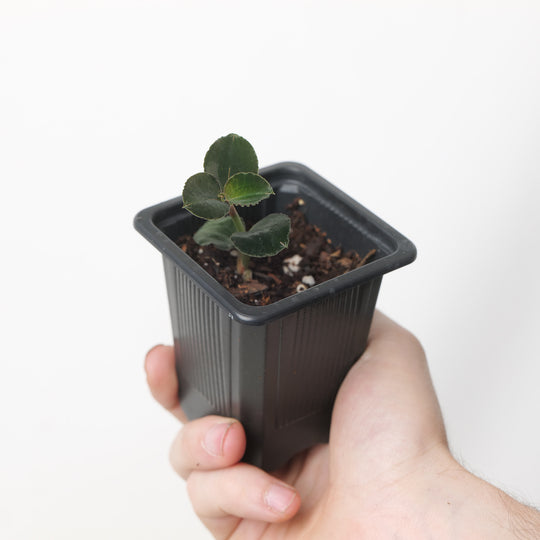
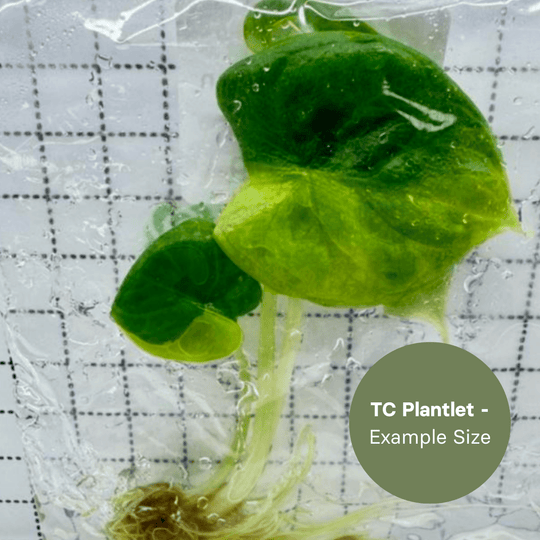
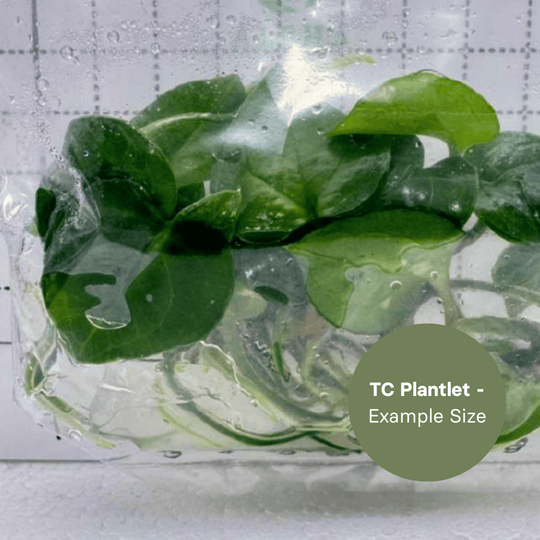
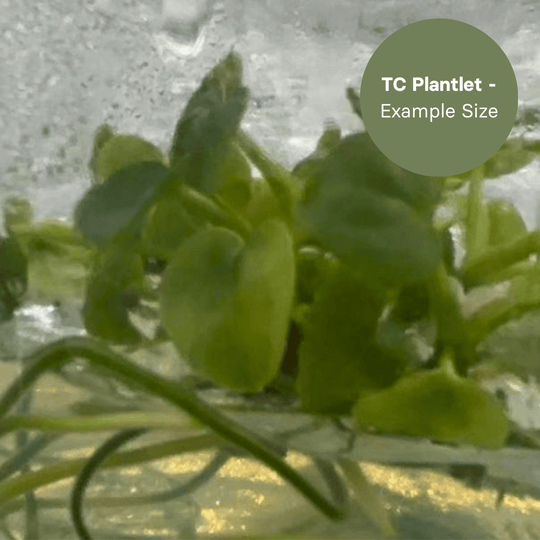
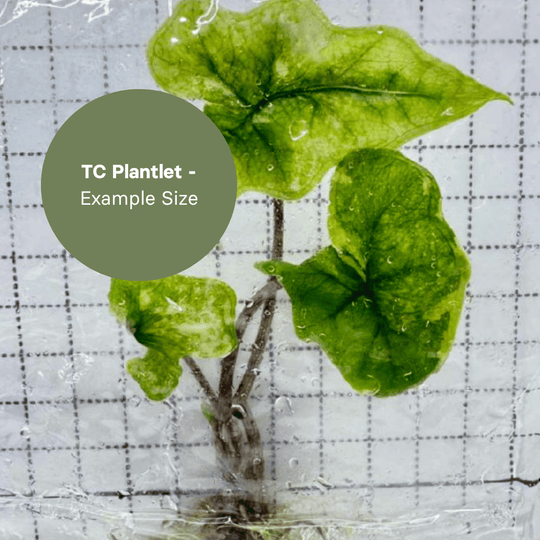
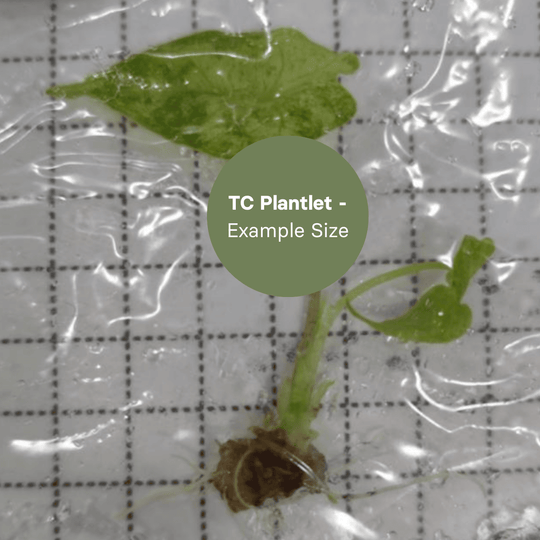
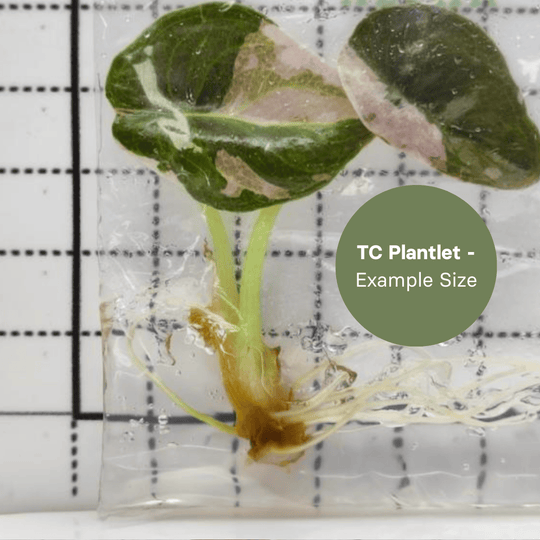
TC plantlets arrive in small sealed containers holding the agar gel they were grown in. The plants are tiny, typically 2-5 cm tall depending on species, with a few small leaves and a root system embedded in the gel. The gel may be clear, yellow, or pale green; this is normal and not a sign of contamination. Some plantlets have etiolated (pale) stems from growing under laboratory lighting. This corrects once the plant is exposed to natural light during acclimation.
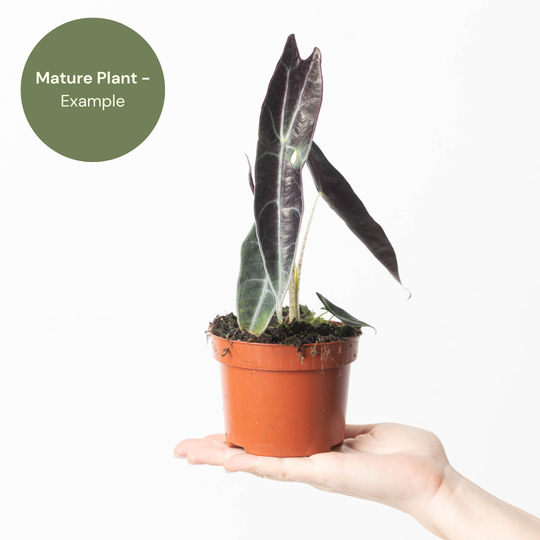
Do not be concerned by the small size. TC plantlets are not comparable to a rooted cutting or a potted plant. They are at the very start of their above-soil growth. Under correct acclimation conditions most species establish quickly, with most producing normal foliage within 8-12 weeks of removal from the agar.
At a minimum you need: a humidity dome or propagation case, a sterile well-draining substrate (a fine bark and perlite mix or sphagnum moss both work well for most species), a clean shallow pot or tray, and a source of indirect light. Avoid unsterilised garden compost or heavy potting mixes at the acclimation stage. TC roots are sensitive to bacterial and fungal load in the early weeks.
The Tissue Culture Acclimation Starter Kit includes the correct substrate, step-by-step instructions, and the tools needed for the agar removal and transplanting process. The Tissue Culture Domed Acclimation Set provides a ready-to-use domed environment sized for individual plantlets. Having the right setup before your order arrives makes a significant difference to success rates.
Timeline varies by species and growing conditions. As a general guide: most Alocasia and Monstera TC plantlets reach a standard nursery-pot size (10-12 cm pot) within 6-12 months of successful acclimation, given good light, warmth, and humidity. Faster-growing genera such as Philodendron can reach that stage in 4-6 months. Slower growers such as Platycerium and Anoectochillus take considerably longer.
The acclimation period, the first 4-8 weeks, is the most critical stage. Plants that establish well in this window tend to grow on strongly. After that, TC plants frequently outpace cutting-raised equivalents because they start disease-free and in peak physiological condition.
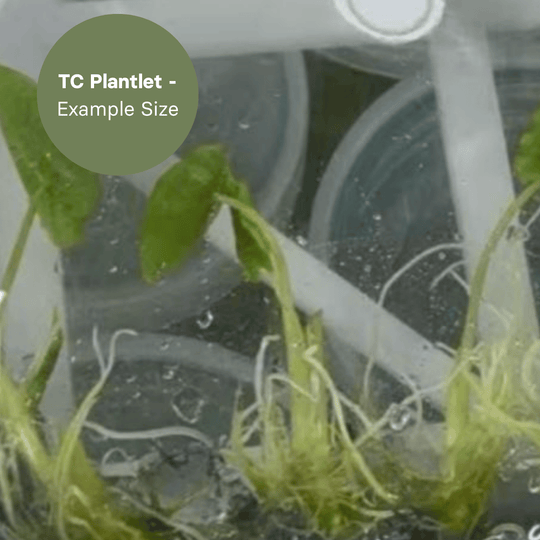
In most cases, yes. Tissue culture propagation produces clones of the parent plant, so variegated or mutation forms should carry the same traits. However, a small percentage of TC plantlets can exhibit somaclonal variation: minor genetic changes introduced during the tissue culture process itself. For highly selected variegated forms there is a small possibility that a plantlet may show slightly different variegation expression as it matures.
At Growtropicals, we source TC stock only from laboratories with strong track records for stability. The genera most likely to produce consistent, stable results include Alocasia, Monstera, and Philodendron. Where we are aware of any known variability in a line, we note it clearly on the product page.
For ultra-rare forms it is rarely a comparison at all. Many of the hybrid and variegated mutations in The Lab would cost hundreds or thousands of pounds as a single cutting, if you could find one. TC makes these varieties accessible at a fraction of that price, at the cost of some additional time and care during acclimation.
For more common varieties the calculation is different. A rooted cutting or established plant will be further along in its growth and requires no acclimation, so for species you can find readily as a potted plant, TC is mainly of interest if you want to start from scratch, grow multiple specimens, or secure a variety before it sells out. For collector-grade established plants that are ready to grow on, see our Rare and Unusual Plants collection.
Once successfully acclimated, TC plants grow just like any other plant of their species. The care requirements are identical to those for a cutting-raised or seed-grown specimen: appropriate light, watering, humidity, and nutrition based on the genus. An established Alocasia TC plant will want the same conditions as any other Alocasia. The same applies to Anthurium and Monstera varieties from The Lab.
The main difference is that TC plants often establish faster than cuttings once acclimated, because they have been growing in optimised nutritional conditions and are disease-free from the start. Many collectors report that TC-raised plants develop into particularly vigorous specimens once past the acclimation stage.
Yes! Our mailing list members are usually the first to know about new tissue culture releases and restocks. Sign up to be the first to receive updates, drop dates, and exclusive early access.
Sign up and save
Get 10% off your first order and be first to hear about restocks and offers
Gifting has never been easier
Perfect if you're short on time or are unable to deliver your gift yourself. Enter your message and select when to send it.