The fatsia genus: japonica and polycarpa
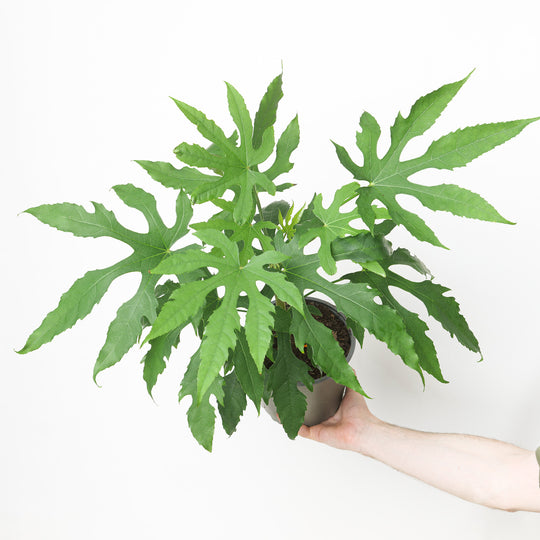
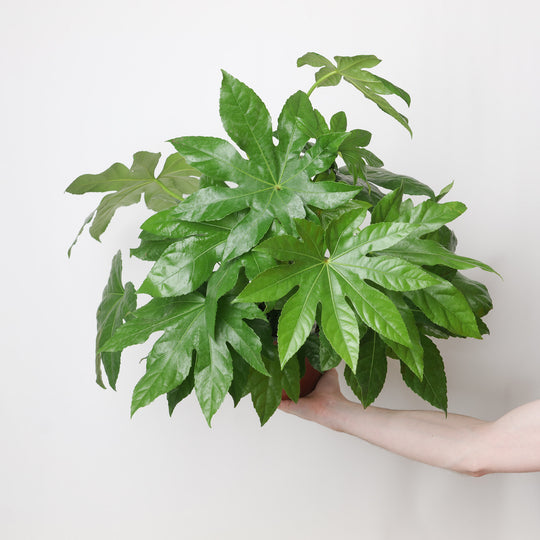
Fatsia is a genus of just a few evergreen shrubs in the ivy family, Araliaceae, and two are widely grown in Britain. Fatsia japonica, native to the coastal woodlands of southern Japan and South Korea, carries broad, glossy leaves with seven to nine bold lobes, up to 40 cm across, on a rounded shrub of 1.5 to 2.5 m. Fatsia polycarpa, described from Taiwan and a far more recent arrival in UK nurseries, is taller and narrower at 2.5 to 4 m, with leaves cut into much slimmer fingers. Both are evergreen, both flower late in the year, and both belong in shade.
Where to plant fatsia in the garden
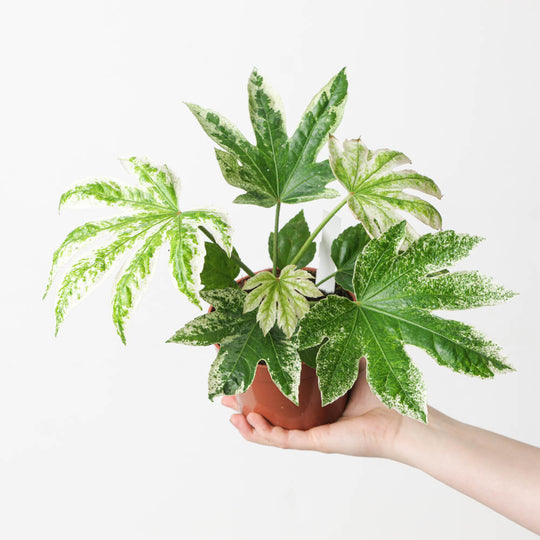
Shade is the point. Fatsia is one of the few architectural plants that genuinely prefers a north-facing wall, a woodland-edge border or a shaded courtyard, and established Fatsia japonica will cope with dry shade, which defeats most shrubs. Give it moist but well-drained soil of any type, chalk, clay, loam or sand, enriched with organic matter. The main thing to avoid is cold, drying wind, which browns the leaf margins. Fatsia will take sun where the soil stays reliably moist, though the variegated 'Spider's Web' scorches in hot afternoon sun and looks better in the shade that shows its speckling off anyway. Plant it towards the back of an exotic border, use it to furnish a dark side return, or grow it as a specimen in a large pot.
How hardy is fatsia in the UK?
Hardiness differs by species, and the difference matters. Fatsia japonica is rated RHS H5, fully hardy across the UK, and holds its foliage through winter without protection in all but the coldest, most exposed gardens. Fatsia polycarpa is rated RHS H3, hardy in milder and coastal gardens: give it a sheltered position and fleece young plants when hard frost is forecast. Plants in containers are always more exposed than plants in the ground, because the rootball can freeze right through, so move pots against a house wall or wrap them over winter. Our guide to what to expect through the seasons explains how hardy exotics behave in their first year.
Fatsia care through the year
Fatsia is undemanding once established. Water regularly through the first two growing seasons and in any container, and mulch in spring with garden compost or bark to hold moisture. Feed in spring with a balanced general fertiliser, and give plants in pots and containers a liquid feed every few weeks through summer. In autumn mature plants send up creamy drumstick flower heads that are a valuable late nectar source for bees and other pollinators, followed by black berries the birds take. Prune only if you need to: cut stems back to a node in mid spring and the plant will resprout, usually with several new shoots, which is also the way to rejuvenate a leggy old specimen.
Which fatsia should you choose?
For a first fatsia in an ordinary UK garden, plain Fatsia japonica is the one, and it holds an RHS Award of Garden Merit. Choose 'Spider's Web' where you want a shady corner lifted, since the white speckling reads as light from a distance. Choose Fatsia polycarpa 'Green Fingers' for a more elegant, narrower shrub with slim leaf fingers, and 'Needham's Lace' where you want the finest, laciest foliage of the group. Both polycarpa cultivars want shelter. Fatsia associates beautifully with tree ferns and hostas in the same shaded planting.
Can fatsia be grown indoors?
Yes, and it is one of the better large houseplants for a cool, shaded room. Fatsia japonica tolerates lower light and cooler temperatures than most tropical foliage plants, preferring 10 to 20 degrees Celsius, and it dislikes hot, dry air near a radiator. Water when the top half of the compost has dried out and never leave the pot standing in water. Indoors it will reach 1.5 to 2 m in time, and a pot-grown plant is happiest spending the summer outside in a sheltered, shaded spot.