The parlour palm as a houseplant
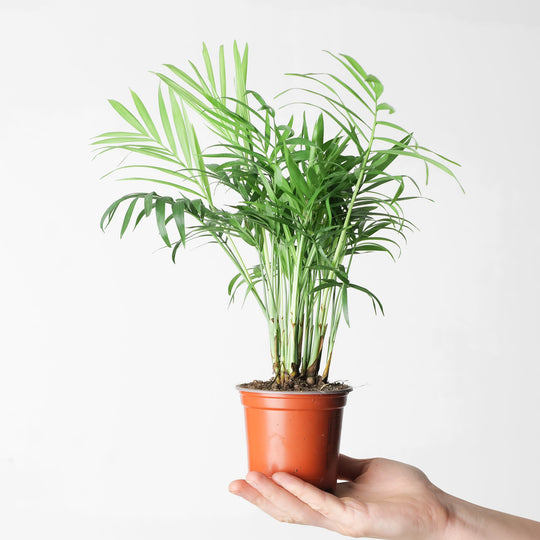
Chamaedorea elegans earns its place as one of the most widely sold houseplants on a simple basis: it works. Unlike many palms that struggle indoors, the parlour palm genuinely tolerates the lower light, lower humidity, and cooler temperatures found in typical homes. It grows slowly and stays proportionate for years. It produces clusters of small yellow flowers even indoors, sometimes followed by small black berries. And its elegant, refined appearance suits both modern and traditional interiors. Few plants deliver as consistent a result for as little effort.
How to care for parlour palm
Parlour palms prefer bright, indirect light but are among the most shade-tolerant palms available - they will grow, albeit slowly, in a north-facing room. Keep the compost evenly moist but never waterlogged - allow the top inch to dry before watering again. They are sensitive to fluoride and mineral salts in tap water, which causes brown leaf tips; use filtered or rainwater if this is a persistent issue. Feed monthly from spring to early autumn with a palm or balanced liquid fertiliser. Repot only when the plant is heavily root-bound, using a well-draining palm compost.
Other Chamaedorea species
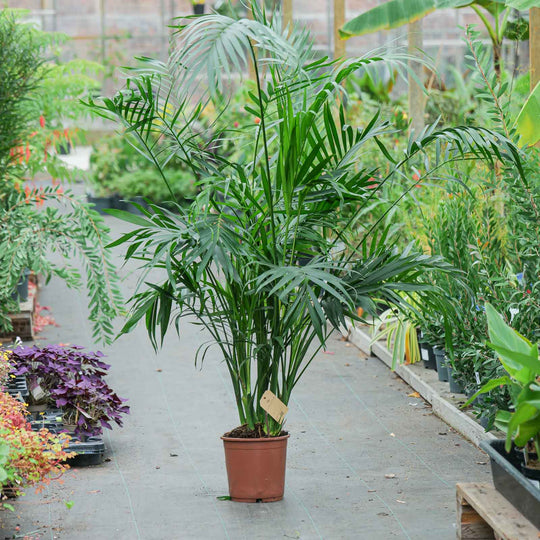
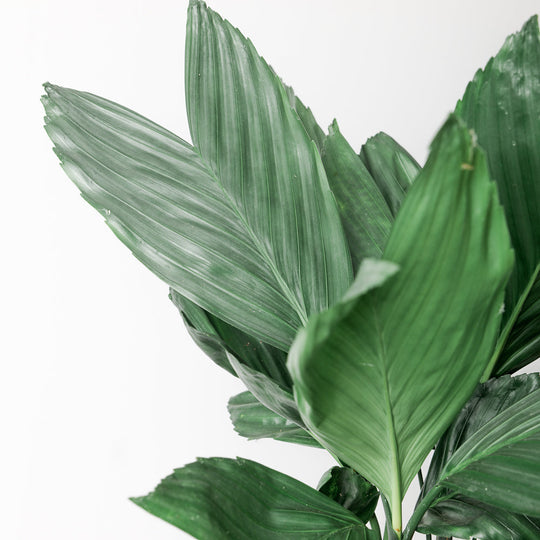
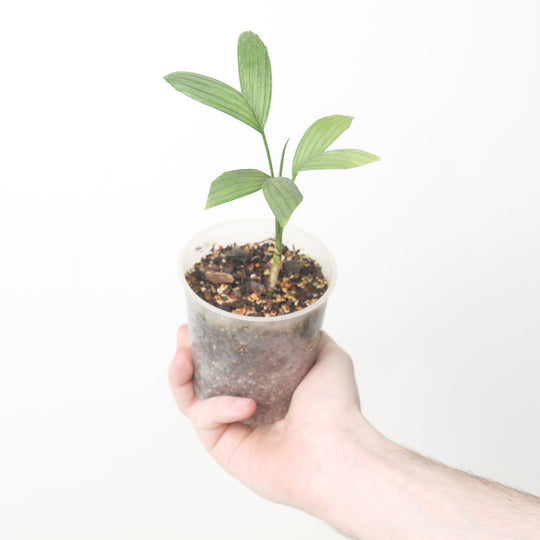
Chamaedorea elegans is the most widely grown species but the genus contains over 100 others. Chamaedorea seifrizii (bamboo palm) produces multiple slender stems and a more open, airy canopy than C. elegans. Chamaedorea metallica has unusual, undivided, metallic blue-green leaves - a striking collector's plant. Chamaedorea cataractarum (cat palm) produces dense, multi-stemmed clumps of arching fronds and is particularly effective as a floor plant in a bright room.
Solving common problems
Brown leaf tips are the most common complaint with parlour palms and are usually caused by fluoride in tap water, low humidity, or irregular watering. Switch to filtered water, use a pebble tray, and keep watering consistent. Spider mites thrive on palms in dry indoor conditions - check the undersides of fronds regularly and treat promptly with neem oil or insecticidal soap if found. Lower fronds naturally yellow and die as the plant ages - trim these cleanly at the base of the stem.