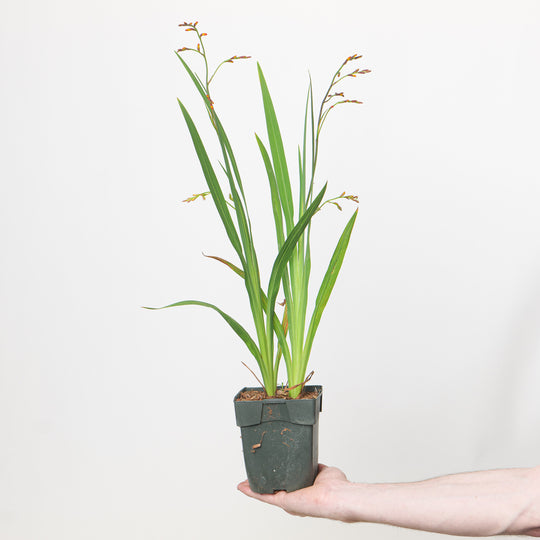
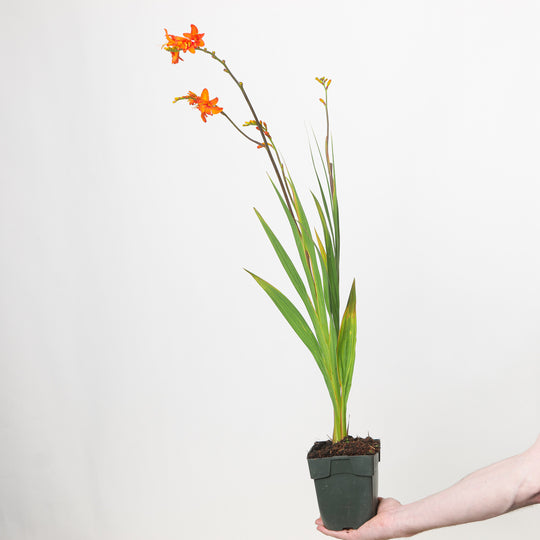
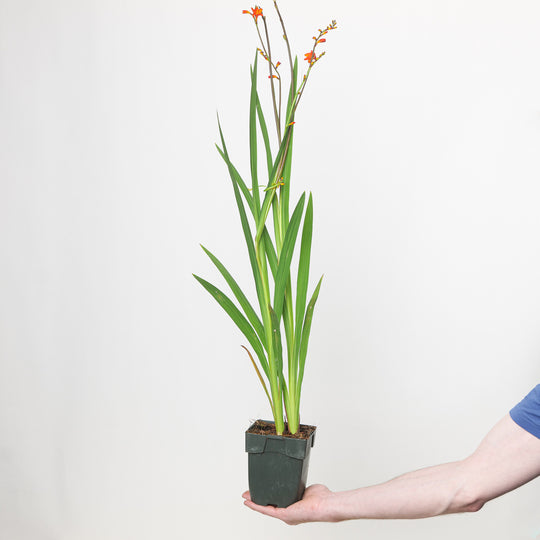
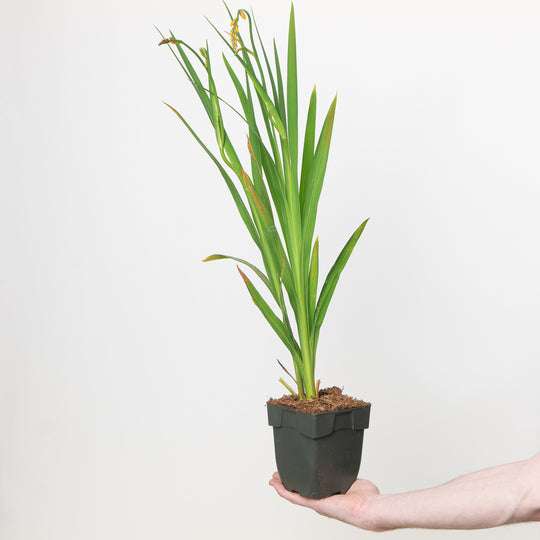
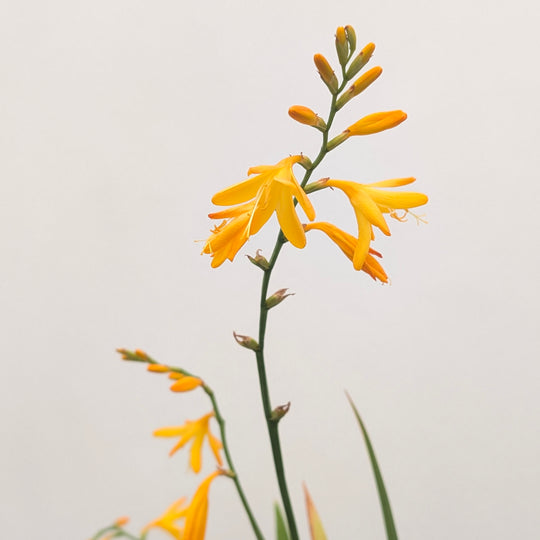
Crocosmia
Crocosmia brings late-summer fire to the border. Arching sprays of red, orange and yellow flowers dance above upright, sword-shaped leaves, just when the garden needs a lift.
5 products
RHS Chelsea 2026 Gold Medalists 🏅
RHS Chelsea 2026 Gold Medalists 🏅
7 Day Live Arrival Guarantee Read more →
7 Day Live Arrival Guarantee Read more →
Crocosmia brings late-summer fire to the border. Arching sprays of red, orange and yellow flowers dance above upright, sword-shaped leaves, just when the garden needs a lift.
5 products
Crocosmia, sometimes called montbretia, is one of the easiest ways to bring hot colour into the second half of summer. Wiry, arching stems carry rows of open, funnel-shaped flowers in blazing reds, oranges and yellows above fans of upright, sword-like foliage. The whole plant has a loose, informal grace, and the flowers are a favourite of bees and, in the case of the fiery reds, the odd passing hummingbird hawk-moth.
It is about as easy a perennial as you will find. Crocosmia grows from corms and spreads happily into generous clumps in sun or light shade, in any reasonable soil that does not sit waterlogged. Most are fully hardy and can stay in the ground over winter, especially with a mulch in colder gardens. Leave the seedheads standing for winter structure, and lift and divide congested clumps every few years to keep them flowering well.
All grown for UK gardens and sent out well rooted.
Most are fully hardy and can stay in the ground over winter, particularly the well-established named varieties. In colder gardens a mulch over the corms gives extra protection. Only a few of the largest-flowered kinds are a little more tender.
From mid to late summer into early autumn, giving a run of hot colour just as many earlier perennials are fading. It is one of the best plants for keeping a border lively late in the season.
The old wild montbretia can spread enthusiastically, but the named garden varieties sold here are far better behaved and form well-mannered clumps. Lifting and dividing every few years keeps them vigorous and in bounds.
Yes, the nectar-rich flowers are popular with bees and butterflies, and the tubular red kinds are visited by the hummingbird hawk-moth. Leaving the seedheads up also provides interest and some food into autumn.
Sign up and save
Get 10% off your first order and be first to hear about restocks and offers
Gifting has never been easier
Perfect if you're short on time or are unable to deliver your gift yourself. Enter your message and select when to send it.