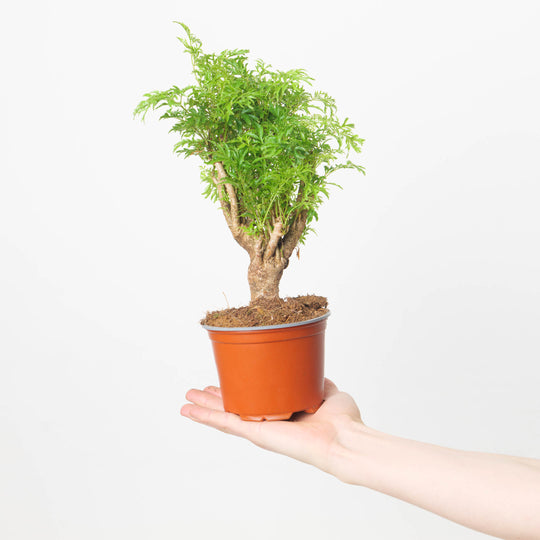
Aralia
Polyscias Care Guide

Polyscias is a genus of tropical shrubs and small trees in the Araliaceae family, the same family that includes Ivy and Schefflera. They are native across a huge area of the Old World tropics, from tropical Africa through South and Southeast Asia and into Australia and the Pacific Islands. Different species come from different parts of this range, but most are plants of warm, humid environments where they grow as evergreen shrubs or trees.
You will usually see Polyscias sold as Aralia, with popular houseplant varieties including Polyscias scutellaria 'Fabian', P. fruticosa (Ming Aralia), P. balfouriana and P. guilfoylei. Their natural origins explain much of their reputation indoors. They prefer warmth, steady moisture, good light and as little sudden change as possible. They are not particularly difficult plants, but they can be quick to drop leaves when their conditions change.
Light Requirements for Polyscias
Ideal light bright, indirect light with some gentle direct morning or evening sun.
An east-facing window is a good position for most Polyscias. They can manage slightly lower light, but growth will slow and older leaves may gradually drop. This is particularly common through a British winter when daylight levels are much lower.
If your plant is more than around 1 to 1.5 metres from a window, consider moving it closer between October and March or using a grow light. Avoid placing it immediately against a hot south-facing window in summer, as strong midday sun can scorch the foliage.
Variegated forms generally need more light than green varieties to maintain their colouring. If a variegated plant starts producing increasingly green leaves, move it somewhere brighter.
Signs of too much light include pale or bleached patches, scorched leaf edges and crispy foliage.
Signs of too little light include slow or stalled growth, long gaps between leaves and leaf drop that starts with the older lower foliage.
How Often to Water Polyscias
The rule is to water when the top few centimetres of compost have dried, then allow excess water to drain away fully.
There is no useful calendar schedule for watering an Aralia because the rate at which the compost dries depends on the size of the pot, the plant, light levels and temperature. In a warm, bright room it may need watering weekly during the growing season. In a cooler or darker spot, it may take considerably longer.
The aim is to avoid both extremes. Polyscias does not appreciate being left bone dry for long periods, but constantly wet compost can quickly lead to root problems.
When you water, soak the compost thoroughly until water runs from the drainage holes. Empty any water left in the outer pot or saucer rather than allowing the roots to sit in it.
If your tap water is particularly hard, rainwater or filtered water can be useful, especially if you notice brown leaf tips or a white mineral build-up on the compost.
Signs of overwatering: yellowing leaves, persistent wet compost, soft roots, stem damage at soil level and leaf drop.
Signs of underwatering: suddenly dropping leaves, dry or curling foliage and compost that has pulled away from the sides of the pot.
Humidity and Temperature
Because Polyscias comes from warm tropical and subtropical regions, it prefers a stable indoor environment rather than large swings in temperature. Aim for around 18 to 24°C and avoid temperatures below 15°C where possible.
Cold draughts are a common cause of sudden leaf drop. Keep your plant away from frequently opened exterior doors, cold windows and strong draughts. A plant can also lose leaves after being moved from one room to another or after coming home from a nursery, so some leaf drop after a change of environment is not unusual. Around 50% or above is a good target.
Most Polyscias can cope with average household humidity, but they will generally be happier when the air is not extremely dry. This is particularly relevant during winter when central heating can dry the air considerably.
Grouping plants together or using a humidifier can help. We do not recommend relying on misting to raise humidity, as any increase is very short-lived.
Soil and Potting Mix
Choose a loose, free-draining houseplant mix that holds some moisture without becoming heavy and compacted.
Our Jungle Mix works well for Polyscias, providing a balance between moisture retention and drainage. Simply Houseplant is another good option for smaller plants.
Avoid garden soil or dense composts that stay wet around the roots for long periods. Good drainage is particularly important if your home is cool or the plant receives lower light during winter.
Repotting
Polyscias are relatively slow-growing, so they do not need repotting every year.
Repot in spring when the plant is actively growing and only move it into a slightly larger pot. Look for roots circling around the inside of the pot, roots growing from the drainage holes or compost that has become difficult to water evenly.
Avoid moving a small rootball into a much larger pot. Extra compost holds extra moisture and can take a long time to dry, increasing the risk of root problems.
When repotting, keep the plant at the same depth as before and use a pot with drainage holes. Water it in thoroughly and allow the excess to drain away.
Pruning and Shape
One of the reasons Polyscias makes such a good architectural houseplant is its ability to be shaped through pruning. Commercial plants are often trained into standards or compact tree-like forms.
Pruning is best carried out during spring and early summer when the plant has plenty of light and warmth for new growth.
If your plant has become leggy, you can cut back individual stems to encourage new shoots lower down. Removing the tips of long stems can also encourage a bushier shape.
Always use clean, sharp secateurs and make your cut just above a healthy node or branching point.
Do not remove too much foliage at once. If your Polyscias is already stressed or dropping leaves, it is usually better to stabilise its growing conditions first.
Propagation
Polyscias can be propagated from stem cuttings, although it is not the quickest houseplant to root.
Take cuttings in late spring or early summer when the plant is actively growing.
-
Take a healthy stem cutting with several nodes.
-
Remove the lower leaves, leaving a small amount of foliage at the top.
-
Place the cutting into a moist, free-draining propagation mix.
-
Keep it warm and humid in bright, indirect light.
-
Keep the compost lightly moist but never waterlogged.
-
Be patient. Root development can take several weeks.
A clear propagation cover can help prevent the cutting from drying out while it develops roots. Avoid pulling on the cutting to check for roots, as this can damage newly developing roots.
Air layering can also be used with larger, woody plants where taking a small cutting is less practical.
Common Polyscias Problems
Leaf drop
This is probably the most common complaint with Aralias. A sudden change in temperature, cold draught, moving the plant, insufficient light, inconsistent watering or very dry conditions can all contribute. It is particularly common after a plant has been moved or during the darker months of the year.
Try to identify what changed before doing anything drastic. If the plant is otherwise healthy, avoid immediately repotting it, pruning it heavily or changing several care conditions at once.
Black or brown leaf tips
Dry air, inconsistent watering and mineral build-up can all contribute. Check the compost and growing conditions first. If you live in a hard-water area, using rainwater or filtered water for a period may help.
Sticky residue on the leaves
Check the stems and undersides of the leaves for scale insects or mealybugs. Both pests can produce honeydew, which leaves a sticky coating on the foliage. See our scale guide and mealybug guide.
Spider mites
These pests are more common when plants are kept in warm, dry conditions. Look for fine speckling on the leaves, tiny insects underneath the foliage and, in more advanced cases, fine webbing. See our spider mite guide.
Sudden collapse from the base
This can indicate serious root or stem rot, usually associated with compost remaining wet for too long. Check the roots and remove any that are black or mushy before repotting into fresh, free-draining compost.
Ready to find your next Polyscias?
Whether you love the rounded leaves of Polyscias scutellaria 'Fabian', the finely divided foliage of Ming Aralia or something a little more unusual, there is plenty of variety within the Polyscias genus.