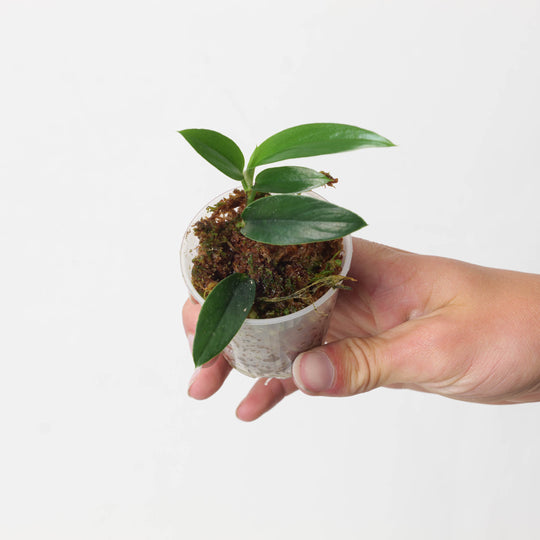
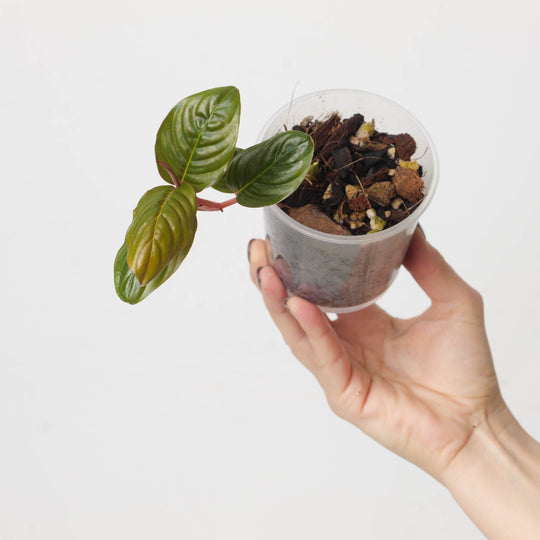
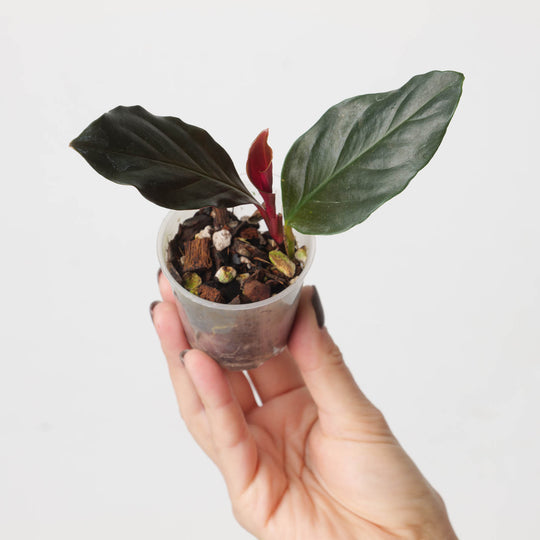
Rhodospatha
Rhodospatha Care Guide

If you like climbing houseplants with glossy foliage and a slightly unusual edge, Rhodospatha is well worth getting to know. This tropical aroid comes from the rainforests of Central and South America, where species grow as climbing plants among the trees.
Rhodospatha belongs to the Araceae family, the same family as Monstera, Philodendron and Anthurium. In its natural habitat, it often begins life on or close to the forest floor before climbing upwards towards the canopy. This makes it a hemiepiphyte, which simply means a plant that can spend part of its life growing on the ground and part growing up in the trees.
It might look like a plant reserved for experienced collectors, but Rhodospatha is actually quite straightforward once you understand what it needs. If you have grown a climbing Philodendron, Monstera or Rhaphidophora before, you will already be familiar with much of its care.
Here is everything you need to know about growing Rhodospatha at home.
How Much Light Does Rhodospatha Need?
Rhodospatha does best in bright, indirect light. A position close to an east-facing window is ideal, while a spot around one to two metres back from a south or west-facing window can also work well.
The brighter the light, the more energy the plant has for new growth. Good light is particularly important if you want your Rhodospatha to produce larger, more mature leaves as it climbs.
It can cope with lower light, but growth will usually be slower and the gaps between leaves may become larger. New leaves can also remain smaller than they would in brighter conditions.
On the other hand, avoid strong direct midday sun. Too much intense sunlight can bleach the leaves and leave behind pale, brown or crispy patches.
If you are unsure, bright light with no harsh midday sun is a good place to start.
How Often Should You Water Rhodospatha?
Rhodospatha likes its potting mix to stay slightly moist but never soggy. Rather than watering on a fixed schedule, check the mix first. Once the top 3 to 5cm feels dry, give the plant a thorough watering until excess water runs freely from the drainage holes.
During the brighter months of spring and summer, you may find yourself watering roughly every 5 to 8 days. In winter, when growth naturally slows and there is less light, this can stretch to every 10 to 14 days or longer.
These timings are only a guide. The temperature, light levels, pot size and type of potting mix will all affect how quickly your plant dries out.
The important thing is to avoid letting the roots sit in water for long periods.
If you are overwatering, you may notice yellowing lower leaves, a consistently wet potting mix or a soft, unpleasant smell from the soil. If the problem is severe, the roots can become brown and mushy.
If you are underwatering, the leaves may droop or curl and the edges can become dry and crispy. The potting mix may also pull away from the sides of the pot.
A missed watering is usually much easier for Rhodospatha to recover from than roots that have been sitting in soggy soil, so always check the mix before reaching for the watering can.
What Soil Does Rhodospatha Need?
A good potting mix makes a big difference with Rhodospatha. A chunky mix containing ingredients such as bark and perlite works particularly well. We use our Monstera & Philodendron Premium Potting Mix, which is designed to provide the drainage and structure climbing aroids need.

Rhodospatha can also be grown in very chunky mixes, semi-hydroponic setups and other airy growing systems. Whatever you choose, good drainage and plenty of air around the roots are more important than following one particular recipe.
Does Rhodospatha Need a Moss Pole?
Yes, particularly if you want your plant to develop larger, more mature foliage.
In the wild, Rhodospatha climbs through surrounding vegetation and uses its aerial roots to help anchor itself. A support gives it something similar to climb at home.
A moss pole, wooden support or other sturdy climbing structure can all work. If you use a moss pole, keeping the surface slightly moist can encourage the aerial roots to grow into it.
As the plant climbs, you may notice that its leaves become larger and the overall shape of the plant changes. This is part of the natural transition from juvenile to more mature growth.
You can find suitable moss poles and plant supports if your Rhodospatha is ready to start climbing.
When Should I Repot Rhodospatha?
There is no need to repot Rhodospatha every year simply because the calendar says so. Instead, look at the plant and its roots.
It is usually time to repot when the roots have filled much of the existing pot, are circling around the bottom or are starting to emerge from the drainage holes. If the potting mix has broken down and become compacted, that is another good reason to give the plant fresh mix.
How Do You Propagate Rhodospatha?
Rhodospatha can be propagated from stem cuttings, making it possible to grow new plants from a healthy mother plant.
The most important thing to remember is that your cutting needs a node. A node is the point on the stem where a leaf, aerial root or new growth can emerge.
A leaf on its own will not grow into a new Rhodospatha.
To propagate from a stem cutting:
-
Choose a healthy section of stem with at least one visible node.
-
Use clean, sharp scissors or secateurs to make a cut just below the node.
-
Place the cutting into water, damp sphagnum moss or a suitable chunky potting mix.
-
Keep it somewhere warm with bright, indirect light.
-
Once the cutting has developed a good root system, it can be potted into its own growing mix.
Sphagnum moss is a popular choice because it provides moisture while still allowing plenty of air around developing roots.
Warm temperatures generally help cuttings root more quickly, so propagation is often much faster during spring and summer than it is in the colder, darker months.
Common Rhodospatha Problems
Rhodospatha is generally quite forgiving once its basic needs are met. Most problems come down to watering, light or a lack of support.
Why Are My Rhodospatha's Leaves Turning Yellow?
Yellow leaves are often linked to overwatering, particularly if several leaves are affected at once and the potting mix stays wet for a long time.
Check the roots and the condition of the potting mix. If the roots are healthy and the plant is otherwise growing well, one older yellowing leaf is not necessarily a cause for concern. Older leaves naturally yellow and drop as the plant produces new growth.
Why Are the Leaves Staying Small?
If your Rhodospatha is producing small leaves despite being healthy, look at its light levels and climbing support.
Low light can slow growth and prevent the plant from producing larger foliage. A plant that has nothing to climb may also struggle to transition into more mature growth.
Try moving it somewhere brighter and give it a sturdy support to grow against.
Why Are the Leaf Edges Brown and Crispy?
Brown, crispy edges can be caused by underwatering, very dry conditions or a combination of the two.
Instead of regularly misting the leaves, focus on keeping the plant's growing conditions consistent. Grouping tropical plants together can help create a slightly more humid local environment, while a humidifier can be useful if your home is particularly dry.
A bathroom or kitchen can also be a good location if it receives enough natural light.
Does Rhodospatha Get Pests?
Like many aroids, Rhodospatha can be affected by common houseplant pests such as thrips and spider mites.
Check the undersides of leaves and around new growth regularly, particularly if your plant is growing in a warm, dry room. Catching an infestation early makes it much easier to deal with.
You can find our range of pest control products if you need a helping hand.
Is Rhodospatha Beginner Friendly?
Yes, provided you get the basics right.
Rhodospatha is not the most demanding aroid in your collection, but it does have a few preferences that are worth understanding. Give it bright, indirect light, an airy potting mix, sensible watering and something to climb, and it should have everything it needs to grow well.
The support is particularly important if you want to see the larger foliage that makes mature Rhodospatha so appealing. It is a climber by nature, after all, so giving it somewhere to go is one of the simplest ways to encourage it to do what it does best.
Once you understand that, Rhodospatha becomes much less mysterious and much more enjoyable to grow.