


Packaged with Care
Every order is hand-packed in eco-friendly, protective packaging - refined through thousands of deliveries to ensure your plant arrives healthy, hydrated, and looking its best.
Backed by our Live Arrival Guarantee.


FREE tracked delivery on orders over £60
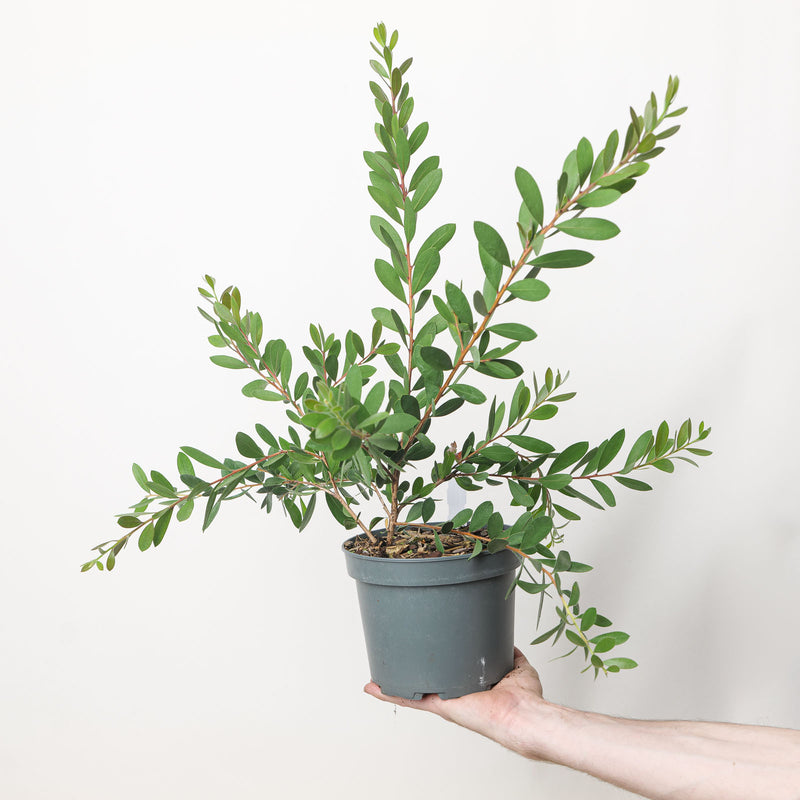
Callistemon Hot Pink ('Kkho1') is a compact bottlebrush with flower spikes in a vivid magenta pink rather than the usual red, each brush flecked with gold from the pollen-tipped stamens. The new shoots emerge red and mature to narrow, grey-green, aromatic leaves, so the plant has colour even between flushes. At around 1.5m it fits a small garden or a large pot where a full-sized bottlebrush would not.
Hardiness and seasons. Rated H3 by the RHS, so hardy to around -5C and happiest in a sheltered, sunny spot or a mild or coastal garden. Elsewhere grow it in a pot and give it some protection in hard frost. It is evergreen. The main flush of brushes comes in early summer, with further flowers into autumn if the spent spikes are trimmed off. Bees and butterflies work the flowers hard.
How and where to grow. Full sun against a warm south or west facing wall, out of cold winds, in a moist but well-drained soil that is neutral to acid; it is not happy on shallow chalk. Sand, loam and improved clay all suit it. Expect 1 to 1.5m tall and around 1m wide. In a container use an ericaceous or loam-based compost and water freely in summer.
Using it in the garden. A striking front-of-border shrub for an exotic or Mediterranean planting, partnering well with grasses, phormiums and silver-leaved shrubs. It is excellent in a large pot on a sunny terrace, and the flowers make it one of the best pollinator shrubs for a warm corner.
All plants are covered by our 7-day live arrival guarantee. We pack every order in protective, sustainable packaging designed to keep your plants safe in transit, and every plant is checked before it ships. On the rare occasion something is not right on arrival, we will make it good, provided the plant is still in its original nursery pot.
Ordering in autumn or winter? Many hardy exotics arrive dormant or cut back right now. This is normal, and the best time to plant.
Seasonal by nature: what to expect
Not sure what to expect from yours? Dormant, cut-back or weather-marked plants are all perfectly healthy and normal. Read what to expect through the seasons
Based on your basket total, confirmed at checkout. Free delivery: Economy over £60 · Standard over £100 · Express over £150.
Order by 1pm Monday to Friday for same day dispatch. Every plant travels in protective, plant-safe packaging with tracked delivery.
Changed your mind? See our Return Policy.
Arrived just like the photos - maybe even fuller. Healthy, well-acclimated, and straight into my collection with no issues.
Flawless leaves, stunning variegation, and clearly cared for by experts. It’s already a talking point in my home office.
Hard to find rare plants that are pet-safe. Ours arrived in perfect condition and looks amazing without any worry.
Callistemon Hot Pink ('Kkho1') needs full sun and moist but well-drained soil. It is half-hardy to around −5°C and needs protection from hard frost.
Semi-Hardy (H3): down to around −5°C. Half-hardy; reliable in mild or coastal gardens, protect in colder areas.
H3, hardy to about -5C. Grow in a sheltered, sunny spot; in colder gardens keep it in a pot and fleece or move under cover in hard frost.
Full sun, south or west facing, out of cold winds.
Moist but well-drained, neutral to acid soil; sand, loam or improved clay. Avoid shallow chalk. Ericaceous or loam-based compost in pots.
Water regularly in the first summer and whenever the top of the compost dries in pots. Established plants in the ground tolerate short dry spells but flower best with steady moisture.
Bushy
Early summer to autumn · Pink
Evergreen
Trim off the spent flower spikes just behind the brush as they fade to encourage a second flush and keep the plant bushy. Avoid cutting into old bare wood.
Not known to be toxic to people or pets.
Garden hybrid raised from Australian species
Myrtaceae
Callistemon Hot Pink ('Kkho1')
We could not find a close match for that. Ask us directly and a real plant person will reply.
Contact usEvery order is hand-packed in eco-friendly, protective packaging - refined through thousands of deliveries to ensure your plant arrives healthy, hydrated, and looking its best.
Backed by our Live Arrival Guarantee.

From rare collector’s pieces to easy-care favourites, our plants arrive fully potted and ready to enjoy. Add a personalised note at checkout for a thoughtful finishing touch.
Delivered fresh, beautiful, and gift-ready.

All plants are ethically sourced from trusted growers, never wild-collected. Every order ships carbon-neutral in minimal-waste packaging.
Good for your home - and the planet.
