Sea Holly (Eryngium)
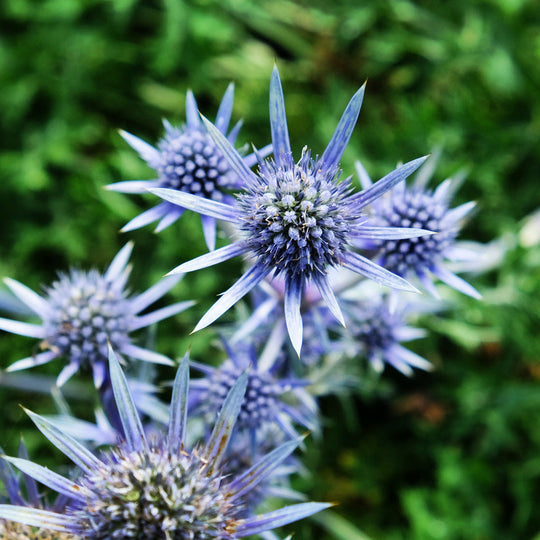
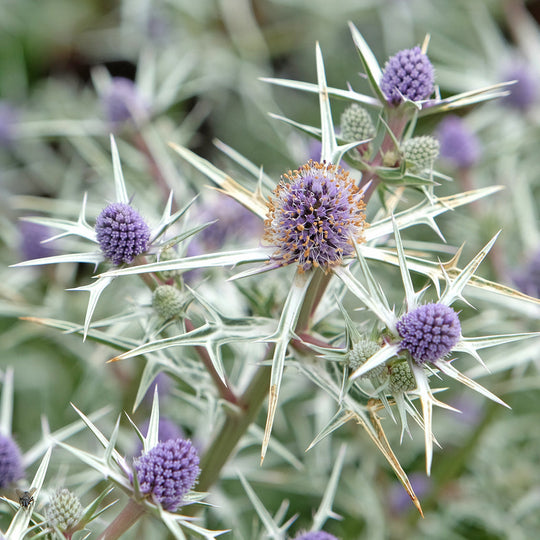
Sea holly is one of the most striking perennials you can grow. Metallic, thistle-like flowers in steely blues and silvers give a border a spiky, architectural edge, and the bees adore them.
3 products
RHS Chelsea 2026 Gold Medalists 🏅
RHS Chelsea 2026 Gold Medalists 🏅
7 Day Live Arrival Guarantee Read more →
7 Day Live Arrival Guarantee Read more →
Sea holly is one of the most striking perennials you can grow. Metallic, thistle-like flowers in steely blues and silvers give a border a spiky, architectural edge, and the bees adore them.
3 products
Eryngium, or sea holly, looks like nothing else in the border. Its branching stems carry cones of tiny flowers surrounded by a spiky ruff of bracts, often in remarkable metallic blues and silvers that seem almost artificial until you see them in the flesh. The effect is architectural and slightly wild, and it holds long after flowering as the seedheads dry, giving structure well into winter.
As the name suggests, sea holly is built for tough, sunny, dry conditions. It thrives in poor, free-draining or gravelly soil in full sun and resents rich ground or wet feet, which makes it a natural for a gravel garden, coastal plot or hot border. It is also a magnet for bees and butterflies. Leave it undisturbed once planted, as it forms a deep taproot and dislikes being moved.
All grown for UK gardens and sent out well rooted.
In full sun on poor, free-draining or gravelly soil. It thrives in the tough, dry conditions that defeat thirstier plants, which makes it ideal for gravel gardens, coastal plots and hot borders. It dislikes rich, wet ground.
Excellent. The nectar-rich flowerheads are hugely popular with bees, butterflies and hoverflies through summer, so it is one of the best architectural plants for a wildlife garden.
Usually not. Its stiff, wiry stems hold themselves up well, especially in the lean, sunny conditions it prefers. Overly rich soil produces softer growth that may flop, which is another reason to keep it on poor ground.
Yes, it is a classic dried flower. Cut the stems as the flowers colour up fully and hang them upside down in a dry, airy spot. The metallic blue holds well for months.
Sign up and save
Get 10% off your first order and be first to hear about restocks and offers
Gifting has never been easier
Perfect if you're short on time or are unable to deliver your gift yourself. Enter your message and select when to send it.