What Makes a Plant Gothic?
A gothic plant is any plant with dark, dramatic or slightly sinister looks. That usually means foliage in deep purple, burgundy, charcoal or near-black, but it also covers unusual forms such as living stones, carnivorous traps and flowers shaped like bats. The dark colour comes from high levels of anthocyanin pigments, which give leaves like those of ZZ Raven and Philodendron Black Cardinal their glossy, almost black finish. Set against pale walls or paired with brass and black planters, gothic plants make a bold statement in a way that green foliage alone cannot.
Dark Foliage Houseplants
For an easy start, the ZZ Raven and Ficus elastica Abidjan both offer deep, glossy leaves and tolerate a range of conditions. Tradescantia Purple Heart and Gynura Purple Passion add rich purple colour and grow quickly. For dark trailing plants, the Scindapsus range includes Black Mamba and Scindapsus treubii Dark, both of which look superb cascading from a high shelf.
Black Anthurium and Alocasia for Collectors
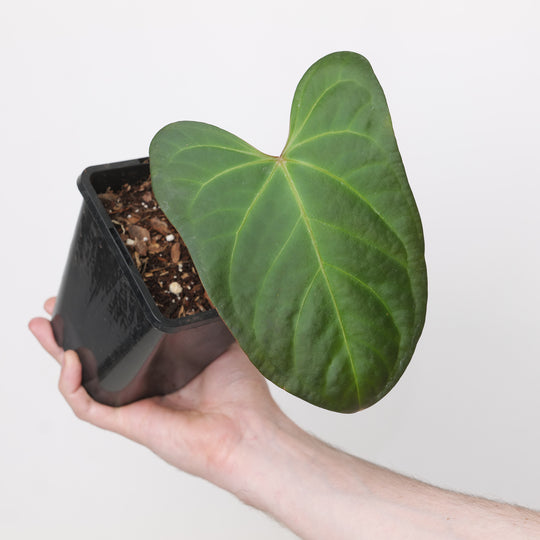
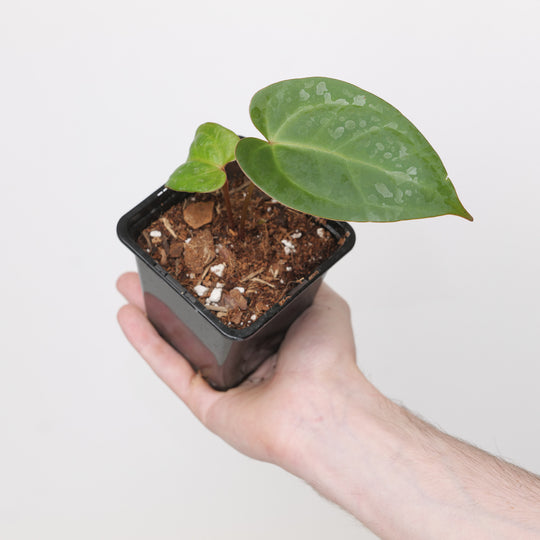
Some of the most sought-after gothic plants are aroids. Velvet-leaved Anthuriums such as Anthurium Black Magic, Dark Mama and the Ace of Spades and Dark Phoenix lines in our Anthurium Hybrids collection produce leaves so dark they absorb the light. Alocasia Black Velvet is a compact favourite with silver veins on near-black leaves, while Colocasia Black Magic offers huge, smoky purple leaves. Browse our full Alocasia range for more.
Living Stones, Bat Flowers and Other Oddities
Lithops, also called living stones, look more like pebbles than plants and suit a sunny windowsill. The Black Bat Flower produces near-black blooms with long, whisker-like filaments, and the Dracula orchid earns its name from its unusual flowers. Ludisia discolor Black, a jewel orchid, has velvety dark leaves lined with fine pink veins. For something with a bite, our carnivorous plants include the Venus Fly Trap and Nepenthes Bloody Mary.
Gothic Plants for the Garden
The gothic look works outdoors too. Black Mondo Grass forms neat clumps of jet-black leaves, Sambucus Black Lace has finely cut purple-black foliage with pink flowers, and Aeonium Schwarzkopf makes a glossy black rosette for summer patios. Find more outdoor plants in our Hardy Exotics range.
How to Care for Dark-Leaved Plants
Dark leaves contain more pigment and often less chlorophyll per leaf, so most gothic houseplants need bright, indirect light to hold their colour. In low light, purple and black foliage can fade towards green. Avoid harsh, direct summer sun through south-facing glass, which can scorch velvety leaves. Water when the top 2 to 3 cm of compost feels dry, and feed every two to four weeks with a balanced liquid fertiliser in spring and summer. Succulents such as Lithops and Aeonium need much less water and a very free-draining mix.