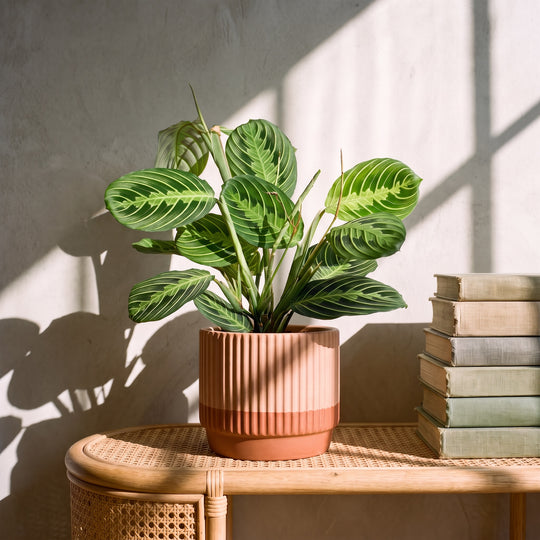
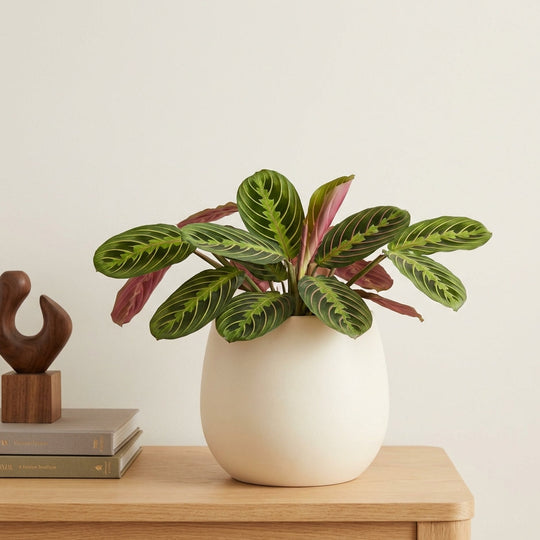
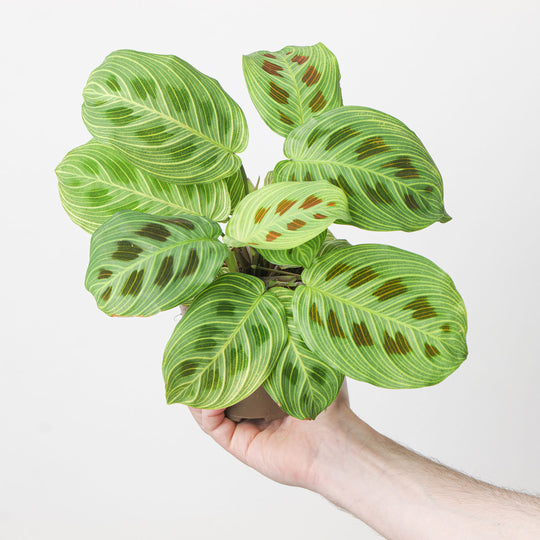
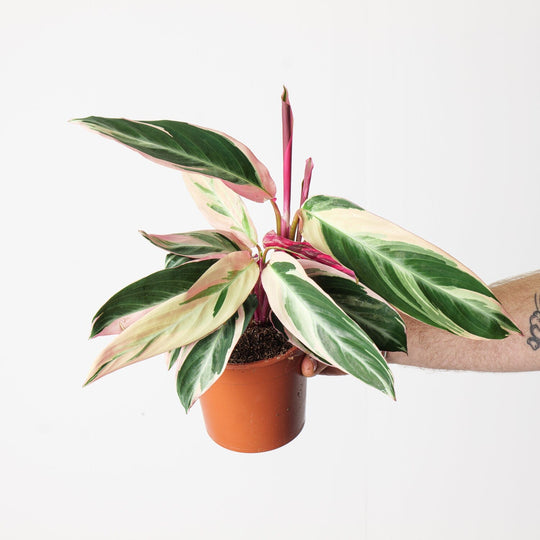
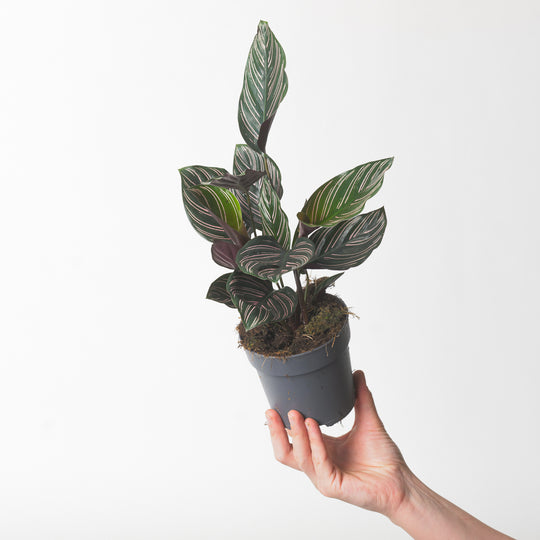
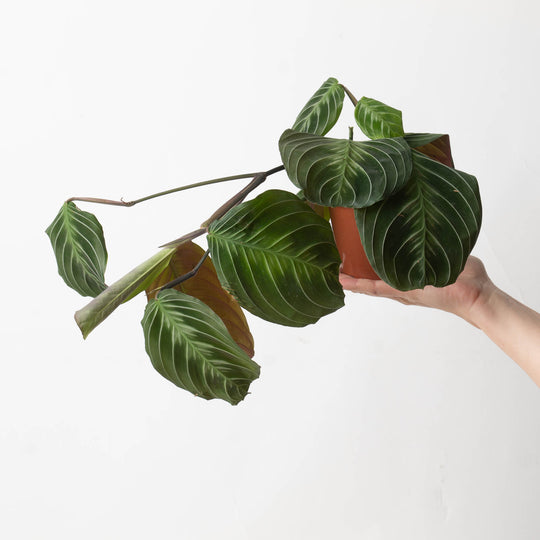
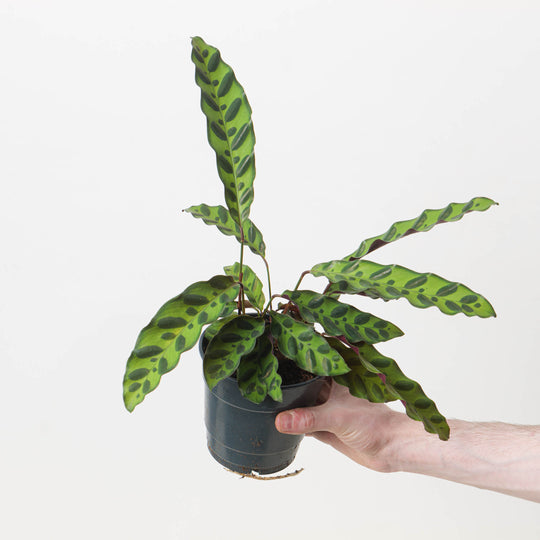
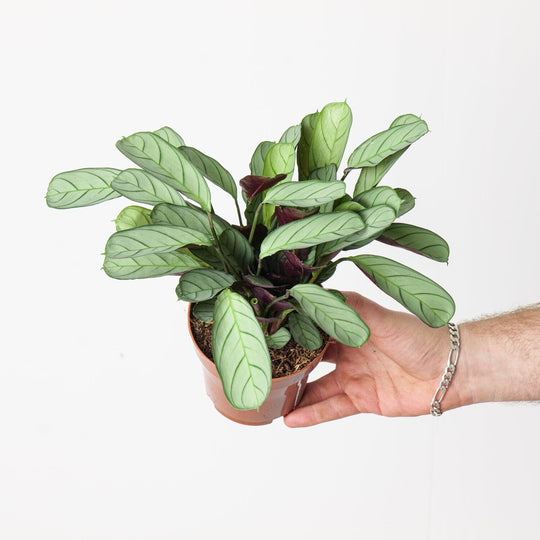
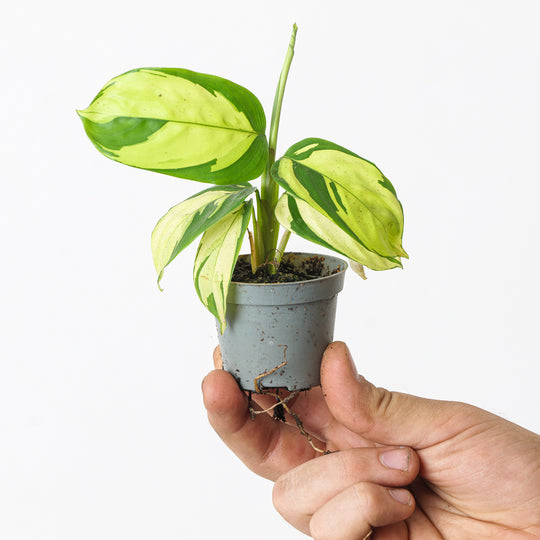
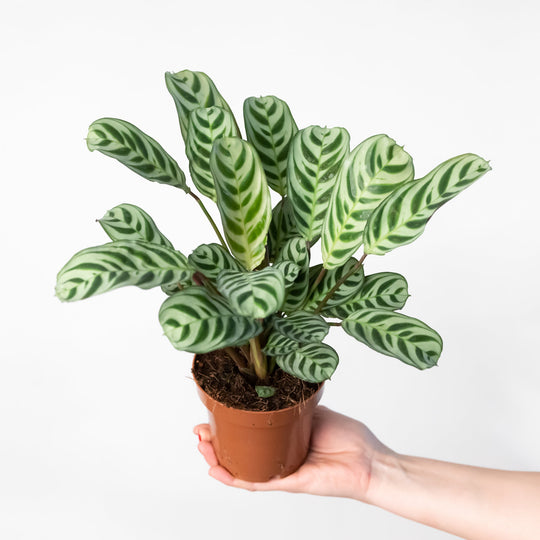
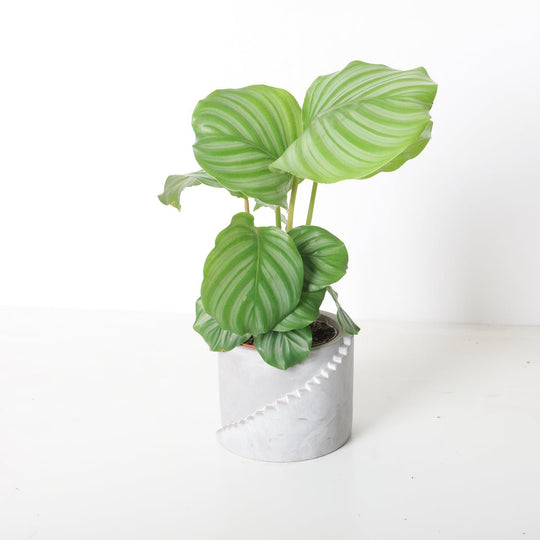
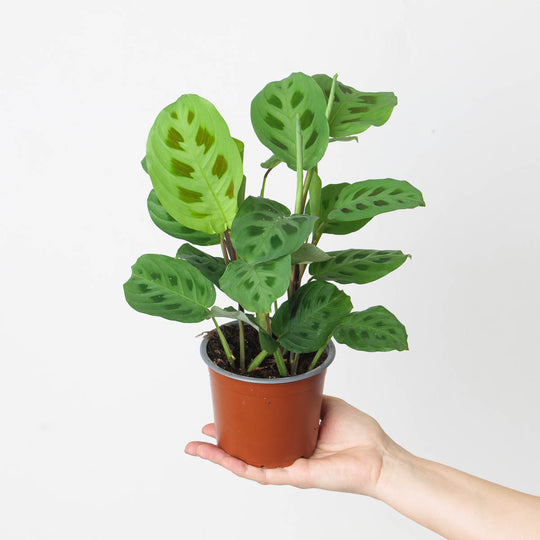
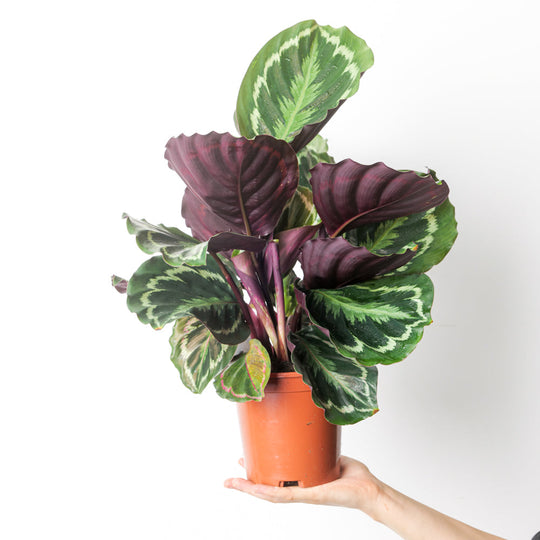
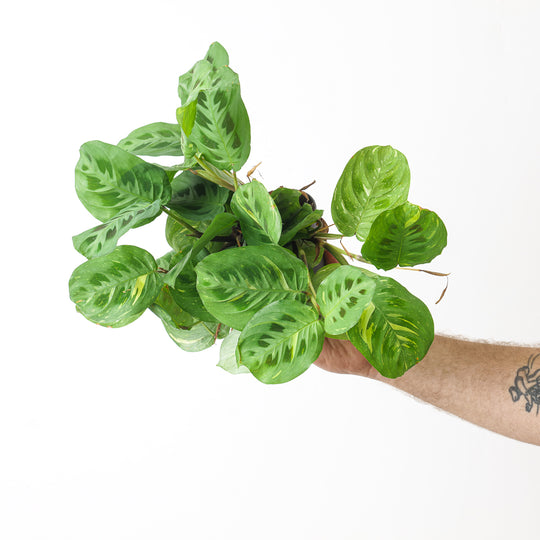
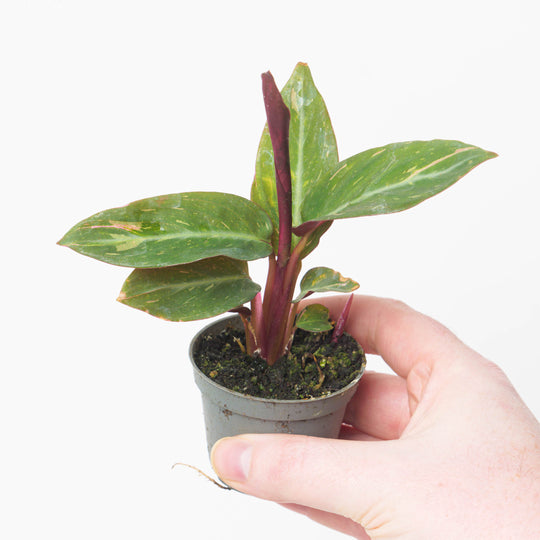
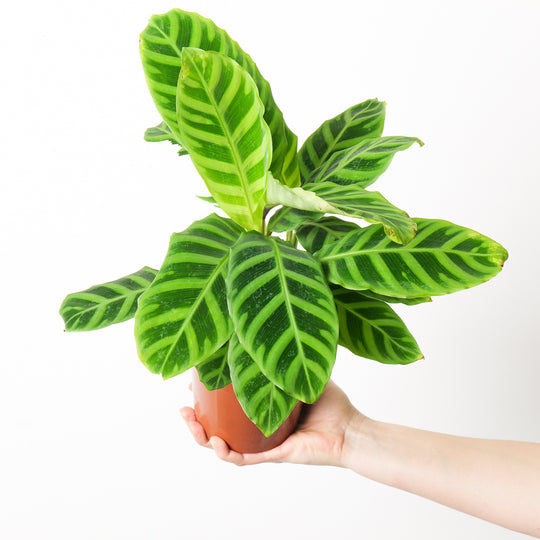
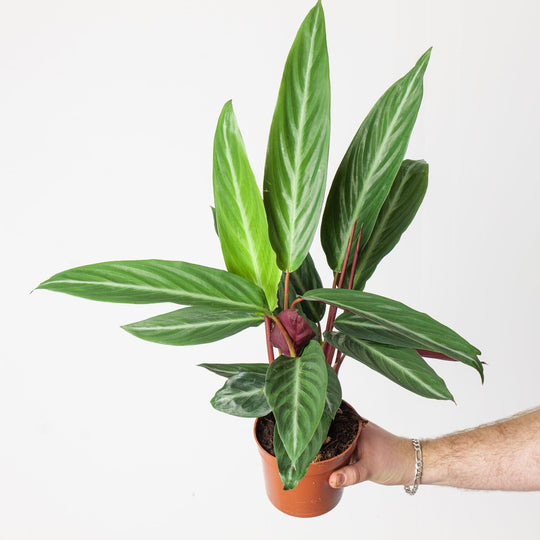
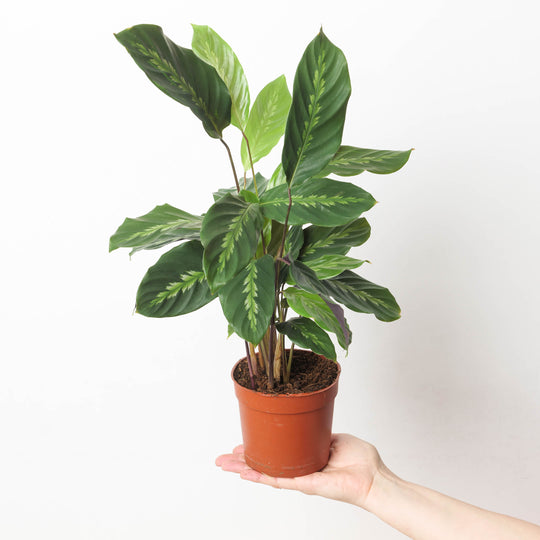
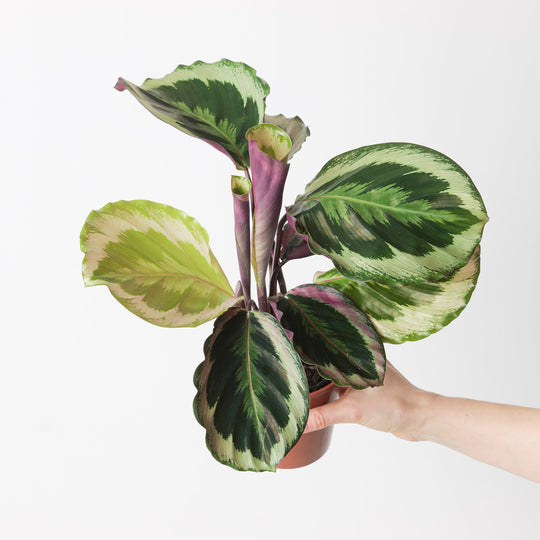
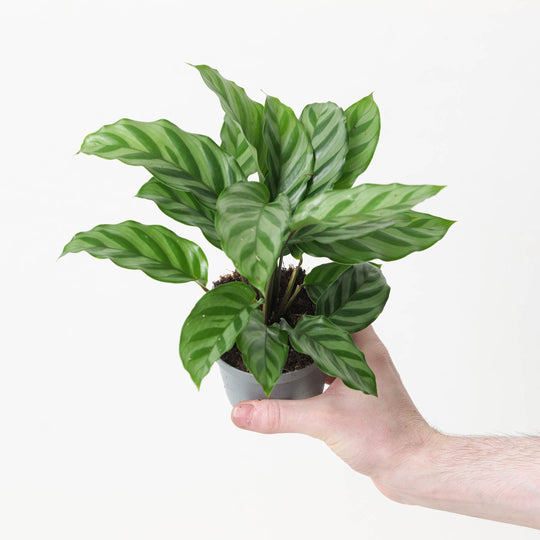
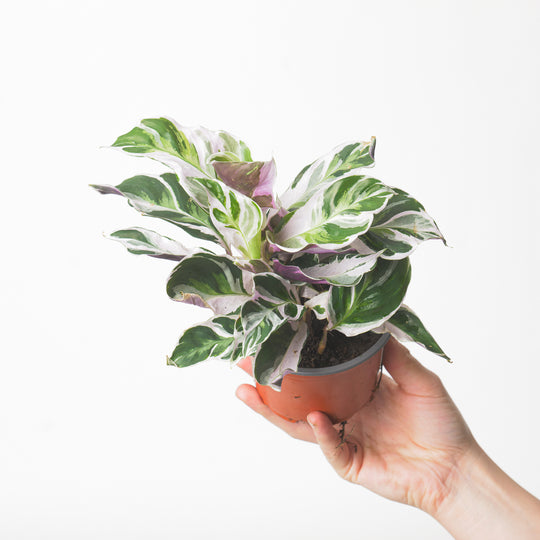
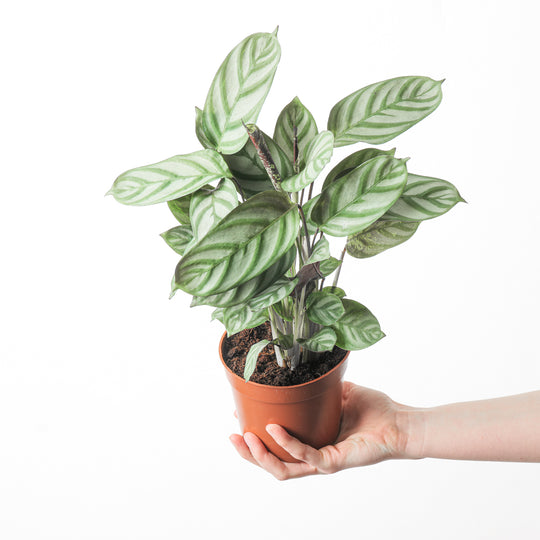
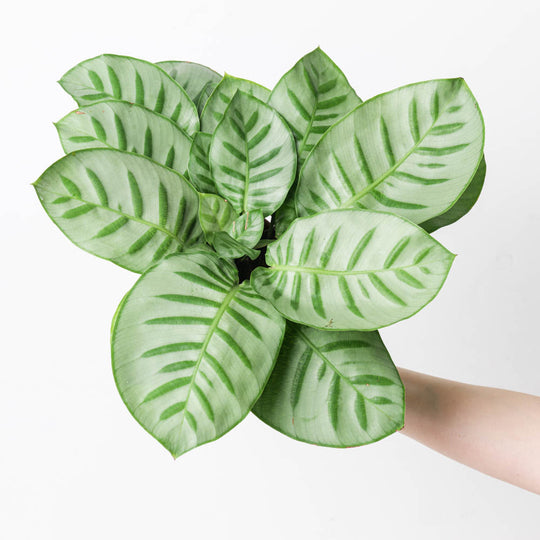
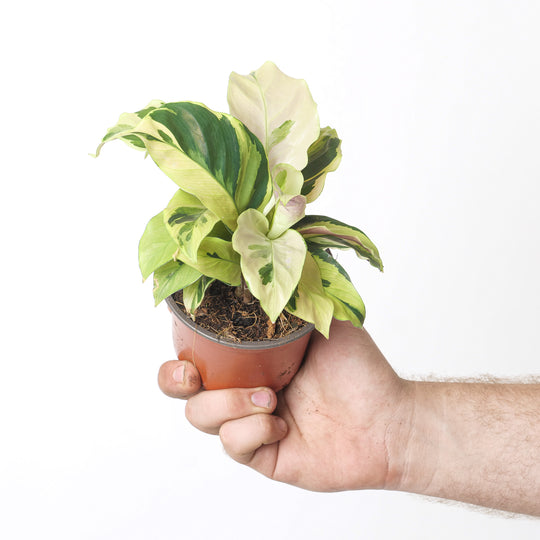
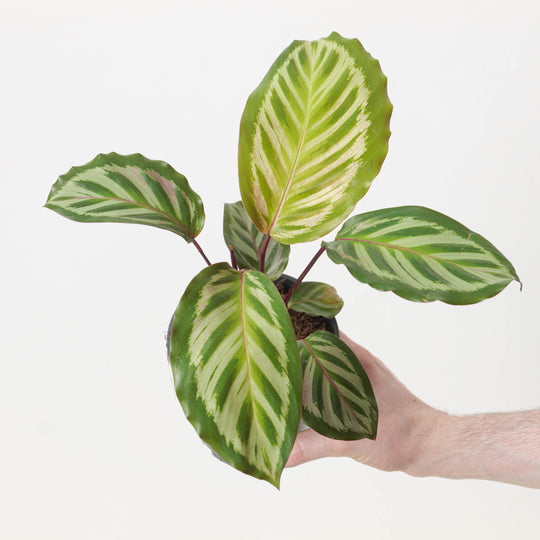
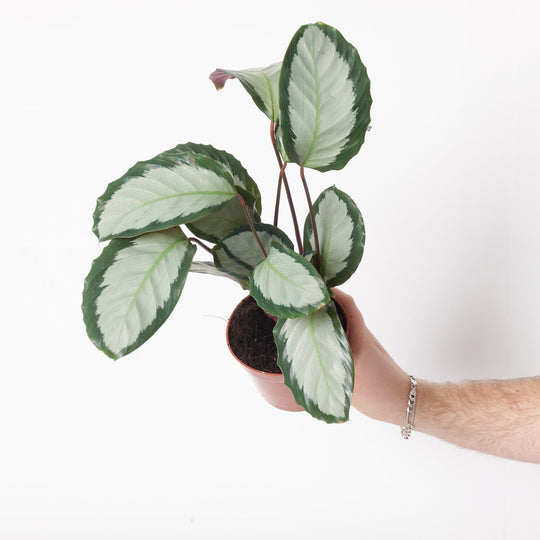
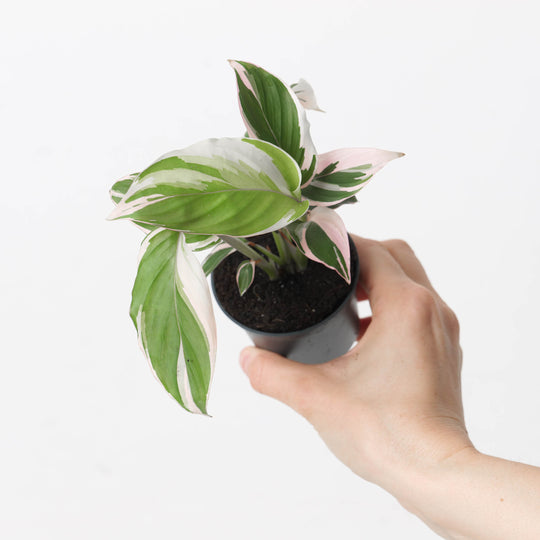
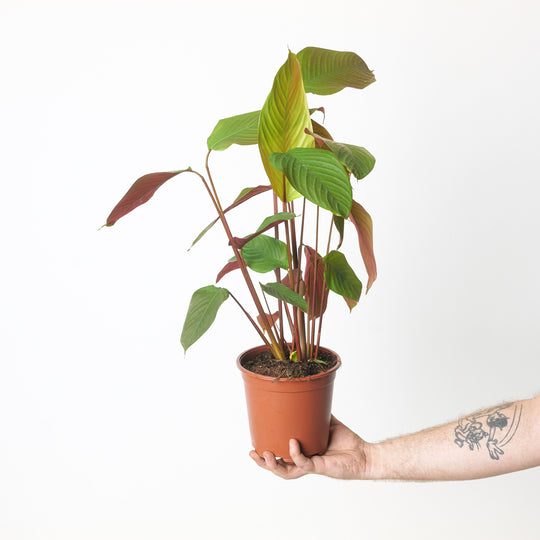
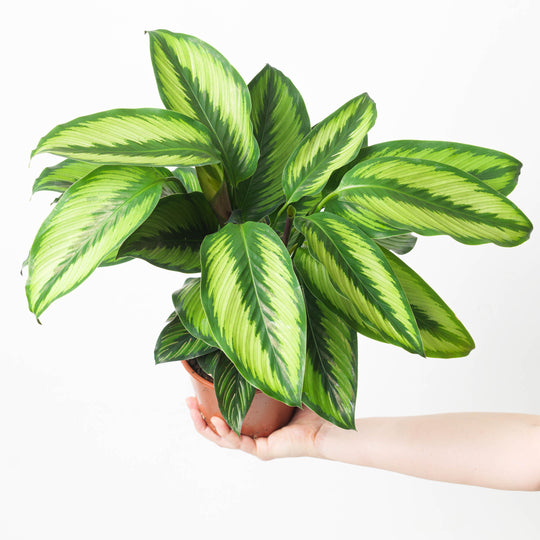
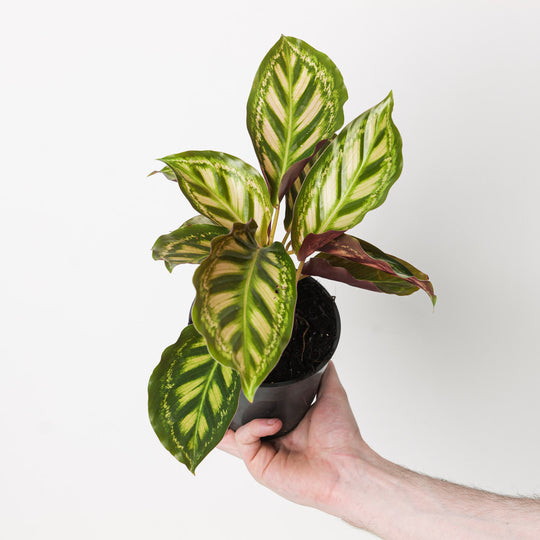
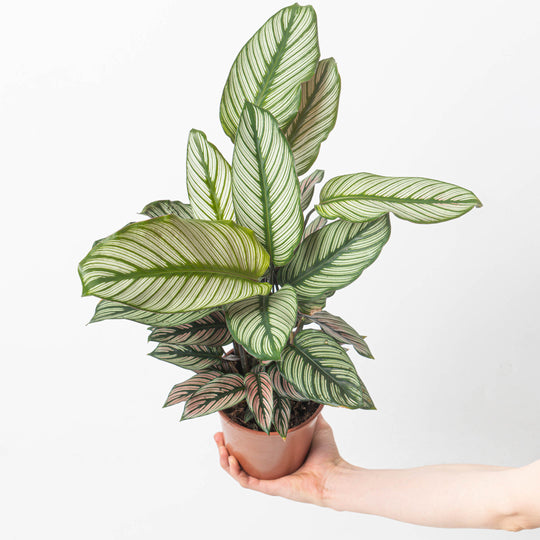
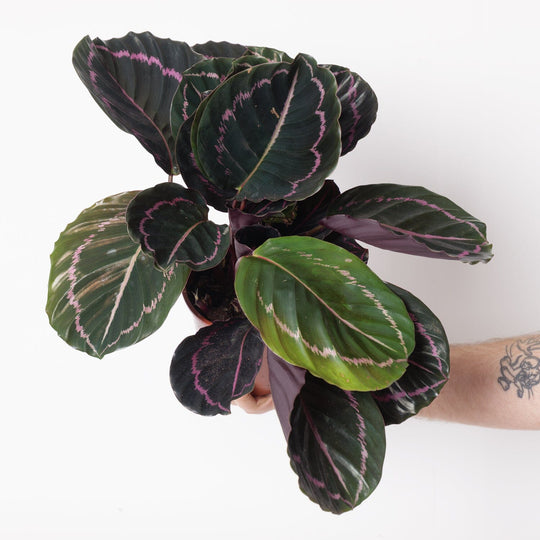
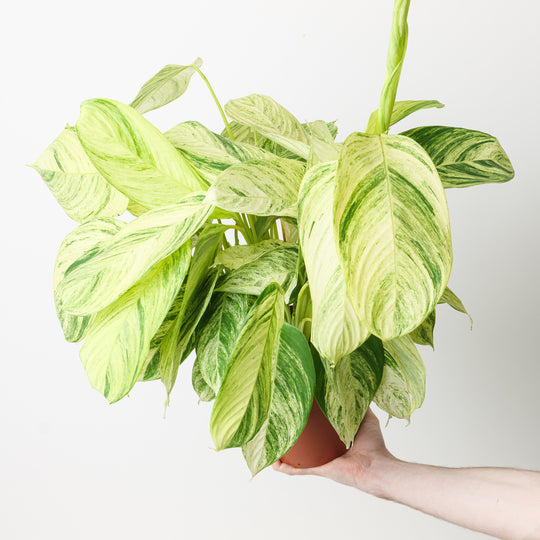
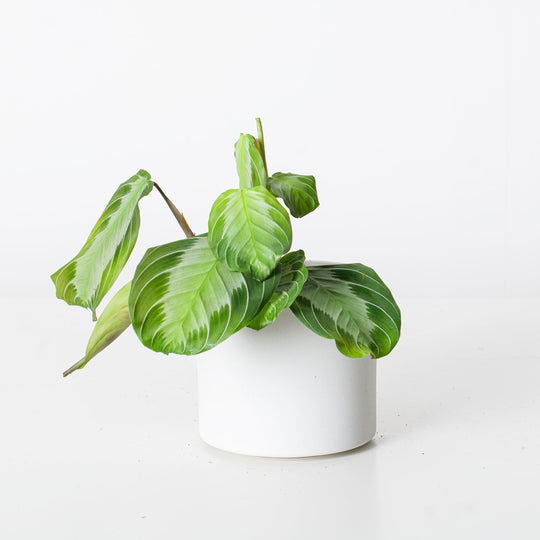
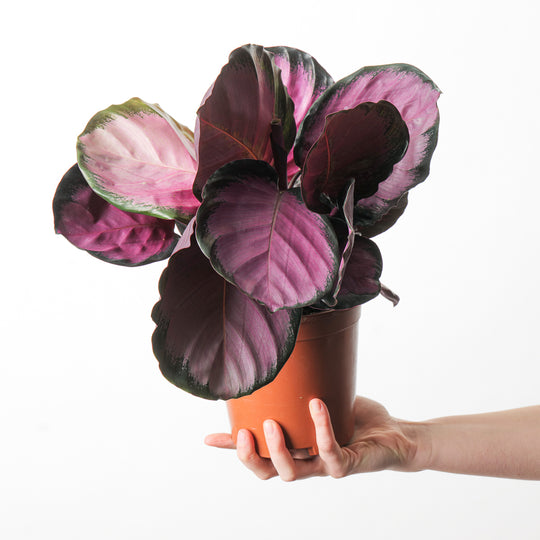
Prayer plants, including Calathea, Maranta, Ctenanthe and Stromanthe, raise and lower their leaves on small joints called pulvini in response to light. Watch Maranta Lemon Lime over an evening and the movement is genuinely visible: leaves lift towards vertical at dusk, then relax again by morning.
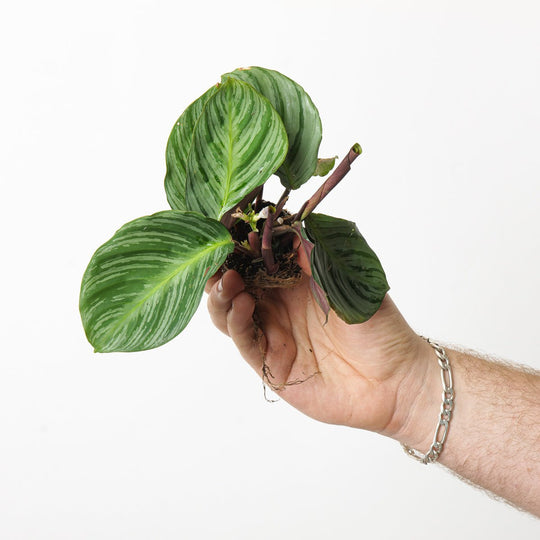
The patterning is the other draw. Species such as Maranta leuconeura 'Fascinator' look hand-painted, with pinstripes, medallions and blushes of pink and burgundy no two leaves repeat exactly.
The humidity contract
Prayer plants come from humid forest floors, and crisp brown leaf edges are their way of asking for more moisture in the air. Group plants together, use a pebble tray, or grow showier types like Ctenanthe Pilosa Golden Mosaic in kitchens and bathrooms where humidity runs naturally higher.
Water with filtered or rain water where possible, keeping compost lightly moist but never soggy, and give bright, indirect light; direct sun bleaches the patterns. For companions with similar tastes, browse our ferns or add Stromanthe sanguinea 'Triostar'.
Frequently Asked Questions
The movement, called nyctinasty, is driven by small hinge-like joints at the base of each leaf. As light fades the leaves fold upwards, resembling hands in prayer, then open again with morning light.
Crispy brown edges are the classic sign of dry air or mineral-heavy tap water. Calathea want humidity of around 60 percent and are sensitive to fluoride and chlorine.
Raise humidity by grouping plants or using a pebble tray, and switch to filtered or rain water. Trim damaged edges with clean scissors, following the leaf shape.
Yes, the family is one of the best choices for households with cats and dogs: Calathea, Maranta, Ctenanthe and Stromanthe are all listed as non-toxic.
As always, plants are not food, so persistent chewers may still get a mild upset stomach.
Bright, indirect light is the sweet spot: near a window but shielded from direct sun, which fades the leaf patterns and can scorch the foliage.
They tolerate medium light better than most patterned plants, though growth slows and colours mute a little.
They ask for consistency rather than skill: steady moisture, decent humidity and no direct sun. Get those three right and Calathea are dependable.
If you prefer a more forgiving start, Maranta and Ctenanthe deliver the same folding habit and bold patterns with a little more tolerance.