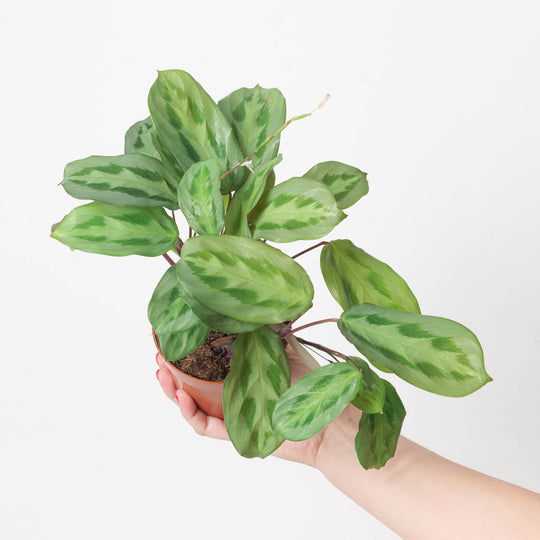
Maranta


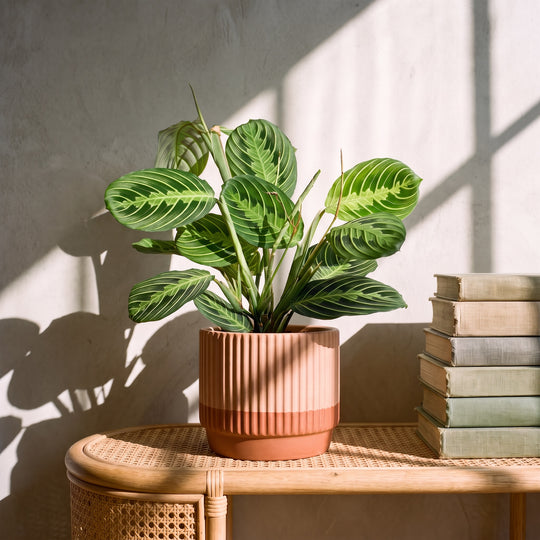
Maranta are some of the most captivating foliage plants you can grow indoors. Known for their striking patterned leaves and famous night-time leaf movement, these compact plants fold their leaves upward after dark in a behaviour botanists call nyctinasty - earning them the nickname prayer plants. Native to the tropical rainforests of Central and South America, Maranta thrive in warm, humid conditions and reward attentive care with extraordinary colour and pattern.

At Grow Tropicals, we offer a curated range of Maranta varieties, from the bold red-veined Maranta leuconeura 'Erythroneura' to the subtler silver-marked Maranta leuconeura 'Kerchoveana'. Each plant is grown to a high standard and dispatched with care to arrive in excellent condition.

10 products

    10 products
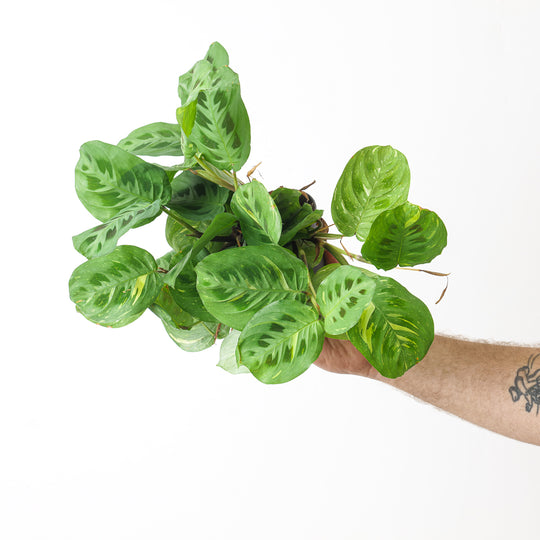
    Maranta Lemon Lime Plants GrowTropicalsSale
    Prayer Plant

    Maranta Lemon Lime

    £11.99 £12.99
    1
    Maranta leuconeura 'Fascinator' Plants GrowTropicalsSale
    Prayer Plant

    Maranta leuconeura 'Fascinator'

    £9.99 £10.99
    1
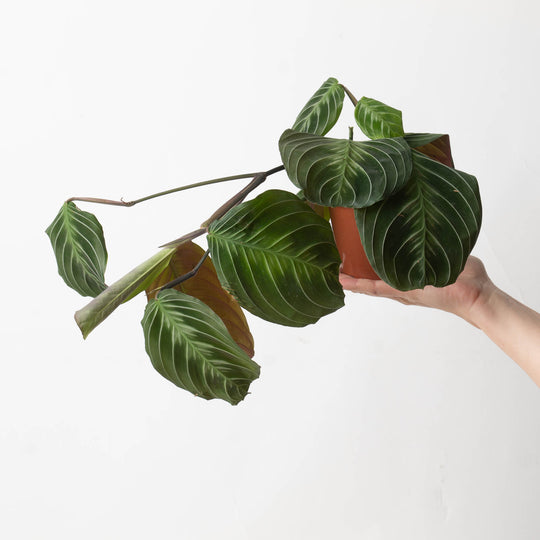
    Maranta leuconeura var. kerchoveana Plants GrowTropicalsSale
    1
    Maranta sp. Silver Band 12cm Plants GrowTropicalsSale

    Maranta sp. Silver Band

    £12.99 £19.99
    1
    Maranta Leuconeura Kerchoveana Variegated Plants GrowTropicals
    1
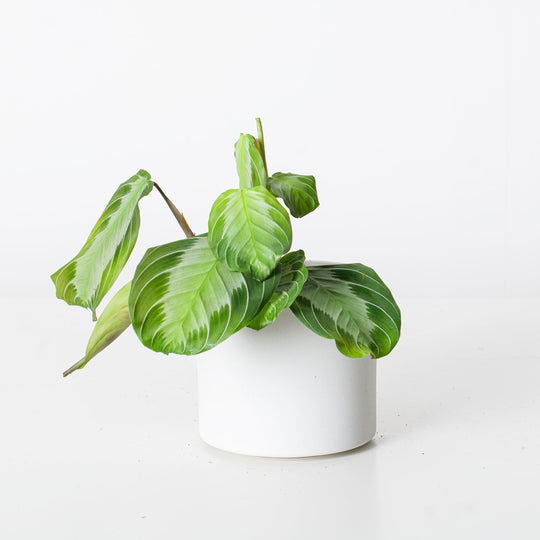
    Maranta Fantasy Plants GrowTropicalsSale
    Prayer Plant

    Maranta Fantasy

    £14.99 £19.99
    1
    Maranta sp. 'Dark' 12cm Plants GrowTropicals
    1

    Maranta Prayer Plants: Care, Varieties & Growing Guide

    Why Maranta are special

    Few houseplants can match the drama of a Maranta in full foliage. Each leaf is a work of art: deep green backgrounds overlaid with intricate herringbone patterns, feathered markings, or bright red veins, depending on the variety. What sets Maranta apart even further is their movement. As daylight fades, the leaves fold upward like hands pressed together in prayer - a response to changing light that gives the whole genus its common name. It is one of the most endearing behaviours in the houseplant world and never grows old.

    How to care for Maranta

    Maranta prefer bright, indirect light - direct sun bleaches their markings and can scorch the leaves. They are tropical understory plants by nature, accustomed to filtered light beneath a forest canopy. Water regularly during the growing season, keeping the compost evenly moist but never waterlogged. Reduce watering slightly in winter. Maranta are more sensitive to water quality than most houseplants: if your tap water is heavily chlorinated or very hard, leave it to stand overnight before watering, or use filtered water. Feed every two to four weeks from spring through to early autumn with a half-strength balanced liquid fertiliser.

    Temperature, humidity and positioning

    Warmth and humidity are the keys to healthy Maranta. Aim for temperatures between 18 and 27 degrees Celsius and avoid cold draughts, open windows in winter, or positioning near radiators. Maranta love humidity - bathrooms and kitchens often suit them well. If your home is dry, place pots on a tray of damp pebbles, group plants together, or use a humidifier nearby. Misting can help temporarily but is less effective than raising ambient humidity. Brown leaf tips are usually the first sign that the air is too dry.

    Varieties to look for

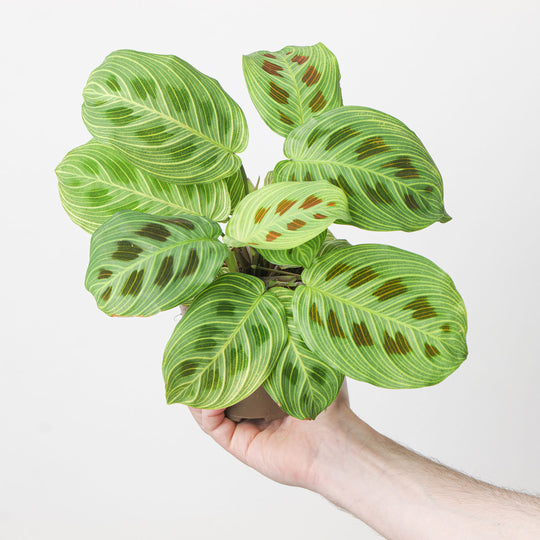
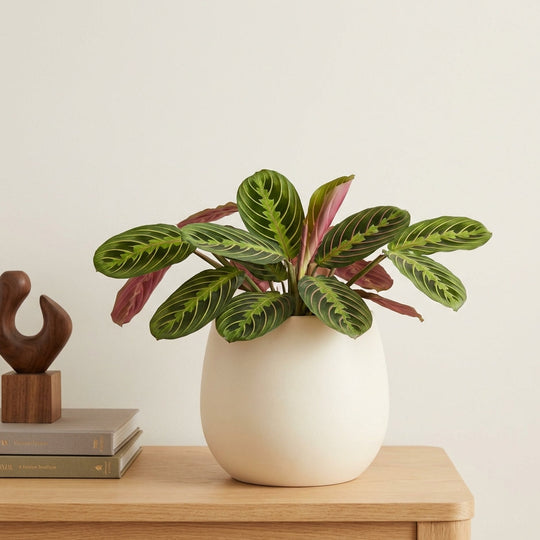
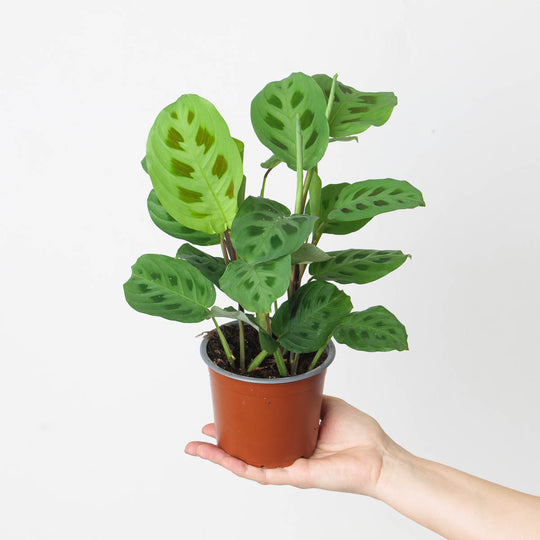
    Maranta leuconeura 'Erythroneura' (also called the herringbone plant) is the most striking variety, with vivid red veins radiating across deep green leaves marked with lime-green centres. Maranta leuconeura 'Kerchoveana' (the rabbit's foot) is more understated, with greyish-green leaves and dark chocolate spots arranged either side of the midrib. Both are excellent houseplants. Less commonly seen but worth seeking out is Maranta leuconeura 'Marisela', which has a finer, more silvery patterning and a particularly compact habit.

    Frequently Asked Questions

    Maranta are tropical foliage plants native to Central and South America, belonging to the family Marantaceae. They are best known for their beautifully patterned leaves and their habit of folding upward at night - a movement called nyctinasty - which gives them the common name prayer plant. The most widely grown species is Maranta leuconeura, available in several distinctly marked varieties.

    Maranta need bright, indirect light, consistently moist (but not waterlogged) compost, warm temperatures (18-27 degrees Celsius), and good humidity. Water when the surface of the compost begins to dry, feed monthly from spring to autumn, and keep them away from cold draughts and direct sun. They are more sensitive to water quality than most houseplants, so hard tap water can cause brown tips - use filtered or standing water if needed.

    Leaf movement in Maranta is driven by light changes - leaves fold up in the evening and open again in the morning. If your plant is not moving, it may be positioned under constant artificial light with no natural light cycle, or the plant may be stressed by underwatering, low humidity, or cold temperatures. Giving the plant a natural light-dark cycle and improving care conditions usually restores the movement.

    Brown leaf tips on Maranta are almost always caused by low humidity or water quality issues. Maranta are sensitive to fluoride and mineral salts in hard tap water, which accumulate in the leaf tips and cause browning. Try switching to filtered water or leaving tap water to stand overnight. Increasing humidity around the plant - via a pebble tray, grouping plants, or a humidifier - also helps. Inconsistent watering and cold draughts can contribute too.

    Maranta are best propagated by division when repotting in spring. Gently separate the root clumps into smaller sections, each with at least two or three stems, and pot each section into fresh, moist compost. They can also be propagated from stem cuttings - take a cutting just below a node, remove the lower leaves, and place in a glass of water. Roots form within three to four weeks. Keep cuttings warm and humid while they establish.

    Yes - Maranta are considered non-toxic to dogs and cats, making them a good choice for pet-friendly homes. They are listed as non-toxic by the ASPCA. While ingesting any plant material in large quantities could cause mild stomach upset, Maranta do not contain compounds that are harmful to pets, unlike some other popular houseplants.