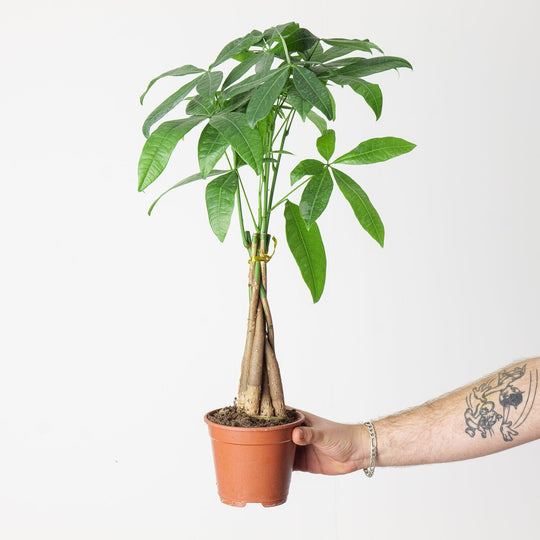
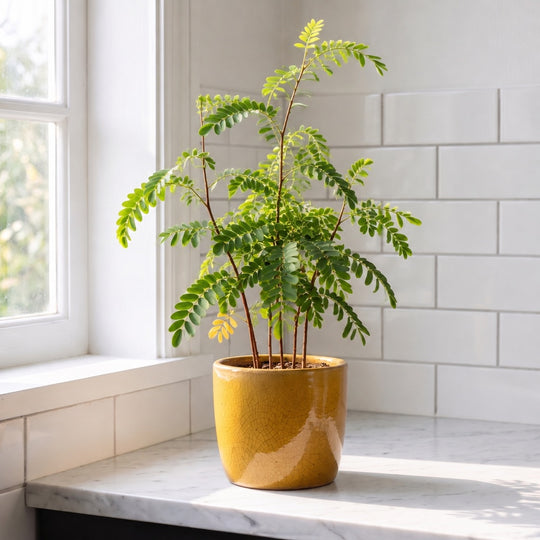
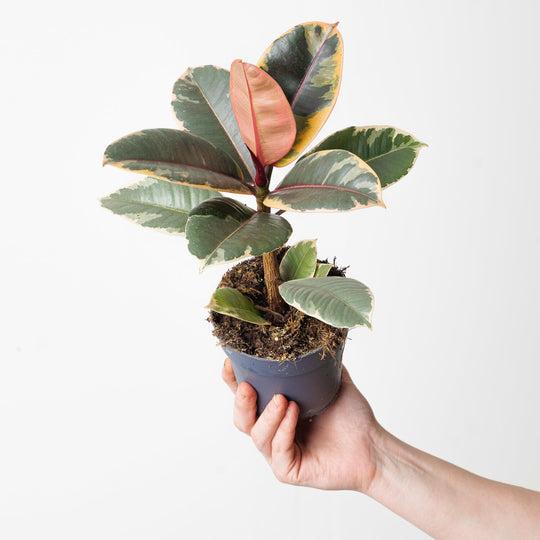
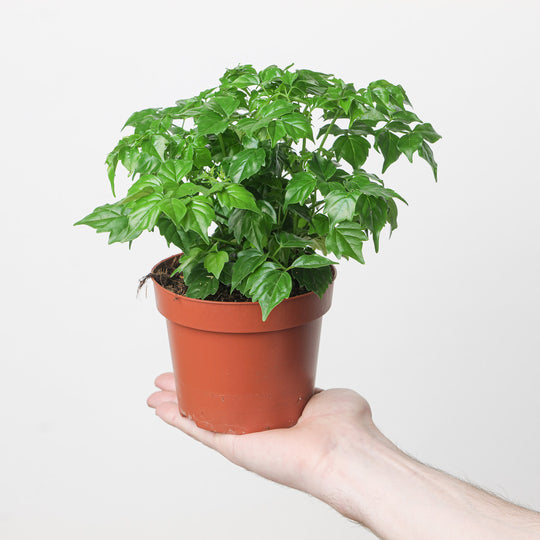
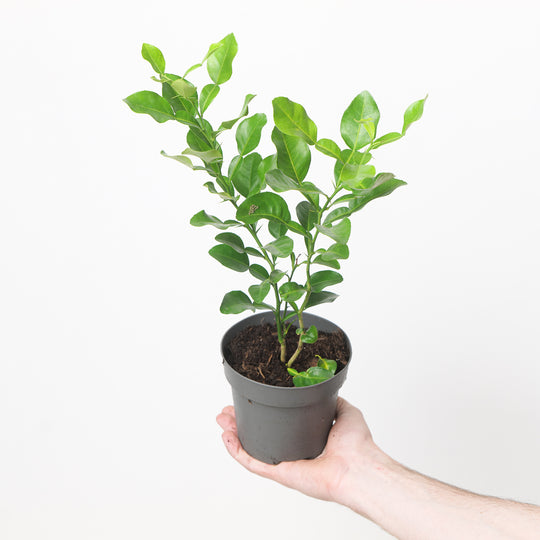
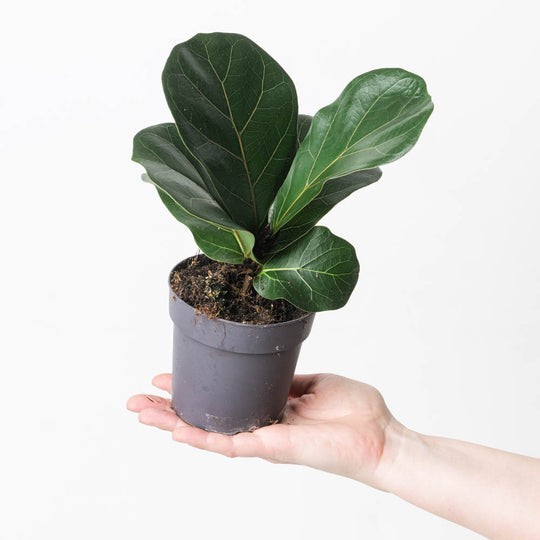
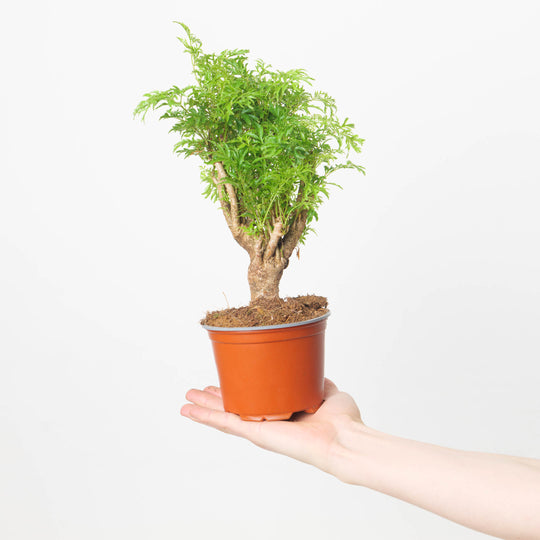
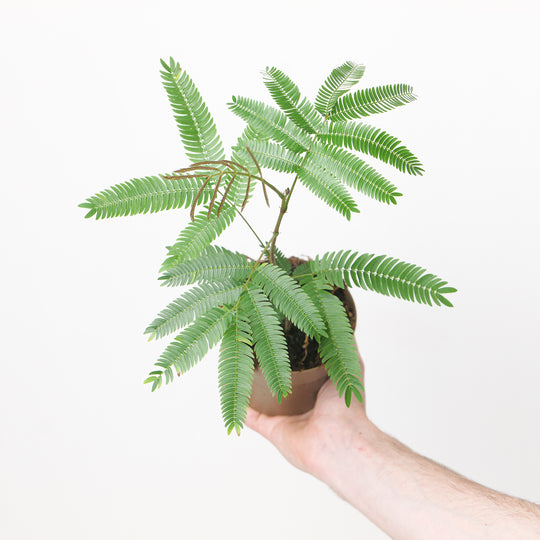
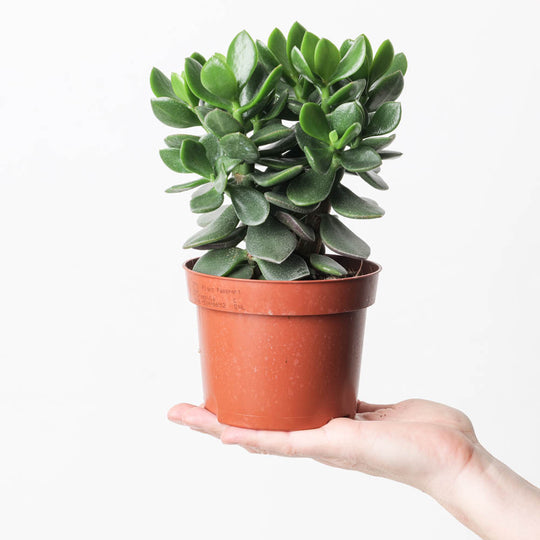
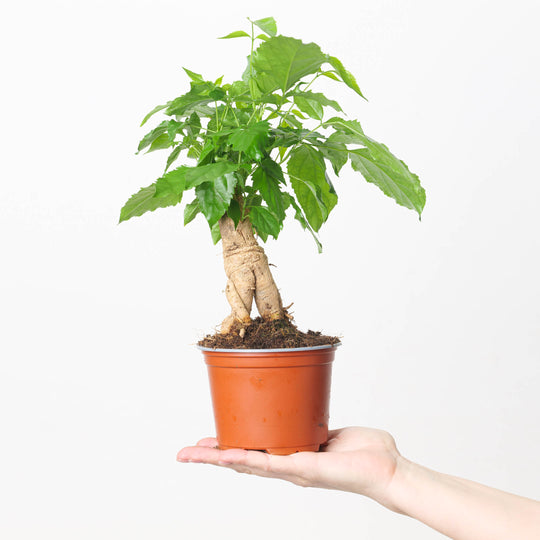
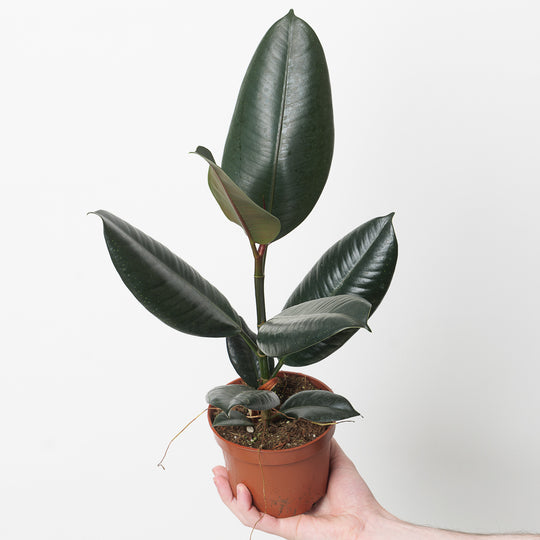
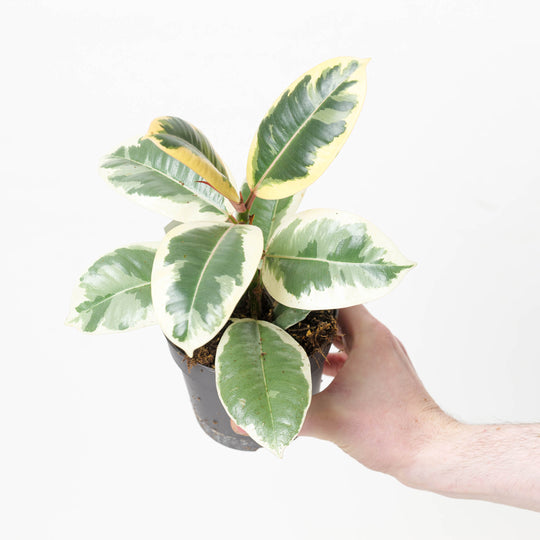
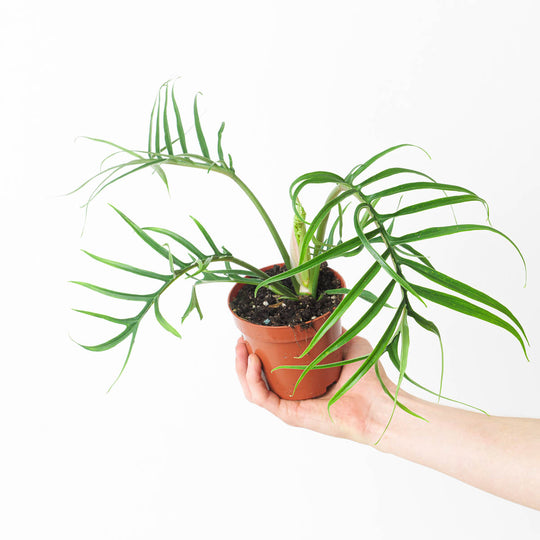
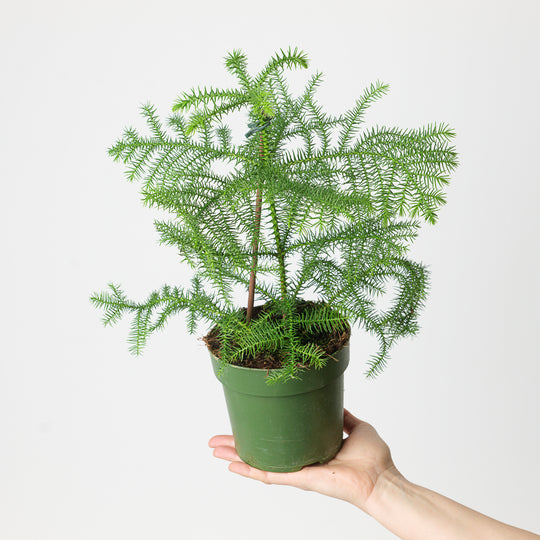
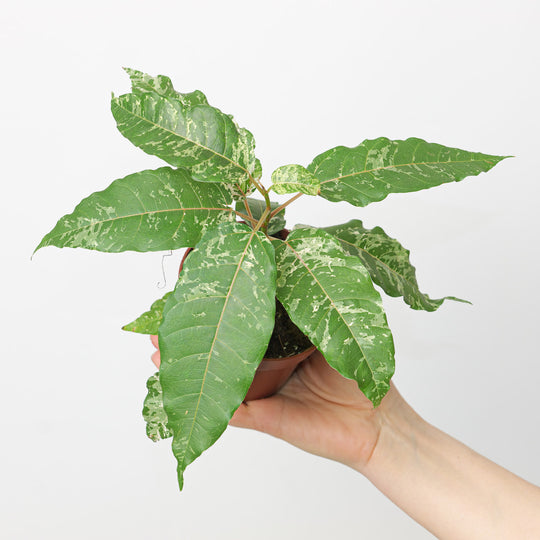
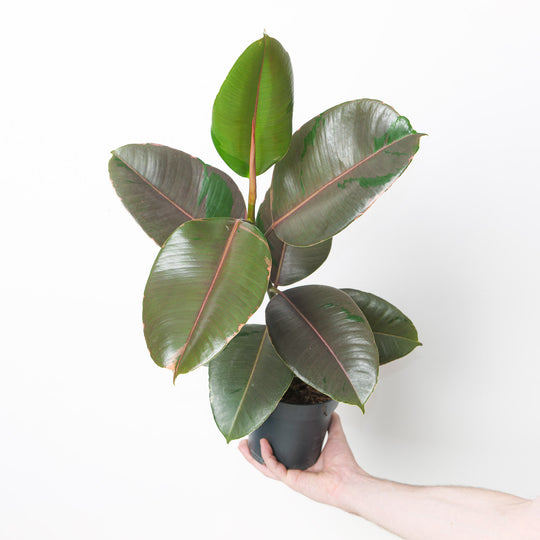
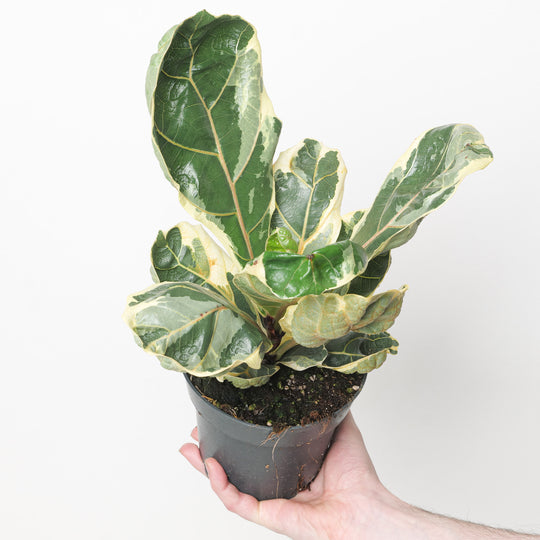
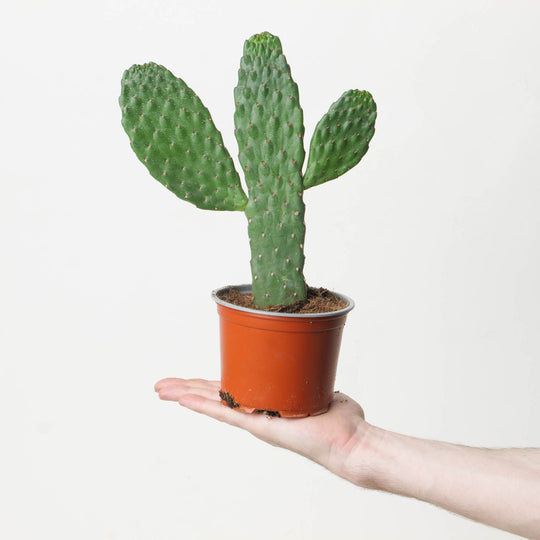
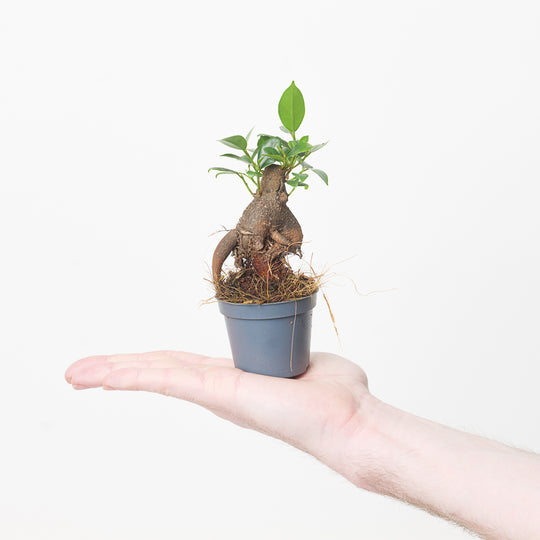
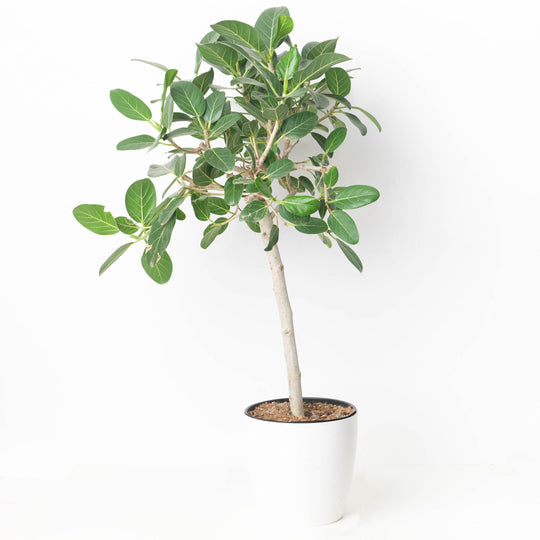
A tree-form plant is a long-term companion, so choose for your conditions rather than the catalogue photo. Light is the deciding factor: species such as Adenium Obesum want a bright room with some gentle direct sun, while Ficus elastica 'Belize' copes with less. Measure your space too; a tree that arrives at chest height can reach the ceiling within a few years.
Buying smaller is a genuine option. Young tree-form plants establish quickly, cost less, and adapt to your home's conditions as they grow.
Tree care indoors
Indoor trees dislike being moved, so find the right spot and let the plant settle; some species drop leaves after relocation and regrow once settled. Water thoroughly but let the top of the compost dry between drinks, and dust the leaves every few weeks so they can photosynthesise freely. Adenium arabicum 'Baobab' especially rewards a regular leaf wipe.
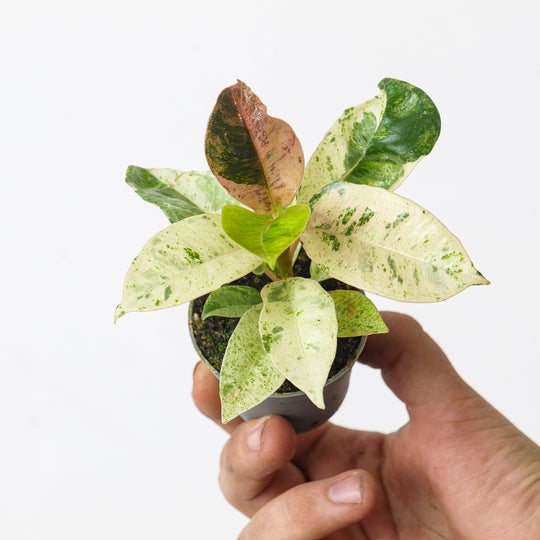
Feed monthly through spring and summer, and repot every two to three years in spring. For underplanting ideas, our trailing plants soften the base of a tall trunk nicely, or add Ficus Shivereana Moonshine alongside.
Frequently Asked Questions
Tree-form houseplants grow with a single clear trunk topped by a canopy of foliage, giving the silhouette of a miniature tree. Ficus, Pachira and standard-trained shrubs are familiar examples.
Leaf drop after moving home or changing position is normal for many indoor trees, especially Ficus. The plant is adjusting to new light levels and usually regrows within weeks.
Persistent leaf drop points to watering issues: check the compost is neither soggy nor bone dry, and keep the plant away from radiators and cold draughts.
Indoors, most tree-form species reach two to three metres given time, though the pot size naturally limits growth. Each product page lists the current height and the likely indoor maximum.
You can hold a tree at a size you like by keeping it slightly pot-bound and pruning the canopy lightly each spring.
Most want bright light with some gentle direct sun, morning or evening rather than harsh midday. A spot within a metre of a bright window suits the majority.
Rotate the plant occasionally so the canopy develops evenly rather than reaching to one side.
Every two to three years in spring, or when roots circle the pot or push through the drainage holes. Go up just one pot size; a much larger pot holds excess moisture around the roots.
For very large specimens, refreshing the top few centimetres of compost each spring is a practical alternative to a full repot.