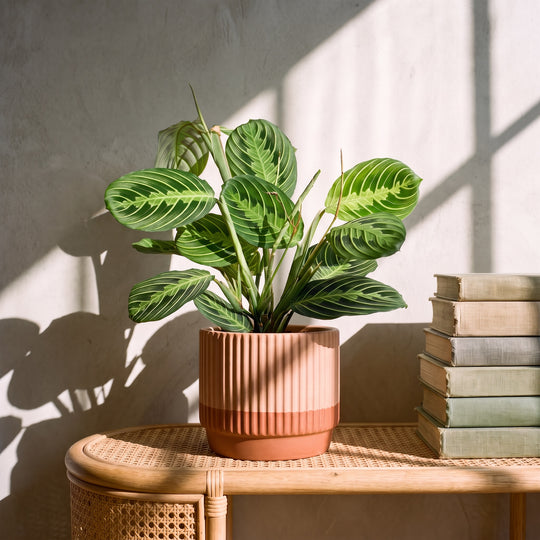
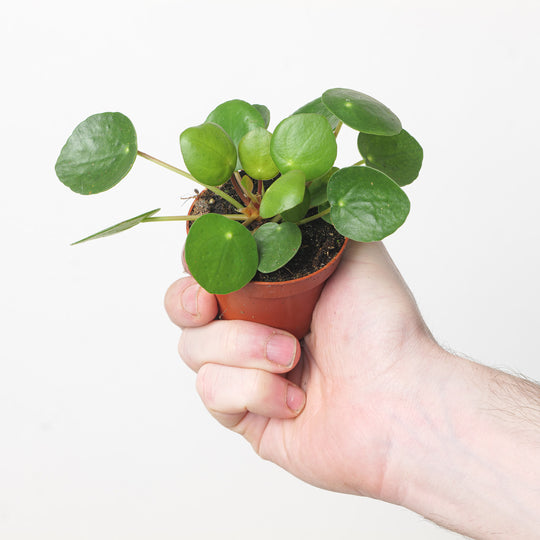
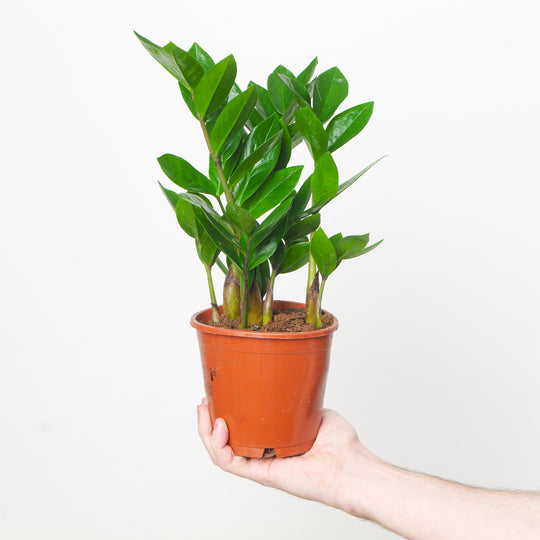
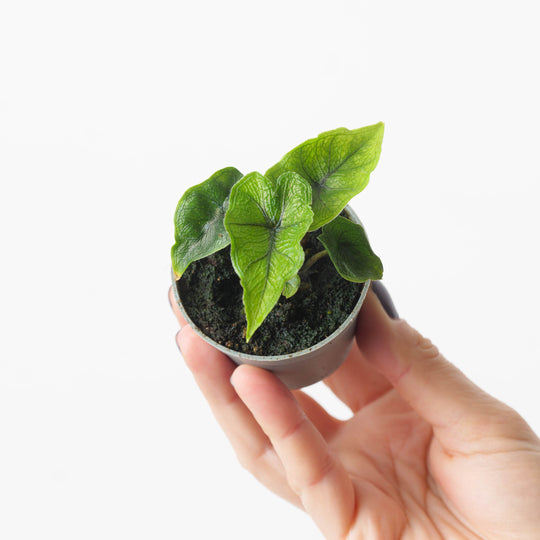
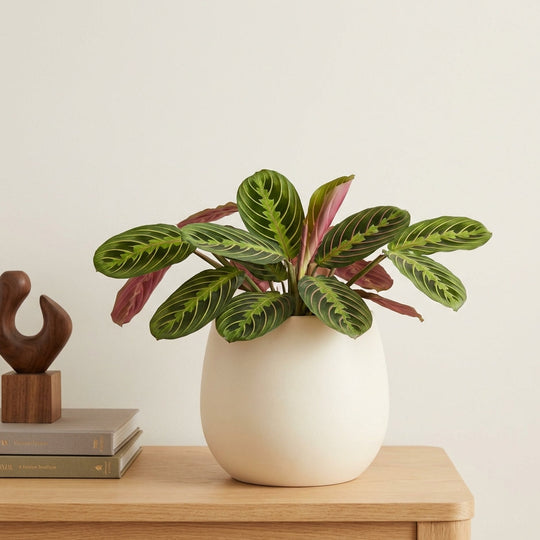
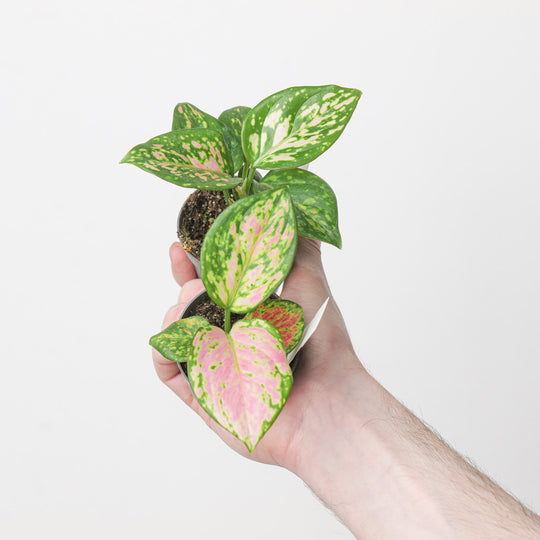
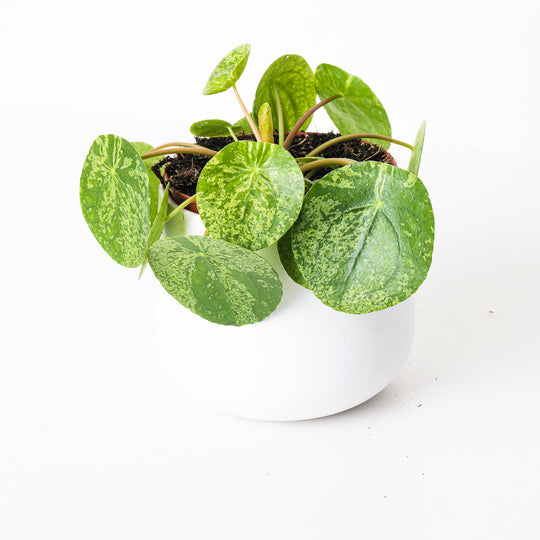
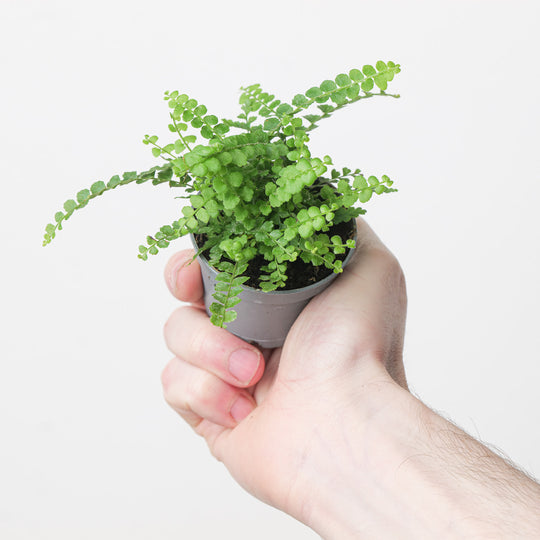
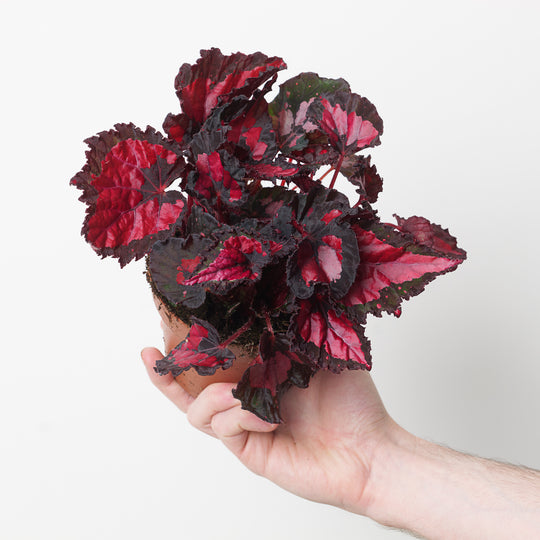
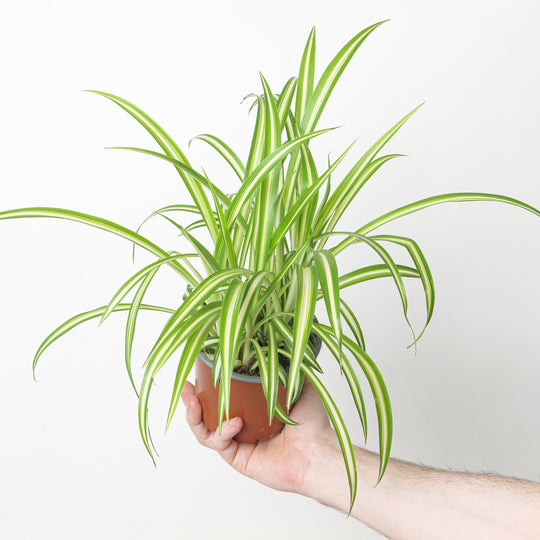
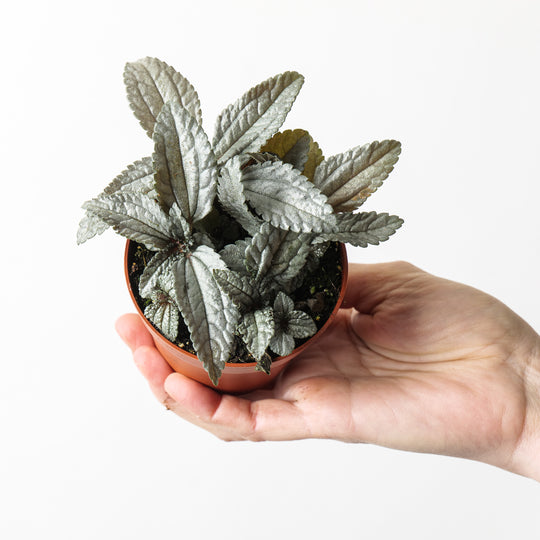
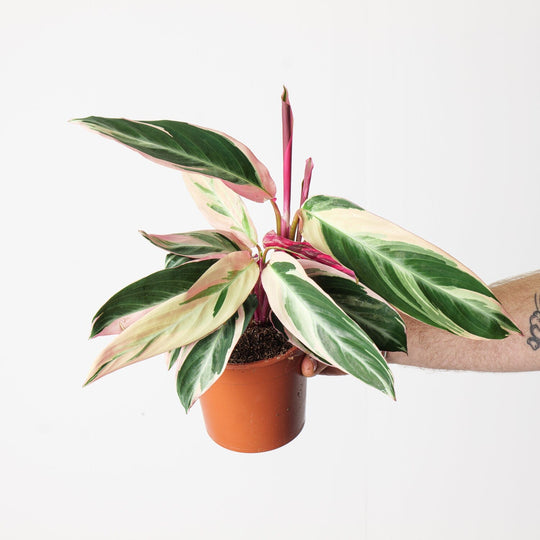
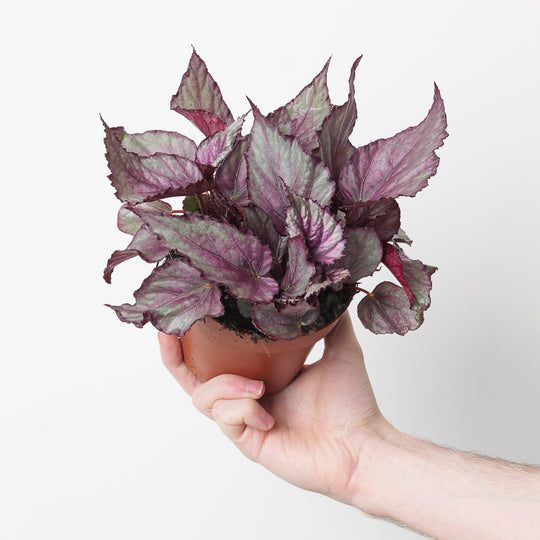
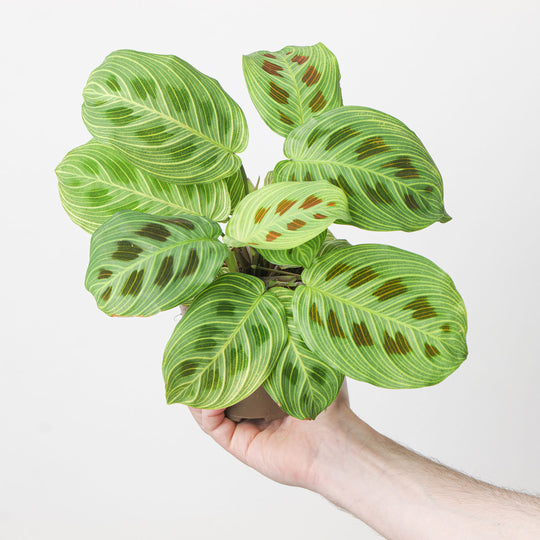
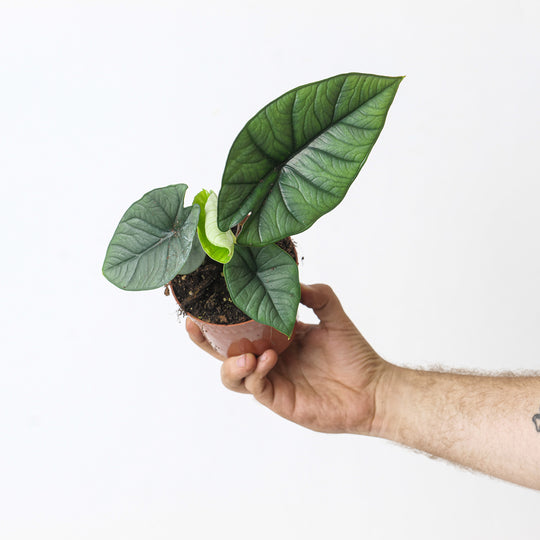
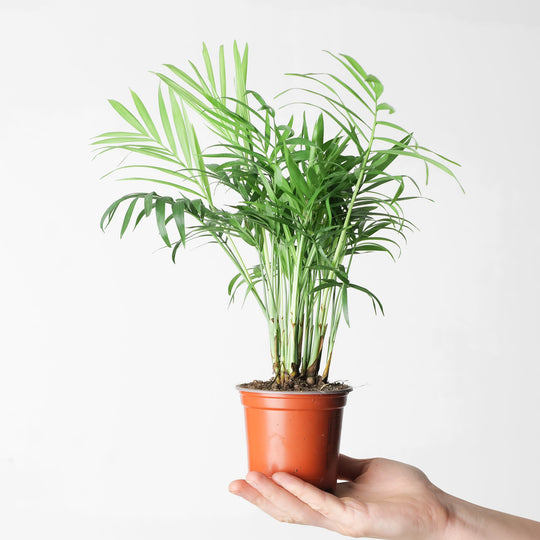
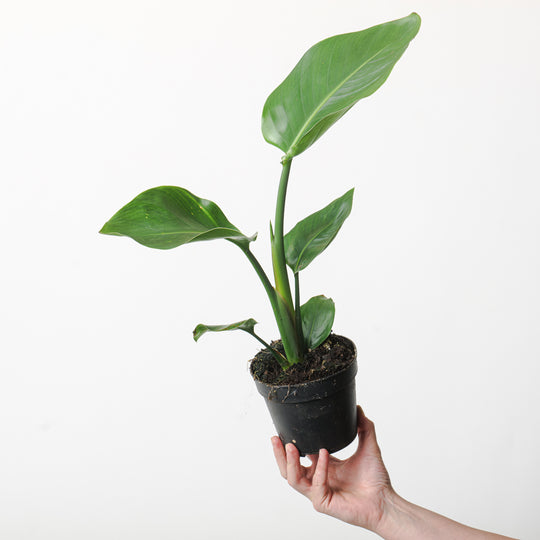
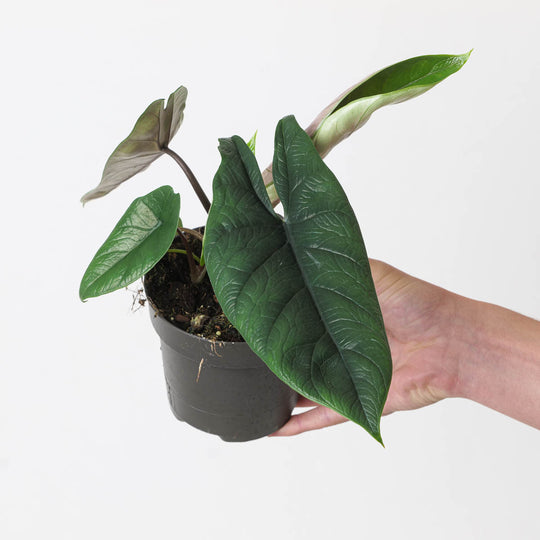
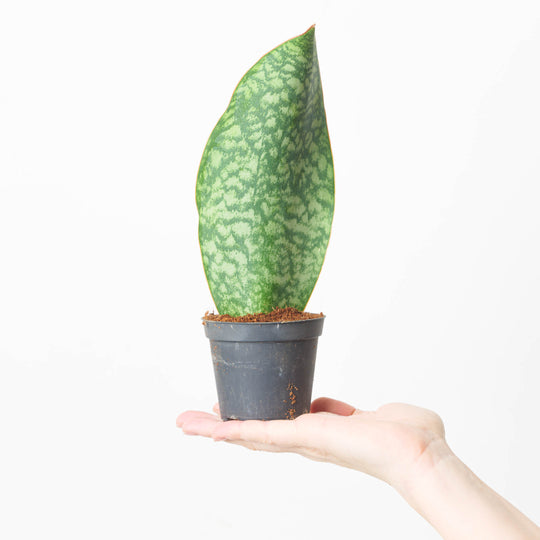
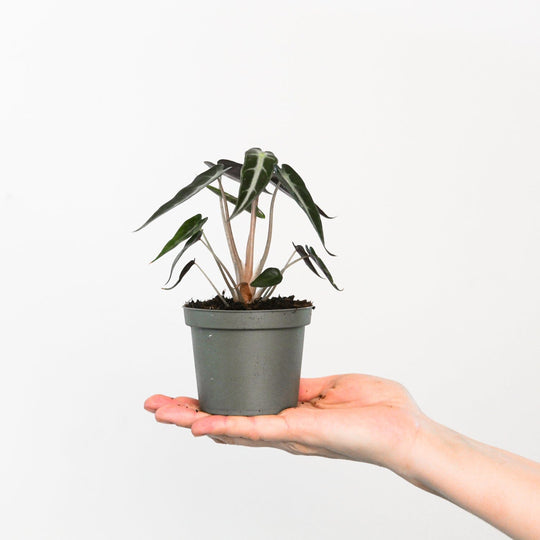
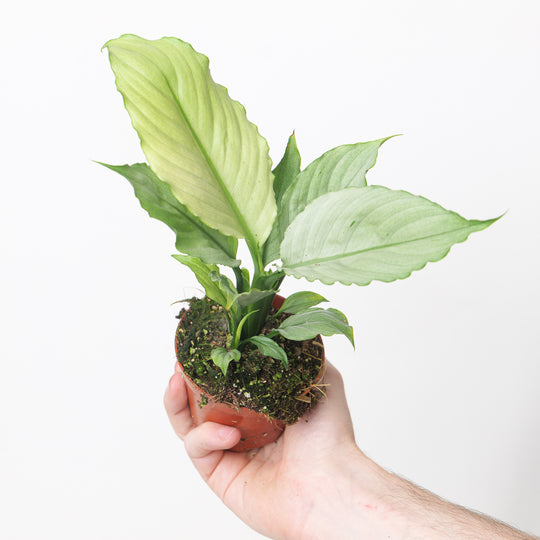
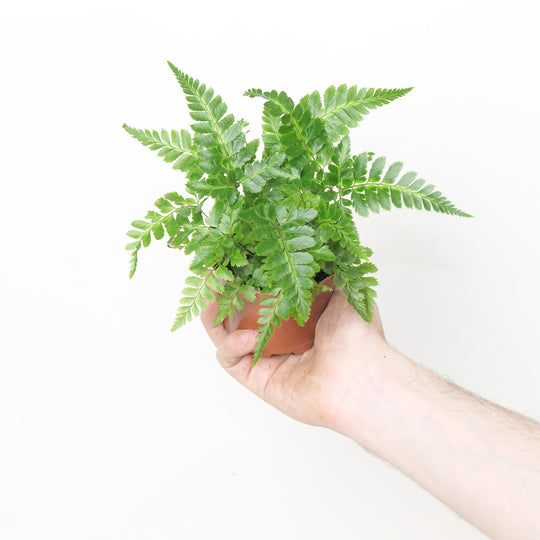
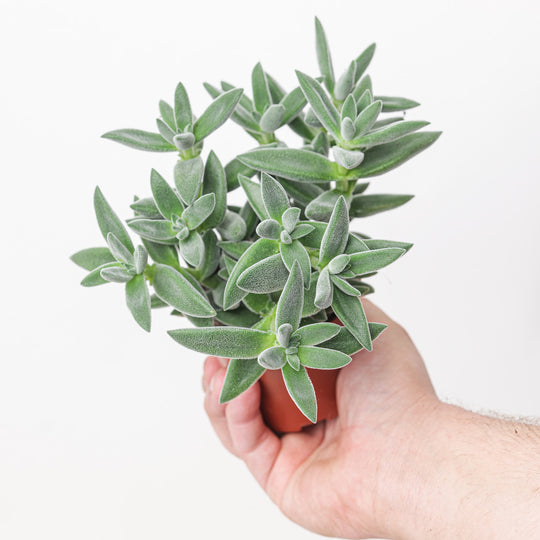
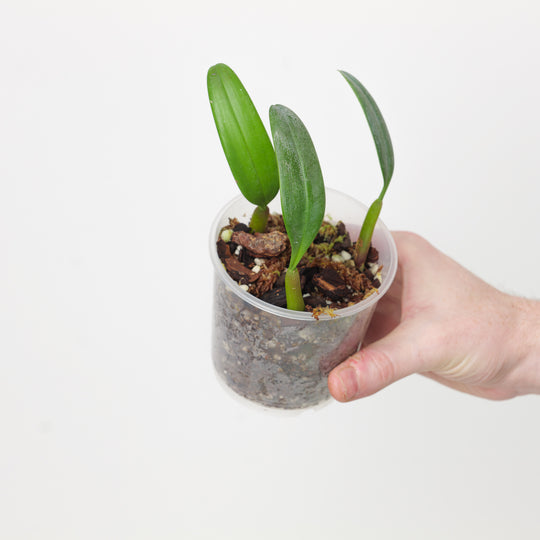
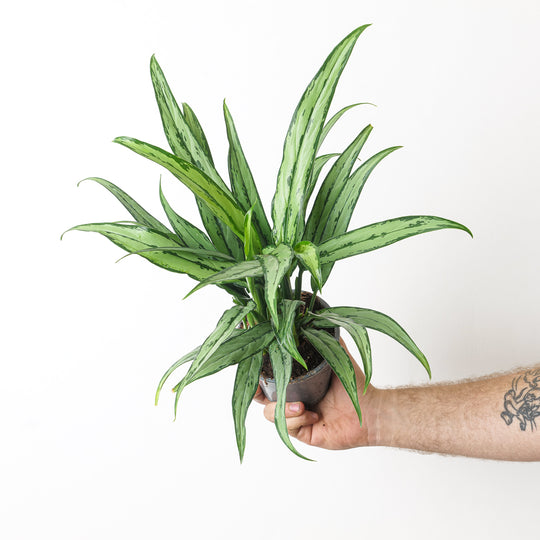
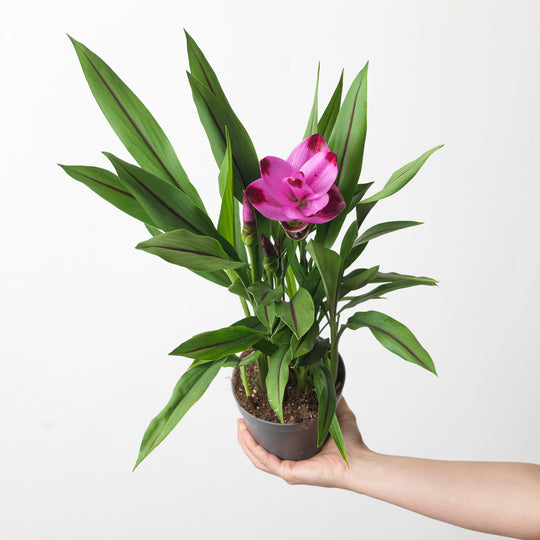
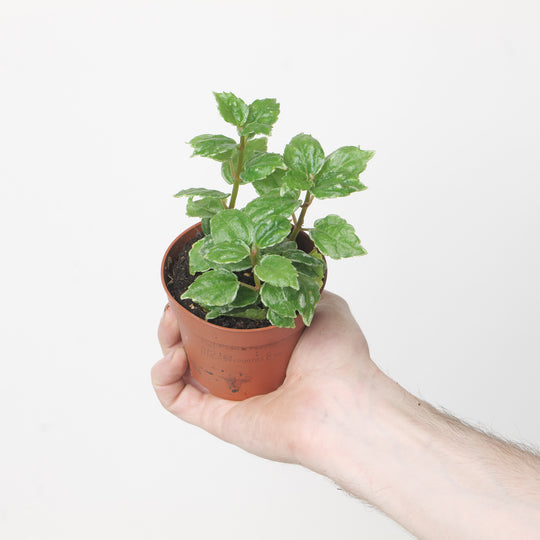
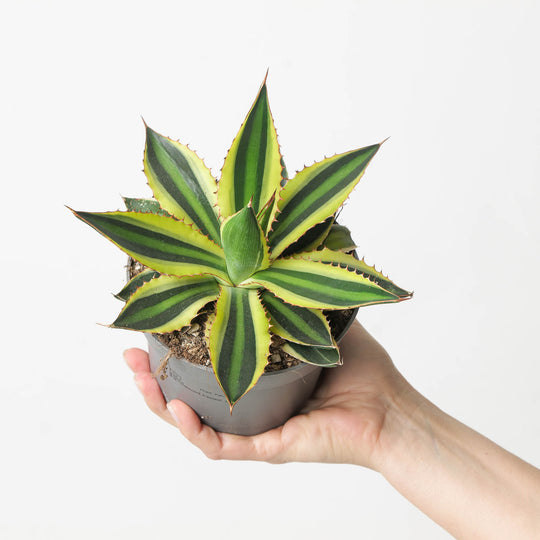
Clumping plants produce new shoots from the base rather than from a single stem, so the plant becomes fuller and wider over time. Species such as Alocasia 'Black Velvet' and Alocasia sp. 'Jacklyn' slowly build into lush, rounded mounds of foliage that look generous in a pot without needing any training or support.
This habit also makes clumping plants easy to propagate: a mature clump can often be divided at repotting time into two or three new plants, each with its own roots. It is one of the most reliable ways to multiply a collection.
Care essentials
Because clumps are dense, airflow matters. Give the plant space rather than wedging it between others, and water at compost level rather than over the foliage so moisture does not sit in the crown. Most clumping species, including Pilea peperomioides, enjoy bright, indirect light and steady moisture.
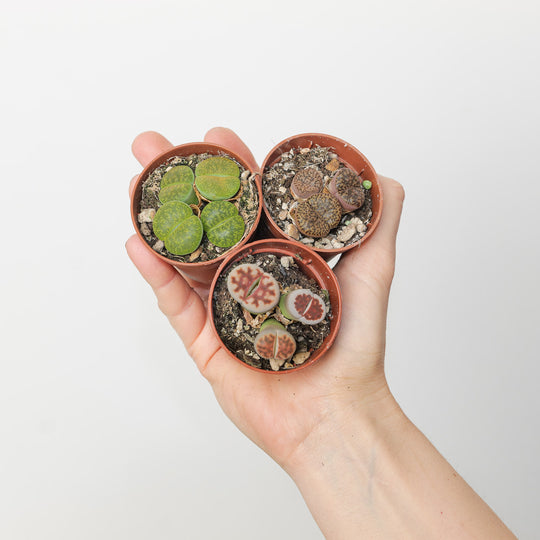
When growth slows or the pot is crowded with shoots, divide and repot in spring. For companion planting ideas, browse our rosette plants and foliage houseplants, or start with Lithops sp..
Frequently Asked Questions
Clumping houseplants send up new shoots from the base, forming a dense cluster of stems rather than one central trunk. Calathea, Aglaonema, many ferns and Spathiphyllum all grow this way.
The result is a naturally full plant that looks lush from every angle. See the whole clumping plants collection for the range.
Yes, and it is the easiest propagation method there is. At repotting time, ease the root ball apart into sections, making sure each section keeps roots and a few shoots, then pot each one up separately.
Spring is the best time, as new divisions establish quickly in the growing season. Water divisions well for the first few weeks while roots settle.
Central thinning usually means the clump is congested or the light is uneven. Older central shoots naturally give way as the plant pushes new growth at the edges.
Dividing and repotting refreshes the plant, and rotating the pot weekly evens out the light so all sides keep growing.
Check the compost rather than watering to a schedule. Most clumping species like the top few centimetres to dry before the next drink, though ferns and Calathea prefer steadier moisture.
Each product page in this collection carries specific watering guidance for that plant, so check before you buy if you tend to over or under water.
Many are. Aglaonema and Spathiphyllum are famously forgiving, and their clumping habit means the plant still looks full even when an individual leaf is past its best.
More demanding clumpers, such as some Calathea, reward growers who can offer higher humidity. Check the care level on each product page to match a plant to your home.