


Packaged with Care
Every order is hand-packed in eco-friendly, protective packaging - refined through thousands of deliveries to ensure your plant arrives healthy, hydrated, and looking its best.
Backed by our Live Arrival Guarantee.


 15cm / 1.5L
FREE tracked delivery on orders over £60
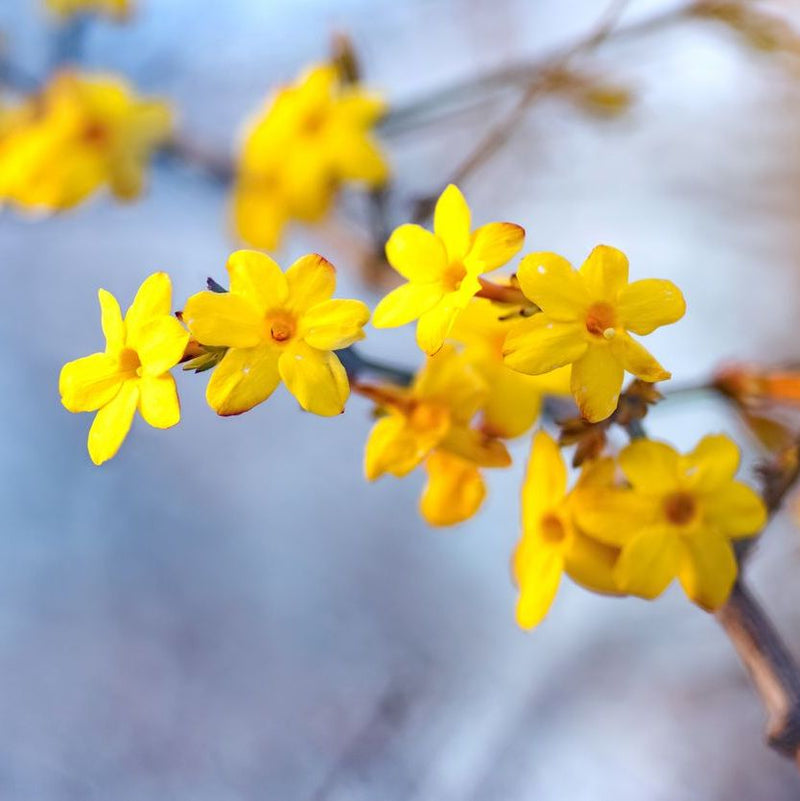
Winter jasmine: Jasminum nudiflorum earns its keep in the coldest, greyest weeks of the year. Bare green stems light up with small bright yellow flowers from about November through to March, well before the leaves return. It is a lax, arching shrub rather than a true climber, so it leans and scrambles happily against a wall or tumbles down a bank.
Hardy and dependable: This one is properly tough. It carries an RHS hardiness rating of H5, which means it shrugs off hard winters across most of the UK, and it holds the RHS Award of Garden Merit. The flowers have little scent, but they arrive when almost nothing else is in bloom, which is exactly why gardeners love it.
How and where to grow: Give it well drained soil and a spot in full sun or partial shade. It copes with chalk, clay, loam or sand and is not fussy about pH. A cold north or east facing wall suits it well, so it is genuinely useful for the difficult, shady corners other plants sulk in. Tie the long shoots in as they grow if you want a neat sheet of winter colour.
Settling in and using it: Water regularly through the first season while the roots take hold, then it largely looks after itself. Prune straight after flowering, cutting back the shoots that have bloomed to keep it tidy and to encourage fresh growth for next winter. Use it by a door, over a low wall, or as informal ground cover on a slope.
What you receive: Sent as an established plant, ready for the garden.
All plants are covered by our 7-day live arrival guarantee. We pack every order in protective, sustainable packaging designed to keep your plants safe in transit, and every plant is checked before it ships. On the rare occasion something is not right on arrival, we will make it good, provided the plant is still in its original nursery pot.
Ordering in autumn or winter? Many hardy exotics arrive dormant or cut back right now. This is normal, and the best time to plant.
Seasonal by nature: what to expect
Not sure what to expect from yours? Dormant, cut-back or weather-marked plants are all perfectly healthy and normal. Read what to expect through the seasons
Based on your basket total, confirmed at checkout. Free delivery: Economy over £60 · Standard over £100 · Express over £150.
Order by 1pm Monday to Friday for same day dispatch. Every plant travels in protective, plant-safe packaging with tracked delivery.
Changed your mind? See our Return Policy.
Arrived just like the photos - maybe even fuller. Healthy, well-acclimated, and straight into my collection with no issues.
Flawless leaves, stunning variegation, and clearly cared for by experts. It’s already a talking point in my home office.
Hard to find rare plants that are pet-safe. Ours arrived in perfect condition and looks amazing without any worry.
Jasminum nudiflorum needs full sun or partial shade and well-drained soil. It is hardy to around −15°C and stands a UK winter outdoors.
Hardy Exotic (H5): down to around −15°C. Hardy through a cold UK winter.
Fully hardy across most of the UK (RHS H5, roughly -15 to -10C).
Full sun or partial shade. Happy on a cold north or east facing wall.
Any well drained soil, including chalk, clay, loam or sand, at any pH.
Water regularly through the first growing season while it roots in, then it is largely self sufficient.
Bushy
Late winter to early spring (November to March) · Yellow
Deciduous
Prune straight after flowering, cutting back the shoots that have bloomed to strong buds to keep it tidy and boost next winter's display.
No significant toxicity reported for people or pets. As with any garden plant, discourage pets from chewing the stems.
China (western and north-central)
Oleaceae
Jasminum nudiflorum
We could not find a close match for that. Ask us directly and a real plant person will reply.
Contact usEvery order is hand-packed in eco-friendly, protective packaging - refined through thousands of deliveries to ensure your plant arrives healthy, hydrated, and looking its best.
Backed by our Live Arrival Guarantee.

From rare collector’s pieces to easy-care favourites, our plants arrive fully potted and ready to enjoy. Add a personalised note at checkout for a thoughtful finishing touch.
Delivered fresh, beautiful, and gift-ready.

All plants are ethically sourced from trusted growers, never wild-collected. Every order ships carbon-neutral in minimal-waste packaging.
Good for your home - and the planet.
