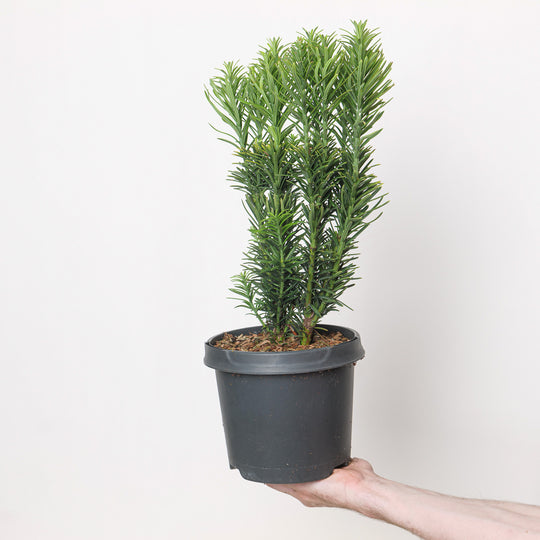
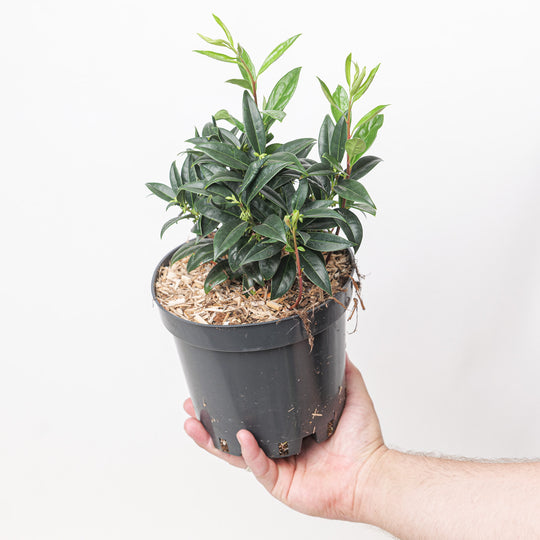
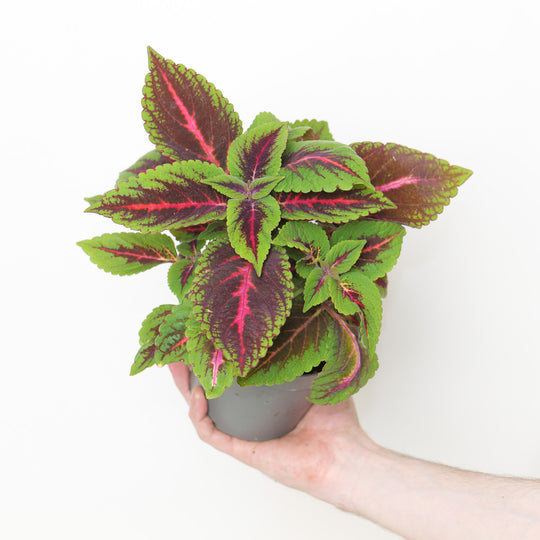
What are shade plants?
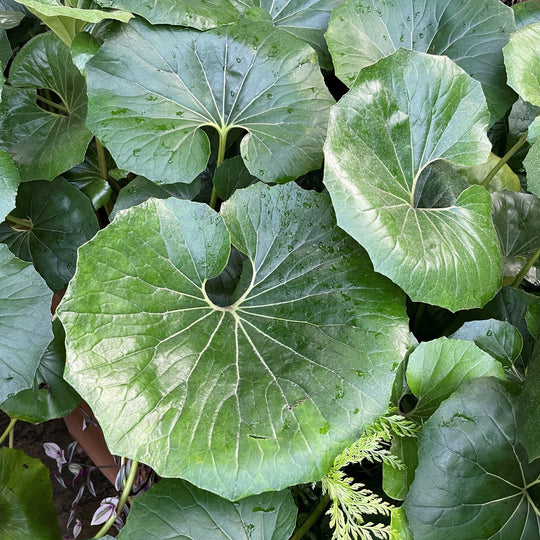
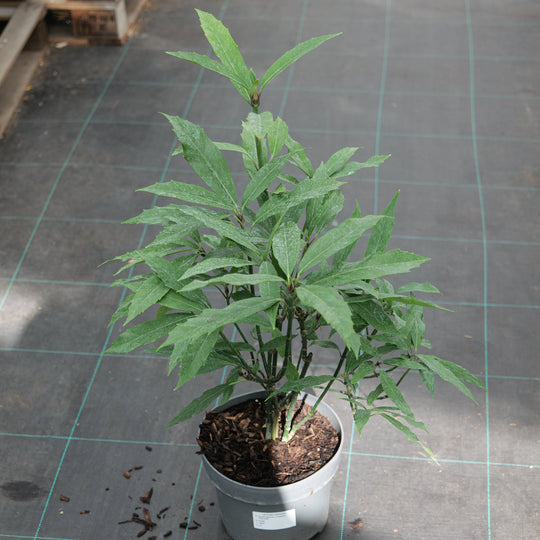
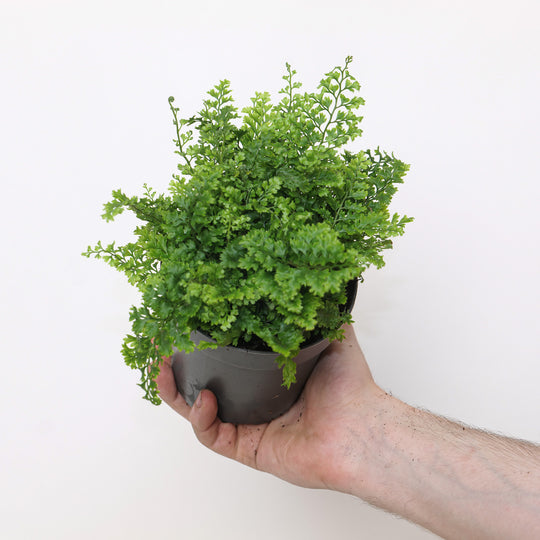
Shade is the condition most UK gardens have too much of, and the one most plant lists ignore. It is also where foliage looks its best. Out of direct sun, leaves grow larger and hold their colour for longer, so ferns, hostas and bold evergreen foliage read as lush rather than scorched. This collection gathers 137 plants that prefer or tolerate shade, from woodland ground cover that carpets the soil to tree ferns and Fatsia that give a shady bed real height and structure. The range runs from fully hardy to tender, and every listing shows its RHS hardiness band, so you can tell at a glance what stays out all winter. Read our honest guide to what to expect from hardy exotics through the seasons before ordering.
Dry shade or damp shade? Start here
Before choosing anything, work out which kind of shade you have. It matters more than how dark the spot is.
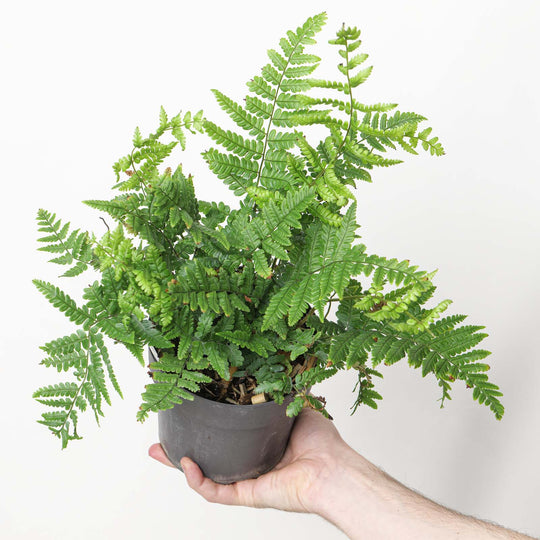
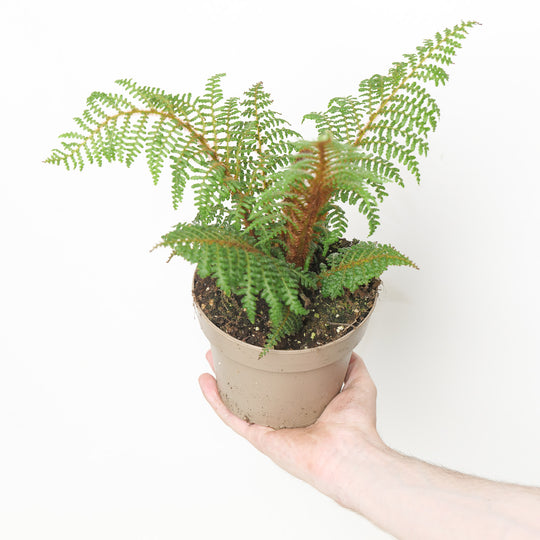
Damp shade is the straightforward one: a north-facing bed, a spot beside a wall that catches rain, soil that stays cool and moist through summer. Almost everything in this collection is happy there. Hostas, Astilbe, Brunnera and moisture-loving ferns such as Polystichum setiferum and Dryopteris erythrosora 'Brilliance' settle in quickly and need little from you afterwards.
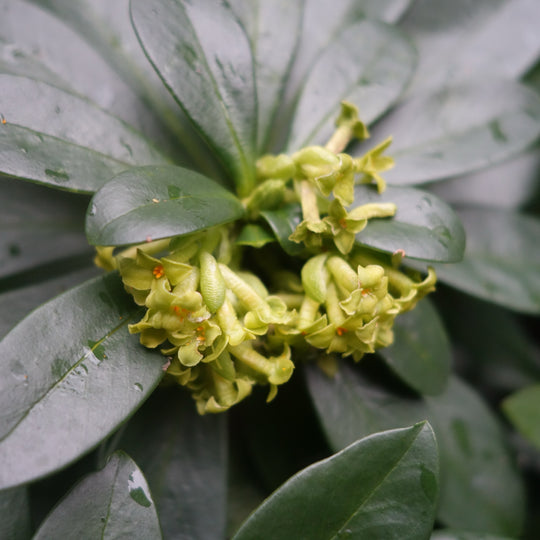
Dry shade is the hard one. Under mature trees, along the foot of a fence, or in the rain shadow of a house, established roots take the water before a new plant ever sees it. Fewer things cope, but the ones that do are excellent. Sarcococca confusa, Mahonia, Pachysandra terminalis, Liriope muscari and the tougher Dryopteris ferns all hold their own once settled. The trick is not the plant choice alone, it is getting them through their first two summers on generous mulch and a deep weekly soak.
Foliage that lifts a dark corner
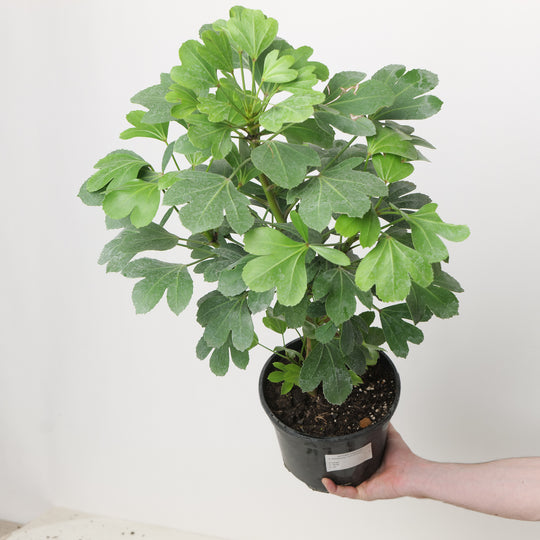
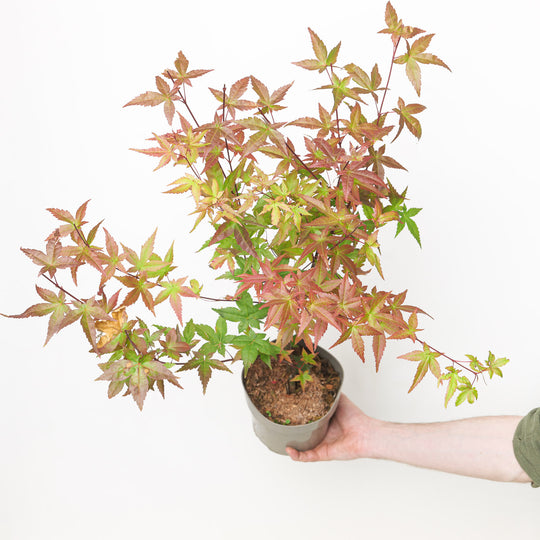
A shady bed planted only in dark green reads as a hole in the garden. The fix is contrast, not flowers. Variegated and pale-leaved plants bounce what light there is, and Brunnera macrophylla 'Silver Heart', Fatsia japonica 'Spiders Web' and Hakonechloa macra 'All Gold' all do this well. Anchor the planting with one strong shape, such as Fatsia japonica or a Dicksonia antarctica tree fern, then repeat a single ground-cover plant beneath it rather than mixing several. Where the shade is light rather than deep, Acer palmatum adds seasonal colour. Structure first, colour second, and the corner stops looking like a problem.
Care essentials
- Position: Partial to full shade. Establish whether your shade is dry, typically under trees or in a rain shadow, or moist, typically north-facing, and choose species to match.
- Soil: Humus-rich and moisture-retentive, never waterlogged. Mulch generously each spring with leafmould or garden compost. In dry shade, mulch does more good than feeding.
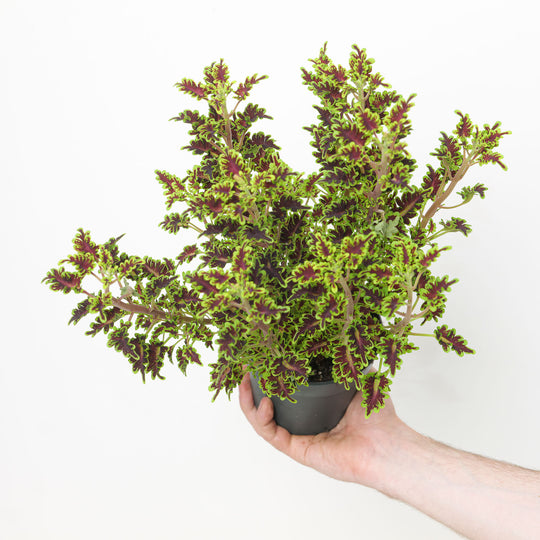
- Hardiness: This collection spans RHS H1b to H7. Around three quarters of it sits at H5 to H7 and stays outside all year across most of the UK. A smaller group, including the Coleus, Begonia, Colocasia and Fatsia polycarpa, is rated H3 or below and needs a frost-free spot over winter. The band is shown on every product page, so check it before planting out.
- Watering: Dry shade is the hardest condition in any garden. Water deeply once a week through the first two summers to establish, then let mulch hold the moisture. Pots in shade dry out more slowly than pots in sun, but still need checking through summer.
- Spring tidy: Cut back tired fronds and old leaves in early spring, before new growth pushes through. Beyond that, most of these plants would rather be left alone.
Explore the shade range
Shade planting works best in layers. Use Hardy Ferns for texture at mid-height and Tree Ferns where you want a canopy, then Hostas for broad leaves at ground level. Where the bed brightens towards its edge, run it into Plants for Tropical & Exotic Borders so the shady planting and the sunnier border read as one scheme. Everything here sits inside our wider Outdoor Plants range. All plants shipped directly from our nursery to your door.