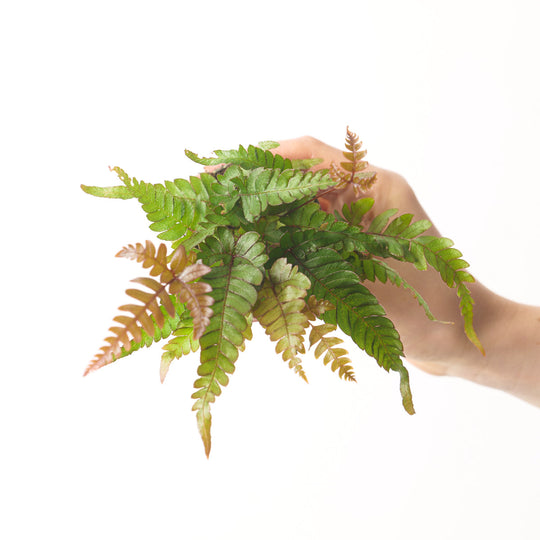
Why Choose Indoor Ferns?
Ferns have been growing on earth for over 350 million years, long before flowering plants evolved. Their delicate, arching fronds add texture and movement to a room in a way that few other houseplants can. They thrive in the humid, shaded conditions that many homes naturally provide, especially bathrooms and kitchens.
Popular Indoor Fern Varieties
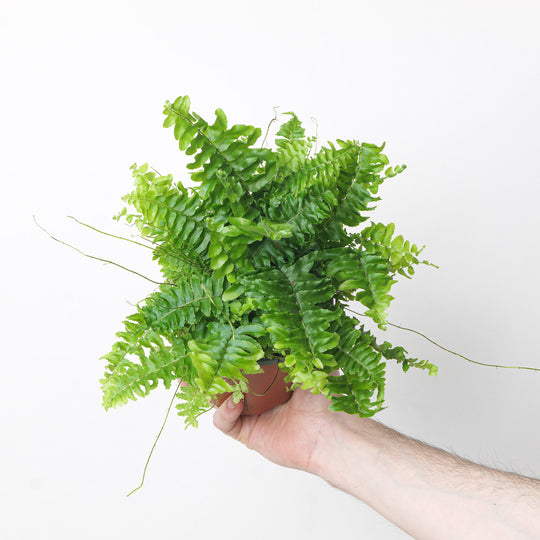
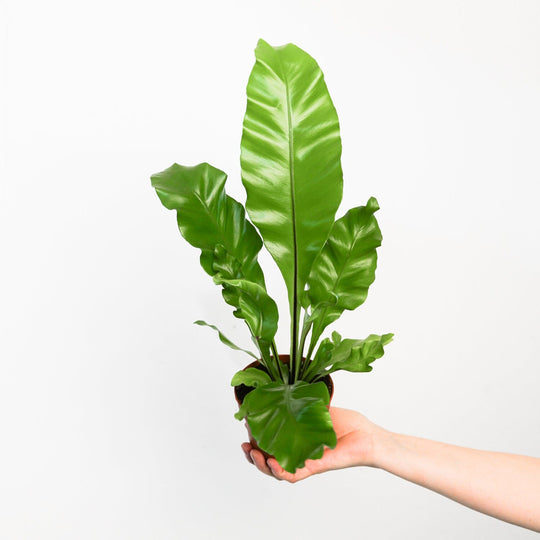
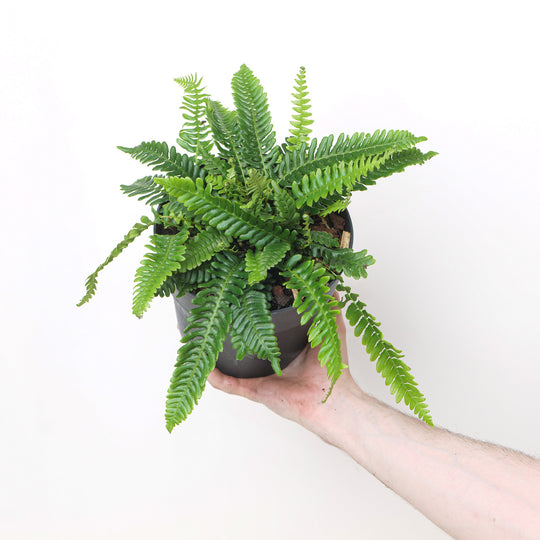
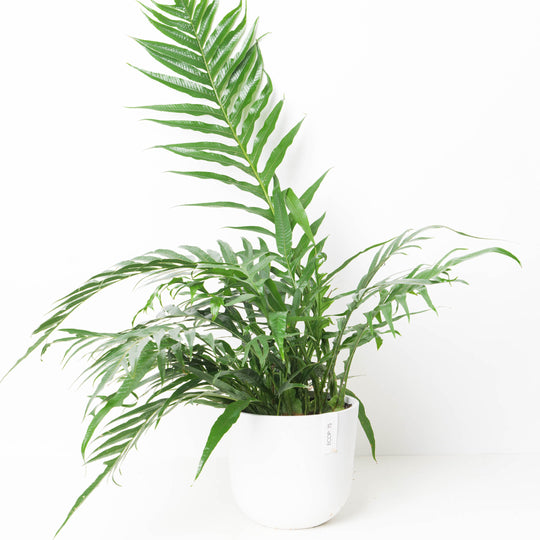
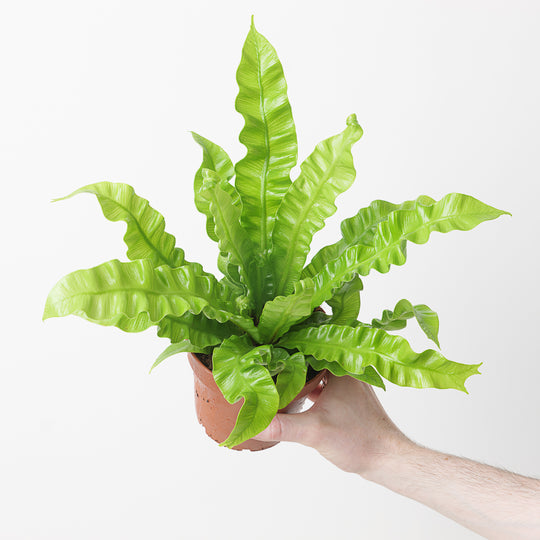
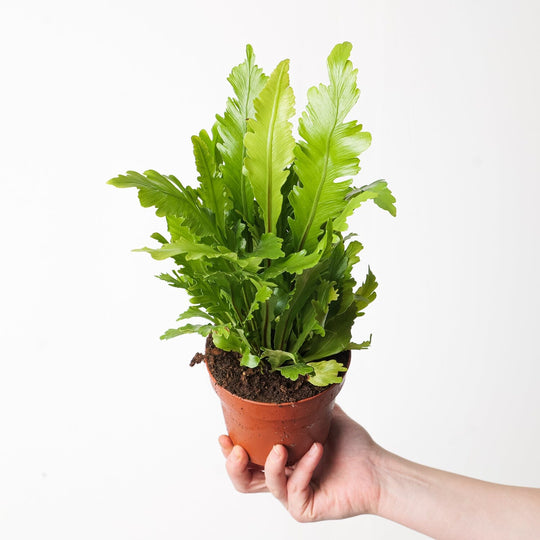
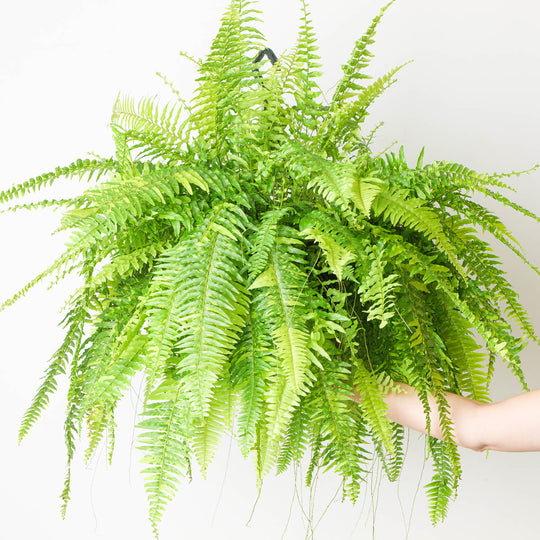
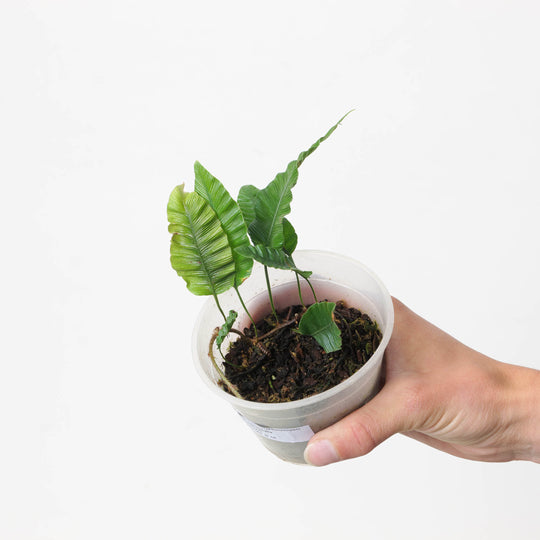
Asplenium nidus (Bird's Nest Fern) is one of the easiest ferns to grow indoors. Its broad, undivided fronds unfurl from a central rosette and tolerate lower humidity than most ferns. Nephrolepis 'Green Lady' is a classic Boston fern with cascading fronds, perfect for hanging baskets or high shelves.
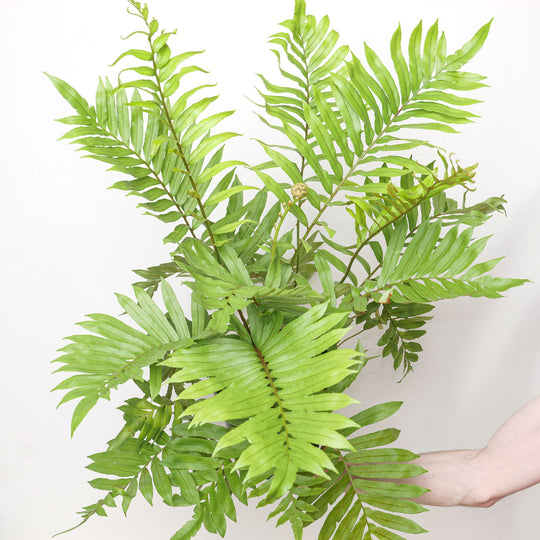
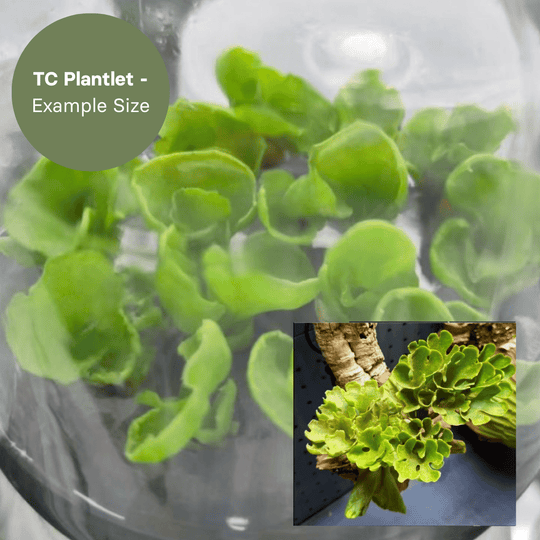
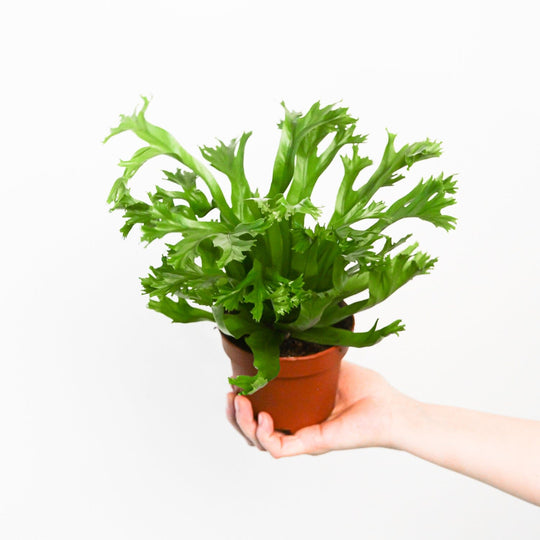
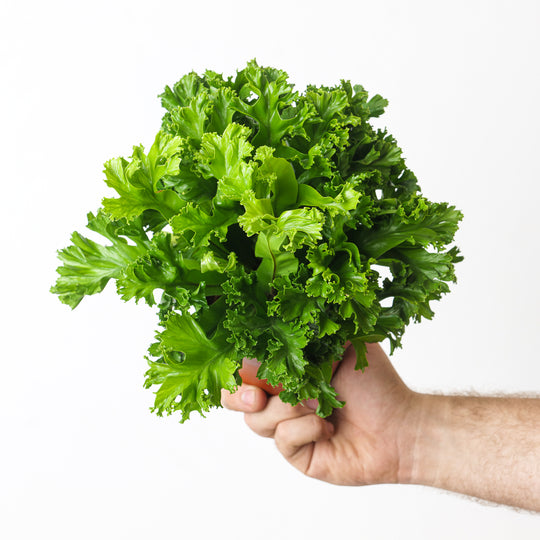
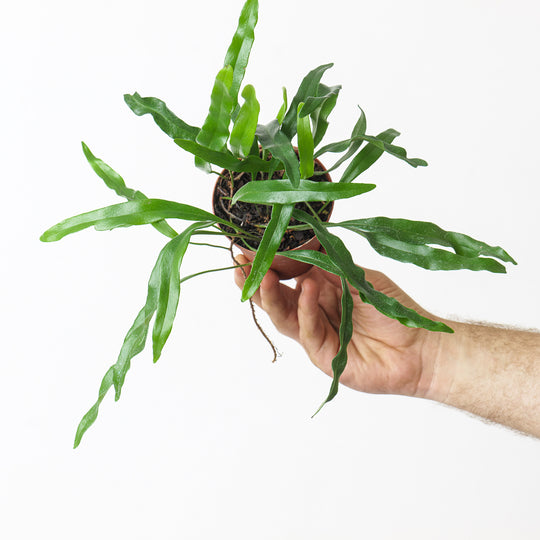
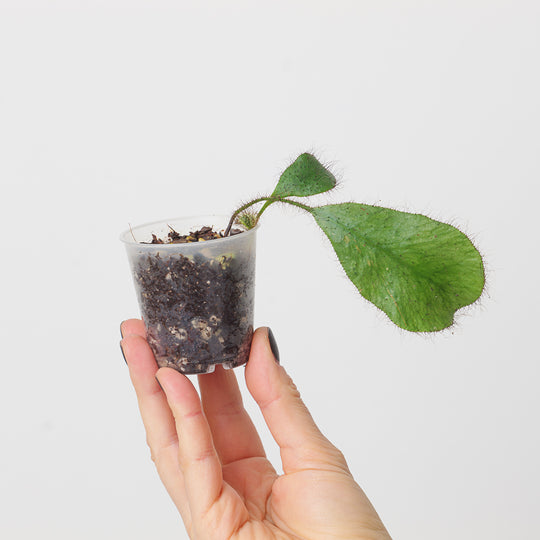
For something more unusual, Microsorum Crocodyllus features textured leaves that resemble crocodile skin. Asplenium 'Crispy Wave' offers ruffled, sword-shaped fronds that add a modern twist to the traditional Bird's Nest shape.
Rare and Collector Ferns
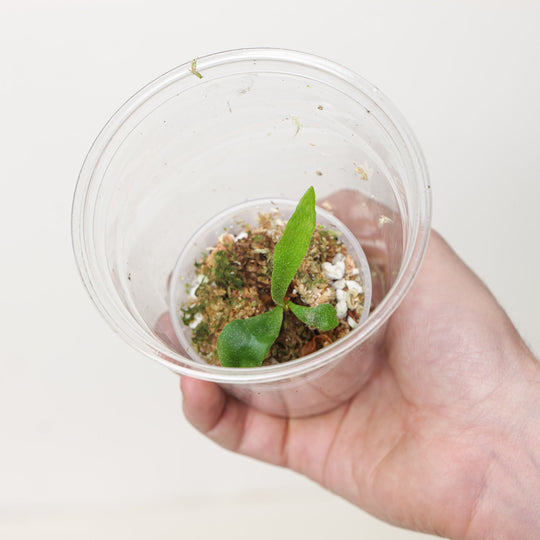
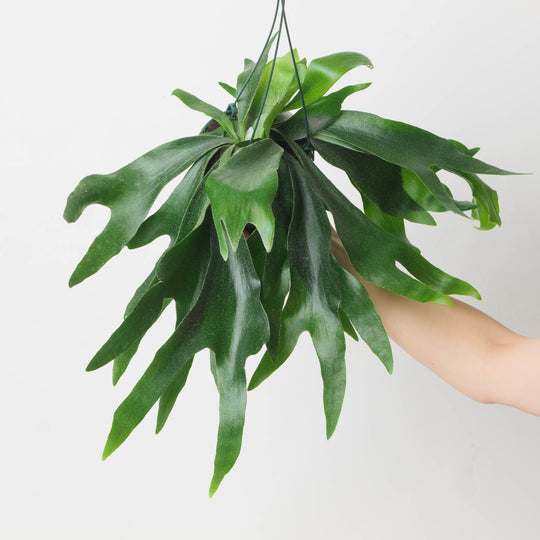
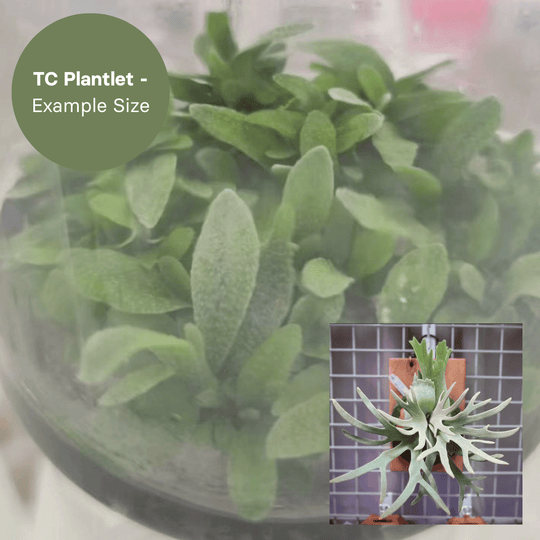
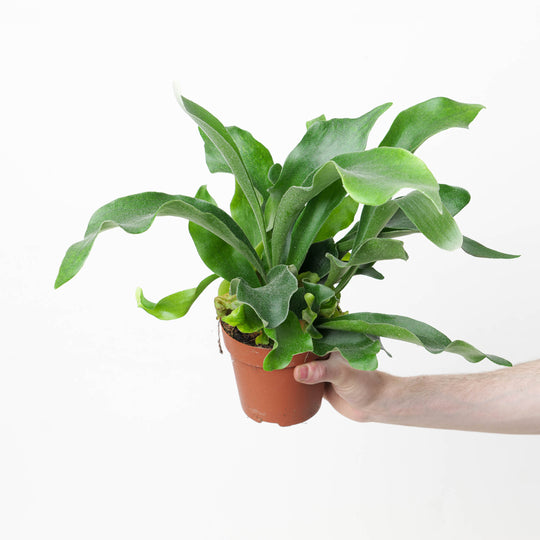
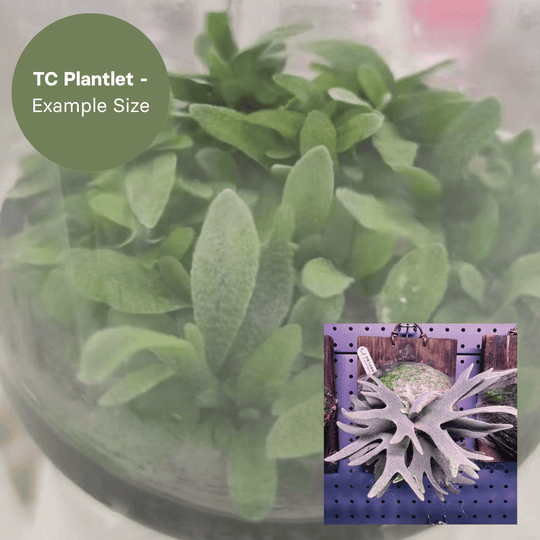
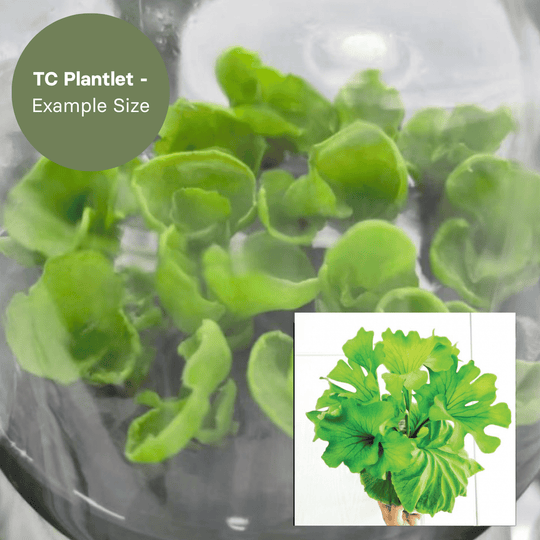
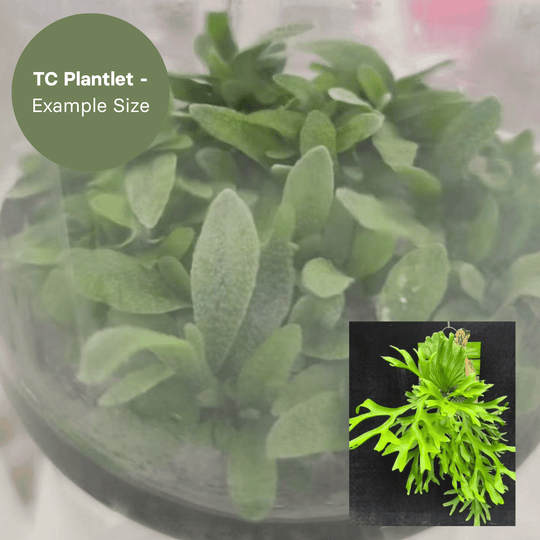
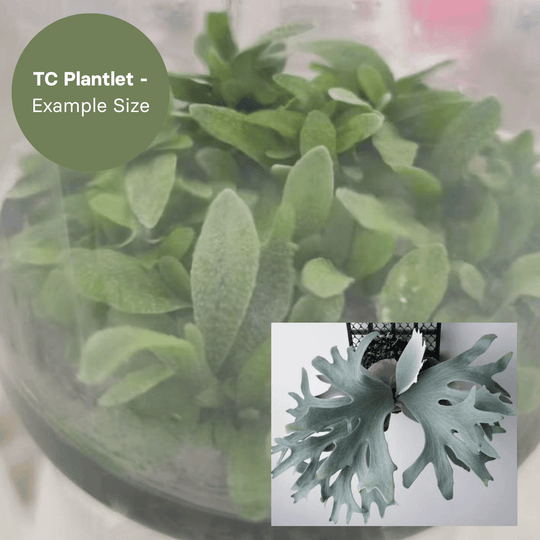
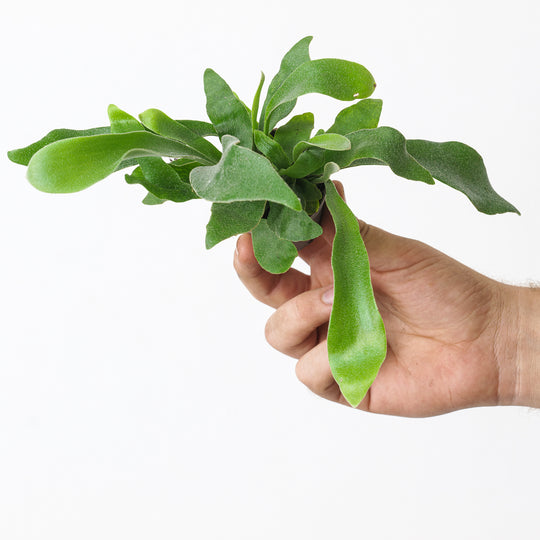
Platycerium (Staghorn Ferns) are among the most spectacular ferns you can grow. They produce antler-shaped fronds and can be mounted on boards or grown in hanging baskets. We carry several species including Platycerium superbum and Platycerium Grande. Dicksonia antarctica is a stunning tree fern for sheltered outdoor spaces or large conservatories.
Caring for Indoor Ferns
Most ferns prefer bright indirect light and high humidity. Keep the compost consistently moist but not waterlogged. Misting, grouping plants together, or placing pots on pebble trays all help raise humidity. Avoid placing ferns near radiators or in draughty spots, as dry air causes fronds to brown and crisp.
Feed every two to four weeks with a balanced liquid fertiliser during spring and summer. Most ferns are not heavy feeders, so a half-strength solution works well. Remove any brown or dead fronds at the base to keep the plant looking tidy and encourage new growth.
Ferns for Terrariums
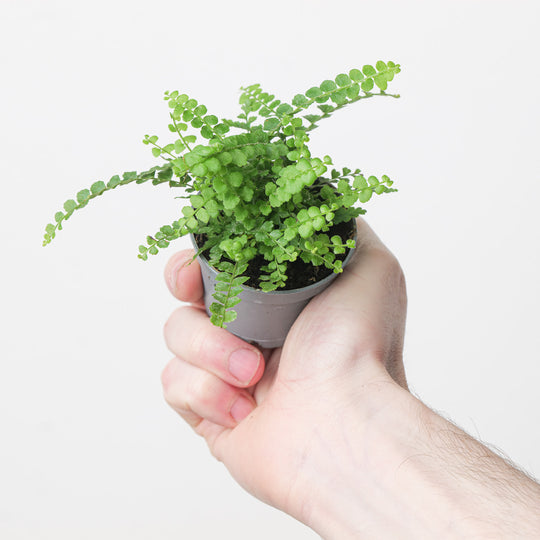
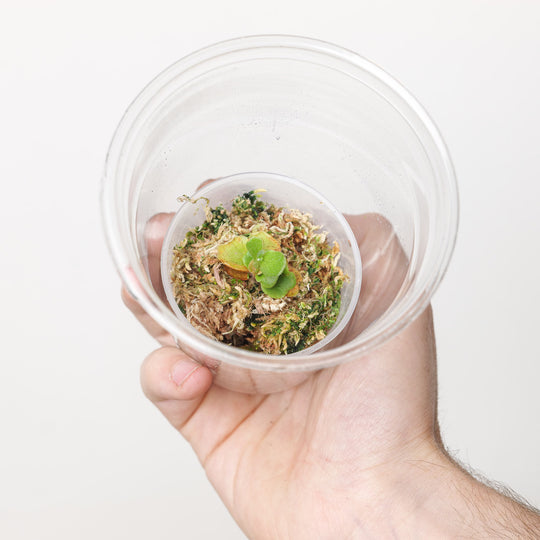
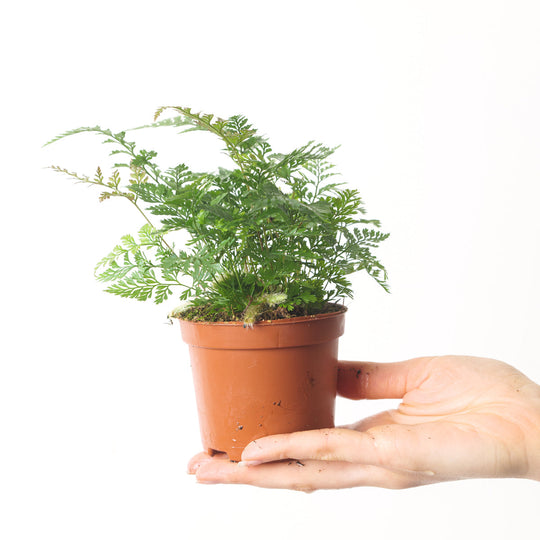
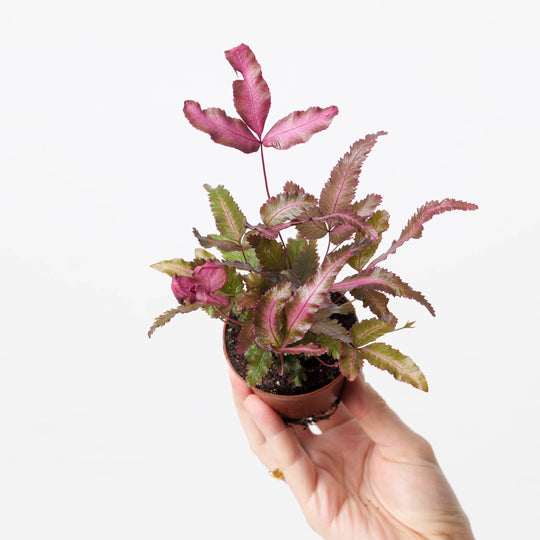
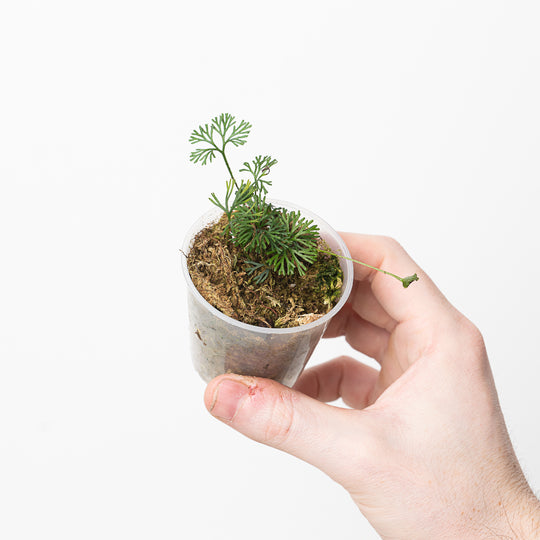
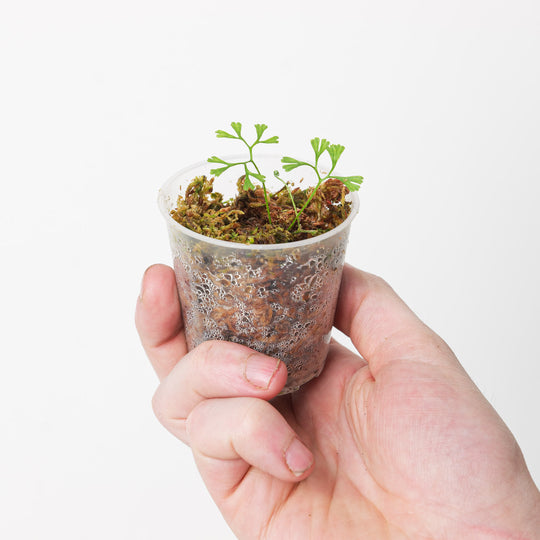
Many smaller fern species are perfect for terrariums and glass displays. Species like Humata tyermanii (Rabbit's Foot Fern) and Elaphoglossum peltatum thrive in the enclosed, humid environment of a terrarium. Their compact growth makes them ideal for smaller glass vessels.