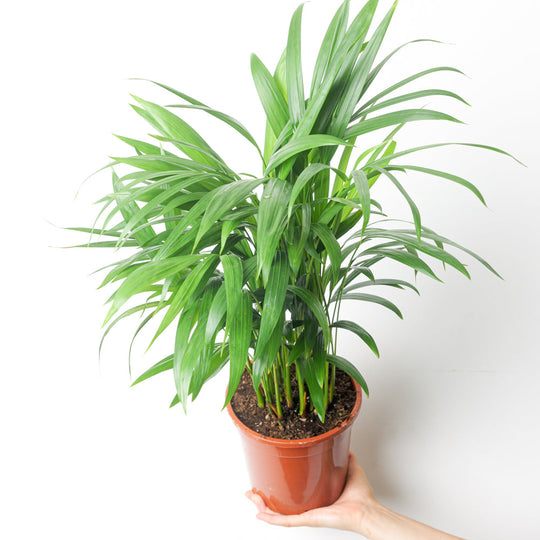
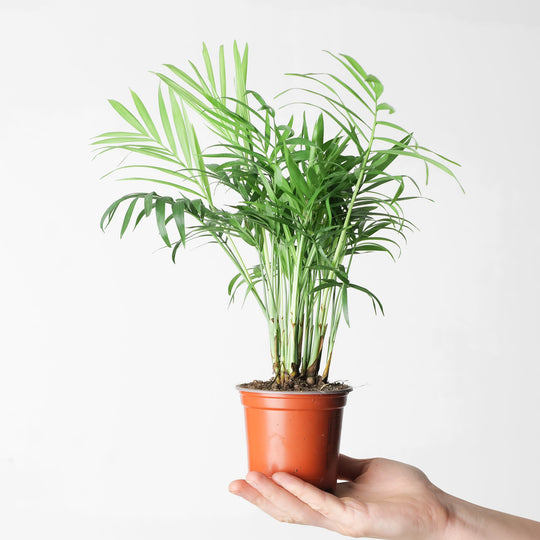
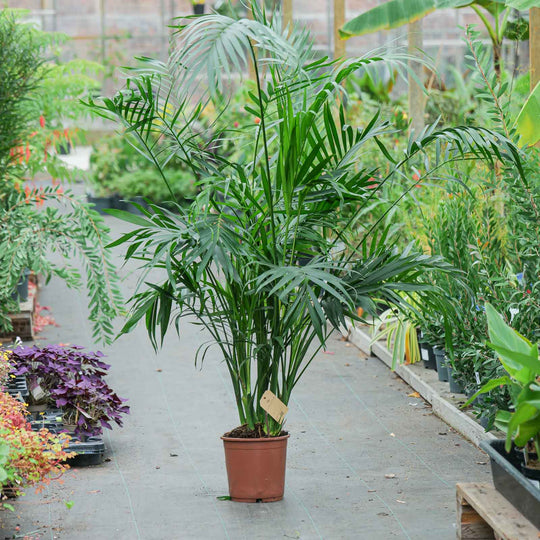
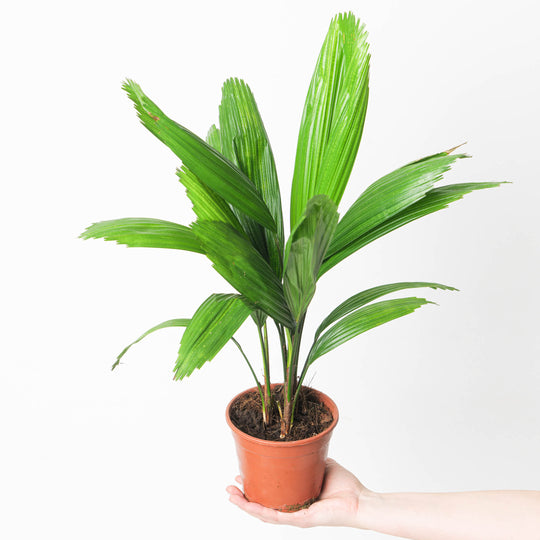
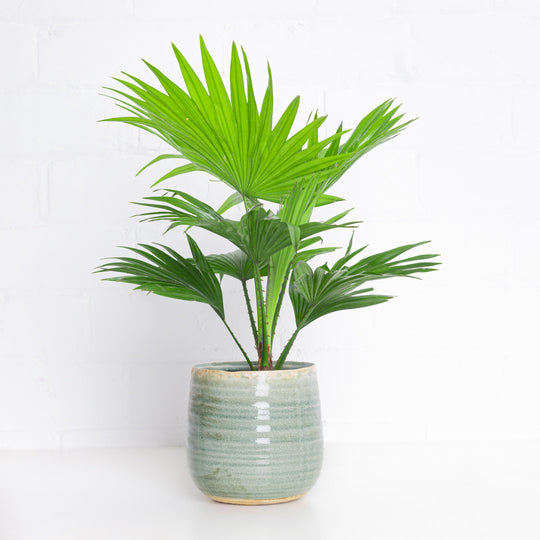
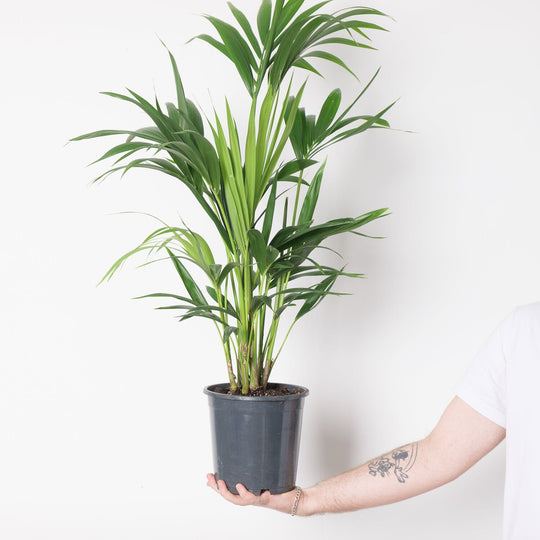
Palms such as Chamaedorea elegans want bright, indirect light: near a window, ideally with morning or evening sun rather than harsh midday rays, which can scorch fronds. Give them room to arch; a palm crammed against a wall never shows its shape.
They are natural room-softeners, blurring hard edges and corners, and their fine fronds read as calm rather than busy even at size.
Keeping fronds green
Water when the top few centimetres of compost dry, keeping the root ball lightly moist through the growing season. Brown frond tips usually mean dry air or underwatering: raise humidity and check your watering rhythm before anything else. Dypsis lutescens 'Areca Palm' responds quickly once conditions improve.
Do not cut whole fronds unless they are fully brown; palms draw nutrients back from ageing fronds. For similar softness in smaller spaces, try our ferns, or add height with the tree-form collection.
Frequently Asked Questions
The classic indoor palms are dependable given bright, indirect light and steady watering. They grow slowly and forgive the odd lapse.
The main complaints, brown tips and pale fronds, are almost always dry air or light issues, both fixable. See the palm collection for current varieties.
Dry air is the usual culprit, followed by underwatering and salt build-up from tap water. Palms like humidity and consistent, moderate moisture.
Trim brown tips with scissors, cutting just inside the dead tissue at an angle that follows the tip's shape, and address the underlying cause.
Bright and indirect: close to a window, shielded from strong midday sun. Deep shade leads to sparse, stretched growth over time.
Rotate the pot every week or two so the fronds develop evenly on all sides.
True palms sold as houseplants, including Chamaedorea and Howea, are non-toxic to cats and dogs, which makes them a favourite for pet households.
Beware lookalikes that are not true palms: always check the toxicity note on the specific product page.
Misting offers only a brief humidity boost. Grouping plants, a pebble tray or a small humidifier raise humidity far more effectively.
An occasional shower or leaf rinse does help, mainly by keeping fronds clean and discouraging spider mites, which love dusty, dry palms.