Jewel Orchids


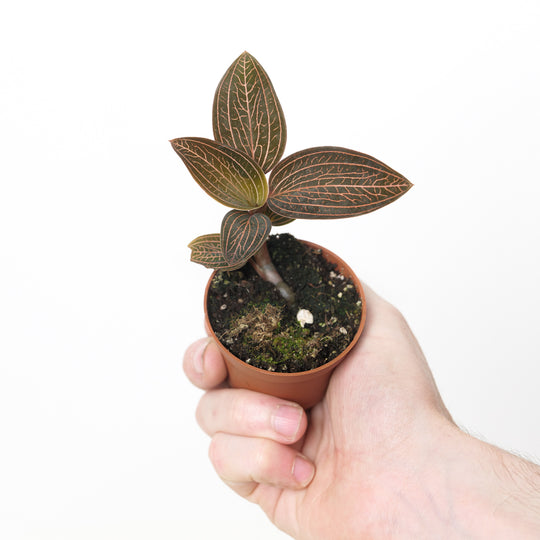
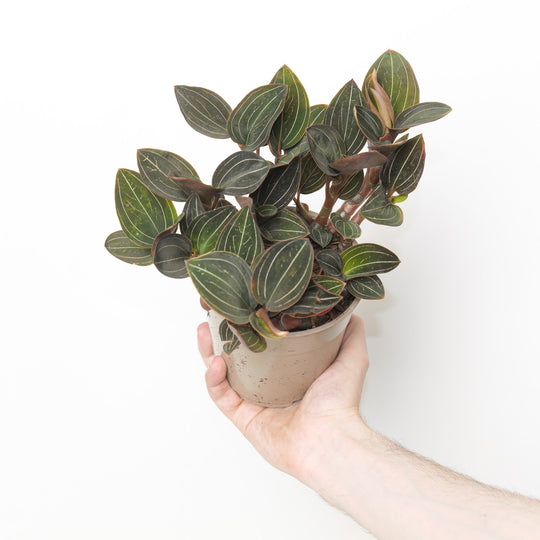
Jewel orchids are terrestrial orchids grown for their foliage rather than their flowers. Their velvet leaves are veined with gold, silver or copper, and the patterns shimmer as the light moves. Start with the easy-going Ludisia discolor, step up to the electric veining of Macodes petola, or collect the rarer Anoectochilus and Goodyera. Most stay small and love humidity, which makes them some of the best terrarium plants you can grow.

55 products

    55 products
    Anoectochilus chapaensis Plants GrowTropicals

    Anoectochilus

    Anoectochilus chapaensis

    £22.99
    1
    Anoectochilus roxburghii 'Gold Heart' (TC Preorder Plantlet) Plants GrowTropicalsSale

    TC Preorder

    Anoectochilus roxburghii 'Gold Heart' (TC Preorder Plantlet)

    £12.99£13.99Save 7%
    1
    Anoectochilus roxburghii 'White Heart' (TC Preorder Plantlet) Plants GrowTropicalsSale

    TC Preorder

    Anoectochilus roxburghii 'White Heart' (TC Preorder Plantlet)

    £10.99£13.99Save 21%
    1
    Anoectochilus hybrid 'Emerald Gold Variegated' (TC Preorder Plantlet) Plants GrowTropicalsSale
    1
    Anoectochilus Black Swan (Acclimated) Plants GrowTropicals
    1
    Anoectochilus Silver Silk Variegated (TC Preorder Plantlet) Plants GrowTropicals
    1
    Anoectochilus Emerald Gold Variegated (Acclimated) Plants GrowTropicals
    1
    Anoectochilus Black Swan Albo (TC Preorder Plantlet) Plants GrowTropicals
    1
    Anoectochilus Black Swan Aurea (TC Preorder Plantlet) Plants GrowTropicalsSale

    TC Preorder

    Anoectochilus Black Swan Aurea (TC Preorder Plantlet)

    £39.49£46.99Save 15%
    1

    Rare Jewel Orchids for Terrariums and Collectors

    What Makes Jewel Orchids Different

    Most orchids are bought for their blooms. Jewel orchids are bought for their leaves. These are ground-dwelling orchids from the forest floors of Asia, and their foliage has a velvet texture with fine metallic veins in gold, silver, red or copper. The flower spikes are small and white, a bonus rather than the main event.

    The best-known jewel orchid is Ludisia discolor, with deep burgundy leaves and pink veins. Macodes petola has lime-green leaves with gold veining that looks almost lit from within, and Dossinia marmorata is one of the largest and most dramatic of the group.

    Ludisia, Macodes, Anoectochilus and Goodyera

    Our range covers four main genera. Ludisia is the hardiest and the best place to start, coping with normal room humidity. Macodes and Anoectochilus carry the most intense veining and do best in a terrarium. Goodyera are compact and often marbled with silver, and some species are cool-growing.

    We also stock hybrids between these genera, such as Anoectochilus roxburghii 'Yellow' x Macodes petola, which combine traits from both parents.

    Jewel Orchids in Terrariums

    Jewel orchids grow naturally in shaded, humid leaf litter, so a closed or semi-closed glass case suits them well. They stay small, they do not need bright light, and they hold their colour best when humidity stays high. Pair them with mosses and small ferns from our terrarium plants range.

    Many of our rarer varieties come as acclimated tissue culture plants, such as Anoectochilus roxburghii 'White Gold'. Browse The Lab for more tissue culture plants.

    Sourcing and Quality

    We work with trusted partner nurseries to source and curate the best quality plants. Every plant is grown on and supplied at its healthiest. All of our jewel orchids are specialist-nursery sourced, never wild-collected. Browse the wider orchid collection for flowering species and miniatures.

    Frequently Asked Questions

    Jewel orchids are terrestrial orchids grown mainly for their foliage. Their leaves have a soft, velvet texture with metallic veins in gold, silver, pink or copper. The group includes Ludisia, Macodes, Anoectochilus, Goodyera and Dossinia.

    Popular examples include Ludisia discolor and Macodes petola. They produce small white flower spikes, usually in winter, but most growers keep them for the leaves.
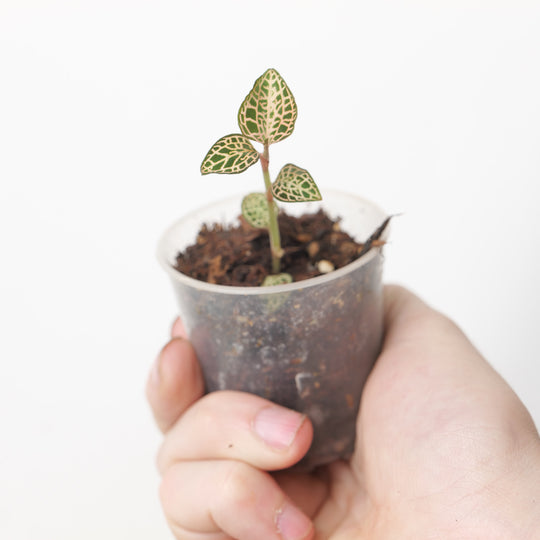
    Ludisia discolor is the easiest jewel orchid to grow. It tolerates normal household humidity better than the others, grows steadily, and roots easily from cuttings. Varieties such as Ludisia discolor 'Green Velvet' are a good first plant.
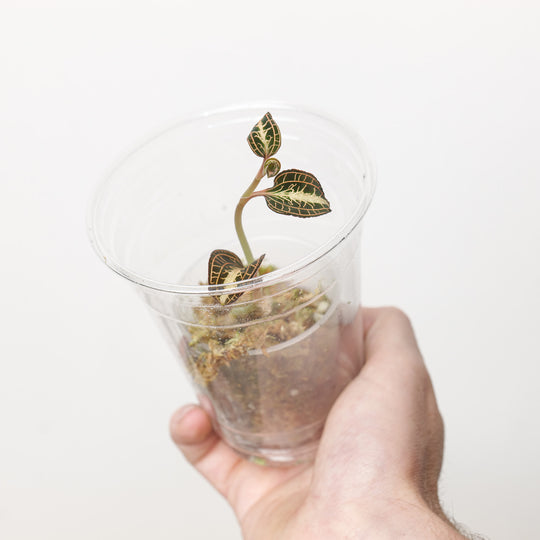
    Once you are comfortable with Ludisia, move on to Macodes or Anoectochilus, which need higher humidity and are best grown in a terrarium.

    Give jewel orchids bright, indirect light or gentle shade, away from direct sun, which scorches the leaves. Keep them between 18 and 26°C. Use a free-draining, moisture-retentive mix such as sphagnum moss with fine bark and perlite. Keep the mix lightly moist, never waterlogged.

    Humidity matters most. Ludisia copes with 50 to 60%, while Macodes and Anoectochilus prefer 70% or more. If the leaf edges crisp, the air is too dry. Feed with a weak orchid fertiliser every few weeks while the plant is growing.

    Yes. Jewel orchids are among the best orchids for terrariums. They stay compact, enjoy low to moderate light and thrive in the stable humidity of a glass enclosure. Macodes and Anoectochilus in particular hold their colour best under glass.

    Leave some airflow, either a small gap in the lid or regular opening, to prevent rot. See our terrarium plants for companions that like the same conditions.

    Orchids are generally regarded as non-toxic to cats and dogs, and we include many of our Ludisia and Anoectochilus in our pet safe houseplants range. As with any plant, keep them out of reach of pets that like to chew leaves.

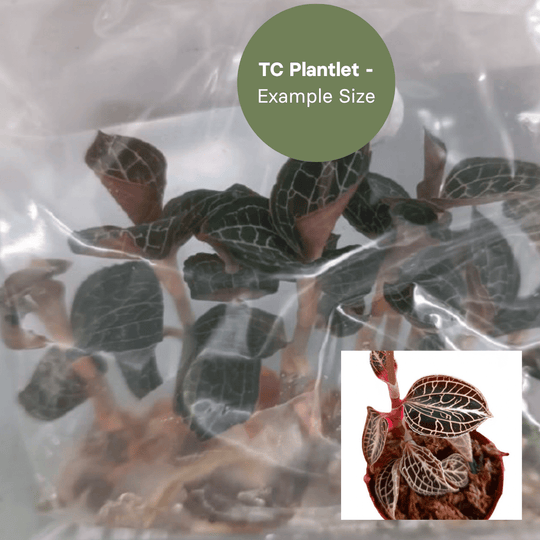
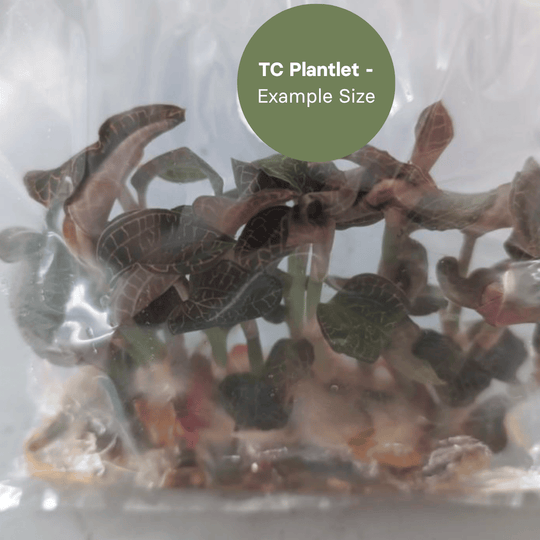
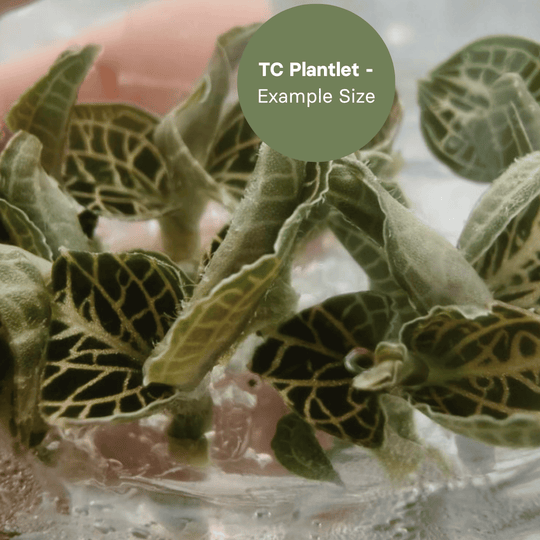
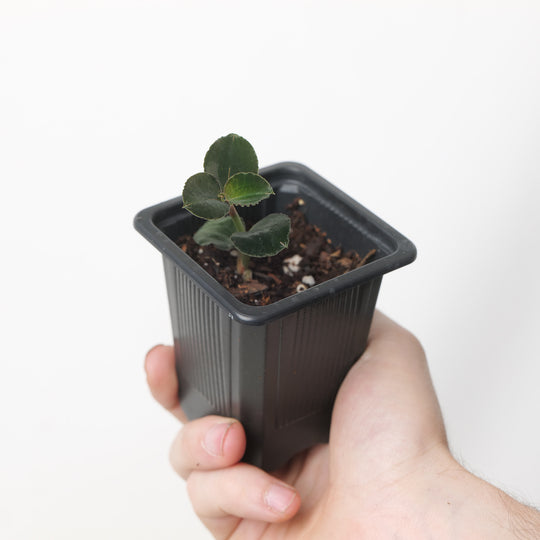
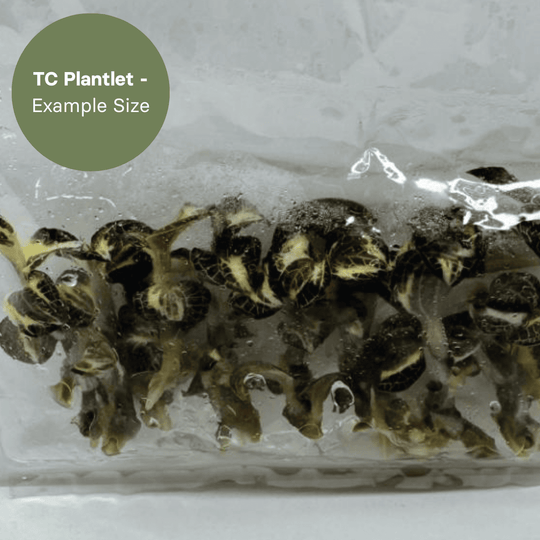
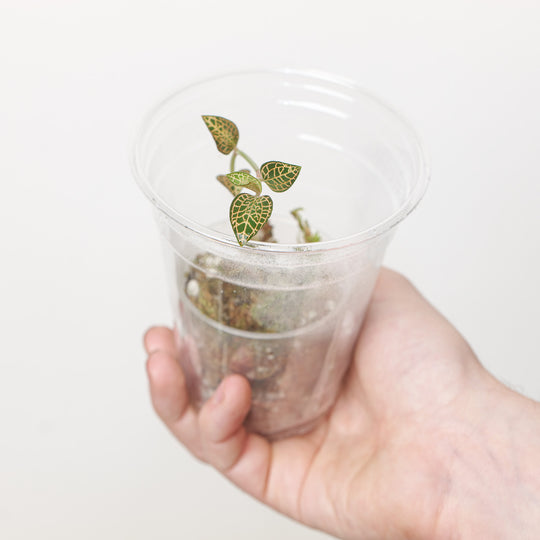
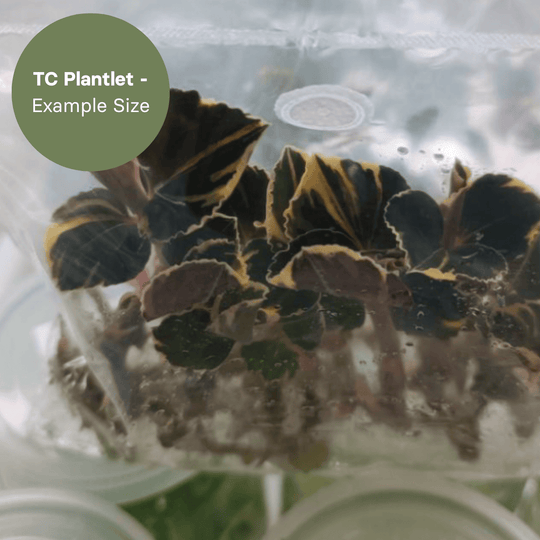
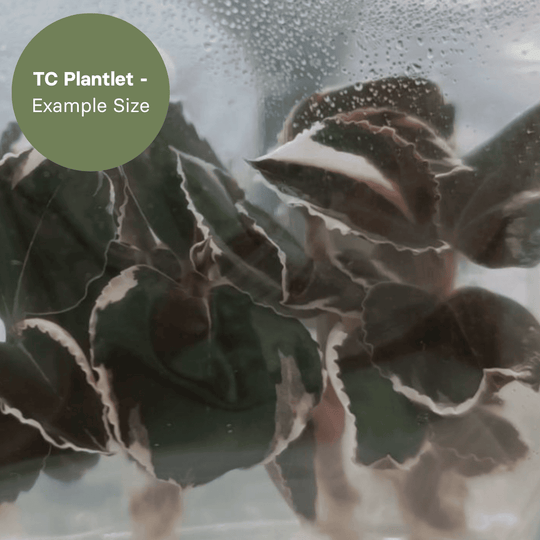
    Tissue culture plants are grown in sterile lab conditions, which lets rare varieties be produced without collecting them from the wild. Our "Plantlet" listings are young plants straight from culture, and "Acclimated" listings have already been weaned onto normal growing conditions.

    Acclimated plants, such as Anoectochilus Black Swan, are the easier choice. Plantlets suit growers with a humid propagation box or terrarium. Find more in The Lab.