


Packaged with Care
Every order is hand-packed in eco-friendly, protective packaging - refined through thousands of deliveries to ensure your plant arrives healthy, hydrated, and looking its best.
Backed by our Live Arrival Guarantee.


FREE tracked delivery on orders over £60
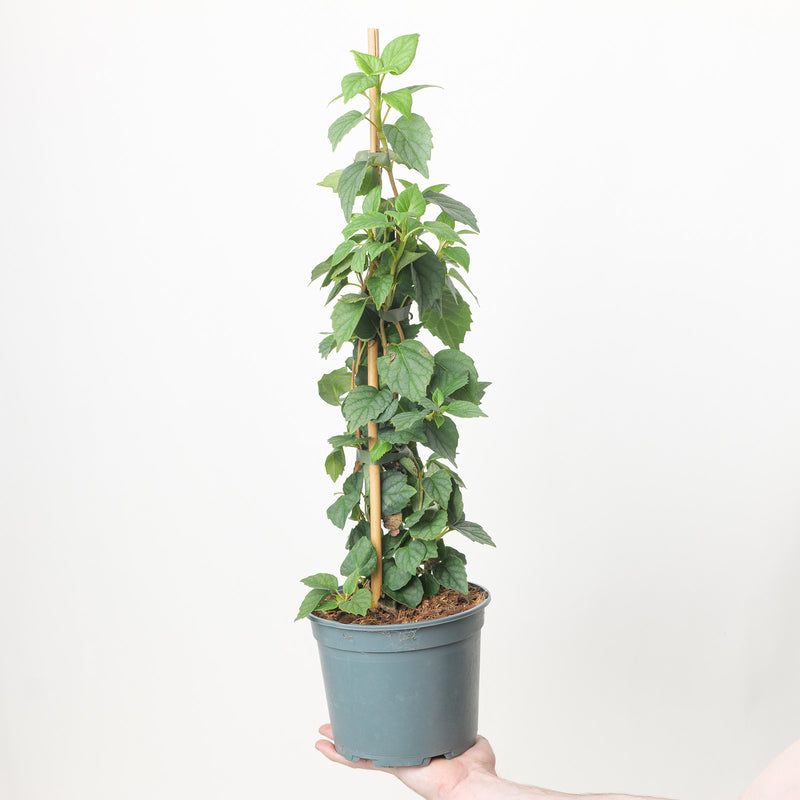
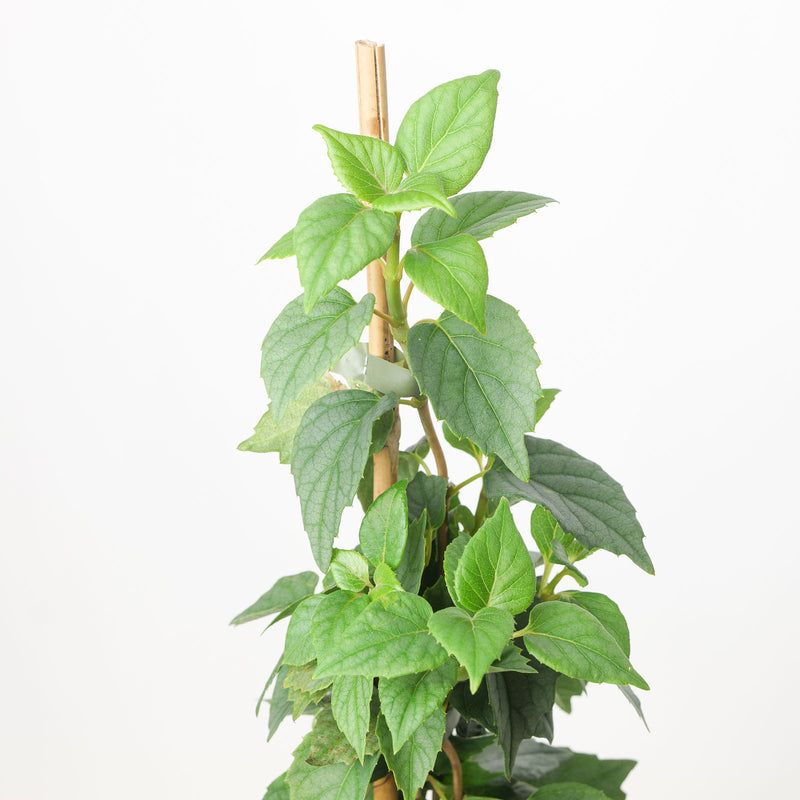
Hydrangea hydrangeoides f. concolor 'Moonlight', still widely sold as Schizophragma hydrangeoides 'Moonlight', is the silver-leaved form of the Japanese hydrangea vine. Each heart-shaped leaf is washed with a silvery blue-green sheen and etched with dark green veins, so the plant looks good from the moment it leafs out in spring. In midsummer it carries flat, lacecap-style heads of small creamy flowers, each ringed with large white bracts that hang like petals, and the foliage picks up orange and yellow tints before it drops in autumn.
Hardiness and seasons. This is a fully hardy, deciduous, self-clinging climber rated H5, so it stands up to severe winters across most of the UK. It is bare through winter, leafs out in spring, flowers from around July into August and colours in autumn. It holds the RHS Award of Garden Merit.
How and where to grow. Give it a wall, fence or tree trunk to climb: it clings with aerial roots and needs no wires once it has taken hold. It grows in full sun or partial shade and is one of the best climbers for a north or east facing wall, where the silver leaves show to full effect. It is happy on chalk, clay, loam or sand as long as the soil is fertile, moist and well drained, and it copes with exposed or sheltered positions. It is slow to get going for the first year or two, then vigorous, reaching 8 to 12m in time, so allow plenty of room.
Using it in the garden. Use 'Moonlight' to clothe a shaded house wall, a bare fence or a mature tree with a curtain of silvery foliage. It pairs beautifully with ferns, hostas and other shade lovers at its feet, and the white summer flowers light up a dim corner. It also grows well in a large container against a wall if kept watered.
All plants are covered by our 7-day live arrival guarantee. We pack every order in protective, sustainable packaging designed to keep your plants safe in transit, and every plant is checked before it ships. On the rare occasion something is not right on arrival, we will make it good, provided the plant is still in its original nursery pot.
Ordering in autumn or winter? Many hardy exotics arrive dormant or cut back right now. This is normal, and the best time to plant.
Seasonal by nature: what to expect
Not sure what to expect from yours? Dormant, cut-back or weather-marked plants are all perfectly healthy and normal. Read what to expect through the seasons
Based on your basket total, confirmed at checkout. Free delivery: Economy over £60 · Standard over £100 · Express over £150.
Order by 1pm Monday to Friday for same day dispatch. Every plant travels in protective, plant-safe packaging with tracked delivery.
Changed your mind? See our Return Policy.
Arrived just like the photos - maybe even fuller. Healthy, well-acclimated, and straight into my collection with no issues.
Flawless leaves, stunning variegation, and clearly cared for by experts. It’s already a talking point in my home office.
Hard to find rare plants that are pet-safe. Ours arrived in perfect condition and looks amazing without any worry.
Hydrangea hydrangeoides f. concolor 'Moonlight' needs full sun or partial shade and moist but well-drained soil. It is hardy to around −15°C and stands a UK winter outdoors.
Hardy Exotic (H5): down to around −15°C. Hardy through a cold UK winter.
Fully hardy, H5. Deciduous, bare in winter.
Full sun or partial shade; excellent on a north or east facing wall.
Fertile, moist but well-drained soil on chalk, clay, loam or sand; any pH.
Water well through the first two summers while the aerial roots take hold, and mulch each spring. Established plants only need water in long dry spells.
Climbing
Midsummer (July to August) · White, Cream
Deciduous
Needs little pruning. Shorten overlong or outward-growing shoots straight after flowering in late summer (RHS pruning group 11). Avoid hard cutting back, which costs you next year's flowers.
Harmful to dogs and cats if eaten. Contact with the sap can irritate skin, so wear gloves when pruning.
The species is native to Japan, Korea and the Kuril Islands; 'Moonlight' is a garden selection.
Hydrangeaceae
Hydrangea hydrangeoides f. concolor 'Moonlight'
Every order is hand-packed in eco-friendly, protective packaging - refined through thousands of deliveries to ensure your plant arrives healthy, hydrated, and looking its best.
Backed by our Live Arrival Guarantee.

From rare collector’s pieces to easy-care favourites, our plants arrive fully potted and ready to enjoy. Add a personalised note at checkout for a thoughtful finishing touch.
Delivered fresh, beautiful, and gift-ready.

All plants are ethically sourced from trusted growers, never wild-collected. Every order ships carbon-neutral in minimal-waste packaging.
Good for your home - and the planet.
