


Packaged with Care
Every order is hand-packed in eco-friendly, protective packaging - refined through thousands of deliveries to ensure your plant arrives healthy, hydrated, and looking its best.
Backed by our Live Arrival Guarantee.


FREE tracked delivery on orders over £60
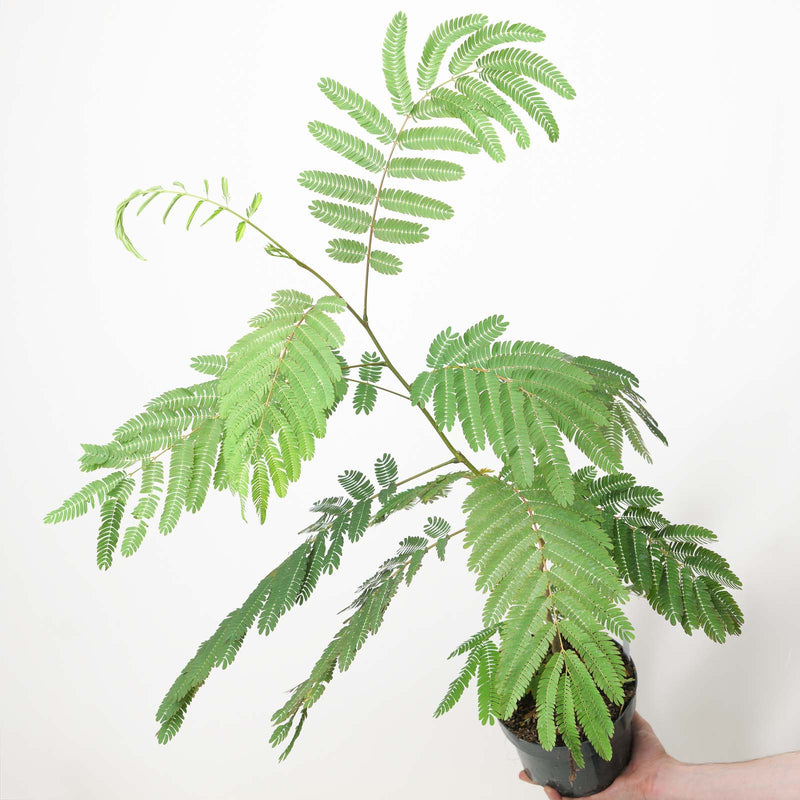
Albizia julibrissin 'Tropical Dream' is a silk tree selection prized for flowers of a deeper, more vivid pink than the ordinary species and for better resilience in cooler gardens. It forms a multi-stemmed large shrub or small tree with a spreading, umbrella-shaped crown of delicate, ferny, bipinnate leaves. The foliage folds up as evening falls and opens again with the morning sun, a small daily ritual that never stops being charming.
Hardiness and seasons. The RHS rates it H4, hardy through most of the UK in a sheltered spot, and it is regarded as one of the hardier silk tree selections offered here. It is deciduous and comes into leaf late, usually well into late spring, then flowers from July to September, when the canopy is covered in fluffy, fragrant pink powder-puff blooms. Young plants are the most vulnerable, so give them winter protection in cold gardens for their first few years.
How and where to grow. Plant it in full sun in a warm, sheltered, south or west facing position. It thrives in any well-drained soil, including chalk, loam or sand at any pH, tolerates poor soil, and is notably drought tolerant once established. The RHS gives an ultimate size of 4 to 8m after ten to twenty years, but in most UK gardens it stays much smaller and is easily kept compact by pruning, and it does well in a large container.
Using it in the garden. Few hardy plants look more exotic: the layered, umbrella canopy and silky pink flowers bring an instant subtropical feel to an exotic border or a sunny gravel garden. The nectar-rich flowers are loved by bees. Use it as a centrepiece specimen, in a large patio pot, or trained informally against a warm wall where summers are cooler.
All plants are covered by our 7-day live arrival guarantee. We pack every order in protective, sustainable packaging designed to keep your plants safe in transit, and every plant is checked before it ships. On the rare occasion something is not right on arrival, we will make it good, provided the plant is still in its original nursery pot.
Ordering in autumn or winter? Many hardy exotics arrive dormant or cut back right now. This is normal, and the best time to plant.
Seasonal by nature: what to expect
Not sure what to expect from yours? Dormant, cut-back or weather-marked plants are all perfectly healthy and normal. Read what to expect through the seasons
Based on your basket total, confirmed at checkout. Free delivery: Economy over £60 · Standard over £100 · Express over £150.
Order by 1pm Monday to Friday for same day dispatch. Every plant travels in protective, plant-safe packaging with tracked delivery.
Changed your mind? See our Return Policy.
Arrived just like the photos - maybe even fuller. Healthy, well-acclimated, and straight into my collection with no issues.
Flawless leaves, stunning variegation, and clearly cared for by experts. It’s already a talking point in my home office.
Hard to find rare plants that are pet-safe. Ours arrived in perfect condition and looks amazing without any worry.
Albizia julibrissin 'Tropical Dream' needs full sun and well-drained soil. It is hardy to around −10°C, standing an average UK winter outdoors.
Hardy Exotic (H4): down to around −10°C. Hardy through an average UK winter.
H4, hardy through most of the UK in a warm, sheltered spot. Protect young plants from hard frost for their first few winters.
Full sun in a sheltered, south or west facing position.
Any well-drained soil, including poor or dry ground; chalk, loam or sand at any pH.
Water regularly through the first summer, then only in prolonged drought; established plants are notably drought tolerant.
Bushy
July to September · Pink
Deciduous
Prune in late winter or early spring if needed, removing crossing or frost-damaged wood and shortening stems to keep it compact. It responds well, so size is easy to manage; wall-trained plants can be tidied after flowering.
Foliage and flowers are not a known hazard, but do not eat the seeds or seed pods and keep them away from pets and livestock.
The species is native to Asia, from the Caucasus and Iran east to China, Korea and Japan; this is a garden selection.
Fabaceae
Albizia julibrissin 'Tropical Dream'
We could not find a close match for that. Ask us directly and a real plant person will reply.
Contact usEvery order is hand-packed in eco-friendly, protective packaging - refined through thousands of deliveries to ensure your plant arrives healthy, hydrated, and looking its best.
Backed by our Live Arrival Guarantee.

From rare collector’s pieces to easy-care favourites, our plants arrive fully potted and ready to enjoy. Add a personalised note at checkout for a thoughtful finishing touch.
Delivered fresh, beautiful, and gift-ready.

All plants are ethically sourced from trusted growers, never wild-collected. Every order ships carbon-neutral in minimal-waste packaging.
Good for your home - and the planet.
