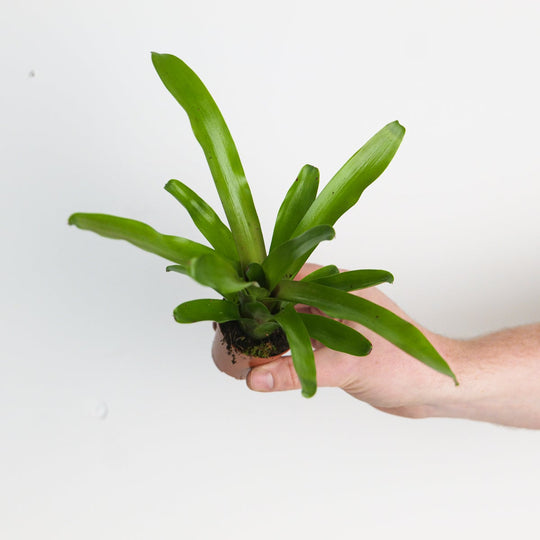
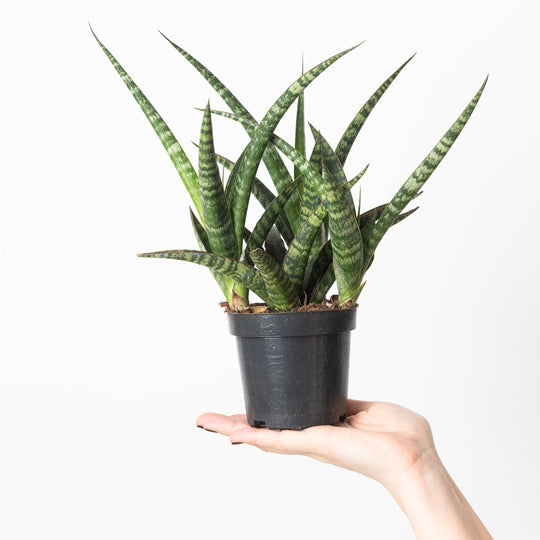
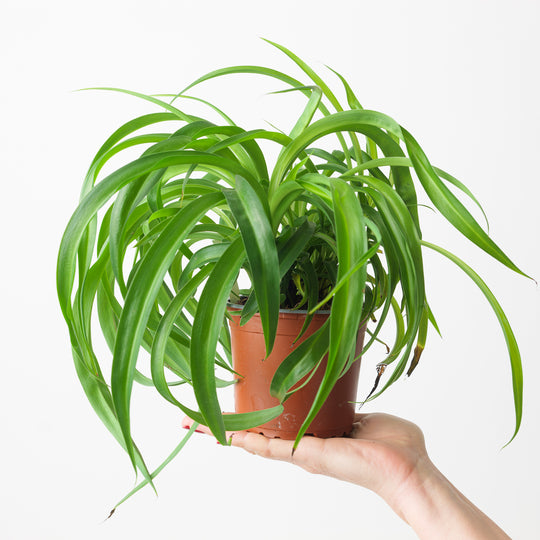
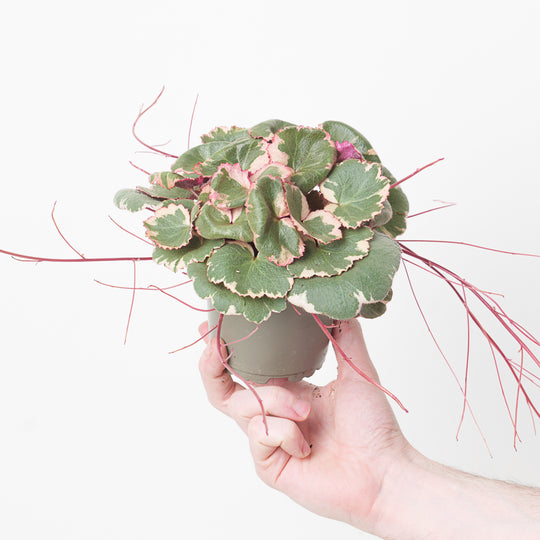
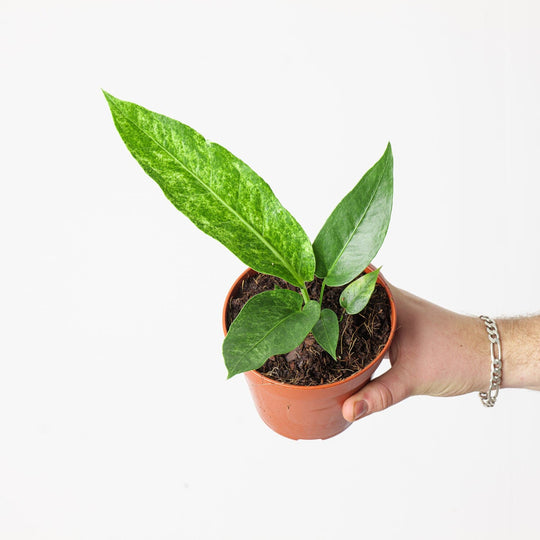
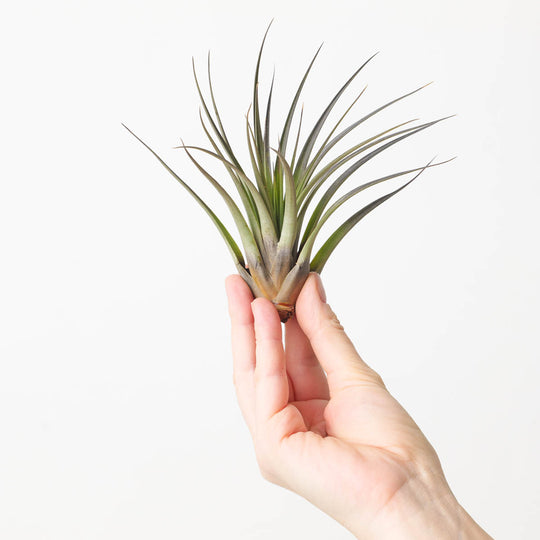
A rosette packs the leaves in a spiral around a tight central growing point, which is why plants such as Anthurium Clarinervium and Platycerium bifurcatum look almost designed. The form has a practical purpose in the wild: it funnels rain and dew towards the roots, and in bromeliads the central cup actually stores water.
Because the shape is the show, rosette plants suit simple pots and uncluttered spots where the symmetry can be appreciated from above as well as from the side.
Rosette care basics
The golden rule: keep water out of the crown unless the plant is a bromeliad. Water at compost level for species such as Brighamia insignis, as moisture trapped in the rosette can cause rot. Bromeliads are the exception and like their central cup topped up with fresh water.
A rosette plant grows its leaves in a circular arrangement around a central point, like the petals of a rose. Echeveria, bromeliads, bird's nest ferns and many air plants grow this way.
Water the compost, not the crown. Moisture sitting in the centre of most rosettes leads to rot, so aim the can at the soil around the edge of the plant.
Bromeliads are the exception: their central cup is designed to hold water and can be kept topped up, refreshed every week or two.
Succulent rosettes such as Echeveria colour up and stay compact in strong light, ideally a south or west facing windowsill. In low light they stretch and lose their tight shape.
Foliage rosettes such as bird's nest ferns prefer bright but indirect light and will scorch in full sun.
That is the natural life cycle. A bromeliad rosette flowers once, then slowly declines over months while producing offsets, called pups, around its base.
Leave the pups attached until they are about a third the size of the parent, then pot them up. Each becomes a new plant.
Many are among the safer choices: most true bromeliads and Echeveria are listed as non-toxic to cats and dogs. Always check the individual product page to be sure.
Even with safe plants, chewing is best discouraged, so shelves and stands are still a good idea with determined pets.