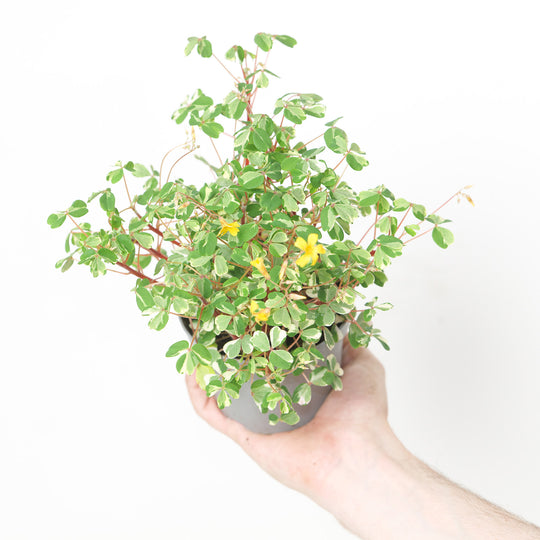
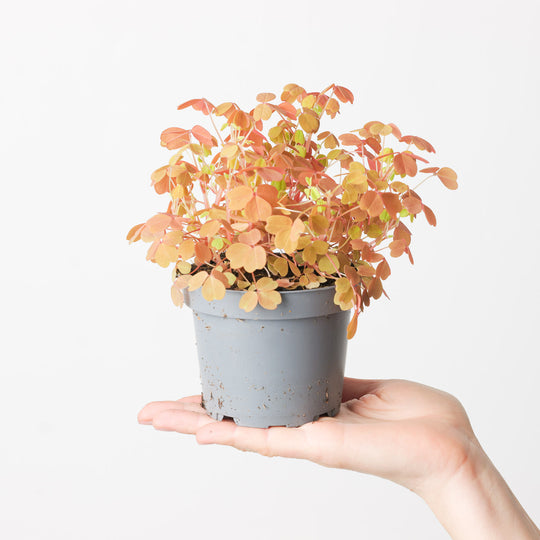
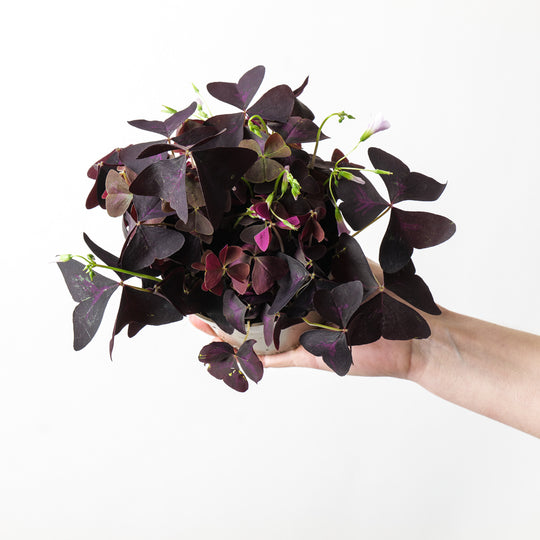
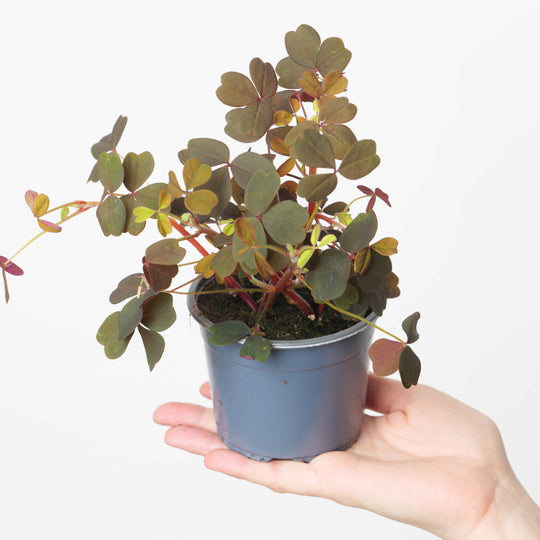
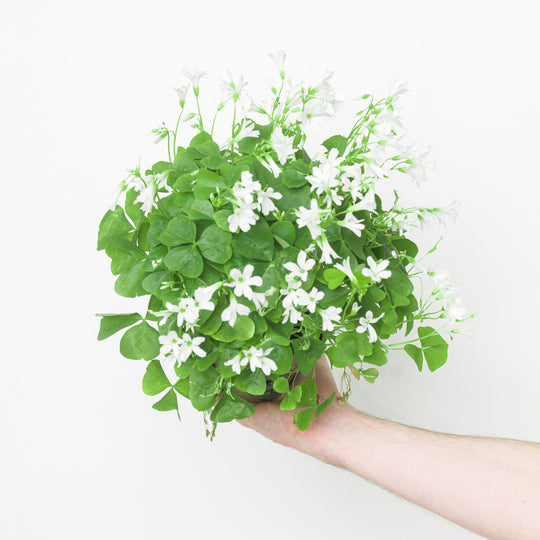
About Oxalis Plants
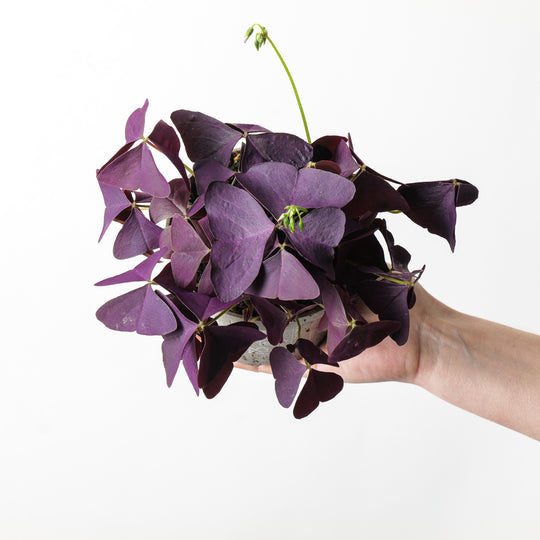
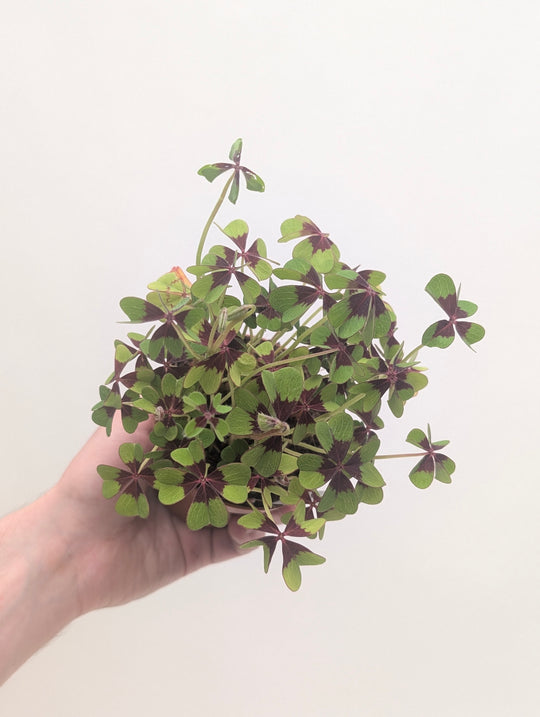
Oxalis triangularis, commonly known as purple shamrock or false shamrock, is a tender perennial grown from small underground corms. Native to Brazil, it has become a popular houseplant worldwide for its dramatic, dark-purple, triangular leaflets that open in daylight and fold closed at night or in dim conditions. This movement, called nyctinasty, is one of the plant's most endearing characteristics.
Light Requirements
Bright, indirect light produces the richest purple colouring and encourages flowering. An east or west-facing windowsill is ideal. Some direct morning sun is tolerated. In lower light, the leaves pale and the plant becomes leggy. If the purple colour fades, the plant needs more light.
Watering
Water moderately during the growing season, allowing the top 2-3 cm of compost to dry between waterings. Oxalis dislikes both drought and waterlogging. When the plant enters dormancy after flowering (leaves yellow and die back), reduce watering to almost nothing and allow the corms to rest in dry compost for 6-8 weeks.
Dormancy and Regrowth
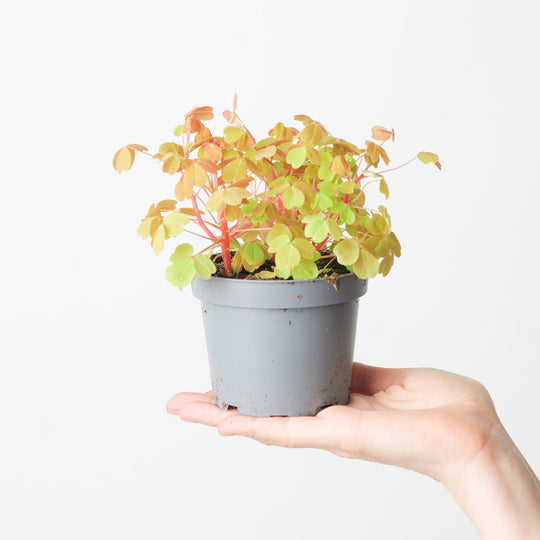
It is completely normal for oxalis to go dormant periodically, usually after a flush of growth and flowering. When leaves yellow and fall, stop watering and move the pot to a cool, dark spot. After 6-8 weeks, resume watering and move back to a bright position. New leaves will appear within 2-3 weeks as the corms rehydrate and reshoot.
Feeding
Feed monthly during the active growing season with a balanced liquid fertiliser at half strength. Do not feed during dormancy. When new growth resumes after a rest period, begin feeding again once the plant has produced a few healthy leaves.
Temperature
Oxalis prefers cool to moderate temperatures of 15-24 degrees C. It dislikes intense heat and may go dormant prematurely if kept too warm in summer. Cooler conditions in autumn naturally trigger a dormancy period, which is beneficial for the plant's long-term health.
Propagation
Oxalis propagates readily by natural corm division. As the plant matures, small corms develop around the base of the parent. These can be separated at repotting time and planted individually in fresh compost. Each corm will produce a new plant within a few weeks.