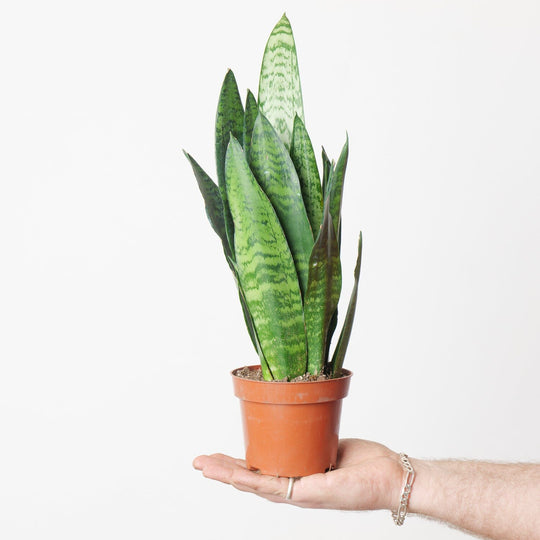
Snake plant varieties compared
Every variety below is a form of the same plant group, reclassified from Sansevieria into Dracaena in 2017. They differ in leaf shape, colour and size, but care is near identical, so choose on looks and space.
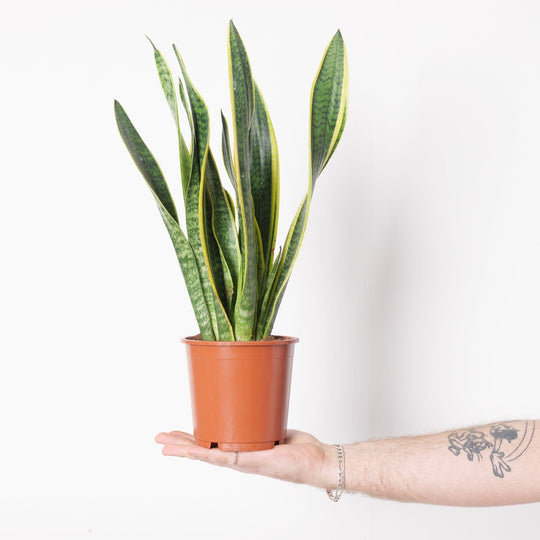
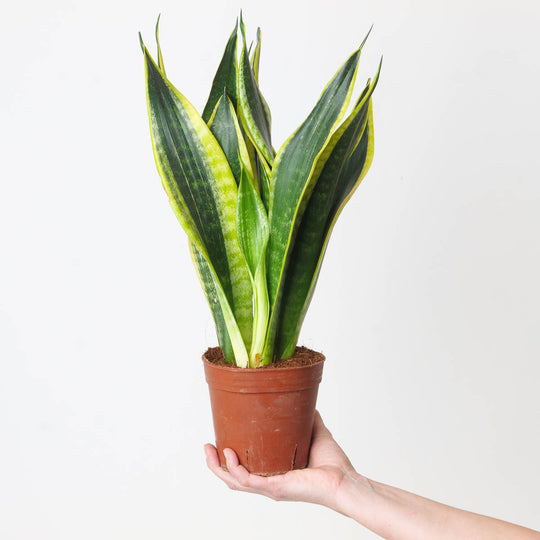
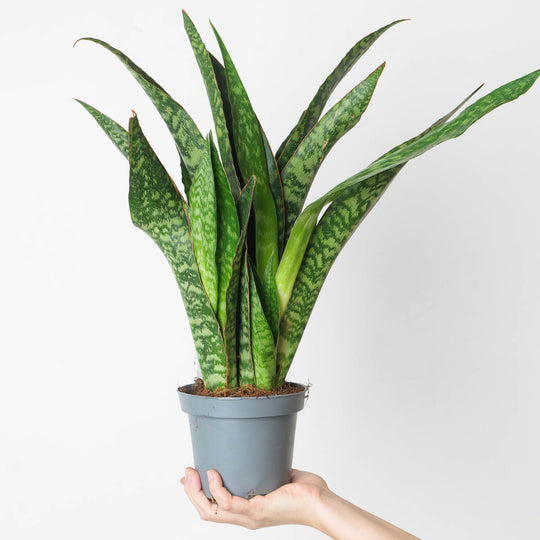
- Laurentii: tall, upright leaves with bright yellow margins. Upright and clumping. Minimum 10°C. The classic snake plant.
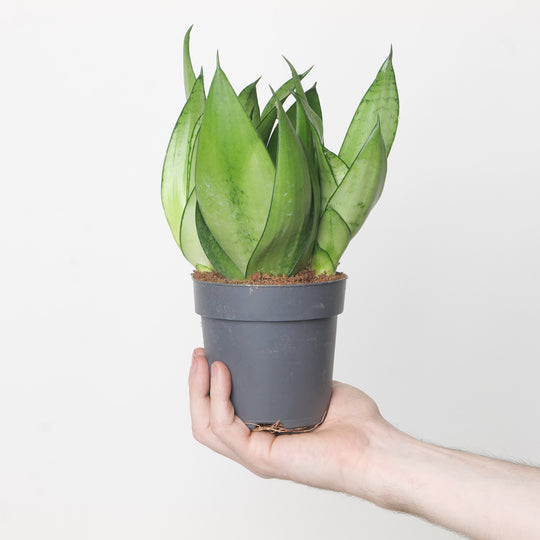
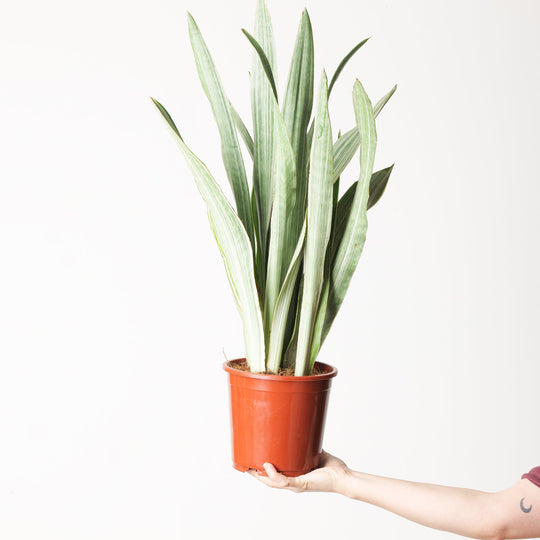
- Moonshine: pale, silvery-green leaves with a minimal, modern look. Upright and clumping. Minimum 10°C.
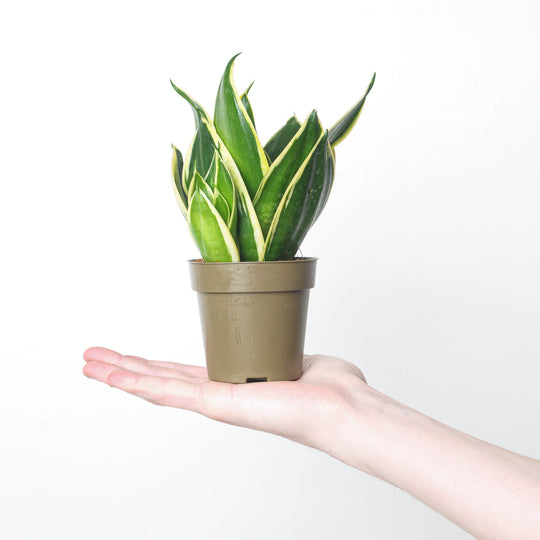
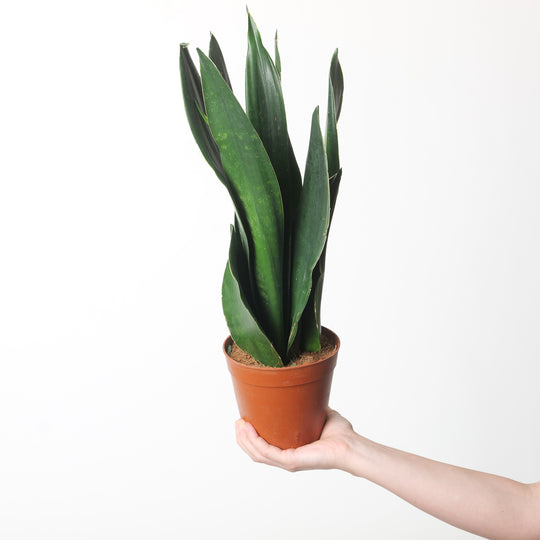
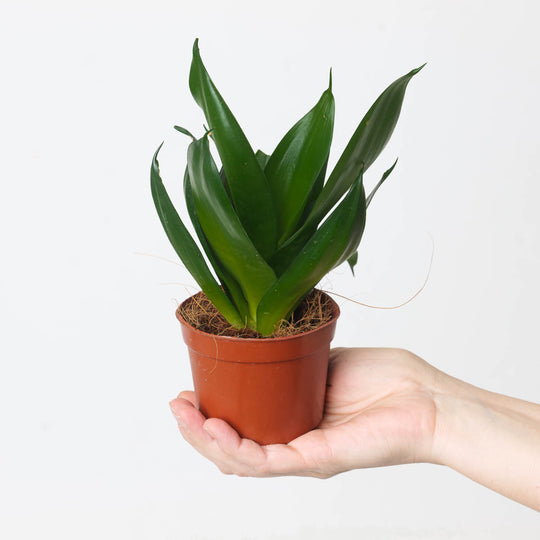
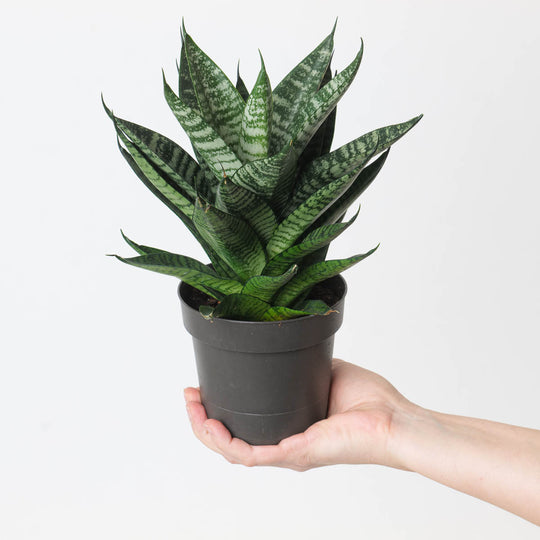
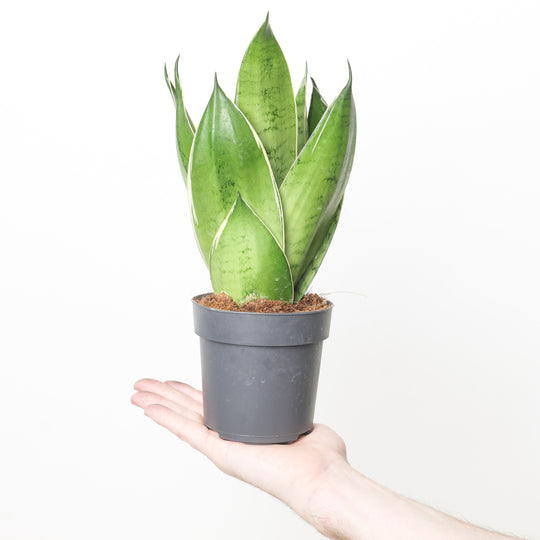
- Black Diamond: the deepest dark green, almost black, edged with fine pale margins. Upright and rosette-forming. Minimum 10°C.
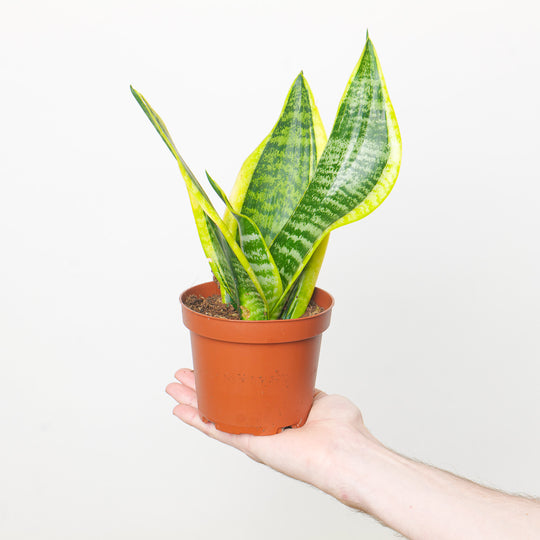
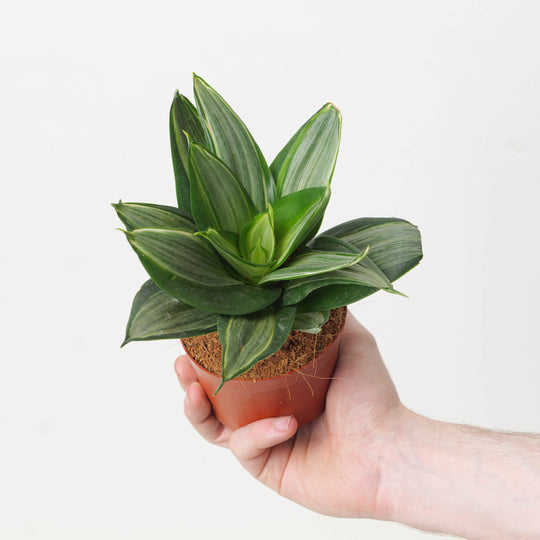
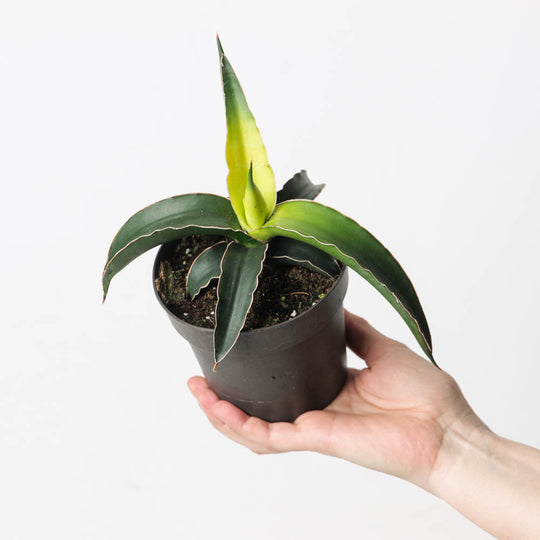
- Futura Superba: compact, with broad leaves and warm golden margins. Upright rosette. Minimum 10°C.
- Hahnii Pagoda: short leaves stacked in overlapping tiers into a small, symmetrical rosette. Stays desk-sized. Minimum 10°C.
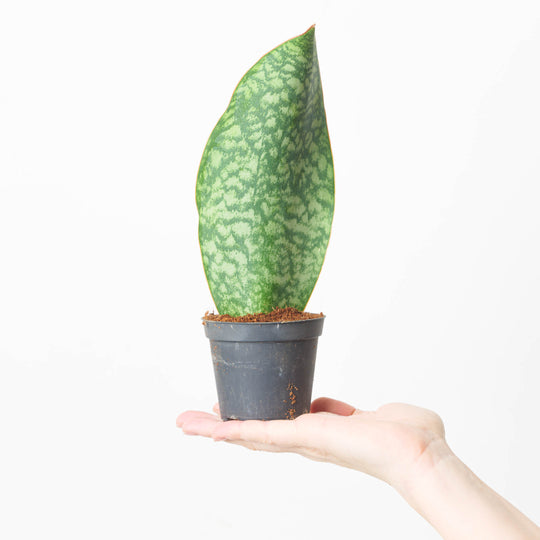
- Whale Fin: a single enormous paddle-shaped leaf that can reach around 1 metre. Upright and clumping. Minimum 13°C. See the Whale Fin plant.
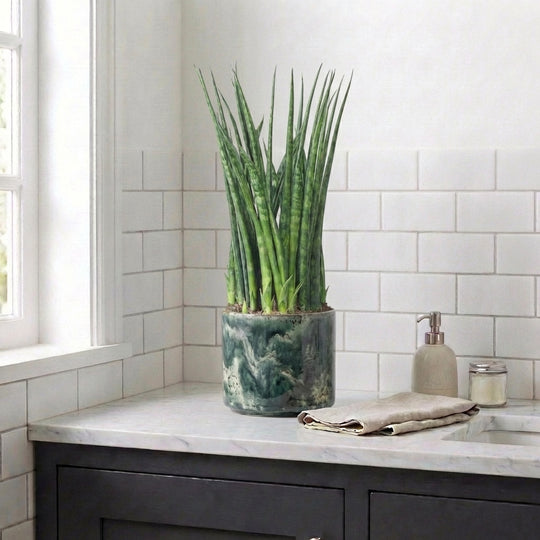
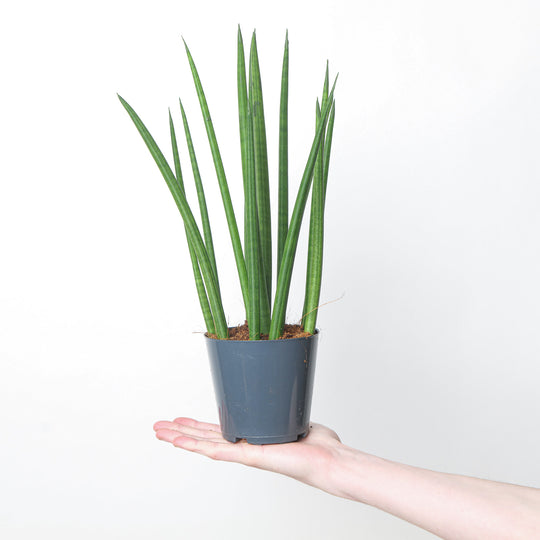
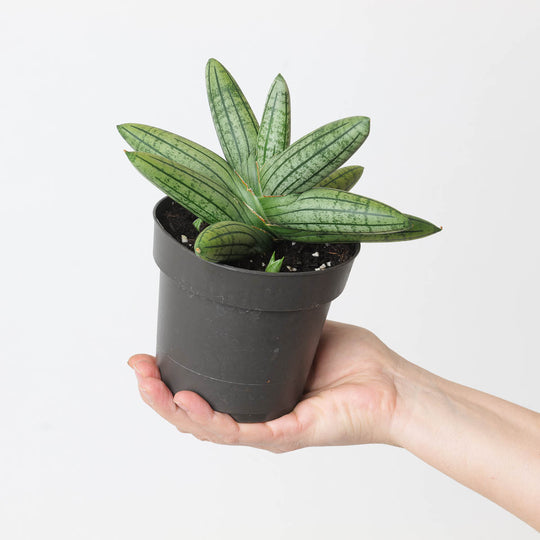
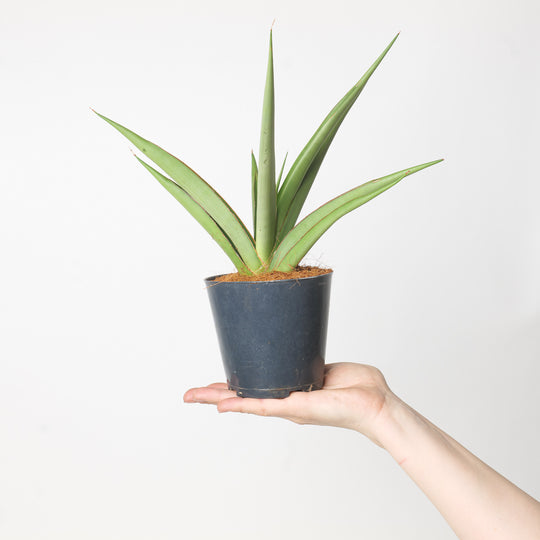
- Bacularis: slim, round, spear-like leaves in an upright clump. Minimum 13°C.
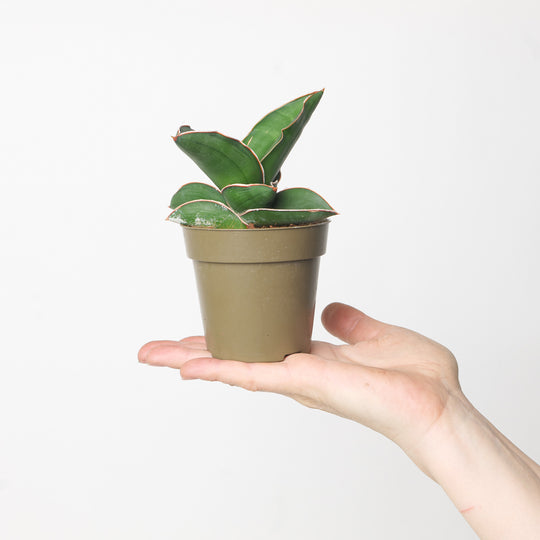
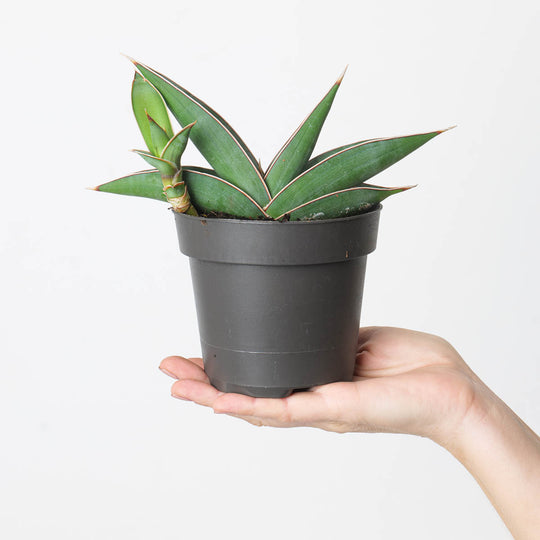
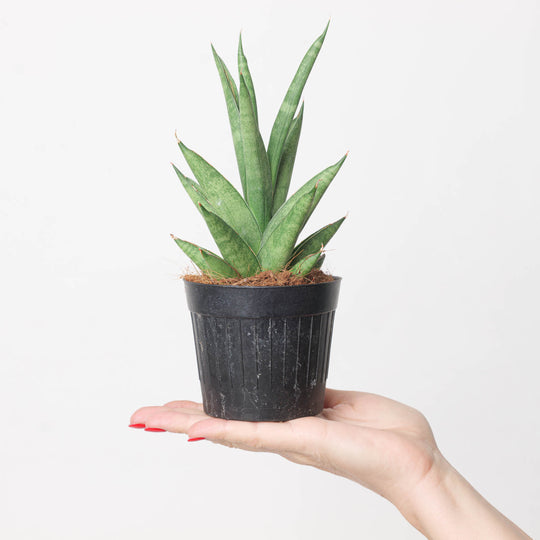
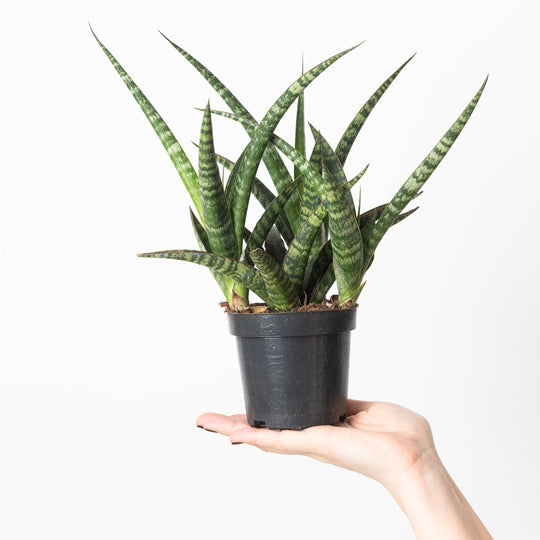
- Samurai: thick triangular leaves in a tight stacked fan, grey-green with darker banding and a thin reddish-brown edge. Minimum 10°C.
The care they all share
- Light: bright indirect is best, but every variety here genuinely tolerates medium and low light, including north-facing rooms. Growth slows in low light; the plant stays healthy.
- Watering: let the compost dry out completely, then water. Roughly every two to three weeks in summer and once a month or less in winter. Overwatering is by far the most common cause of failure.
- Humidity: average household humidity is fine. No misting and no humidifier needed.
- Temperature: above 10°C for most varieties, above 13°C for Whale Fin and bacularis. All are RHS hardiness H1b, so they stay indoors year round in the UK.
- Difficulty: beginner. A pot with drainage holes and a gritty, fast-draining compost solves most problems before they start.
Are snake plants safe for cats and dogs?
No. Snake plants are mildly toxic to cats and dogs if eaten. They contain saponins, which cause gastrointestinal upset including nausea, vomiting and diarrhoea. They are not considered severely dangerous, but keep them out of reach of pets that chew plants and contact your vet if you are concerned.
Do snake plants purify the air?
Not to any degree you would notice at home. The claim traces back to a 1989 NASA study of plants in a small sealed chamber. Later research has found the effect in a normal, ventilated room is far too small to change air quality measurably. Choose a snake plant because it is tough, architectural and happy in low light, not as an air filter.
Which variety should you choose?
For height and a classic look, start with Laurentii or Moonshine. For a small space, Hahnii Pagoda and Futura Superba stay compact. For a statement plant, Whale Fin is a genuine conversation piece. For something more unusual, Bacularis and Samurai have shapes you rarely see. Full growing detail is in our Sansevieria and snake plant care guide, with more on why we rate them in Year of the Snake Plant. Also worth a look: Low Light Houseplants, Easy Care Houseplants and Cacti and Succulents.