Bird of Paradise
Strelitzia Care Guide | Bird of Paradise

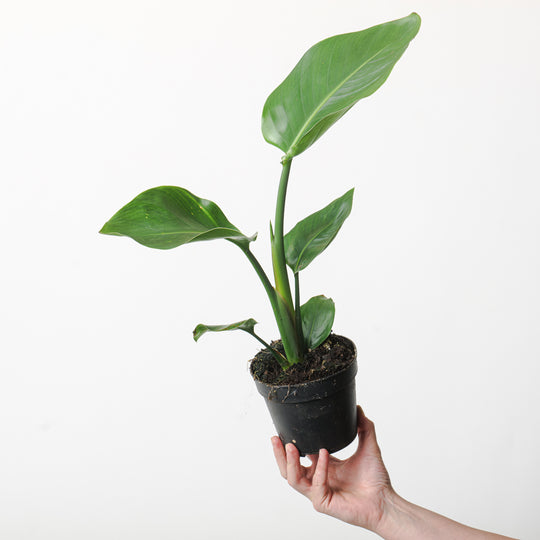
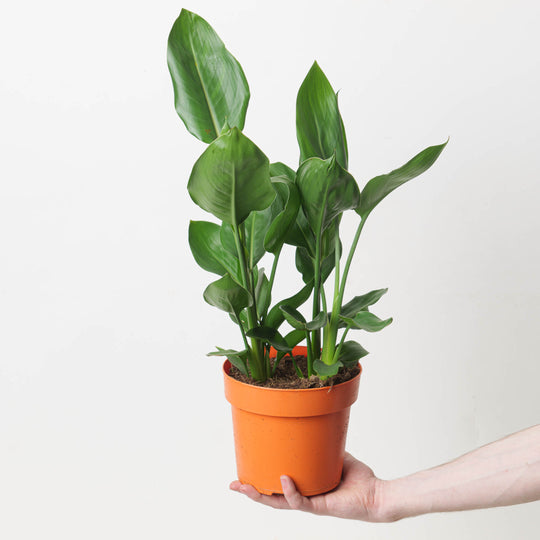
Strelitzia reginae, the bird of paradise plant, is the ultimate easy-care houseplant that brings architectural presence to a room.
The paddle-shaped leaves on tall, upright stems make a strong statement, and when conditions are right, the plant produces those distinctive orange and blue flowers that give it its common name.
This guide covers light, watering, soil, repotting, propagation, the main varieties worth knowing, and the problems we see most often at our nursery.
Light Requirements for Bird of Paradise
A south or west-facing window with several hours of direct sun each day is ideal. This is one of the few houseplants where direct sunlight is genuinely beneficial rather than a risk. In South Africa, where Strelitzia reginae originates, it grows in full sun in scrubby coastal vegetation and UK summer sun is mild by comparison.
Bright indirect light from an east-facing window will keep the plant alive and growing slowly, but will rarely lead to flowering. A north-facing room is not suitable for this plant.
Slow or no growth over an entire growing season, pale or yellowing leaves, and a general lack of new shoots can indicate too little light. If a bird of paradise has not produced a single new leaf in six months, light is almost certainly the limiting factor.
How Often to water a Bird of Paradise plant
Water when the top 3 to 5cm of compost feels dry to the touch. During the main growing season (April to September in the UK) this typically means watering every 7 to 10 days. In winter, allow the soil to dry out more completely before watering again, and reduce to every two to three weeks or less depending on the temperature and light in your home.
If underwatered, leaves begin to curl inward along the length of the blade, and the soil pulls away from the edges of the pot. Give the pot a thorough soak (until water runs freely from the drainage holes) and the plant will usually recover within 24 to 48 hours.
Always ensure the pot has adequate drainage as Strelitzia sitting in standing water will decline quickly.
Repotting a Bird of Paradise plant
A free-draining, nutrient-rich compost with good structure is the right starting point. Standard multipurpose compost tends to compact over time and hold too much moisture for Strelitzia's fleshy roots.
We recommend our Jungle Mix Tropical Houseplant Potting Mix as a good base for bird of paradise, or our Simply Houseplant Tropical Houseplant Potting Mix for a more economical option. Both provide the open structure these plants need.
Avoid mixes with added water-retaining granules or gel. These are designed for plants with very different moisture needs.
Repotting Bird of Paradise
Strelitzia tolerates being pot-bound to a greater degree than many houseplants, and some growers believe it flowers more readily when the roots are slightly constrained. Repot only when roots are visibly circling the base of the pot or emerging in large numbers from the drainage holes.
When repotting, move up by one pot size only. Choose a heavy pot if possible, as the plant becomes quite top-heavy as it matures. Terracotta or ceramic pots are preferable to lightweight plastic for plants over 60 cm tall.
Spring is the best time to repot, ideally March to May when the plant is entering its main growing period. Water well after repotting and keep it out of direct sun for a week or two while the roots settle.
Common problems when growing Bird of Paradise indoors
Brown leaf tips
The most common cosmetic issue. Usually caused by low humidity combined with central heating in winter, or irregular watering. Trim the brown tips with clean scissors if they bother you, but the plant is not in danger. Our nursery team finds this almost inevitable in centrally heated UK homes in winter and not worth worrying about.
Yellow leaves
Particularly lower, older leaves turning yellow often simply indicates the natural death of older growth. If many leaves are yellowing simultaneously, check the watering routine first. Overwatering is the most likely cause, followed by low light.
No new growth
During winter (October to February) it is normal for growth to slow or stop entirely. If the plant is not growing during the main growing season either, the problem is almost always insufficient light. Move it closer to the brightest window available.
No flowers
This is the most common complaint. Flowering indoors in the UK requires strong, direct light for a good portion of the day, a mature plant (typically five or more years old), and ideally a degree of root restriction. Many people grow bird of paradise purely as a foliage plant and enjoy it just as well without the flowers.
Pests
Strelitzia are usually resistant to most common houseplant pests. Occasionally affected by scale insects or spider mites, particularly if the plant is stressed by low humidity or inconsistent watering. Inspect the undersides of leaves regularly and treat early if you spot anything.
If you have questions about your bird of paradise, our horticultural team is happy to help. Get in touch via our contact page.