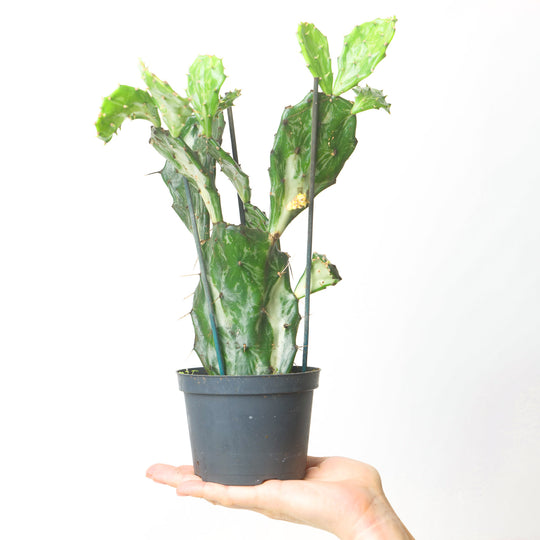
Prickly Pear Cactus
Opuntia Care Guide

Opuntia, the Prickly Pear Cactus, is defined by its flattened pads and by the thing most people learn about too late: the glochids. Those tufts of fine, barbed hairs detach at the slightest touch, embed in skin and are far more of a nuisance than the obvious spines. Handle with folded newspaper or thick gloves, always.
Beyond that, it is one of the more forgiving cacti to grow indoors. This guide covers light, watering through the year, substrate, repotting, propagation from pads, the species we stock, and the problems worth knowing about.
Light Requirements
The ideal light for Optuntia is full, direct sun. A south-facing window with nothing in front of it. Opuntia species come from the Americas, from the Canadian prairies down to Patagonia, and almost all of them evolved in open, unshaded ground.
They will hang on in a west-facing window, but expect slower growth and thinner, paler pads. Below about four hours of direct sun a day, new pads come in narrow and elongated and the plant leans hard toward the glass.

Variegated varieties like the Opuntia 'Jamaican Ghost' needs slightly more light than usual.
How Often to Water Prickly Pear Cactus
Soak the plant thoroughly, then let the compost dry out completely before watering again. In practice, that is roughly every two to three weeks from April to September, and essentially nothing from November to February.
In the winter, keep the plant cool (5°C to 12°C is ideal) and dry. A cool, dry winter rest is what triggers flowering the following year. A prickly pear kept warm and watered through a British winter will survive but is unlikely ever to flower, which is a shame, because the flowers are the best thing about them.
Signs of overwatering include the pads going soft and yellowish at the base; a dark, wet-looking patch spreading up from soil level; the whole plant toppling because the base has rotted through. Overwatering is the single most common way an Opuntia dies indoors.
When underwatered, pads wrinkle and go slightly leathery. Easily corrected with a proper soak. Underwatering is rarely fatal here, which is why we would always err on the dry side.
Water into the compost, not over the plant. Water sitting in the crevices between pads encourages fungal spotting.
Repotting Opuntia
Sharp drainage is non-negotiable. Opuntia roots are shallow and fibrous and they rot quickly in compost that stays wet.
Our Desert Mix Cacti and Succulent Potting Mix is formulated for exactly this and is what we use at the nursery to grow our in-house collection.

Repot every two to three years in spring, or when the plant has become top-heavy enough to tip. Opuntia are not fussy about being pot-bound and a slightly tight pot keeps growth in check, which is useful given how large some species get.
Go up one size only. A pot that is too large holds too much wet compost around a root system that is not using it. Terracotta is a real advantage: it dries faster and adds weight at the base, which matters once a plant is 60cm tall and leaning.
After repotting, wait ten to fourteen days before watering. Damaged roots need to callus first, and watering into fresh wounds is how rot starts.
If you do get glochids in your skin, sticky tape lifts most of them out. Tweezers work for the rest. Do not rub the area, which just drives them deeper.
Common Problems When Growing Opuntia Indoors
Soft, yellowing base. Basal rot from overwatering or a compost that stays wet. Cut the plant back above the rot with a sterile blade, callus the cut, and re-root the healthy section as a pad cutting. The original root system is usually a write-off.
Corky brown patches on old pads. Often just age. Mature Opuntia develop corky, bark-like tissue at the base and on the oldest pads. It is not a disease and needs no action.
Shrivelled, thin pads. Underwatering, or a root system that has died back through overwatering and can no longer take up water. Check the roots before you reach for the watering can. A shrivelled plant sitting in wet compost has a root problem, not a thirst problem.
Mealybugs and scale. Both hide in the areoles and in the crevices between pads, which makes them awkward to spot. Look for white waxy fluff or small brown limpet-like bumps. Treat with a horticultural soap or Pepin neem oil, and see our guides to mealybugs and scale. Our fungal and pest control range covers the rest.
No flowers. Almost always a warm, watered winter. Opuntia need a cool, dry rest to set buds. Give them a bright, unheated room at 5°C to 12°C from November to February and keep them bone dry.