Platycerium


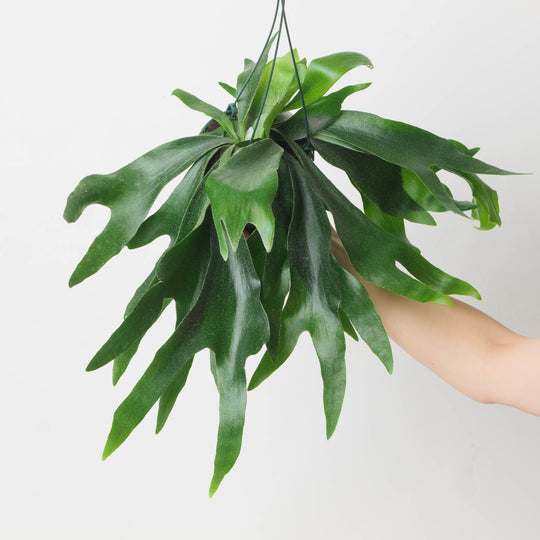
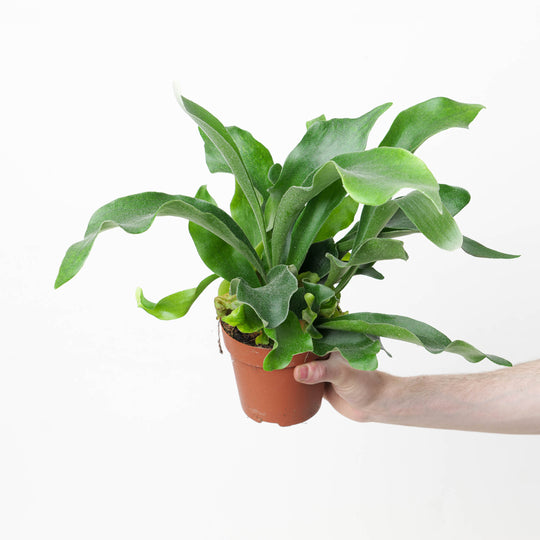
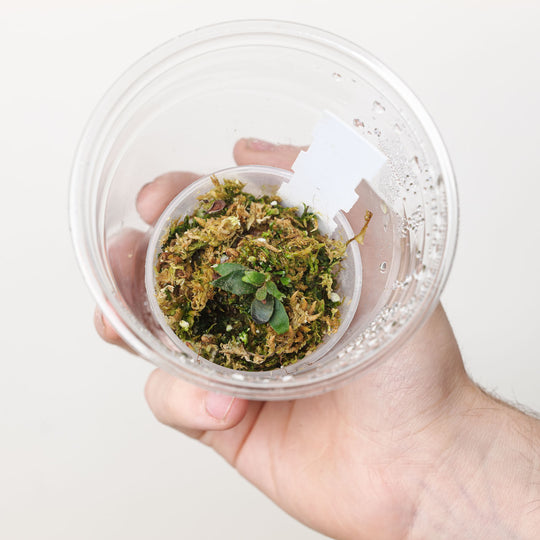
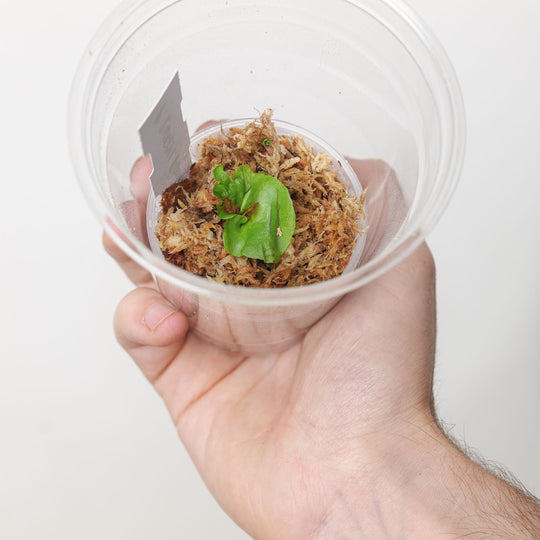
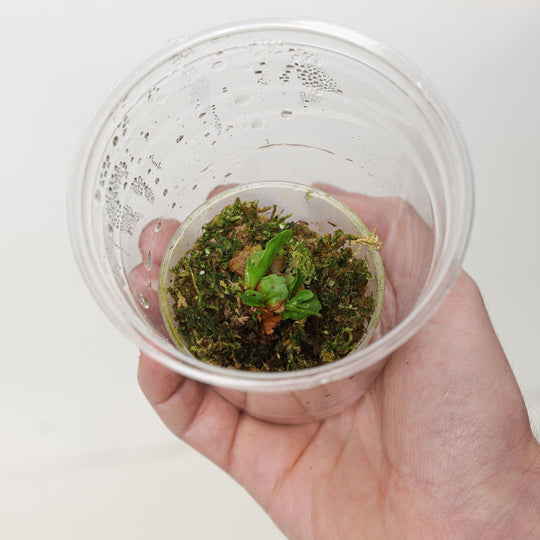
Staghorn ferns (Platycerium) are among the most dramatic and architecturally striking houseplants you can grow, producing magnificent, antler-like fertile fronds alongside flat, shield-shaped basal fronds that anchor the plant to its mount. Native to tropical regions of Africa, Asia, and Australia, they thrive mounted on pieces of bark or driftwood as a living, sculptural feature unlike anything else in the houseplant world. At Grow Tropicals, our staghorn ferns are expertly cultivated to establish strong root systems before dispatch.

Position in bright, indirect light with good airflow, water by submerging the mount or spraying generously, and mist regularly to replicate the humid rainforest environment they call home. With the right conditions, staghorn ferns grow into genuinely spectacular specimens that become true statement pieces in any interior.

10 products

    10 products

    Staghorn Ferns | Platycerium

    About Staghorn Ferns

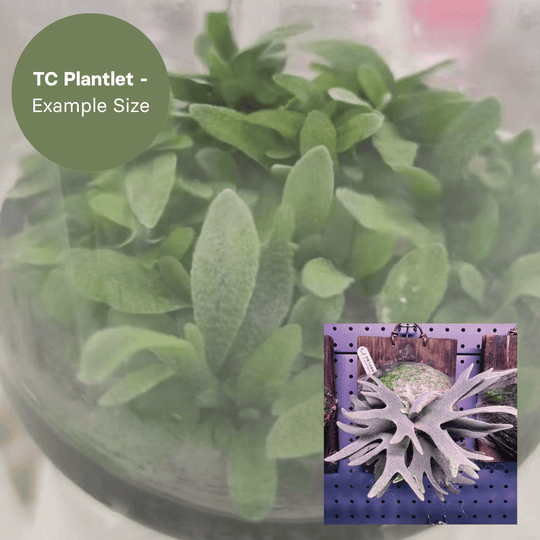
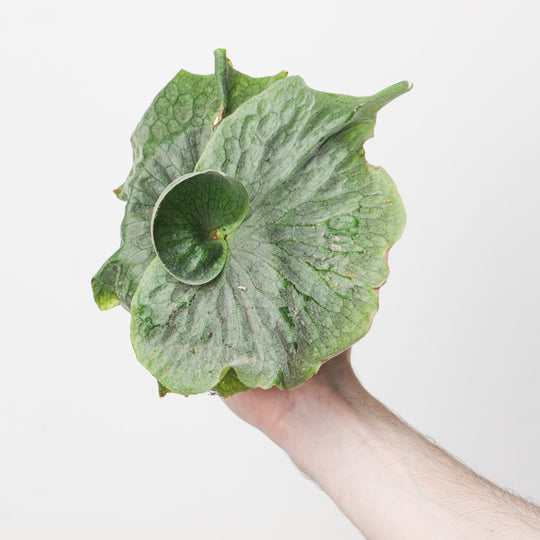
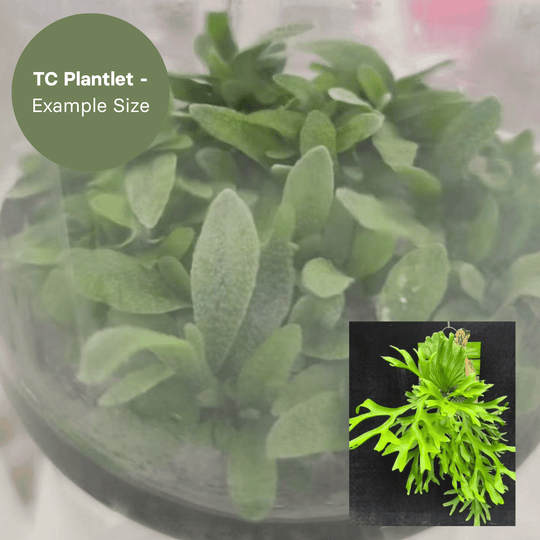
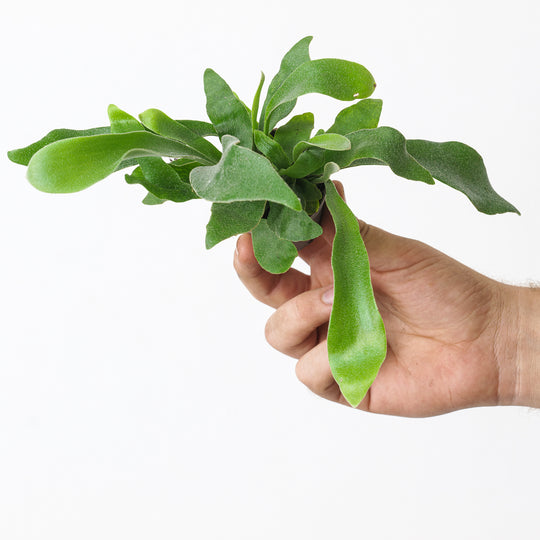
    Platycerium bifurcatum is the species most commonly kept as a houseplant, though the genus encompasses around 18 species distributed across tropical Africa, Asia, and Australia. In the wild, staghorn ferns grow as epiphytes, anchoring themselves to tree bark and absorbing moisture and nutrients from the air and rain. Their two distinct frond types serve different purposes: the flat basal shields protect roots and collect debris for nutrients, while the forked, antler-like fertile fronds photosynthesize and, in mature plants, bear spores.

    Light Requirements

    Staghorn ferns need bright, indirect light. An east or west-facing spot works well. Direct midday sun can scorch the fronds, but insufficient light leads to weak, pale growth. Some varieties tolerate lower light but prefer brightness for vigorous development.

    Watering a Mounted Staghorn

    The most effective way to water a mounted staghorn fern is to submerge the entire mount in a bucket of water for 10-15 minutes, then allow it to drain fully. Alternatively, water generously with a watering can directed at the root area behind the basal fronds. In summer, water every 1-2 weeks; in winter, every 3-4 weeks. Mist the fronds regularly to maintain humidity.

    Humidity and Temperature

    Staghorn ferns prefer temperatures of 15-27 degrees C and high humidity. Avoid cold draughts, heating vents, and temperatures below 10 degrees C. Grouping with other plants, using a humidifier, or placing near a kitchen or bathroom helps maintain the moisture levels they enjoy.

    Feeding

    Feed monthly during spring and summer by diluting a balanced liquid fertiliser in water and applying it to the root area. Some growers tuck banana skins or compost behind the basal fronds as a slow-release nutrient source, mimicking the natural debris accumulation of their wild habitat.

    Mounting Your Staghorn

    Staghorn ferns can be mounted on a piece of weathered wood, cork bark, or a moss-lined board. Attach the plant using fishing line or wire threaded through the basal fronds until they anchor themselves naturally. Line the mounting area with sphagnum moss to retain moisture around the roots. Mounted specimens dry faster than potted ones, so monitor water requirements closely.

    Propagation

    Mature staghorn ferns produce pups (offsets) at the base. Once a pup has developed a few of its own basal fronds, it can be carefully detached with a clean knife and mounted separately on fresh bark with damp sphagnum moss. Wrap with fishing line until it establishes, then care for as a new plant.

    Frequently Asked Questions

    Submerge the entire mount in a bucket of room-temperature water for 10-15 minutes, then allow to drain fully. Alternatively, pour water generously over the root area behind the basal fronds. In summer, water every 1-2 weeks; in winter, reduce to every 3-4 weeks. Mist the fronds regularly.

    Yes. Staghorn ferns make excellent indoor plants when given bright, indirect light, good airflow, and regular misting. They are most dramatic mounted on wood or cork bark as living wall art, though they can also be grown in hanging baskets with a moss-filled base.

    Brown tips on fertile fronds often indicate low humidity or underwatering. Increase misting and check your watering frequency. Brown or yellowing basal shield fronds are normal as the plant ages and should not be removed as they protect the root system. Brown, mushy fronds suggest overwatering or poor drainage.

    Bright, indirect light is ideal. An east or west-facing spot works well. Avoid direct midday sun, which scorches fronds, and deep shade, which causes weak, pale growth. If growing under artificial light, use a full-spectrum grow light positioned 30-60 cm above the plant.

    No. The flat, shield-shaped basal fronds will naturally turn brown and papery over time, but they should never be removed. They protect the root system and help anchor the plant to its mount. Removing them exposes the roots and can seriously damage the plant.

    Wait for a pup (offset) to form at the base of the plant and develop at least a few of its own basal fronds. Carefully separate with a clean knife, mount on fresh bark with damp sphagnum moss, and secure with fishing line. Keep in a humid, bright spot and mist daily until established.