Dieffenbachia


Dieffenbachia, commonly known as dumb cane, are prized for their large, beautifully patterned leaves in shades of green, cream, and white. Native to the tropical Americas, they bring bold foliage to indoor spaces and tolerate lower light levels better than many houseplants.

Our collection includes compact varieties like Dieffenbachia compacta and the strikingly marked Dieffenbachia Reflector, alongside classics like Dieffenbachia Camilla. All are sourced from trusted partner nurseries.

For more patterned foliage, explore our Calathea and Aglaonema collections. Dieffenbachia also pair well with plants from our easy care collection and low light plants range.

6 products
    6 products

    Everything You Need to Know About Dieffenbachia

    About Dieffenbachia

    Dieffenbachia is a genus of around 50 species from the tropical forests of Central and South America. The common name "dumb cane" refers to the calcium oxalate crystals in the sap, which can cause temporary swelling and speechlessness if ingested. Despite this, they have been popular houseplants for over a century, valued for their bold, variegated foliage and tolerance of indoor conditions.

    Varieties in Our Collection

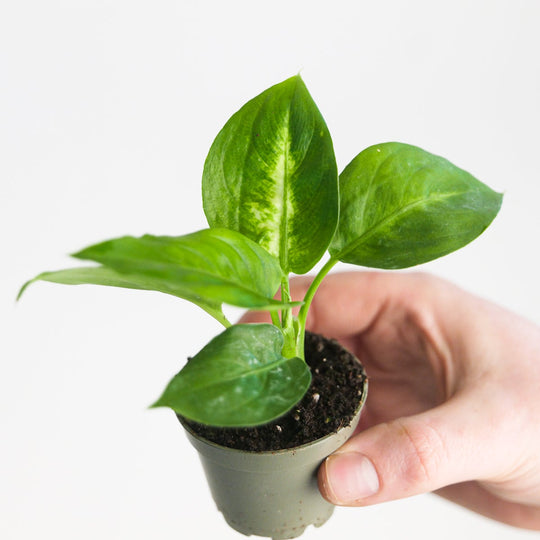
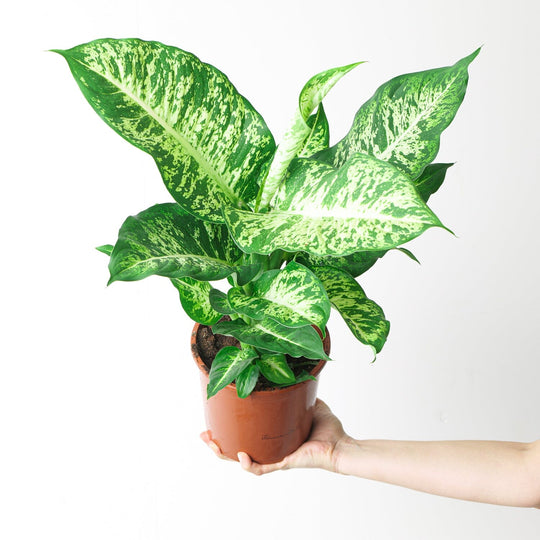
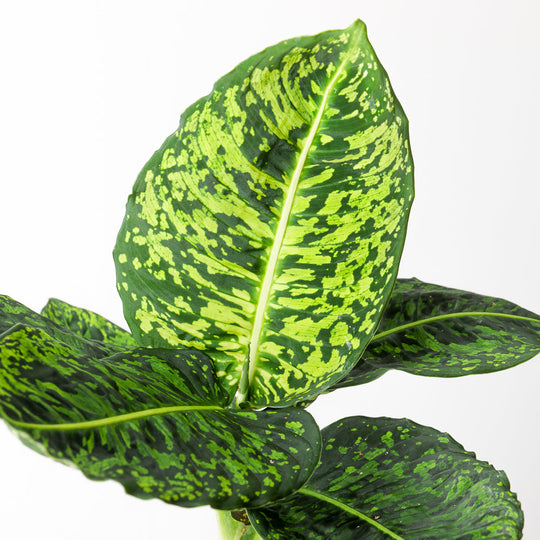
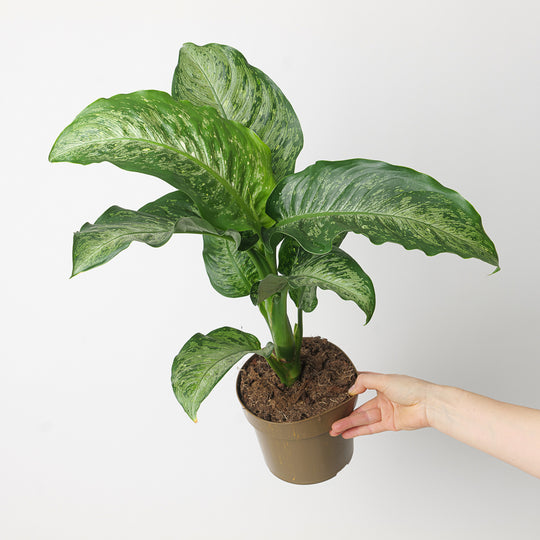
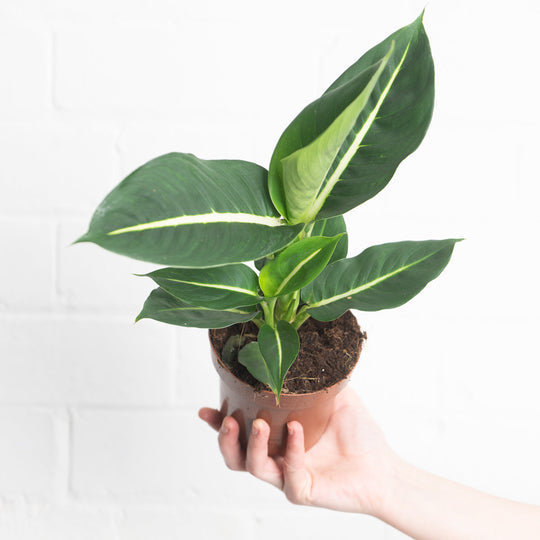
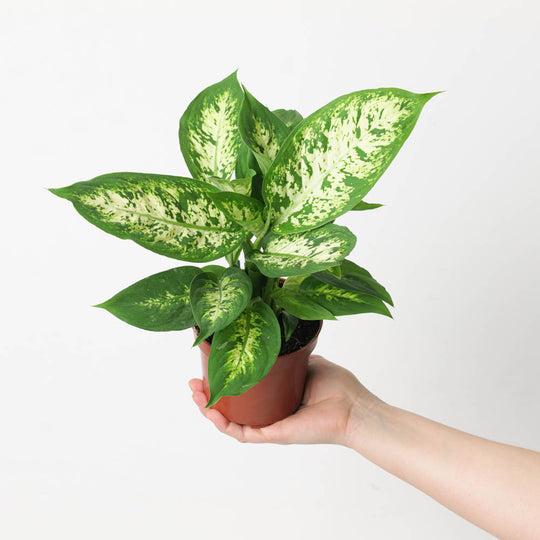
    Dieffenbachia Camilla is one of the most popular cultivars, with creamy-white centres and green margins. Dieffenbachia Reflector features dramatic dark green leaves with lighter green camouflage patterning. Dieffenbachia compacta stays smaller and bushier, making it ideal for desks and shelves. Green Magic offers deep green leaves with a prominent white midrib.

    Light and Positioning

    Dieffenbachia thrive in bright, indirect light but adapt well to moderate shade. Direct sunlight can scorch the leaves, while very low light may cause the variegation to fade. They make excellent companions for other shade-tolerant species from our low light plants collection and pair well with the patterned foliage of Calathea and Aglaonema plants.

    Watering and Care

    Water when the top few centimetres of soil feel dry. Dieffenbachia prefer consistently moist (not soggy) soil and benefit from regular misting or placement in a more humid room. Feed monthly during spring and summer with a balanced liquid fertiliser. They are relatively easy-going and feature alongside other beginner-friendly plants in our easy care collection.

    Safety and Handling

    Dieffenbachia sap contains calcium oxalate crystals that can irritate skin and are toxic if ingested. Wear gloves when pruning and keep these plants out of reach of children and pets. For pet-safe alternatives with similar bold foliage, browse our pet-friendly plants collection.

    Frequently Asked Questions

    Place in bright, indirect light and water when the top soil feels dry. Dieffenbachia enjoy humidity, so mist regularly or keep in a kitchen or bathroom. Feed monthly during the growing season. Dieffenbachia compacta is one of the easiest varieties to start with.

    Yes, Dieffenbachia contain calcium oxalate crystals that can cause mouth and throat irritation if chewed. Keep them away from children and pets. Wear gloves when handling the sap. For non-toxic alternatives, explore our pet-friendly plants collection.

    Yellow leaves are usually caused by overwatering, draughts, or too little light. Check that the pot drains well and allow the soil to dry slightly between waterings. Move the plant away from cold draughts and windows in winter. Older lower leaves may also yellow naturally as the plant grows.

    Dieffenbachia tolerate moderate shade better than many variegated plants, though very low light can cause loss of patterning and leggy growth. A north-facing room or a spot a few metres from a window works well. For more shade-tolerant options, browse our low light plants collection.

    Indoors, most Dieffenbachia reach 60 centimetres to 1.2 metres in height depending on the variety. Dieffenbachia compacta stays on the smaller side, while Reflector and Mars can grow taller with time. Regular feeding and adequate light encourage healthy growth.

    Aglaonema (Chinese evergreen) offer similar patterned foliage with the added benefit of being slightly easier to care for. Calathea provide striking leaf patterns in a different style. Both make excellent companions for Dieffenbachia in a mixed indoor display.