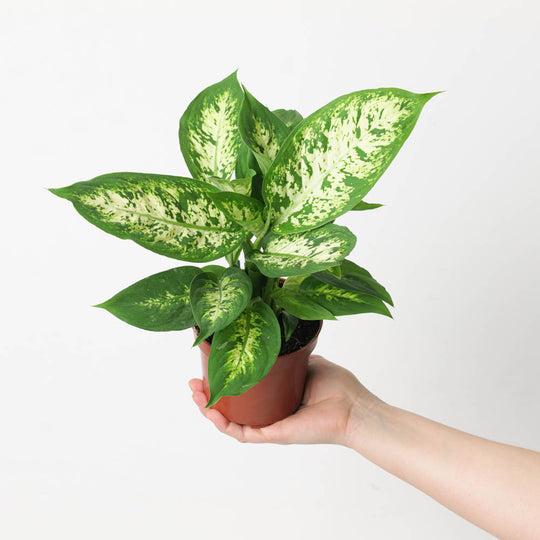
Dumb Cane
Dieffenbachia Care Guide

Dieffenbachia is one of the most effective large-leaved tropical houseplants for UK interiors: fast-growing, tolerant of lower light than most exotics, and genuinely impressive in scale when well cared for.
This guide covers everything our horticultural team recommends for growing Dieffenbachia indoors in the UK, from light and watering through to propagation and the most common problems.
Light Requirements for Dieffenbachia
Dieffenbachia grows best in bright to medium indirect light, and an east- or north-east-facing room works well. It does not want direct sun on its leaves, so a south-facing window in summer will bleach or scorch the foliage.
That said, this is one of the more forgiving tropical plants when it comes to lower light. It will manage in a room with a north-facing window, though growth slows and the variegation becomes less pronounced. In very dim spaces, the stems eventually become leggy and the lower leaves drop faster.
It is worth remembering that the more variegated the cultivar, the more light it needs to maintain its pattern. Deep green varieties tolerate lower light better than cream-splashed ones.
How Often to Water Dieffenbachia
The general rule is to allow the top 3 to 5cm of compost to dry out between waterings. In summer, this usually means watering every 7 to 10 days. In winter, extend this to every 14 to 21 days, as growth slows in low light and the plant uses far less water.
The signs of overwatering are yellow leaves starting from the lower leaves, soft or mushy stems at the base, or a musty smell from the compost. Overwatering is the most common cause of dieffenbachia decline we encounter, so if in doubt, wait another few days.
The signs of underwatering are drooping leaves that perk up quickly after watering, dry compost that pulls away from the sides of the pot, and leaves that feel thin rather than turgid.
Water thoroughly each time, ensuring water drains freely from the pot base, and do not let the pot sit in standing water. In very hard water areas, the fluoride and chlorine in tap water can cause brown leaf tips over time. If this becomes an issue, try filtered or rainwater instead.
What Potting Mix is best for Dieffenbachia?
Dieffenbachia needs a well-draining, aerated tropical mix. Dense, peat-heavy compost that stays wet will cause root rot. A good houseplant potting mix with added perlite (roughly 20 to 30%) improves drainage and aeration significantly.
Our Jungle Mix is well suited to dieffenbachia: it balances moisture retention with drainage, and the bark content keeps the mix open and airy over time. Avoid reusing old compost from previous plants, as it compacts and loses structure.
Repotting
Repot when roots begin emerging from the drainage holes or when the plant looks disproportionately large for its container. Spring is the best time to do this. Choose a pot just 3 to 5 cm larger in diameter than the current one, because too large a pot holds excess moisture in the unused compost, which increases the risk of rot.
When handling the plant, wear gloves to protect your skin from the sap. After repotting, water lightly and place the plant back in its usual spot. Avoid fertilising for 6 to 8 weeks after repotting, as the fresh compost usually contains enough nutrients to sustain the plant through the adjustment period.
Temperature and Humidity
Dieffenbachia is a tropical plant and prefers temperatures between 18 and 27°C. Keep it away from cold windows, exterior doors, and unheated rooms in winter. Temperatures below 13 to 15°C will cause significant leaf drop and may kill the plant if prolonged.
Average household humidity of 40 to 50% is usually sufficient, though the plant prefers higher. Brown leaf tips are often a sign of dry air. A pebble tray filled with water placed beneath the pot, grouping plants together, or using a humidifier in the same room all help. Avoid placing the plant directly above or adjacent to a radiator.
Propagating Dieffenbachia
Dieffenbachia is straightforward to propagate via stem cuttings. This is useful if the plant has become tall and bare at the base, as you can rejuvenate the parent and create new plants at the same time.
Using clean, sharp secateurs or a knife, cut the main stem into sections of about 10 to 15cm, ensuring each section has at least one node, which is the visible bump or ring on the stem. Allow the cut ends to dry and callous for a few hours. Then place the sections horizontally in damp perlite or a propagation mix, or pot individual sections upright in a small container of moist compost, keeping the node buried or in contact with the medium. Position the cuttings in bright indirect light, maintain warmth (ideally above 20°C), and cover loosely with a clear bag or lid to retain humidity. New shoots should emerge within 4 to 8 weeks.
Wear gloves throughout this process, as the cut sections produce sap that is irritating to skin and mucous membranes.
Common Problems when growing Dieffenbachia
Yellow leaves are the most common issue, and the cause is almost always overwatering or cold. Check the compost and ensure the pot has functioning drainage. If the yellowing is confined to the lowest, oldest leaves and the rest of the plant looks healthy, this is normal ageing and nothing to worry about.
Brown leaf tips point to low humidity, fluoride in tap water, or proximity to a heat source. Move the plant, switch your water source, or increase the humidity around it.
Drooping leaves are most often caused by underwatering. Water thoroughly and the leaves should recover within a few hours. If the compost is wet and the plant is still drooping, root rot is likely, so unpot the plant, inspect the roots, and treat accordingly.
Leggy, bare stems are normal with age, but the process is accelerated by low light. Cut the plant back hard in spring to encourage regrowth from the base.
As for pests, mealybugs and spider mites are the most frequent visitors. Check the leaf axils and undersides of leaves regularly, and treat any infestations with neem oil or insecticidal soap, repeating every five to seven days for three to four weeks. Our pest control range covers most common treatments.
Need More Help with Your Dieffenbachia & Other Houseplants?
Caring for plants can be a rewarding experience, adding beauty and elegance to any houseplant collection. If you have specific questions or need further assistance, feel free to reach out to us via email at hello@growtropicals.com. Our plant experts are always here to help you ensure your Dieffenbachia thrives.
Shop our full collection of Dieffenbachia and plant care products today.