About the Cast Iron Plant
Aspidistra elatior earned its "cast iron" nickname through sheer resilience. Originating from the shaded forest floors of Japan and Taiwan, it evolved to cope with deep shade, drought, and poor soil. Indoors, this translates to a plant that tolerates neglect, low light, and the kind of conditions that would finish off most houseplants. The genus contains around 100 species, though only a handful are commonly grown as houseplants.
Varieties in Our Collection
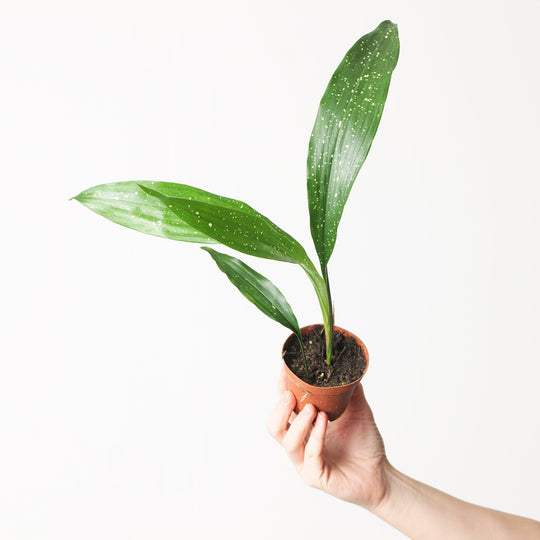
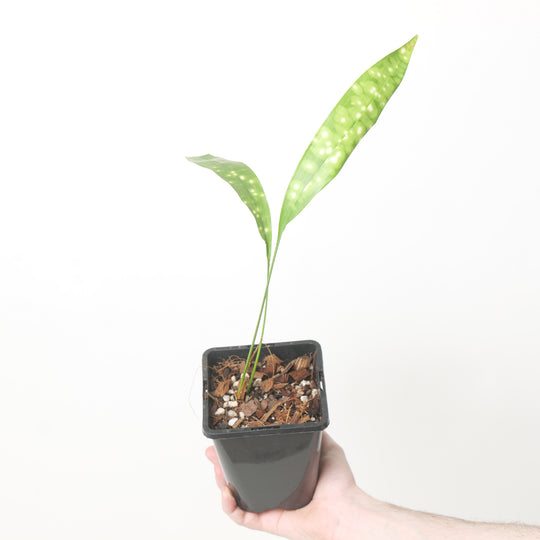
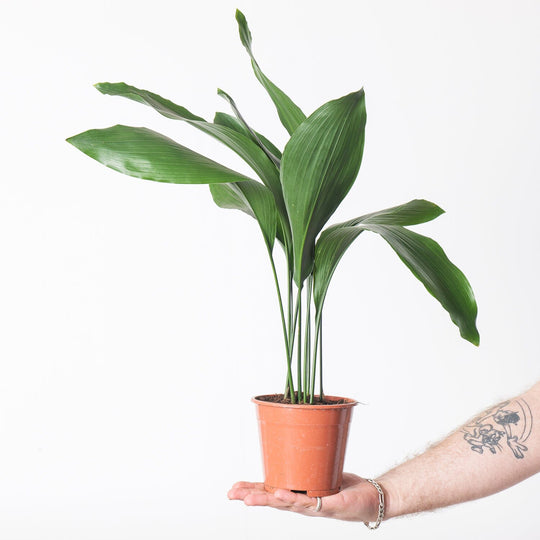
The classic Aspidistra elatior has broad, arching, dark green leaves that grow directly from the rhizome. Aspidistra Milky Way adds tiny cream speckles across each leaf, giving it a starlit appearance. For bolder variegation, Aspidistra Kinboshi features large golden spots that brighten up even the darkest corner.
Light and Positioning
Aspidistra genuinely thrive in low light. A north-facing room, a hallway, or a corner well away from windows is perfectly fine. In fact, direct sunlight can scorch the leaves and fade variegation. This makes Aspidistra ideal companions for other shade-loving plants from our low light collection or fern range.
Watering and Feeding
Water sparingly, allowing the soil to dry out between waterings. Aspidistra store moisture in their rhizomes and are far more likely to suffer from overwatering than underwatering. In winter, reduce watering to once every two to three weeks. Feed once a month during spring and summer with a diluted liquid fertiliser. These minimal requirements make them a natural fit for our easy care collection.
Styling and Companion Plants
The upright, architectural leaves of Aspidistra create a clean, elegant silhouette. They look striking as standalone floor plants or grouped with contrasting textures. Pair them with trailing varieties like Pothos or hanging plants for visual interest, or place alongside peace lilies for a calming green display. Their tolerance of dry air also makes them suitable for offices and bedrooms where humidity is low.