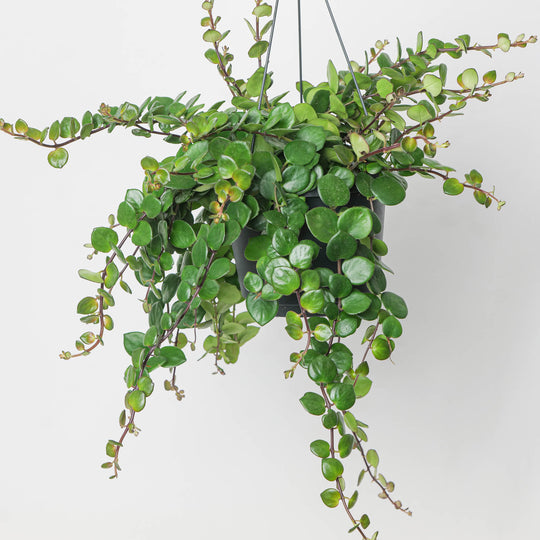
African Violet
Saintpaulia | African Violet Care Guide

The African violet plant flowers for months at a time with almost no fuss, provided you get two things right. 1. Light and 2. Watering. Get those correct, and it will reward you with near-continuous blooms in shades of purple, pink, white, and bicolour. Get them wrong, and it sulks fast.
This guide covers everything you need to know to keep your African violet healthy and blooming in a UK home.
Light Requirements for African Violets
African violets need bright, indirect light. A windowsill facing east or north is usually ideal in the UK as they get good light without the direct midday sun that scorches their leaves. A south- or west-facing window works too, provided there is net curtain or a sheer blind to diffuse the strongest rays.
Signs of too little light: the plant stretches toward the window, flowering slows or stops, and the leaves become a darker green and more upright than usual.
Signs of too much light: leaf centres bleach to a pale or yellowish green, flowers fade quickly, and the leaf edges may crisp at the margins.
In the darker UK winter months, a grow light placed 20 to 30cm above the plant for 12 to 14 hours per day can maintain flowering that would otherwise stop completely. This is one of the few houseplants where supplemental lighting makes an immediate, visible difference.
How to Water an African Violet Plant
The number one mistake people make with African violets is getting water on the leaves. Water on the leaf surface causes pale, water-marked rings that are permanent. Always water at the base of the plant, or use the bottom-watering method: set the pot in a shallow dish of room-temperature water for 20 to 30 minutes, then allow it to drain fully before returning it to its saucer.
Water when the top 1 to 2cm of compost feels dry to the touch. In the summer, this may be every 5 to 7 days; in winter, every 10 to 14 days.
Signs of overwatering: Stems at the base become soft or mushy, lower leaves yellow and drop, and the plant sits in consistently wet compost. Root rot sets in quickly in waterlogged conditions.
Signs of underwatering: Leaves wilt and feel limp even after watering, and the compost has pulled away from the sides of the pot and become hydrophobic.
Always use room-temperature water. Cold water from the tap — especially in winter — causes the same cold shock damage as wet leaves: pale, blotchy rings on the foliage.
Temperature and Humidity
African violets prefer temperatures between 18°C and 24°C. They struggle below 15°C and do not tolerate cold draughts, which means positioning them away from doors and single-glazed windows in winter.
Humidity is worth thinking about, but the solution is not misting. From our experience, misting causes exactly the leaf-spotting you'll want to avoid. Instead, stand the pot on a pebble tray with water sitting below the pot base, or group several plants together so they share ambient moisture. Bathrooms and kitchens naturally run a little higher in humidity, which suits them well provided the light is adequate.
Soil and Potting Mix
African violets need a light, airy, free-draining mix. Standard multipurpose compost is too dense and retains too much moisture. The ideal mix is something close to two parts peat-free compost to one part perlite — this keeps roots oxygenated while holding enough moisture to avoid rapid drying out.
Our Jungle Mix Premium Houseplant Potting Mix works well. African violets are sensitive to fertiliser salt build-up in the compost, so repotting every 12 to 18 months into fresh mix is important even if the plant is not rootbound.
Stop feeding in October and resume in March. Overfeeding in winter, when light levels are low and growth has slowed, leads to fertiliser salt build-up that causes brown leaf tips and root damage.
Propagation
African violets propagate readily from leaf cuttings.
Keep the cutting warm (around 20°C to 22°C) and in bright indirect light. Plantlets will emerge from the base of the stem after four to eight weeks. Once they are large enough to handle, separate and pot them individually. Each leaf cutting can produce three to five plantlets.
Division is also possible when a mature plant produces multiple crowns, which can be carefully pulled apart and potted separately.
Common Problems when Growing African Violets
No flowers
The most common cause is insufficient light. Move to a brighter spot or add a grow light. Other causes include low temperatures, incorrect fertiliser, or a plant that is severely rootbound or overdue for repotting.
Brown leaf tips
Usually caused by overfertilising, low humidity, or cold water splash. Check feeding levels and water temperature, and consider a pebble tray for ambient humidity.
Grey mould (Botrytis)
Appears as fuzzy grey patches on leaves or flowers, typically in cool, damp, poorly ventilated conditions. Remove affected parts, improve air circulation, and reduce watering. African violets are particularly prone to botrytis when conditions are too cool and humid simultaneously.
Root rot
Caused by consistently wet compost. Unpot the plant, trim any blackened or soft roots, repot into fresh dry mix, and allow the compost to partially dry before watering again.
Mealybugs
Look for white, cottony deposits in leaf axils. Treat with isopropyl alcohol applied with a cotton bud or a systemic insecticide suitable for houseplants.