Why Choose Pink Houseplants?
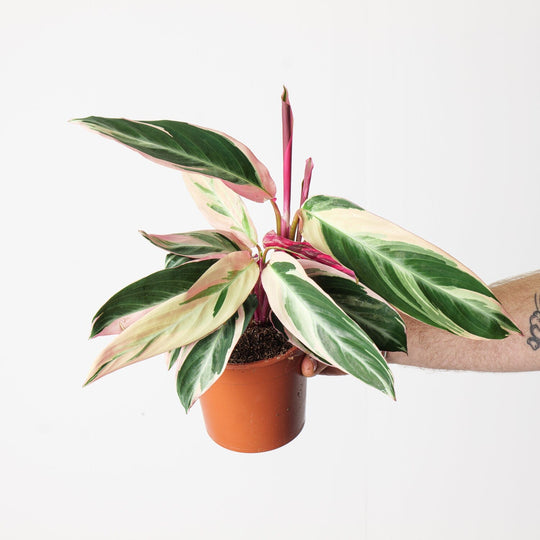
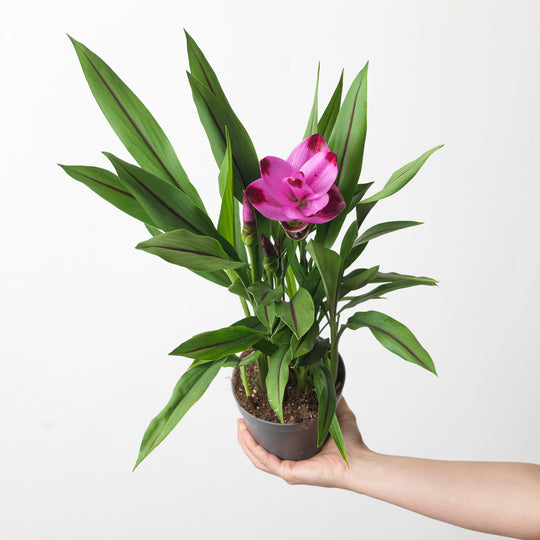
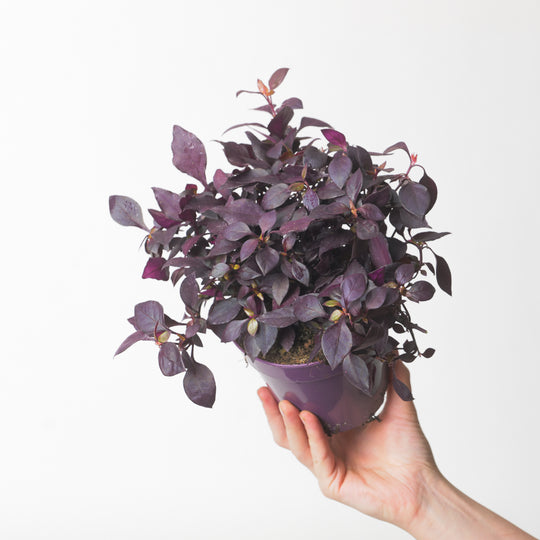
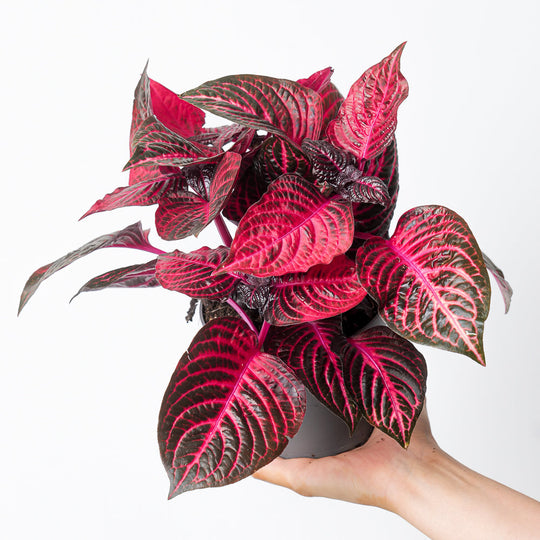
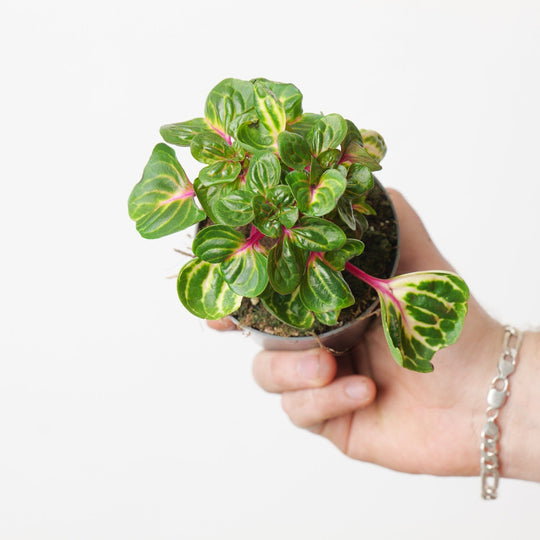
Pink houseplants have become some of the most sought-after indoor plants in recent years, and for good reason. They bring warmth, personality, and visual interest to a collection in a way that all-green plants cannot. Whether you prefer subtle blush tones or vivid magenta, there is a pink plant to suit your style and your space.
Popular Pink Plant Varieties
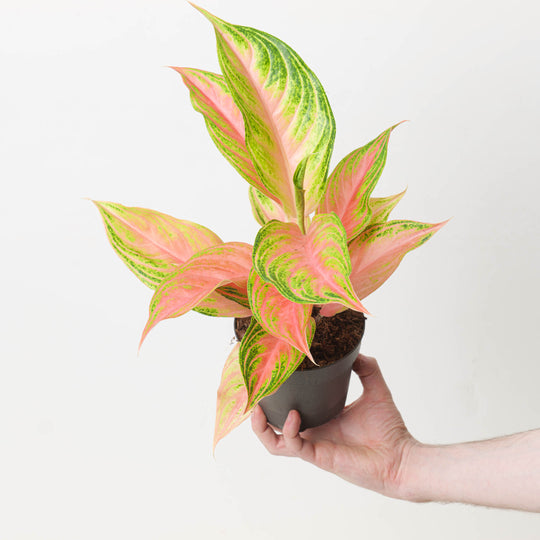
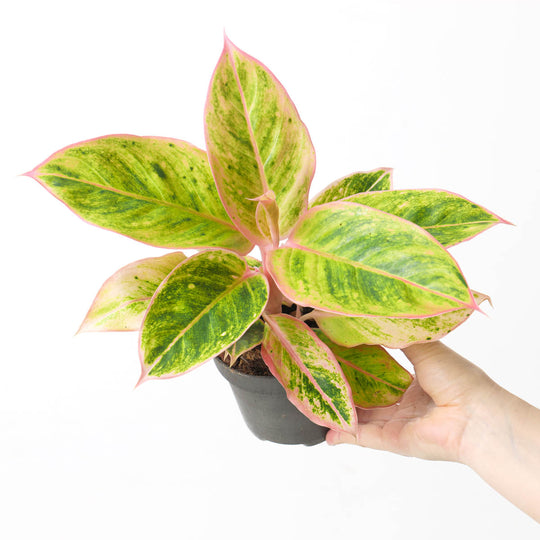
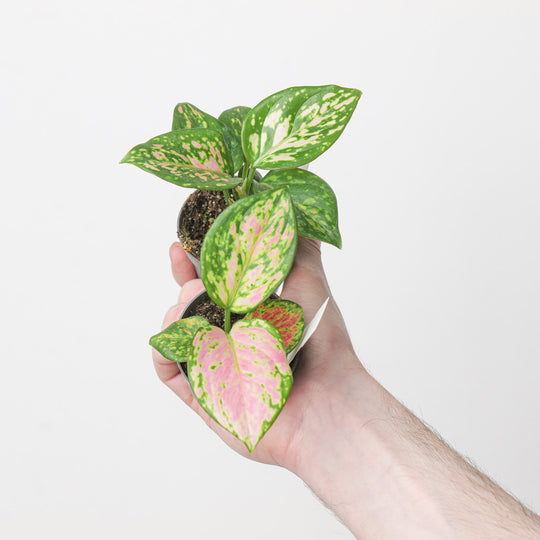
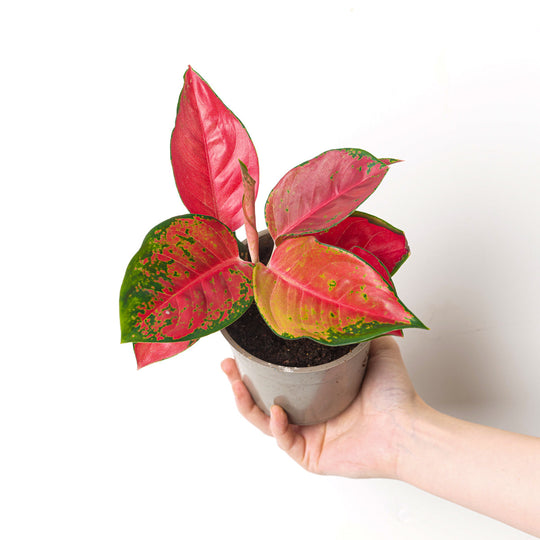
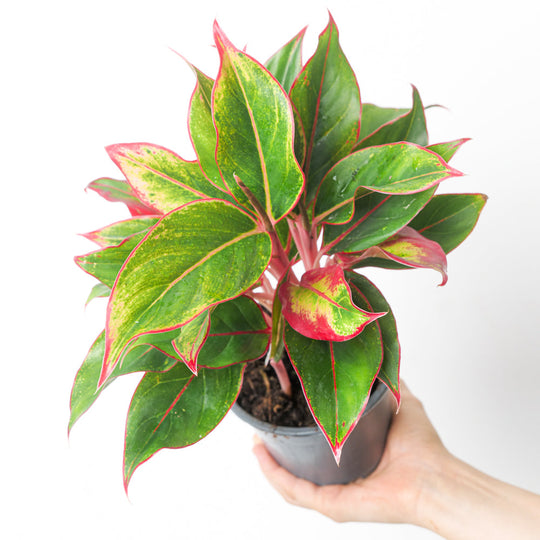
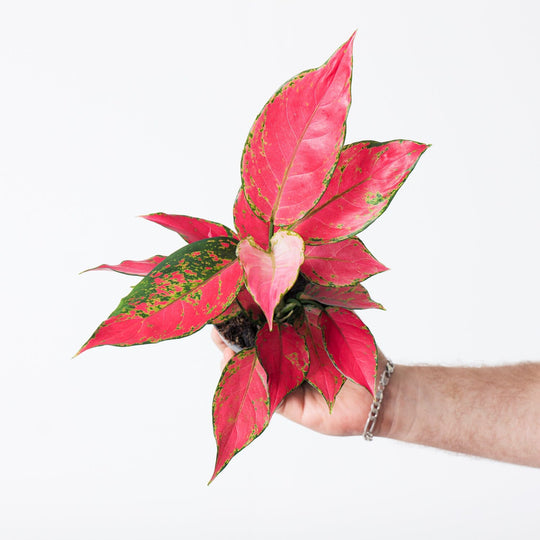
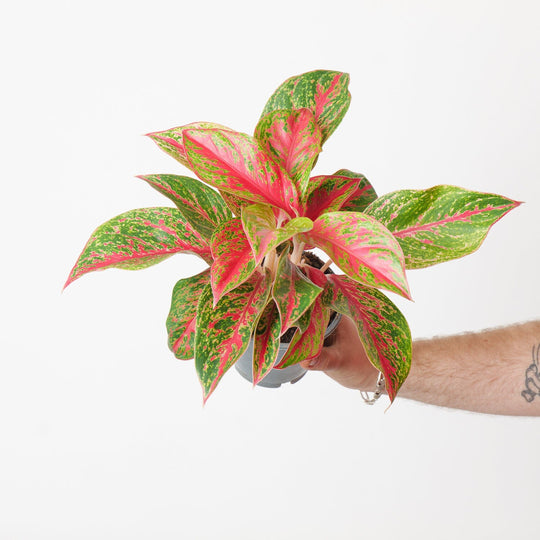
Aglaonema (Chinese Evergreens) are some of the most reliably colourful pink houseplants. 'Pink Leopard' features speckled pink and green leaves, while Aglaonema Flamingo offers striking all-pink foliage. They are also among the easiest pink plants to care for, tolerating lower light better than most colourful species.
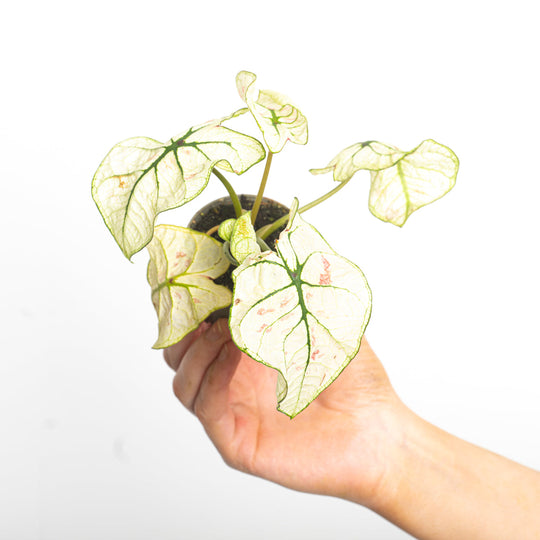
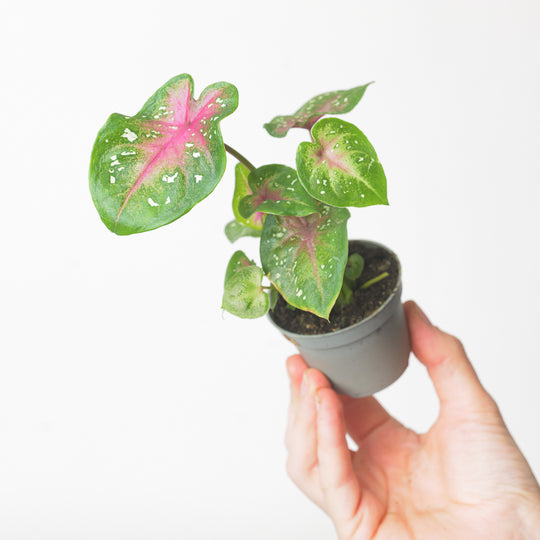
Caladium produce some of the most dramatic pink foliage of any houseplant, with large, paper-thin leaves in shades from pale pink to deep rose. Syngonium offer compact, arrow-shaped leaves with pink tones that deepen in brighter light. Alocasia 'Pink Dragon' adds a structural element with its pink-tinged stems and dramatic leaf shape.
Caring for Pink Houseplants
Most pink houseplants need brighter light than their all-green counterparts to maintain their colour. The pink pigment in leaves means less chlorophyll, so these plants rely on good light to photosynthesise effectively. Bright indirect light is ideal for most species.
Water when the top 2 to 3 cm of compost feels dry. Feed every two to four weeks with a balanced liquid fertiliser during spring and summer. Avoid direct harsh sun, which can scorch delicate pink leaves. Humidity helps keep foliage looking fresh, especially for Caladium and Calathea.
Pink Plants for Beginners
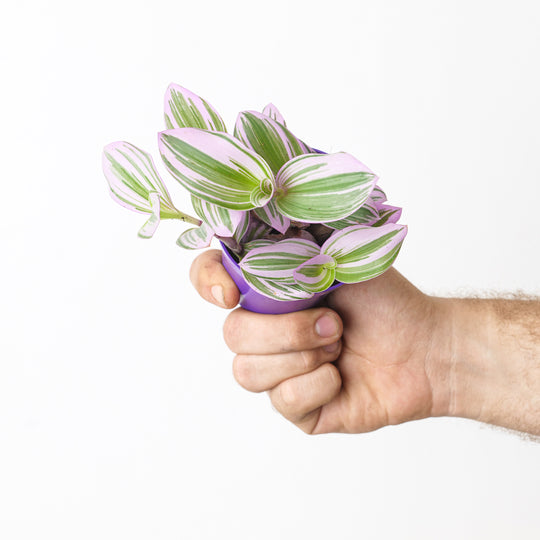
Aglaonema 'Pink Leopard' and Aglaonema Flamingo are the easiest pink houseplants to grow. They tolerate lower light (though colour is best in brighter spots) and are forgiving of occasional missed waterings. Tradescantia Zebrina also offers pink and purple tones and is virtually indestructible.
Pink Calathea and Prayer Plants
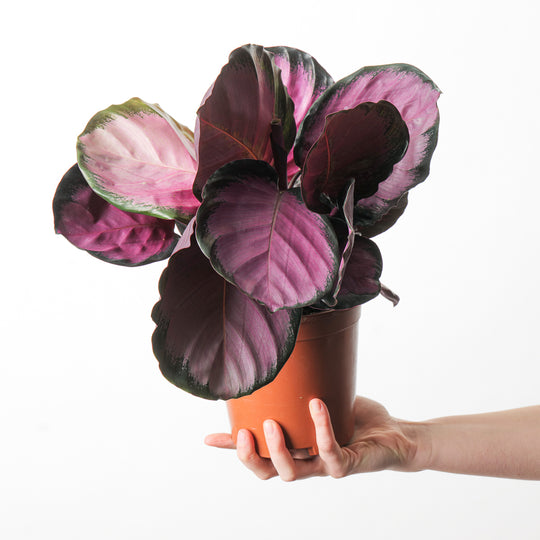
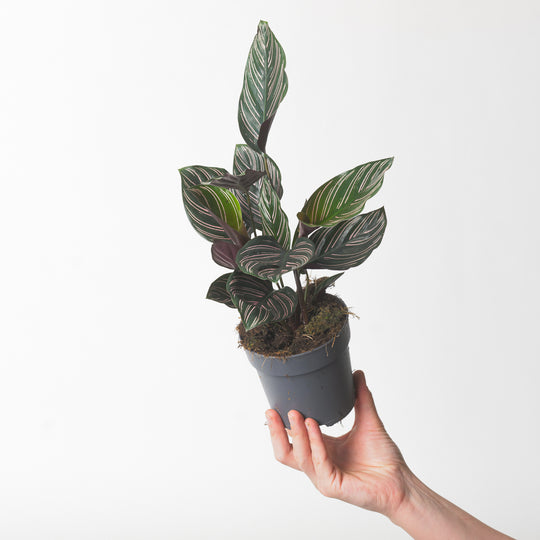
Several Calathea varieties feature pink markings. Calathea 'Crimson' has deep pink undersides, while Calathea 'Cora' combines pink centres with dark green borders. These are also non-toxic to pets, making them a safe choice for pink-plant lovers with cats or dogs.