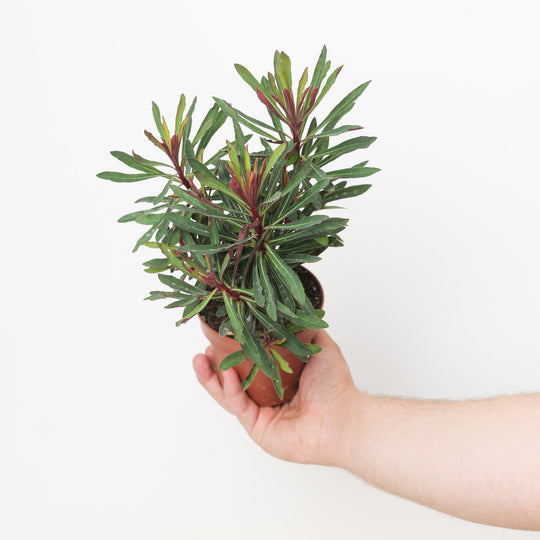
Euphorbia
Euphorbia Care Guide

Euphorbia is one of the largest and most varied plant genera on Earth, with over 2,000 species spanning tiny ground-hugging succulents, towering candelabra trees, and flowering shrubs. The species grown as houseplants are predominantly from Africa and Madagascar, and many are strikingly architectural: they take up visual space without taking up much physical space. The key rules for almost all succulent Euphorbia are simple: maximum light, minimal water, and excellent drainage.
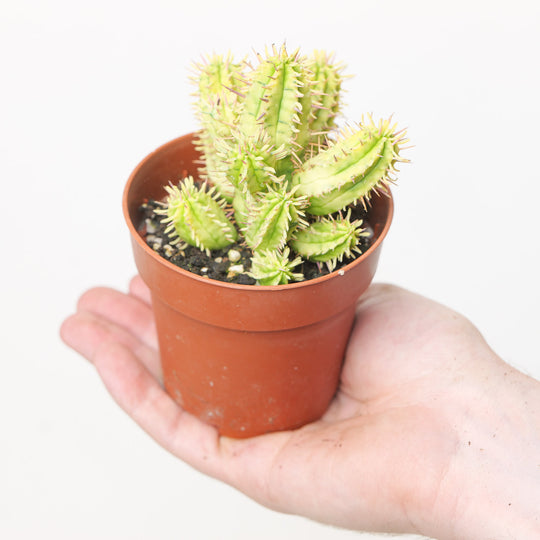
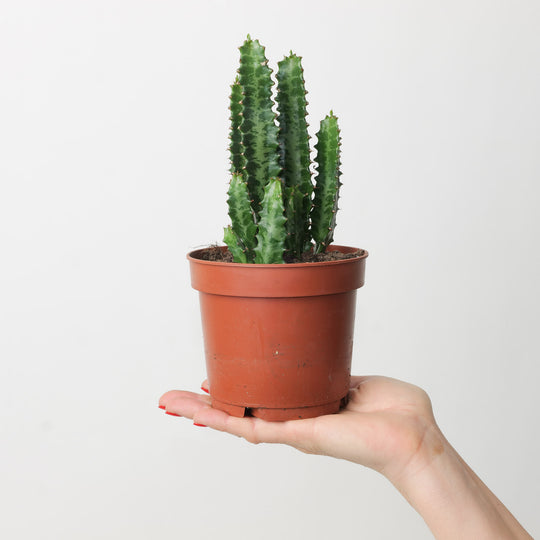
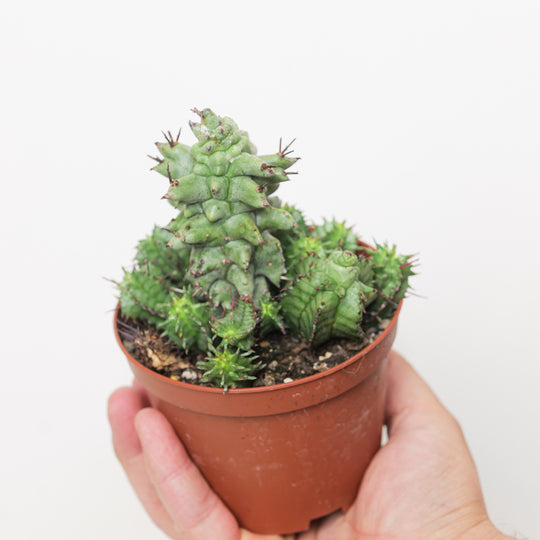
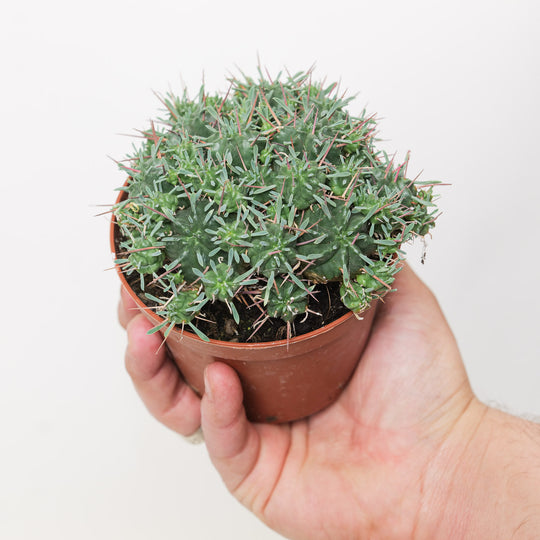
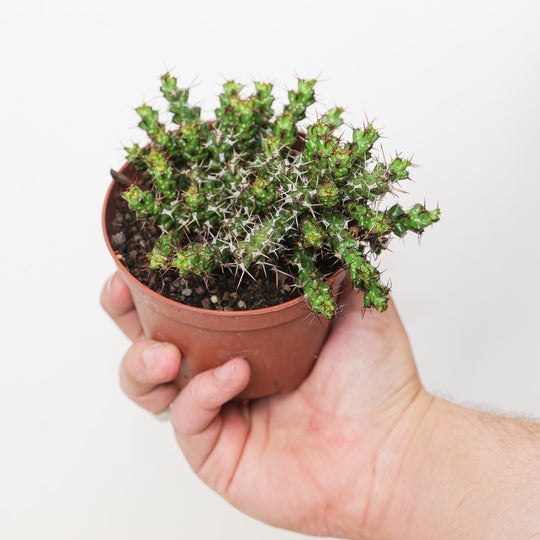
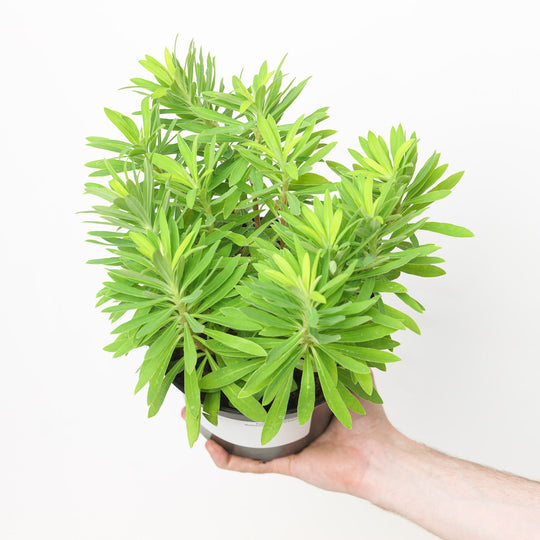
This guide focuses on the succulent-type Euphorbia most commonly kept as houseplants in the UK, including the popular African Milk Tree (Euphorbia trigona), the dramatic Pencil Cactus (Euphorbia tirucalli), and the unusual Coral Cactus (Euphorbia cristata).
💡All Euphorbia produce a white milky latex sap that is a skin and eye irritant and is toxic to humans and pets. Always handle this plant with protective gloves.
Light Requirements for Euphorbia
Euphorbia need as much direct sunlight as possible. A south-facing windowsill is ideal. An east or west-facing window works, though growth will be slower. A north-facing window is generally not sufficient for most species; they will become etiolated (stretched and weak) over time as they reach toward the light.
In summer, many succulent Euphorbia benefit from being moved outside to a sheltered, sunny spot. This is not essential, but the intensity of outdoor light produces noticeably better growth and colour than anything achievable indoors in the UK.
If your Euphorbia starts producing narrow, pale new growth, it is not getting enough light. Move it to the brightest position available. Unfortunately, etiolated sections do not become normal; you would need to prune them out over time as the plant grows in better conditions.
How Often Should You Water Euphorbia?
Let the compost dry out completely before watering. This is non-negotiable for succulent Euphorbia. They store water in their stems and can tolerate extended periods of drought. They cannot tolerate sitting in wet compost, and root rot is the primary cause of death for these plants in cultivation.
In the growing season (spring through summer), watering every 10 to 14 days is typical for most species in a well-draining mix. In autumn and winter, reduce significantly: once a month, or even less for established plants. During winter, many succulent Euphorbia effectively stop growing and require almost no water at all.
Common signs of overwatering include soft, yellowing or translucent stems, a foul smell from the compost and basal rot at the soil level.
Signs of underwatering tend to be slight wrinkling of the stem surface in species that normally have smooth, turgid stems. In most cases this resolves quickly after a thorough watering.
What Potting Mix is best for Euphorbia?
Succulent Euphorbia need a very free-draining mix. A purpose-made cacti and succulent compost is the simplest starting point. If making your own mix, combine a loam or coir-based compost with roughly 50% coarse grit, perlite, or pumice to ensure rapid drainage. Our Desert Mix is formulated for exactly this purpose.

Adding a layer of grit or pumice to the top of the compost around the base of the plant can help prevent rot at the soil surface, particularly in the cooler, lower-light months. We use pumice in our own mixes as it improves drainage, adds weight stability for top-heavy species, and does not break down over time.
Heavy, peat-based compost that retains moisture is one of the most common reasons Euphorbia fail in home cultivation.
Repotting Euphorbia
Repot when the plant visibly outgrows its container, which may be every two to three years for slower-growing species, or annually for vigorous ones like Euphorbia trigona. Move up one pot size only. A pot that is too large will hold excess moisture and increase the risk of rot.
Terracotta pots are a genuinely better choice for Euphorbia than plastic. They are porous, which means the compost dries faster between waterings, and the weight provides stability for tall, top-heavy species.
Always wear gloves when repotting. Wrapping the plant in several layers of newspaper before lifting it can protect both you and the plant. Work over a surface you can wipe clean, as latex sap on fabric is difficult to remove.
Propagating Euphorbia
Most succulent Euphorbia are propagated from stem cuttings. The key step is allowing the cut end to dry completely before potting: this is called callusing, and it takes two to five days depending on the size of the cutting and the ambient temperature. If you skip this step and pot a fresh cutting into damp compost, the cut end is likely to rot before roots form.
- Take a clean cutting using a sharp, sterilised blade. Wear gloves.
- Allow the cut end to callus at room temperature for two to five days, or until the surface is visibly dry and sealed.
- Once callused, place the cutting in dry or barely moist, gritty compost.
- Do not water for the first one to two weeks. Keep in bright, indirect light while rooting.
- Roots typically form within four to eight weeks. Begin watering lightly once new growth appears.
Note: division and offset removal are also possible for clustering species.
Common Problems when growing Euphorbia
Root rot
The most common cause of death. Caused by wet compost held too long, poor drainage, or overwatering. Prevention is far easier than cure: ensure the compost dries out completely between waterings and that water drains freely from the pot.
Etiolated growth
Long, pale, stretched new stems indicate insufficient light. Move to the brightest available position.
Leaf drop
On leafy Euphorbia such as E. milii and E. trigona, leaf drop is usually caused by cold temperatures, draught, overwatering, or a natural winter response to low light levels. Check conditions first before assuming disease.
Mealybugs
Appear as white, cottony patches in stem joints or at the base of spines. Treat with isopropyl alcohol applied with a cotton bud, followed by insecticidal soap. See our mealybug guide for a full treatment protocol.
Scale insects
Brown, waxy bumps on the stems. Can be scraped off manually. Treat with neem oil or insecticidal soap. See our scale guide.

Need More Help with Your Euphorbia Plant and Houseplants?
Whether you're troubleshooting an issue or looking for care tips, we're here to help! Simply drop us an email at hello@growtropicals.com.