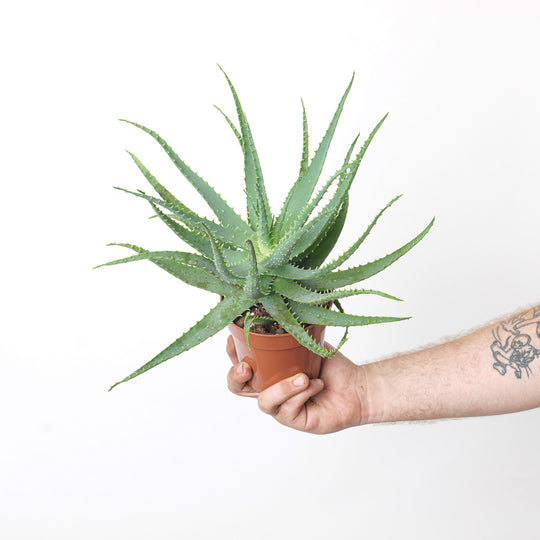
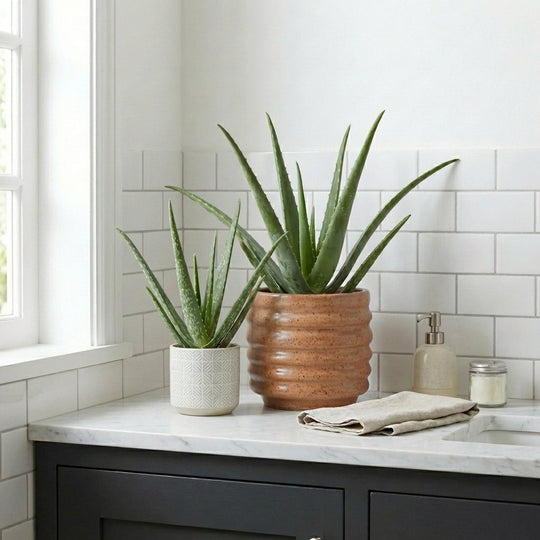
Aloe Vera
Aloe Vera Care Guide

Aloe vera is one of the few houseplants that genuinely thrives on neglect. Its thick, fleshy leaves store water, which means it handles missed waterings far better than most houseplants, but it will not forgive sitting in wet compost.
This guide covers everything you need to grow Aloe vera successfully indoors in the UK.
What Lighting Is Best for Aloe Vera?
Aloe vera is a sun-loving plant. In its native range across arid Africa and the Arabian Peninsula, it grows in full sun. Indoors, the ideal spot is a south- or east-facing windowsill where it receives bright, direct or near-direct light.
It will survive in bright indirect light, but growth slows noticeably. In a dim room, the leaves tend to become elongated and floppy as the plant stretches toward the light source.
If your plant has been indoors for a long time, move it to a brighter spot gradually over two to three weeks rather than straight onto a sunny windowsill. A sudden switch to intense afternoon sun can cause the leaves to bleach or turn orange, which is a condition sometimes called sun stress. It looks alarming, but is usually recoverable.
How Often to Water Aloe Vera
Water thoroughly, then wait until the compost is completely dry before watering again. In summer, that typically means every three to four weeks. In winter, once a month is often enough.
Check the compost before watering. Push a finger 5 to 6 cm into the pot — if there is any moisture at all, wait. Aloe vera comes from arid environments; its roots are adapted to periods of drought, not consistent moisture.
Signs of overwatering: Leaves turn soft, translucent, or mushy, particularly at the base. Yellowing that starts at the lower leaves is another warning sign. If the roots are brown and waterlogged when you unpot the plant, cut away any rotten material, let the roots air-dry for a day or two, and repot into fresh, dry, gritty compost.
If your leaves become thin, slightly wrinkled, or curl inward, it is usually a sign of overwatering. The plant looks a bit deflated rather than plump. A thorough watering and a few days of patience will usually resolve this.
Soil and Potting Mix
Aloe vera must have free-draining compost. Standard multipurpose potting compost holds too much moisture and will cause root rot. Use a dedicated cactus and succulent mix, or blend standard compost with 30 to 40 per cent perlite or coarse grit to improve drainage.
Our Desert Mix is formulated specifically for aloes and other succulents: it drains freely, does not compact over time, and has the gritty texture these plants need. It makes a meaningful difference compared to standard houseplant compost.

Pot choice matters too. Terracotta pots help wick moisture away from the roots and are a better choice than glazed ceramic or plastic for aloe. Always use a pot with at least one drainage hole.
Repotting
Repot when the plant becomes top-heavy, when roots are visibly circling the base of the pot, or when it starts producing offsets that crowd the container. Aloe vera does not need large pots so it is best to choose a new container just one size up (about 2 to 3 cm larger in diameter).
Spring is the best time to repot, but it can be done any time of year if necessary. When repotting, gently remove old compost from the roots and check for any soft or rotten sections. Trim these away with clean scissors before repotting into fresh, dry compost. After repotting, wait a week before watering to allow any root damage to callous over.
Propagation
Aloe vera produces offsets — known as pups — around the base of the parent plant. These are the simplest and most reliable way to propagate aloe. When a pup is a few centimetres tall and has developed its own roots, you can separate it.
-
Unpot the parent plant and gently shake away the compost to expose the pup and its roots.
-
Using a clean, sharp knife, cut the pup away from the parent — try to keep as many roots intact as possible.
-
Leave the cut end to dry and callous for 24 to 48 hours before potting.
-
Pot the pup into a small container with dry, gritty compost. Do not water for the first week.
Aloe vera does not propagate reliably from leaf cuttings — unlike some other succulents, detached leaves tend to rot rather than root.
Common Problems when growing Aloe Vera
Brown or orange leaf tips is usually caused by sun stress during acclimatisation, fluoride in tap water, or very dry air. It is cosmetic rather than serious. If you are using tap water, try switching to filtered or rainwater and see if it makes a difference over a few months.
Soft, mushy leaves is a sign of overwatering. Unpot, check the roots, remove any rot, dry the plant out, and repot in fresh compost. Reduce watering frequency significantly going forward.
Thin, wrinkled leaves is a sign of underwatering, or a pot-bound plant that has exhausted the available moisture too quickly. Water thoroughly and check whether the plant needs repotting.
Long, floppy growth is a sign of insufficient light. Move the plant to a brighter position, ideally closer to a window with some direct sun.
Ready to Add an Aloe to Your Collection?
Browse our full range of Aloe, from classic Aloe vera to unusual collector’s varieties, all grown with care and ready to thrive in your home.