Star Jasmine (Variegated)
Trachelospermum asiaticum 'Star of Milano'
Star Jasmine (Variegated)
Trachelospermum asiaticum 'Star of Milano'
17cm / 2L
£30.99
Ordering in autumn or winter? Many hardy exotics arrive dormant or cut back right now. This is normal, and the best time to plant.
Seasonal by nature: what to expect
- Grown outdoors, the way nature intended. Weather-tested and hardened in real UK conditions, so they thrive in your garden. A few marks on the older leaves are normal, the sign of a tough, real plant rather than a flaw.
- It follows the seasons. Depending on when you order, your plant may arrive cut back, dormant or leafless. That's healthy: dormancy is the ideal time to plant.
- Posted, not posed. Big leafy plants like bananas and gingers may be trimmed or gently folded to travel safely. It does the plant no harm, and it powers away again in spring.
Not sure what to expect from yours? Dormant, cut-back or weather-marked plants are all perfectly healthy and normal. Read what to expect through the seasons
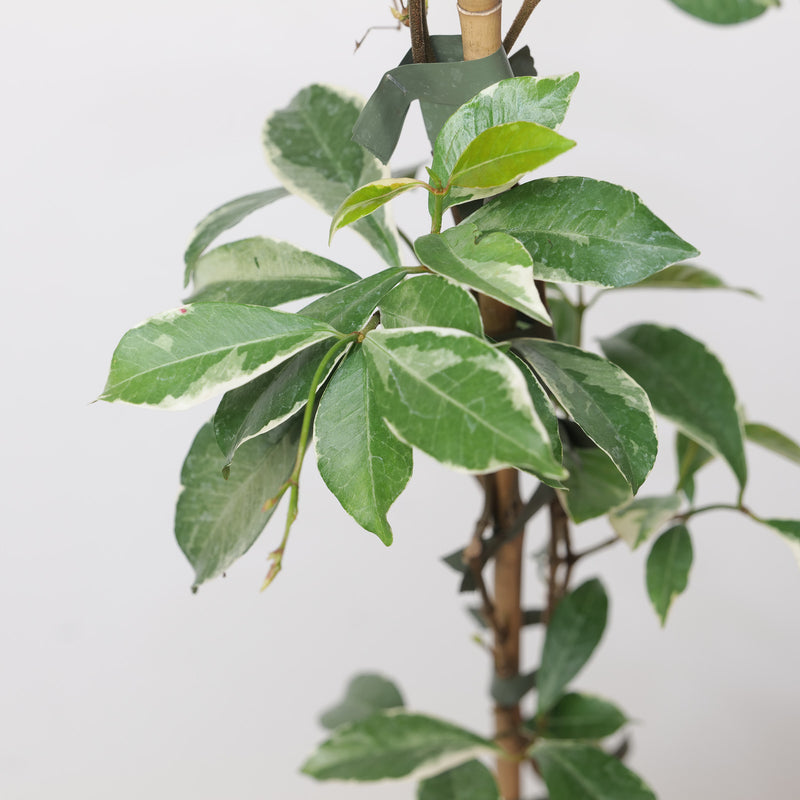
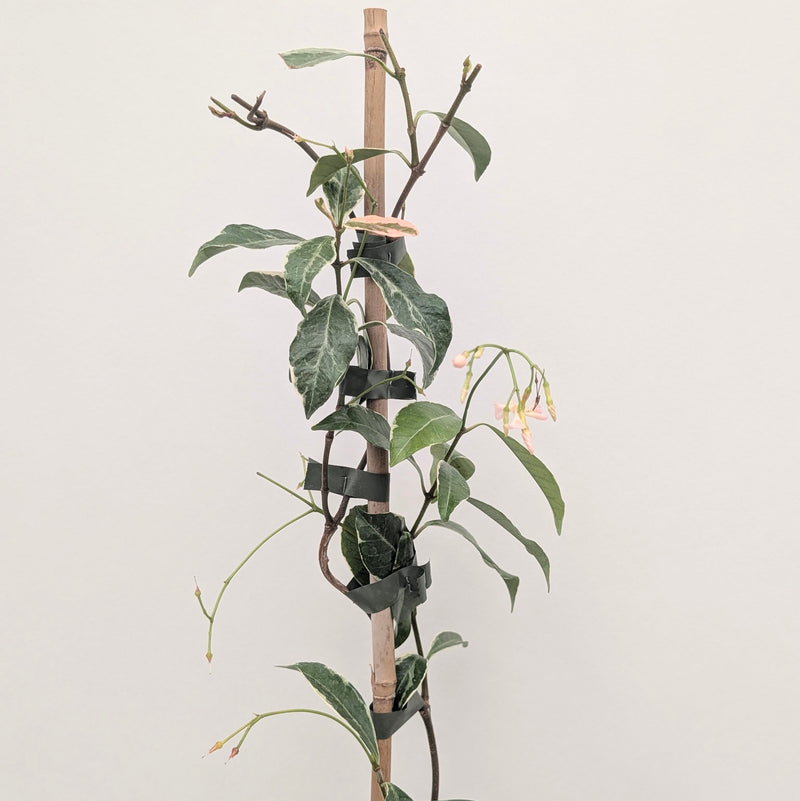
Trachelospermum asiaticum 'Star of Milano' is a beautiful variegated form of the evergreen star jasmine, and one of the most rewarding fragrant climbers you can grow. A woody, self-twining climber reaching around 3m, it clothes itself in glossy oval leaves neatly edged with creamy-white, then from late spring right through to early autumn it produces masses of small, starry, sweetly scented flowers that open a soft blush pink above the foliage.
What sets Star of Milano apart is that long, generous flowering season paired with genuine hardiness. Rated RHS H4 and hardy through most of the UK, it holds its variegated evergreen foliage all year and only asks for a sunny, sheltered wall to give its very best. The perfume alone earns it a spot by a doorway, seating area or open window, where the scent carries on warm summer evenings.
How and where to grow
- Position: full sun for the best flowering and fragrance, though it tolerates partial shade. A warm, sheltered wall out of cold winds suits it best.
- Soil: any fertile, well-drained soil, including chalk, loam and sand. Sharp drainage matters, as it dislikes sitting wet in winter.
- Size: a manageable climber reaching roughly 2.5 to 4 m tall and around 2 m wide, easily kept in check.
- Hardiness: hardy through most of the UK (RHS H4), evergreen, with a little winter shelter worthwhile for young plants in cold gardens.
Because it twines rather than clings, give it a trellis, wires or an obelisk to scramble up. It is superb for softening a sunny wall or fence, and its neat habit makes it a natural for pots and containers on a warm patio. It sits proudly among our other hardy climbers and the wider range of hardy exotics, and its evergreen screen of scented foliage makes it a favourite for exotic borders and quiet, sheltered corners. As with all outdoor plants, it is worth reading our what to expect guide so you know how a garden-hardy climber behaves through the seasons.
Every Trachelospermum asiaticum 'Star of Milano' we supply is nursery-grown, hand-selected for healthy, well-furnished growth and strong roots, and packed with care to arrive ready to train up its support.
Hardiness & Frost
Hardy through most of the UK (RHS H4), coming through winters down to around -10C once established. It stays evergreen year-round. In colder or more exposed gardens give it a sheltered, sunny wall and consider fleecing young plants during prolonged hard frost, as it settles in and toughens up over its first couple of winters.
Sun & Aspect
Flowers and scents best in full sun, though it also grows well in partial shade. Shelter from cold, drying winds keeps the variegated foliage looking its best, as leaves can bleach in a hot, exposed position or scorch in bitter wind.
Soil
Grows in any fertile, well-drained soil, including chalk, loam and sand across a range of pH. Good drainage matters, as it dislikes sitting wet over winter. In pots use a loam-based, peat-free compost and keep it in good light.
Watering & Establishment
Water regularly through the first year or two to settle the roots, keeping the soil moist but never waterlogged. Once established it is fairly drought-tolerant and low-maintenance. Pruning is rarely needed, but a light tidy in early spring keeps it neat and within bounds.
-
It is a manageable climber, reaching roughly 2.5 to 4 metres tall and around 2 metres wide over time. That compact size makes it easy to keep on a trellis, obelisk or wall, and it can also be trained lower as an informal evergreen screen or grown in a large pot.
-
Yes. 'Star of Milano' is rated RHS H4 and hardy through most of the UK, coming through winters to around -10C once established, and staying evergreen. In colder or exposed gardens give it a sheltered, sunny wall and fleece young plants during prolonged hard frost until they toughen up. Browse more hardy exotics for reliable year-round structure.
-
Yes, and the fragrance is one of its main attractions. From late spring to early autumn it carries masses of small, starry, sweetly scented flowers that open a soft blush pink. The perfume carries on warm days, so it is worth planting near a doorway, seating area or open window where you will enjoy it most.
-
It is a genuinely low-maintenance, trouble-free climber. Give it a sunny, sheltered wall and any fertile, well-drained soil and it largely looks after itself. Pruning is rarely needed beyond a light spring tidy, which makes it one of the easier evergreen hardy climbers to keep.
-
Both work well. In the ground it establishes into a bigger, more vigorous climber, while its neat size makes it equally happy in pots and containers on a warm patio, where you can move it to the most sheltered spot for winter. In a pot, use a loam-based compost and keep it well watered in summer.
-
Yes. Unlike self-clinging climbers, star jasmine twines, so it needs a trellis, wires or an obelisk to climb up. Simply tie in the young stems to get it started and it will soon wind its way up the support on its own, forming a dense, evergreen, scented screen.
-
Your plant will arrive in its nursery grow pot — the plastic pot it's been growing in. We don't include a decorative pot as standard, and there's a good reason for that: it means you get to choose one that fits your space and style, rather than being stuck with something that doesn't suit your home.
It also means you're not paying extra for a pot you might not want. The nursery pot is perfectly fine to keep your plant in for a while, just pop it inside a decorative cover pot or cache pot and you're good to go. When you're ready to repot (usually after a growing season or when roots start poking out the bottom), you can move it into something more permanent with fresh soil.
If you're not sure what size cover pot to go for, check the pot selector tool listed above, you'll want a decorative pot that's a centimetre or two wider than that to give it a comfortable fit. -
Every plant on our site includes the pot size (e.g. 12cm) and, where possible, an approximate height. That's the most reliable way to set your expectations, photos can sometimes make a plant look larger or smaller than it really is.
If you're thinking "that sounds quite small for the price," here's something worth knowing: younger, smaller plants almost always adapt better to your home than larger ones. They adjust faster to your light and humidity, put out new growth more quickly, and tend to establish stronger root systems long-term. A plant that grows into your space will usually outperform one that was already big when it arrived.
That said, every plant is an individual. The one you receive may vary slightly in height, shape, or fullness compared to the photo, that's the nature of living things, not a quality issue. We select healthy, well-established specimens, and if you ever feel your plant doesn't match what you were expecting, just get in touch and we'll take a look. -
There's a big difference between a plant that's been sitting under on a retail shelf and one that's been looked after and cared for by people who specialise in exactly this.
Our plants are grown in house or sourced from specialist nurseries, many of them varieties you simply won't find at your local garden centre or supermarket. Before anything leaves us, it's checked over by our horticultural team to make sure it's healthy, well-rooted, and ready to thrive in your home. We're not shifting volume off a pallet, we're choosing plants we'd want to keep ourselves.
When you buy from a supermarket, you get a plant and a generic care label. When you buy from us, you get the knowledge that comes with it, detailed care guidance, a team you can actually contact if something isn't going right, and the confidence that what's arriving has been looked after properly from the moment it was grown to the moment it reaches your door.
We're a specialist nursery first, not a retailer that happens to sell plants. That's the difference, and you'll see it the moment you open the box. -
First things first, unbox it as soon as you can. Plants don't love being in dark boxes any more than you would, and the sooner yours is out and breathing, the better.
Remove all the packaging carefully, give the soil a check with your finger, and water lightly if it feels dry. Then find it a spot with appropriate light, but avoid putting it straight into harsh direct sun or next to a radiator. Think of it like arriving somewhere new after a long journey: it needs a moment to adjust.
It's completely normal for your plant to look a little tired or droopy after transit. This is called transit stress, and most plants bounce back within a week or two. You might see a yellow leaf or some drooping, don't panic, and resist the urge to overwater or start repotting straight away.
Our advice for the first couple of weeks: leave it in its nursery pot, water it only when the top layer of soil feels dry, and let it acclimatise to your home's light, temperature, and humidity. Once it's settled in and showing signs of new growth, you can think about repotting or moving it to its permanent spot.
Every plant we sell comes with a care guide on the product page so you'll know exactly what it needs going forward. And if anything doesn't look right, get in touch with our team, we're always happy to help. -
Yes! and we go to serious lengths to make sure of it. Every plant is hand-packed by our team with protective wrapping and secure, custom-designed boxes to keep it stable and safe in transit. We've shipped hundreds of thousands of plants across the UK and our packaging methods have been refined over years to handle the bumps and jolts of delivery.
During colder months, we monitor weather forecasts and offer heat packs where needed to protect against frost. In extreme conditions, we may hold your order for a day or two rather than risk sending it out, we'd rather you wait an extra day than receive a stressed plant.
That said, plants are living things, and the occasional transit wobble can happen. If your plant arrives damaged or isn't in the condition you'd expect, just get in touch within 48 hours with a photo, and we'll make it right, whether that's a replacement or a full refund. No fuss.
The short version: we treat every box like it's going to someone who really cares about what's inside, because it is.
All plants are covered by our 7-day live arrival guarantee. We pack every order in protective, sustainable packaging designed to keep your plants safe in transit. Whether grown in our own nursery or sourced from trusted partner growers, every plant is checked before it ships. On the rare occasion something isn't right on arrival, we'll make it good, provided the plant is still in its original nursery pot.
Find out more →