About Ceropegia
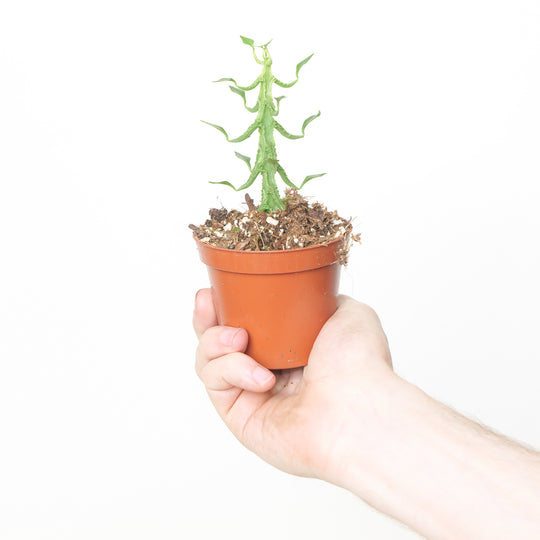
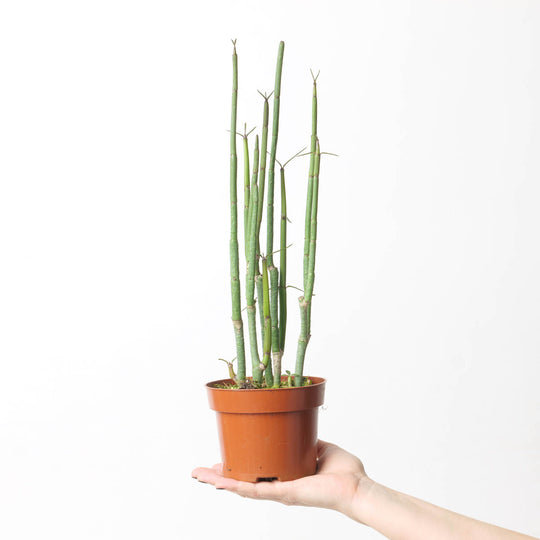
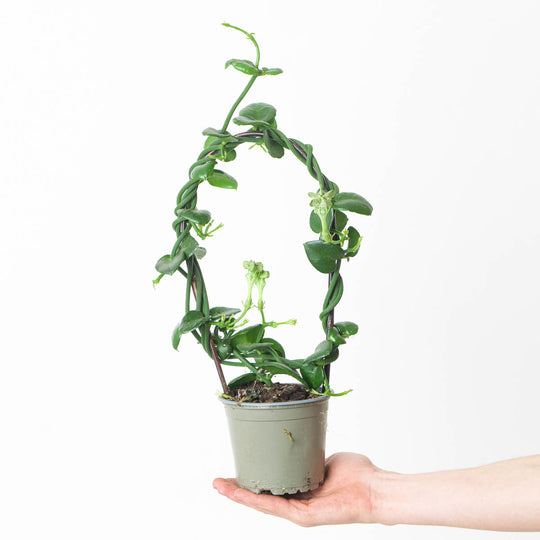
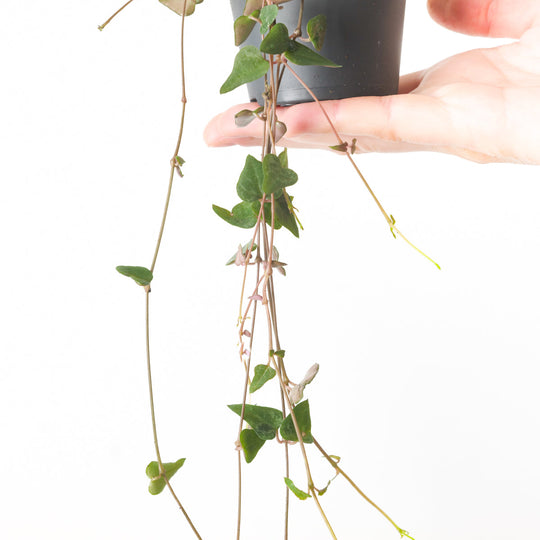
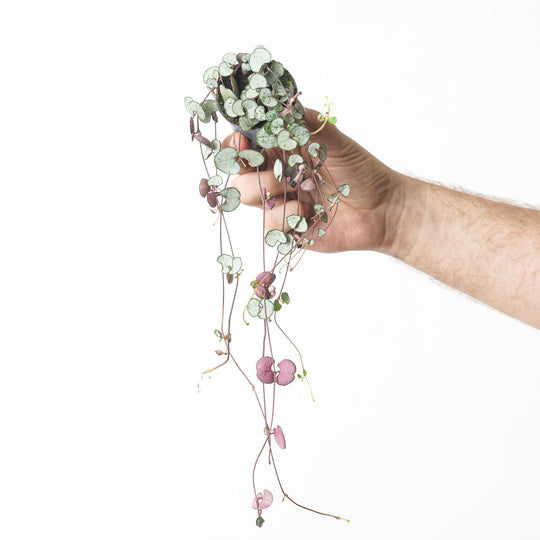
The genus Ceropegia belongs to the Apocynaceae family and contains over 200 species, mostly native to Africa, Asia, and Australia. They are best known for their trailing, vine-like growth and their extraordinary tubular flowers, which act as temporary insect traps for pollination. In cultivation, Ceropegia woodii (string of hearts) has become one of the most popular trailing houseplants, prized for its dainty heart-shaped leaves and easy-going nature.
Popular Varieties
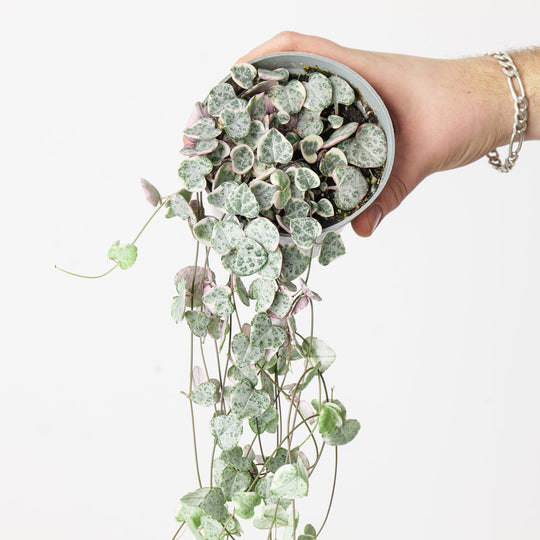
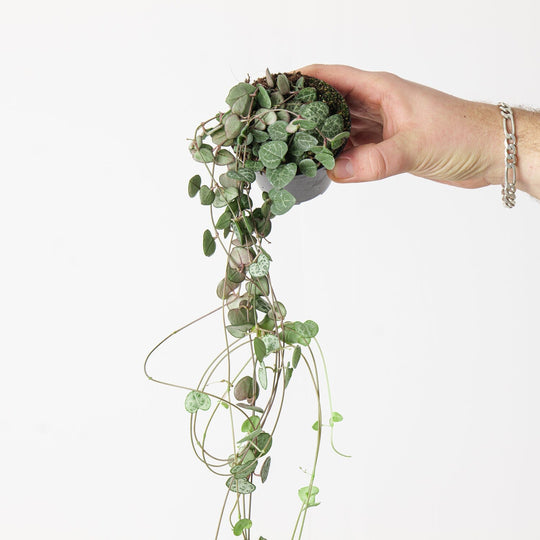
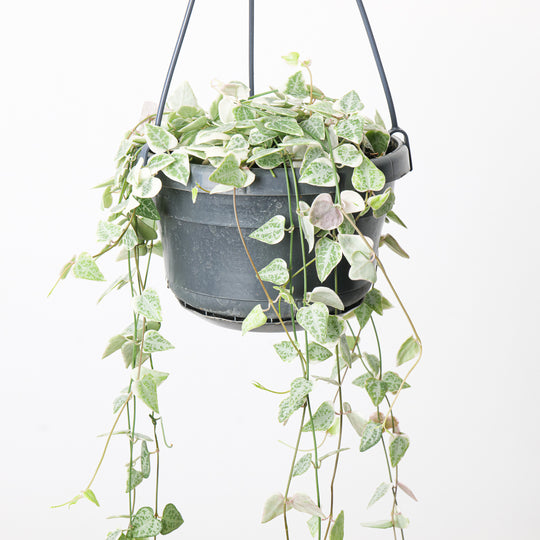
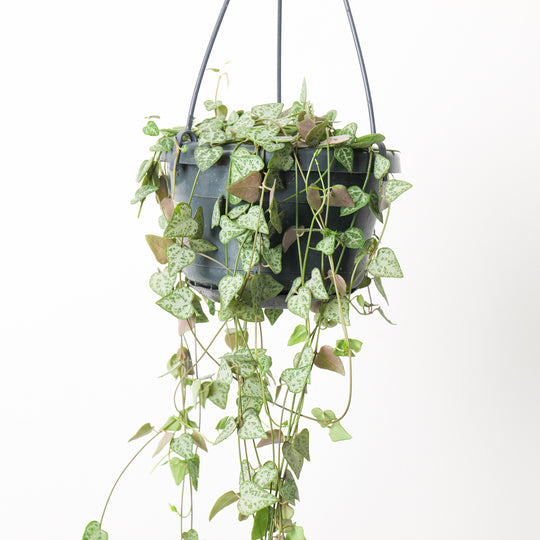
The classic string of hearts has green and silver marbled leaves with purple undersides. Silver Glory offers an even more silvered, metallic appearance. Variegated string of hearts adds pink and cream tones to the foliage. For something truly different, Ceropegia sandersonii produces striking parachute-shaped flowers, and Orange River is a compact form with rounder, thicker leaves.
Light and Positioning
String of hearts prefer bright, indirect light and can handle some direct morning sun. Good light encourages compact growth and stronger leaf colouring. In lower light, stems will stretch and leaves may become smaller. Position them on a bright windowsill or high shelf where their trailing stems can cascade freely. They complement other trailing plants in our hanging plants and trailing plants collections.
Watering and Care
Ceropegia woodii stores water in its tubers and leaves, so it prefers to dry out thoroughly between waterings. Overwatering is the most common cause of problems. In summer, water every one to two weeks; in winter, reduce to once every three to four weeks. They do not need high humidity and actually prefer drier conditions, much like the plants in our succulent collection.
Propagation
String of hearts propagate easily. You can root stem cuttings in water or lay them on moist soil and pin them down at the nodes. The plant also produces small aerial tubers along its stems that can be planted directly. This makes them wonderful plants for sharing with friends or filling out a hanging planter more quickly.