


Living Stones
Lithops sp.
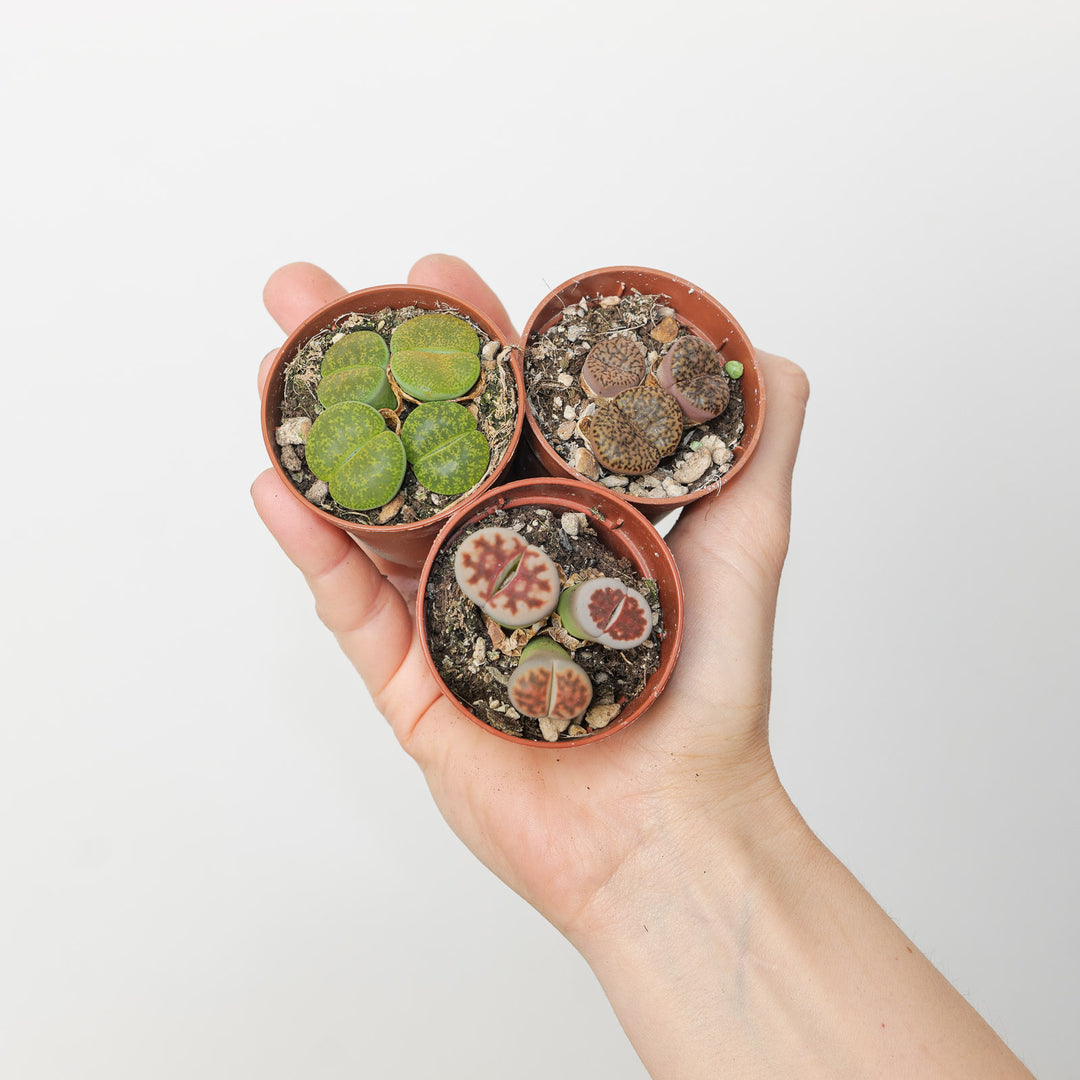


Living Stones
Lithops sp.

£2.99

£2.99

£2.99

£2.99

£2.99

£2.99
£3.99

£3.99

£3.99

£5.99

£5.99
£16.00

£16.00

£16.00

£16.00

£16.00

£16.00
£5.39

£3.99

£7.99
New to this plant? See how to care for it

Lithops sp.
6cm (Grower's Choice)
£3.99

Lithops, commonly known as Living Stones, are slow-growing succulents that have evolved to resemble the rocks and gravel of their native habitat. Each plant consists of a single pair of thick, fleshy leaves fused together, with a fissure across the top from which new leaf pairs and flowers emerge. The surface patterns range from mottled browns and tans to greys, greens, and pinkish tones, each species camouflaging into a different type of stony ground. They are small, fascinating, and unlike anything else you will grow indoors.
Origins
Native to the arid regions of southern Africa, particularly Namibia and South Africa, Lithops grow in stony desert terrain where rainfall is extremely scarce and temperatures fluctuate widely between day and night.
Soil and Substrate
Our Desert Mix provides the sharp drainage Lithops require. They are extremely sensitive to overwatering: water sparingly during the active growing season (autumn and spring) and not at all while new leaf pairs are forming or during summer dormancy. Full sun or the brightest windowsill you have. A south-facing position is ideal.

Water
Water Lithops very sparingly and only when the soil is completely dry. In spring, water lightly if the plant looks wrinkled. In summer, do not water at all because the plant is dormant. In autumn, water every 2–3 weeks as this is the main growing season. In winter, stop watering completely while the plant replaces its leaves.
Can I use tap water for houseplants?

Humidity
Lithops prefer very low humidity and dry air. Do not mist them or place them in humid rooms like bathrooms. Good airflow is important to keep them healthy.

Temperature
Lithops grow best between 18 and 26°C. They can tolerate cooler temperatures down to about 10°C if the soil is dry. Avoid frost and never let them sit in cold, wet soil.
Is Air Conditioning good for houseplants?
Read the full care guideAll plants are covered by our 7-day live arrival guarantee. We pack every order in protective, sustainable packaging designed to keep your plants safe in transit. Whether grown in our own nursery or sourced from trusted partner growers, every plant is checked before it ships. On the rare occasion something isn't right on arrival, we'll make it good, provided the plant is still in its original nursery pot.
Find out more →


