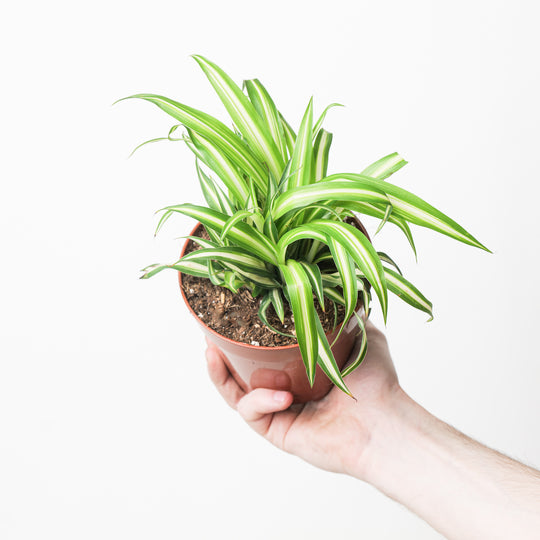
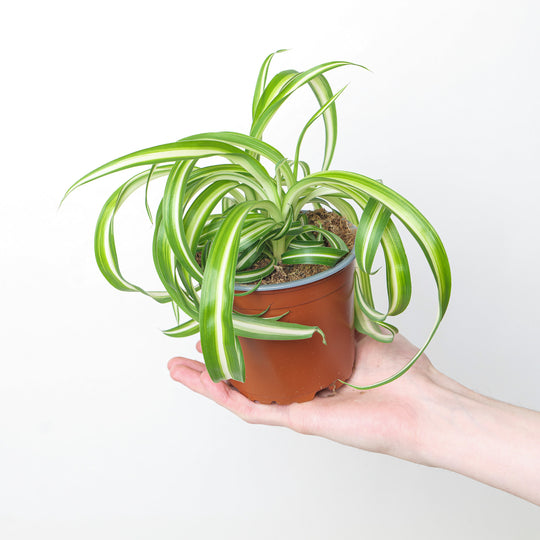
Spider Plant
Chlorophytum Care Guide

Chlorophytum comosum, the spider plant, is one of the most forgiving houseplants you can grow. It tolerates low light, bounces back from missed waterings, and produces cascading babies on long arching stolons that make it one of the best plants for hanging displays. If you are new to houseplants, this is a reliable place to start.
This guide covers light, watering, soil, repotting, propagation, and the most common problems you will run into with spider plants in UK homes.
Light Requirements for Spider Plants
Bright indirect light such as near an east-facing or north-facing window is best. Spider plants cope well in lower light conditions too, which is why they work in offices, bathrooms, and hallways where other houseplants struggle.
Avoid prolonged direct sunlight, especially through south-facing glass in summer. The leaves scorch easily, developing bleached or brown patches. An hour or two of gentle morning sun is fine.
Spider plants can survive in low light, but growth slows noticeably and variegated forms may lose their white striping, reverting to solid green. If the plant looks leggy or pale, move it closer to a window.
How Often to Water a Spider Plant
Water when the top 3 to 5cm of compost feels dry. In practice, that means roughly once a week in summer and every two to three weeks in winter, but always check the soil rather than following a fixed schedule. Spider plants have thick, tuberous roots that store water. This makes them drought-tolerant but sensitive to overwatering. If the pot sits in water for long periods, root rot sets in quickly.
One thing to note is spider plants are sensitive to fluoride and chlorine in tap water, which causes brown leaf tips over time. If your tap water is heavily treated, use filtered water or leave tap water to stand overnight before watering.
Soil and Potting Mix
Spider plants are not fussy about soil, but they do need decent drainage. A good-quality, free-draining houseplant compost works well. Our Jungle Mix or Simply Houseplant Potting Mix both provide the right balance of moisture retention and drainage.

Repotting Spider Plants
Spider plants grow quickly and become rootbound within a year or two. Repot when you see roots circling the bottom of the pot or pushing out of the drainage holes. Spring is the best time to repot, but spider plants are tough enough to handle repotting at any time of year if needed.
Our top tip: Spider plants like to be slightly snug in their pots. A mildly rootbound plant is more likely to produce babies than one with lots of spare room.
Propagation
Spider plants are one of the easiest houseplants to propagate. They do most of the work for you!
Propagating from Babies (Plantlets)
The classic method. Mature spider plants send out long stolons with small plantlets at the tips. Once a baby has developed its own small root nubs (visible as small bumps on the base), it is ready to propagate.
- Cut the baby from the stolon with clean scissors, leaving a short stem attached.
- Place it in a small pot of moist compost, pushing the base just below the surface.
- Alternatively, root it in a jar of water first. Change the water weekly. Once roots reach 3 to 5cm, transfer to soil.
- Keep in bright indirect light and water lightly until established.
Propagating by Division
For a large, overgrown plant, you can divide the root ball when repotting. Gently tease apart the roots into two or more sections, each with a healthy clump of foliage, and pot each one separately.
Browse our full range of Spider Plants for an easy-care fast-growing plant.