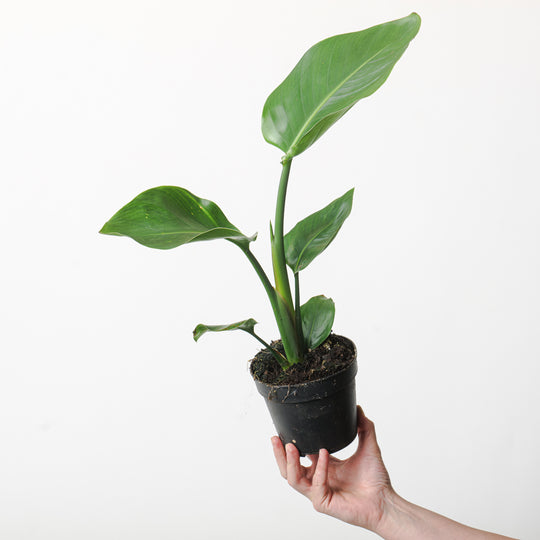
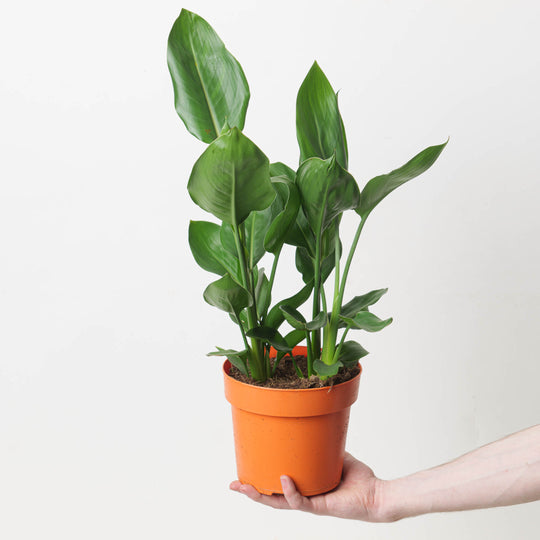
About Strelitzia: The Bird of Paradise
The genus Strelitzia contains just five species, all native to southern Africa. The most commonly grown as a houseplant is Strelitzia reginae, prized for its broad, banana-like leaves and, in mature specimens, its extraordinary crane-shaped flowers in orange and blue. Indoors in the UK, flowering is rare, but the foliage alone makes it a worthy addition to any plant collection.
Light, Temperature and Positioning
Bird of paradise plants need as much bright light as you can give them. A south or west-facing window is ideal. They will tolerate some direct sun, which actually encourages more compact, sturdy growth. In lower light, leaves may stretch and the plant can become leggy. If your home lacks bright spots, consider varieties from our low light plants collection instead.
Strelitzia prefer warm conditions between 18 and 27 degrees Celsius. They dislike cold draughts, so keep them away from exterior doors in winter. Humidity is appreciated but not essential, making them easier than many tropical species such as Calathea or Alocasia.
Watering and Feeding
Water thoroughly when the top few centimetres of soil have dried out. In summer this may be once a week; in winter, reduce to every two to three weeks. Bird of paradise plants are somewhat drought tolerant thanks to their thick, fleshy roots, but consistent watering encourages the best leaf production. Feed monthly from spring to early autumn with a balanced liquid fertiliser.
Repotting and Growth
Strelitzia reginae is a slow to moderate grower indoors. Repot every two to three years into a pot one size up, using a well-draining potting mix. These plants actually prefer being slightly root-bound, which can also help encourage flowering in the long term. For a dramatic floor-level display, pair your bird of paradise with other large indoor plants or architectural species from our Ficus collection.
Styling and Companion Plants
With its upright, fan-like growth, the bird of paradise works as a standalone statement piece or grouped with other tropical plants. Pair it with trailing varieties like Pothos or hanging plants to create layers and texture. Its bold leaf shape contrasts beautifully with the fine, feathery foliage of ferns or the patterned leaves of Philodendron varieties.