Large indoor plants for floors, corners and high ceilings, every one offered in a 17cm pot or bigger. Choose by light before looks: most of these want a bright room. Every dispatch is protected by our live arrival guarantee. For narrow spaces, see our tall and upright houseplants.
Every plant here is offered in a pot size of 17cm or more. Pot size is not plant height, though. A 17cm Strelitzia nicolai and a 17cm parlour palm are very different plants, so check the height on each product page before you measure your corner. Our guide to what our pot sizes mean explains how the two relate.
Choose large houseplants by light first
Most plants sold as statement pieces need more light than a UK living room gives them in winter. The right plant in the wrong corner is the usual reason a big plant stalls.
Bright rooms: both Strelitzia species and the banana Musa Florida Variegated list bright direct or bright indirect light. The bird of paradise will sit still rather than grow in a dim spot.
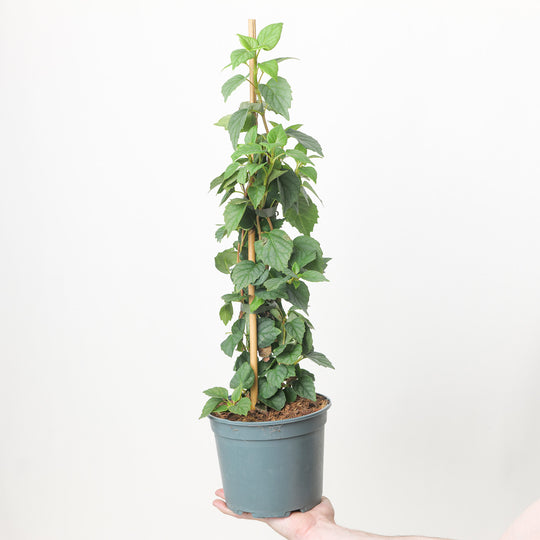
Big leaves rather than height: browse Alocasia, Monstera and Philodendron. Many of these climb or spread, so they need floor space as well as height. For a tree shape, look at our Ficus range.
Caring for a big indoor plant
Water less often than you expect. A large pot holds water for longer. Strelitzia, Chamaedorea and Monstera all prefer the top few centimetres of compost to dry out between waterings. Musa is the exception and likes to stay evenly moist.
Keep it warm. Minimum temperatures on our product pages range from 10°C for Chamaedorea and Strelitzia nicolai to 13°C for Strelitzia reginae and Musa, and 16°C for Monstera Albo. Keep big plants away from cold draughts by outside doors in winter.
Dust the leaves. Broad leaves collect dust quickly. Our guide to cleaning plant leaves covers the safe way to do it.
Repot only when roots fill the pot. Go up one size at a time. If it is going into a decorative pot, our pots and planters range includes larger sizes.
Pets and large plants
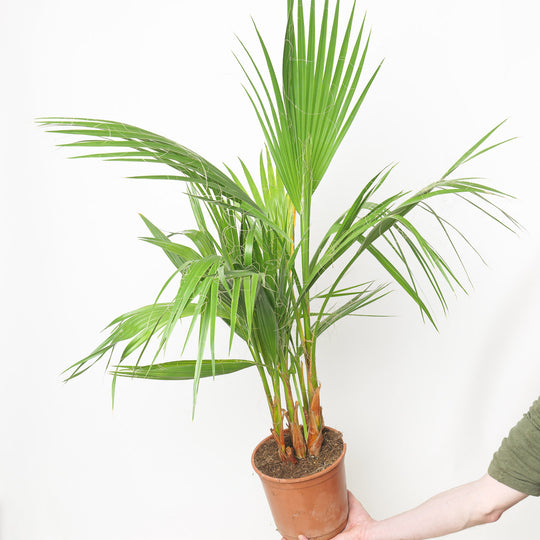
Strelitzia and Monstera are listed as toxic if eaten. Chamaedorea elegans and Musa Florida Variegated are listed as pet safe. If you have cats or dogs, check the pet safety note on the product page before you buy, and ask us if one is missing.
Delivery
All plants are shipped directly from our nursery to your door. A large plant can drop a lower leaf after the journey, which is normal. Give it a week or two in its new position before you judge how it is settling in.
Frequently Asked Questions
Monstera deliciosa is one of the most popular large houseplants, loved for its iconic split leaves. Ficus lyrata (Fiddle Leaf Fig) and Strelitzia nicolai both grow tall and make striking architectural statements in any room.
For bold, tropical foliage, explore the Alocasia collection. For something more classic, Ficus 'Audrey' offers a handsome, rounded canopy that suits most interiors.
Monstera deliciosa is very forgiving and handles a range of light conditions. Ficus 'Audrey' is more tolerant than the Fiddle Leaf Fig and copes well with occasional missed waterings.
For low-light spots, large peace lilies are hard to beat. They visibly droop when thirsty and recover quickly, making them easy to read even for beginners.
Most large houseplants prefer bright indirect light. Water when the top 2 to 3 cm of compost feels dry. Larger pots retain moisture longer, so check before watering to avoid root rot. Feed every two to four weeks with a balanced liquid fertiliser during spring and summer.
Wipe leaves regularly to remove dust and help the plant photosynthesise. Rotate the pot a quarter turn every few weeks to encourage even growth. Repot into a slightly larger container when roots begin circling the bottom of the pot.
Peace lilies are among the best large plants for lower light. Many Philodendron species also tolerate shade well, including the larger-growing climbing and self-heading types.
Avoid placing sun-loving species like Strelitzia or Ficus lyrata in dark corners, as they will become leggy and lose vigour. Match the plant to the light level for best results.
It varies by species. Many popular large houseplants including Monstera, Alocasia, and Ficus contain compounds that are mildly toxic to cats and dogs if chewed. Symptoms are usually limited to mouth irritation and digestive discomfort.
Pet-safe large options include peace lilies (mildly toxic but often listed as low-risk) and certain palms. Always check individual product pages for specific pet safety information before purchasing.
Start with the light level. Bright rooms suit Strelitzia and Fiddle Leaf Fig. Moderate light works well for Monstera and Alocasia. Lower light is best for peace lilies and Philodendrons.
Consider the shape you want: tall and upright (Strelitzia, Ficus), broad and bushy (Monstera, Philodendron), or architectural and dramatic (Alocasia). Narrow corners suit upright growers; open floor space suits spreading species.