Echeveria


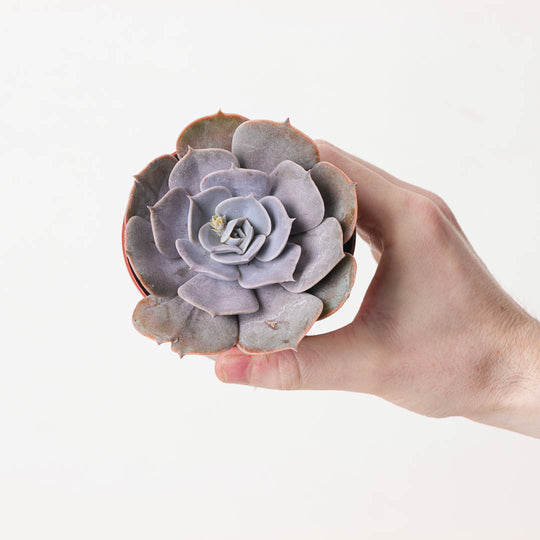
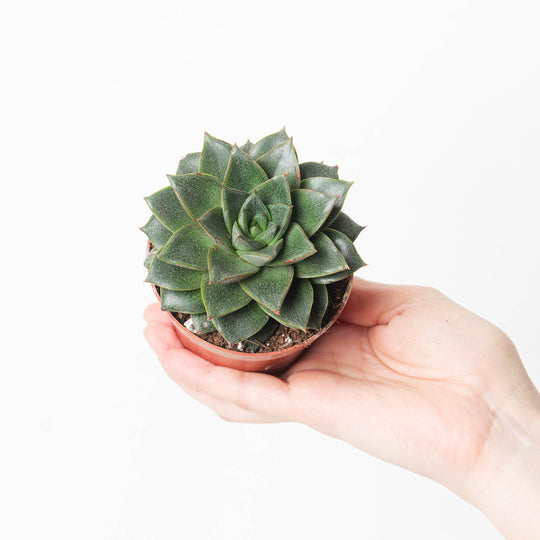
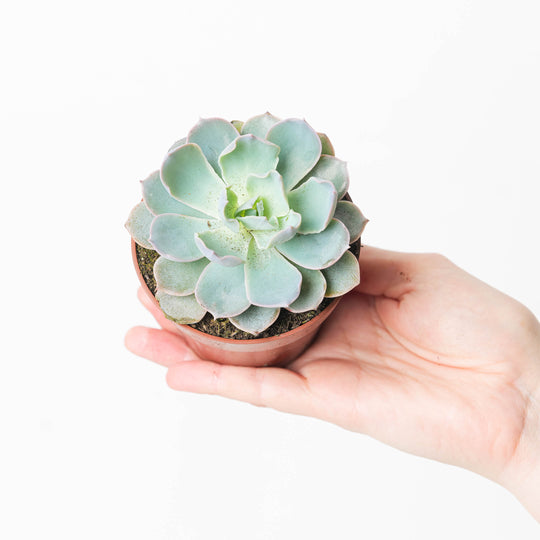
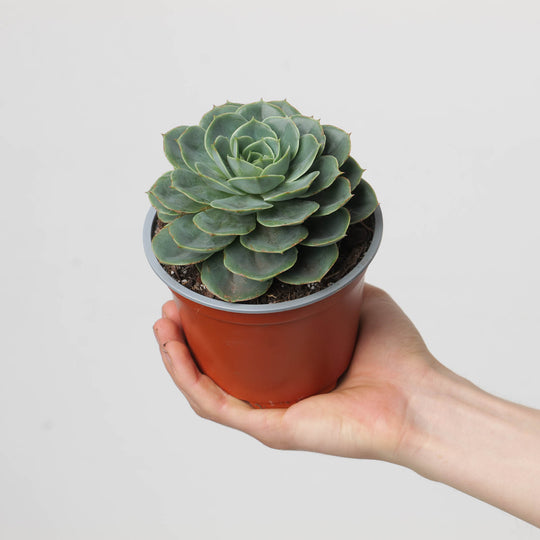
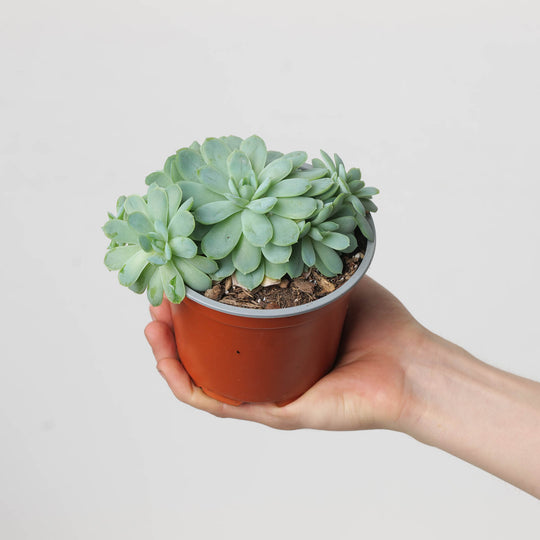
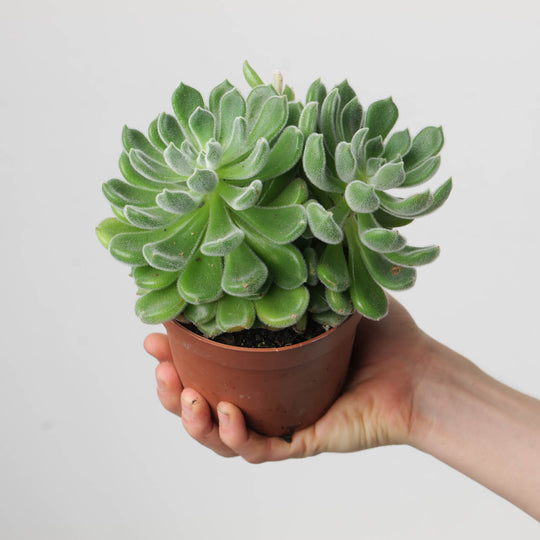
Echeveria are among the most beautiful succulent rosettes in the world. Native to semi-arid regions of Mexico and Central America, they produce tight, symmetrical rosettes of fleshy leaves in an extraordinary range of colours - from pale silver-blue and powder pink to deep burgundy, mint green, and almost-black purple. Many varieties produce delicate bell-shaped flowers on arching stems in spring and summer. Compact, drought-tolerant, and requiring only a bright spot and restrained watering, Echeveria are ideal for sunny windowsills, terrariums, and succulent arrangements.

At Grow Tropicals we stock a rotating selection of Echeveria species and hybrids, chosen for their exceptional colour, form, and quality. All plants are grown to our high standards before dispatch.

7 products

    7 products

    Echeveria Succulents: Care, Varieties & Growing Guide

    Why echeveria are so popular

    Echeveria owe their popularity to one thing above all others: their appearance. The tight, geometrically perfect rosette - often described as a living stone flower - is one of the most satisfying forms in the plant world. Each leaf is smooth and fleshy, coated in a powdery bloom called farina that gives many varieties their characteristic dusty, matte finish. The colour palette is remarkable: varieties range from pale silver and icy blue to vivid pink, burnt orange, and near-black. Many develop striking colour intensification (called stress colouring) when exposed to bright light and cool temperatures.

    How to care for echeveria

    Echeveria need maximum light - a south-facing windowsill is the ideal position in a UK home. Without enough light, rosettes etiolate (stretch and elongate) as the plant reaches toward the light source, losing the compact form that makes them attractive. Water sparingly: drench the compost thoroughly, then allow it to dry completely before watering again. In winter, reduce watering to once a month or less. Never let water sit in the rosette, as this causes rot at the crown. Use a well-draining cactus and succulent compost. Feed two or three times in the growing season with a dilute low-nitrogen fertiliser.

    Popular echeveria varieties

    Echeveria elegans (Mexican snowball) is one of the most widely grown, with pale blue-white rosettes and pink flower stems. Echeveria 'Perle von Nurnberg' is prized for its powder-pink and purple colouring with a distinctive farina coating. E. agavoides has pointed, angular leaves with red tips that deepen in strong light. E. subsessilis produces tight rosettes of blue-green leaves edged in pink. The hybrid E. 'Black Prince' offers dramatic near-black rosettes that turn richest in bright conditions. The range of forms available is vast and constantly expanding.

    Propagating echeveria

    Echeveria are satisfying to propagate. Individual leaves can be removed cleanly from the stem and laid on dry cactus compost in a warm, bright spot. After a few weeks, tiny rosettes with roots emerge from the base of the leaf. Offsets (chicks) that form at the base of the mother rosette can be gently removed and potted individually once they have a few leaves of their own. Stem cuttings work well too: allow the cut end to callous for a day before pushing into dry compost.

    Frequently Asked Questions

    Echeveria need maximum bright light (south-facing windowsill), sparingly watered compost (soak then allow to dry completely before watering again), well-draining cactus compost, and minimal feeding. In winter reduce watering to once monthly. Never let water pool in the rosette. They thrive on neglect far more than overattention.

    Etiolation (stretching) in echeveria is caused by insufficient light. The plant reaches toward the light source, elongating the stem and spacing out the leaves. Move the plant to the brightest spot available - ideally a south-facing windowsill. Once the new growth is compact in strong light, the stretched portion can be cut away and the top rosette re-rooted as a cutting.

    Remove a healthy leaf cleanly from the stem with a gentle twist - the entire base must come away intact. Lay the leaf on dry cactus compost in a warm, bright spot. Do not water until tiny rosette plantlets appear at the base of the leaf (usually three to six weeks). Mist lightly once the plantlet has its own roots. The original leaf will shrivel as the plantlet grows.

    Soft or mushy leaves on echeveria almost always indicate overwatering or root rot. Remove the plant from its pot, trim any rotten roots, and allow the root system to dry for a day or two before repotting in fresh, dry cactus compost. Do not water for two weeks. The plant may lose some leaves but will often recover if treated promptly. Check that the pot has adequate drainage holes.

    The white or silver powdery coating on echeveria leaves is called farina or epicuticular wax. It is a natural protective coating produced by the plant to reflect intense sunlight and reduce moisture loss. It is entirely normal and a sign of a healthy plant. Avoid touching the leaves unnecessarily, as fingerprints remove the farina permanently and leave marks on the rosette.

    Echeveria are generally considered non-toxic to cats and dogs and are listed as non-toxic by the ASPCA. They are a safer choice for pet-friendly homes than many other succulents. However, eating any plant material in large quantities can cause mild stomach upset, so it is sensible to keep plants out of reach of pets that habitually chew houseplants.