Nephrolepis


Nephrolepis are the classic sword ferns, best known through the Boston fern (Nephrolepis exaltata 'Bostoniensis') - one of the most popular houseplants of the Victorian era and still widely grown today. With long, arching fronds of bright green, finely divided pinnae, Nephrolepis create an instantly lush, tropical effect in any room. They are humidity-lovers by nature, making them particularly well suited to bathrooms and kitchens, and with the right care they will reward you with a full, cascading display that looks spectacular in a hanging basket or on a high shelf.

At Grow Tropicals we stock Boston ferns and other Nephrolepis species, grown to a high standard and dispatched to arrive fresh and healthy.

3 products

    3 products
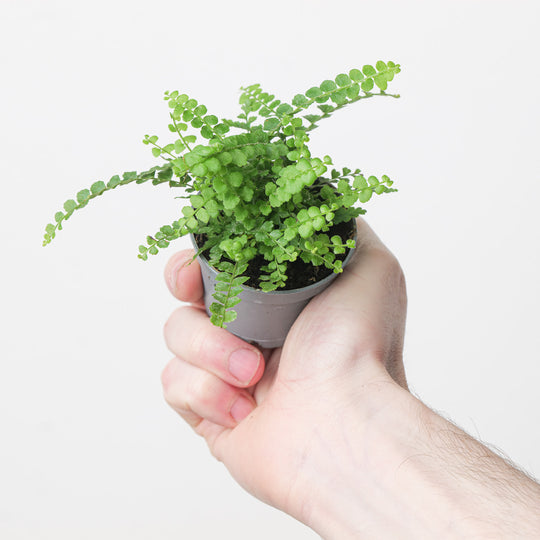
    Nephrolepis duffii 6cm Plants GrowTropicalsSale
    1
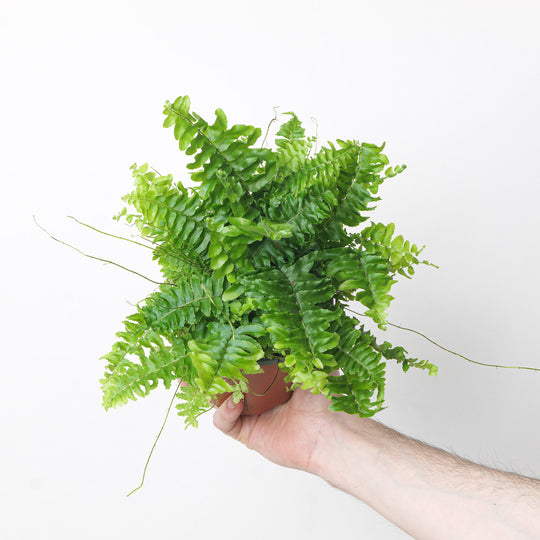
    Nephrolepis exaltata 'Green Lady' 12cm Plants GrowTropicalsSale
    Boston Fern

    Nephrolepis exaltata 'Green Lady'

    £8.99 £11.99
    1

    Boston Fern & Nephrolepis: Care, Varieties & Growing Guide

    Why Boston ferns remain a favourite

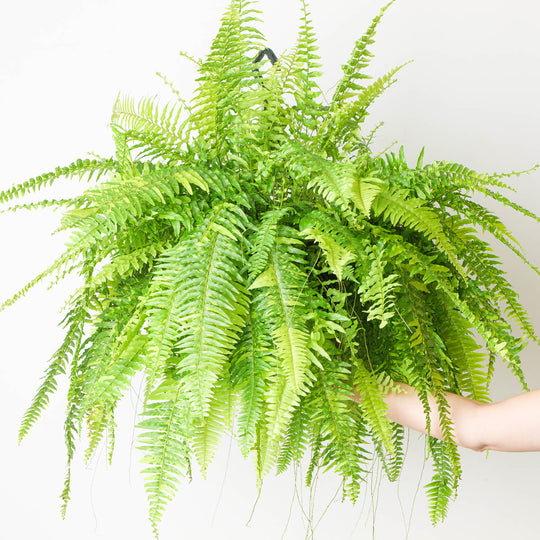
    The Boston fern has been grown as a houseplant for over a century, and its enduring popularity is entirely justified. Few houseplants fill a space with such lush, flowing greenery. The arching fronds can reach 60-90 cm on a well-grown specimen, with each frond densely covered in small, bright green leaflets that move in the lightest breeze. Hung in a basket or placed on a high surface where the fronds can cascade downward, a mature Boston fern is one of the most impressive displays available. The related Nephrolepis cordifolia and its cultivars offer similar appeal in slightly different forms.

    How to care for Boston ferns

    Nephrolepis thrive in bright, indirect light and high humidity - the two conditions they are most often denied in British homes. A bright bathroom is often the ideal position: good light, warmth from the shower, and higher ambient moisture. If growing in a living room or bedroom, place on a pebble tray of water to raise humidity around the plant, or use a humidifier nearby. Water regularly to keep the compost evenly moist - never allowing it to dry out completely, as dry compost causes rapid and dramatic frond drop. Feed monthly from spring to autumn with a dilute balanced fertiliser.

    Solving common problems

    The most common issues with Boston ferns are frond drop and brown, crispy fronds. Frond drop almost always follows a period of dry compost - once a Boston fern dries out, it sheds fronds quickly and dramatically. If this happens, place the pot in a bowl of water for 30 minutes to rehydrate the compost fully, then resume careful regular watering. Brown crispy fronds indicate low humidity, dry air from a radiator, or draughts. Trim off affected fronds, improve humidity, and move the plant away from heat sources. New fronds will emerge once conditions improve.

    Other Nephrolepis varieties to try

    Nephrolepis exaltata 'Bostoniensis' is the classic choice, but there are excellent cultivars worth exploring. 'Fluffy Ruffles' has densely ruffled, overlapping fronds with a very full, compact texture. 'Tiger Fern' has yellow-variegated fronds with an unusual striped effect. Nephrolepis cordifolia 'Duffii' (lemon button fern) is a compact species with small, rounded leaflets and a much neater, upright habit - ideal where space is limited.

    Frequently Asked Questions

    Frond drop in Boston ferns is almost always caused by the compost drying out. Nephrolepis are very sensitive to drought and will drop fronds rapidly once the compost becomes too dry. To rescue a dehydrated plant, place the pot in a basin of water for 30 minutes to fully rehydrate the compost, then resume regular watering. Other causes include draughts, sudden temperature changes, and repotting shock.

    Boston ferns need bright, indirect light, high humidity, and consistently moist (but not waterlogged) compost. Keep the compost evenly moist throughout the growing season, reducing slightly in winter. Mist regularly or use a pebble tray to raise humidity. Feed monthly from spring to autumn. Keep away from radiators and draughty windows. A bright bathroom is often the ideal position in a UK home.

    Boston ferns need humidity of at least 50% to thrive - well above the 30-40% typical in centrally-heated British homes in winter. Signs of low humidity include brown, crispy leaf tips and rapid browning of the fronds. Raise humidity by placing the pot on a pebble tray filled with water, grouping with other plants, or using a humidifier. Bathrooms and kitchens naturally have higher humidity and often suit ferns very well.

    Boston ferns can be propagated by division when repotting in spring. Gently separate the root mass into two or more sections, each with several fronds, and pot individually in fresh, moist compost. Runners (stolons) that emerge from the base can also be pinned down onto moist compost in a separate pot - once rooted, sever from the parent plant. Keep newly propagated sections warm and humid while they establish.

    Yes - Nephrolepis exaltata (Boston fern) is considered non-toxic to cats and dogs and is listed as non-toxic by the ASPCA. It is one of the safer choices for pet-friendly homes. While any plant material eaten in large quantities can cause mild stomach upset, Boston ferns do not contain compounds that are harmful to pets.

    Yellowing fronds on a Boston fern can be caused by overwatering, underwatering, insufficient light, or natural ageing of older fronds. Check the compost moisture first - the compost should be consistently moist but never waterlogged. If the pot is sitting in water, improve drainage. Ensure the plant is in bright, indirect light. Some yellowing of the oldest, outermost fronds is a normal part of the plant's growth cycle.