Crassula | Jade Plants


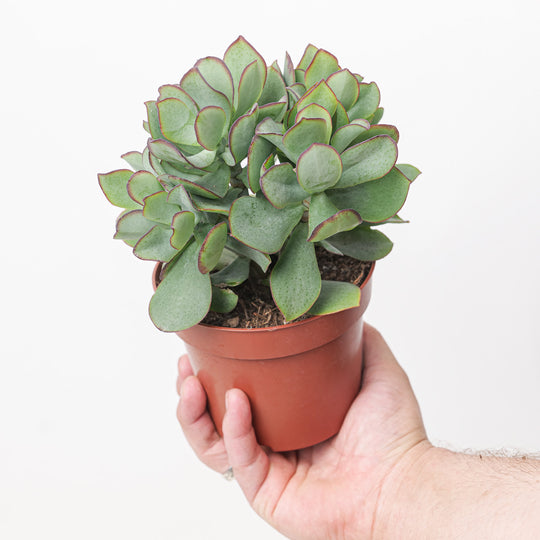
Crassula are succulent plants from South Africa and Madagascar, grown for their extraordinary variety of forms - from the classic jade plant tree with its thick trunk and rounded leaves, to geometric stacked towers, compact rosettes, and sprawling trailers. The most widely grown is Crassula ovata, known as the jade plant or money tree, which can live for decades and eventually grow into an impressive sculptural specimen. With minimal watering requirements and a tolerance for bright, dry conditions, Crassula are ideal for sunny windowsills and anyone who wants rewarding plants without demanding care routines.

Grow Tropicals carries Crassula ovata and a curated selection of other Crassula species, all grown to our high standards and dispatched with care.

8 products

    8 products

    Jade Plants & Crassula: Care, Varieties & Growing Guide

    The jade plant: a long-lived classic

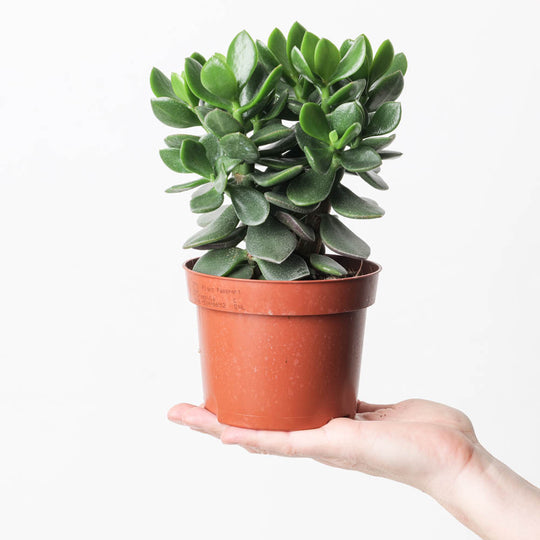
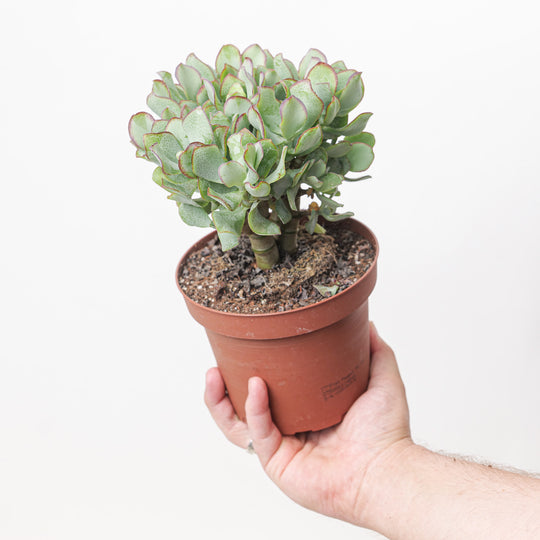
    Crassula ovata - commonly called the jade plant, money plant, or money tree - is one of the most enduringly popular succulents in the world. Native to the Eastern Cape of South Africa, it grows naturally as a shrubby plant in dry rocky terrain. In the home it develops slowly into a handsome miniature tree with a thick, woody trunk, glossy oval leaves of deep green (often with red margins in bright light), and small clusters of white or pink flowers in winter when given enough light. With good care a jade plant can live for decades and become a genuine heirloom.

    How to care for Crassula

    Crassula need the most light you can give them indoors - a south- or west-facing windowsill is ideal. Without enough light, stems become long and leggy and the compact form is lost. Water thoroughly, then allow the compost to dry out completely before watering again. During winter, reduce watering to once a month or less. Crassula are very drought-tolerant and far more often killed by overwatering than underwatering. Use a gritty, free-draining compost mix. Feed with a dilute cactus and succulent fertiliser two or three times during the growing season.

    Other Crassula species to explore

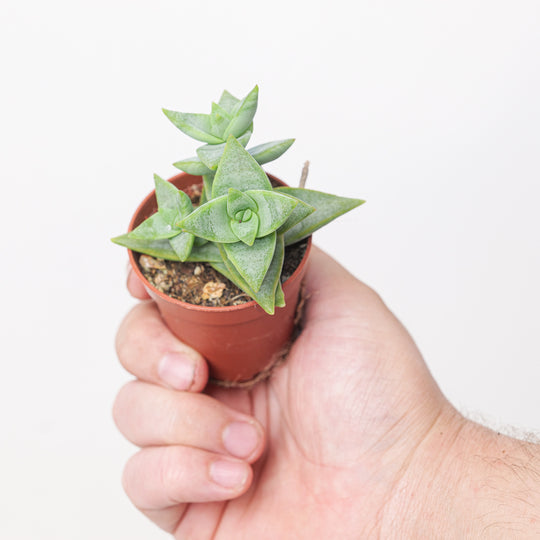
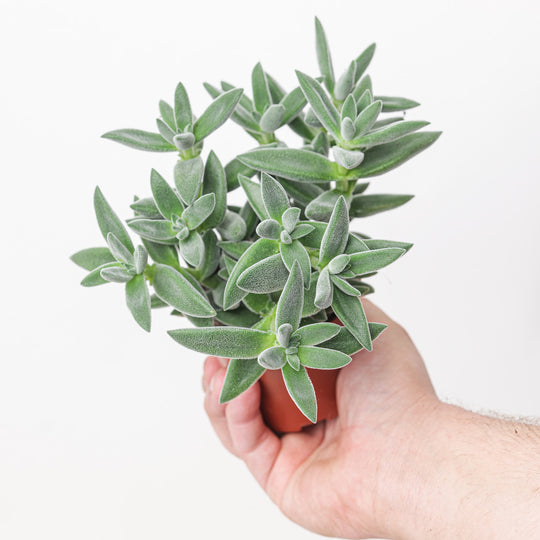
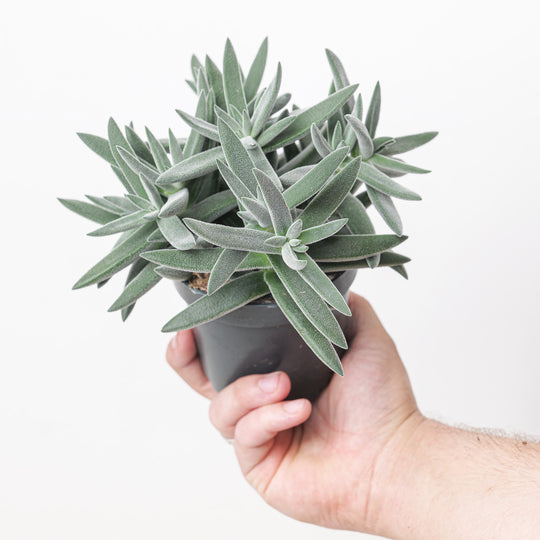
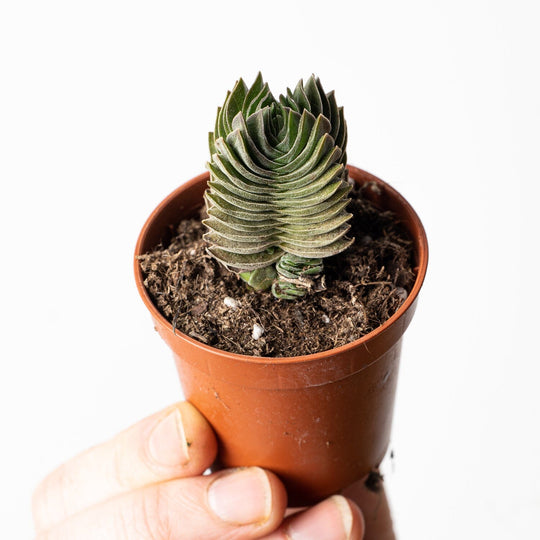
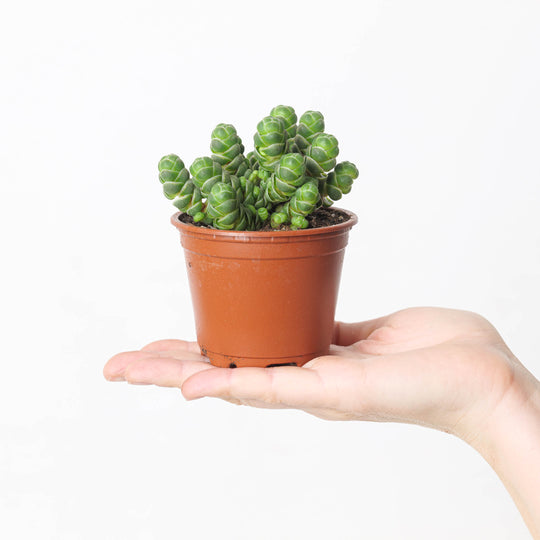
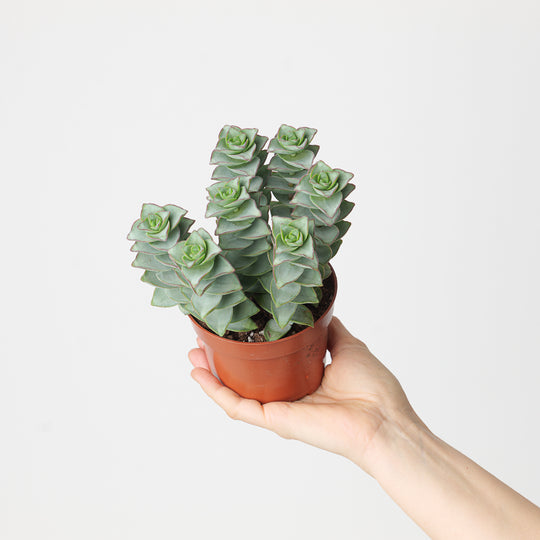
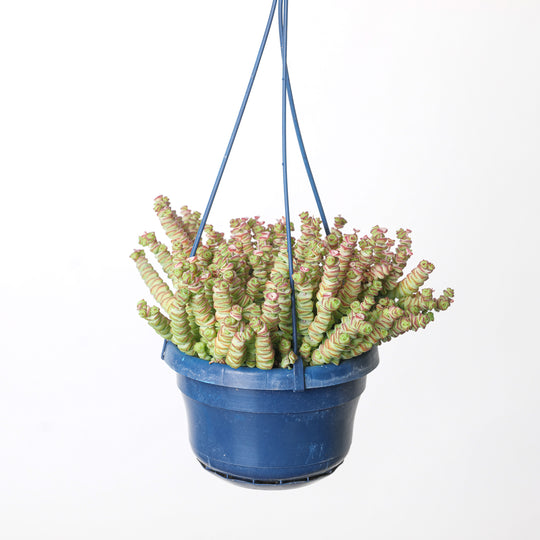
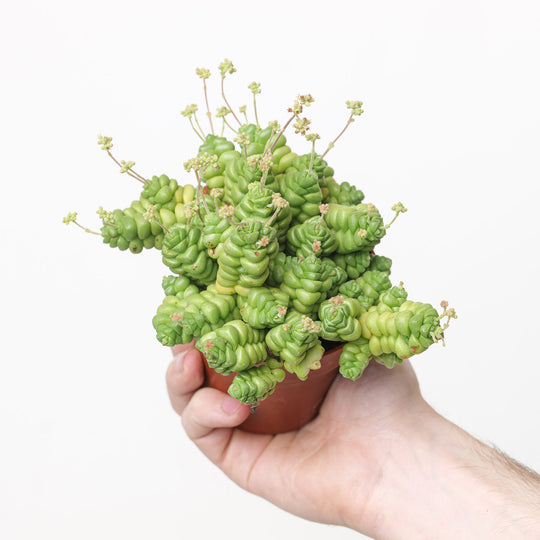
    Beyond Crassula ovata there is a wonderful diversity within the genus. Crassula perforata (string of buttons) has stacked triangular leaves threaded along the stem like a column. Crassula muscosa (watch chain plant) forms dense, tightly packed towers of tiny scale-like leaves. Crassula falcata (propeller plant) has grey-green propeller-shaped leaves topped with clusters of scarlet flowers. Each has slightly different care requirements but all share the genus's tolerance of dry conditions and dislike of overwatering.

    Training and shaping jade plants

    One of the pleasures of growing Crassula ovata long-term is training it into a bonsai-like form. Prune back any branches that spoil the shape immediately after the growing season. New shoots will emerge from just below each cut, creating a denser, more branched canopy. Allow the plant to become slightly root-bound before repotting, which encourages flowering and keeps the plant compact. Repot in spring using a well-draining succulent compost, moving up only one pot size at a time.

    Frequently Asked Questions

    A jade plant is the common name for Crassula ovata, a succulent native to South Africa that grows as a long-lived, shrubby plant with thick stems, oval glossy leaves, and over time a woody trunk. It is also called the money plant or money tree. Jade plants are popular houseplants because they are very long-lived, easy to care for, and tolerate neglect well.

    Jade plants should be watered thoroughly, then left to dry out completely before watering again. In the growing season (spring to autumn) this typically means watering every two to three weeks. In winter, water once a month or even less. Jade plants are succulents and store water in their leaves - overwatering is the most common cause of decline. Always ensure the pot has good drainage.

    Leaf drop in jade plants is most commonly caused by overwatering or sudden changes in temperature or light. If leaves are soft, yellow, or mushy before dropping, the likely cause is too much water or root rot. If leaves look healthy but still fall, the plant may have been moved suddenly or exposed to a draught. Check the compost - it should be completely dry before watering. Also check the roots are not sitting in water.

    Jade plants need as much bright light as possible. A south- or west-facing windowsill is ideal. Without enough light, the stems grow long and leggy in search of more light and the plant loses its compact form. In good bright light, the leaf margins often develop attractive red or orange tinges. Jade plants can be placed outdoors in summer in a sheltered sunny spot, which encourages compact growth and sometimes flowers.

    Jade plants are easy to propagate from stem or leaf cuttings. For stem cuttings, take a cutting 5-10 cm long, allow the cut end to dry out (callous over) for a day or two, then push into dry cactus compost. Do not water for a week. Leaves can also be laid flat on dry compost - small plantlets will emerge from the base. Cuttings root best in warm, bright conditions and should not be watered until new growth is visible.

    Yes - Crassula ovata (jade plant) is toxic to cats and dogs if ingested. It can cause vomiting, depression, and incoordination. It is advisable to keep jade plants out of reach of pets. The level of toxicity is considered moderate - while rarely fatal, any suspected ingestion by a pet should be assessed by a vet.