Why Choose an Indoor Palm?
Palms are among the most recognisable houseplants in the world. Their arching fronds create a relaxed, tropical atmosphere that works in both modern and traditional interiors. Many species are slow-growing and long-lived, making them excellent investments for homes and offices. Most indoor palms are also non-toxic to pets, which is a practical bonus for households with cats or dogs.
Popular Indoor Palm Varieties
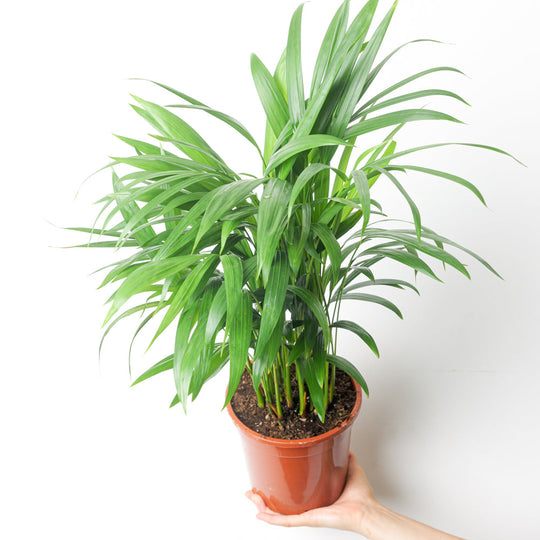
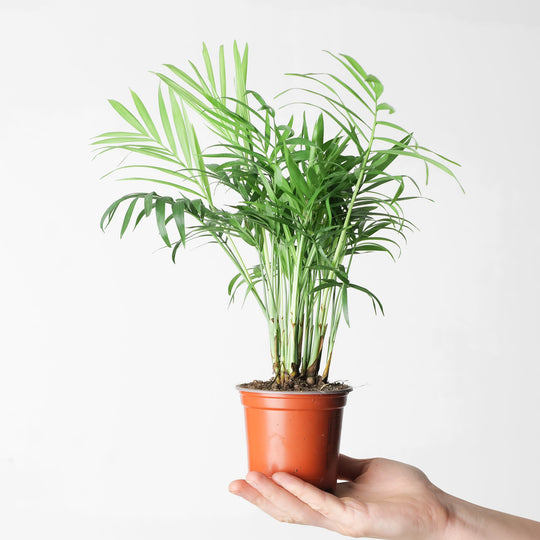
The Parlour Palm (Chamaedorea elegans) is one of the most popular indoor palms. It stays compact, tolerates shade, and is virtually impossible to kill. The Areca Palm (Dypsis lutescens) is a larger option with feathery, golden-green fronds that fill a corner beautifully.
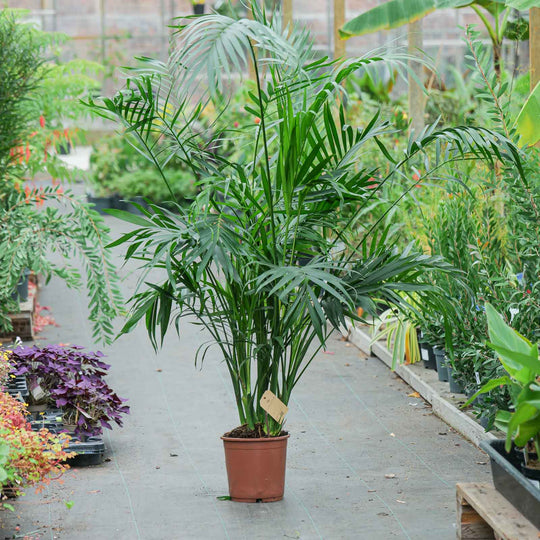
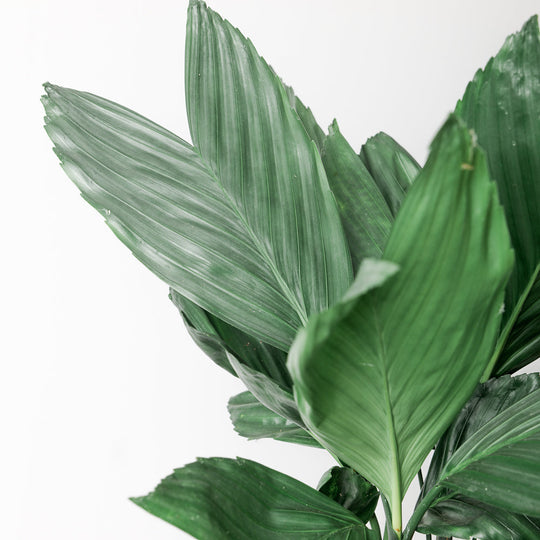
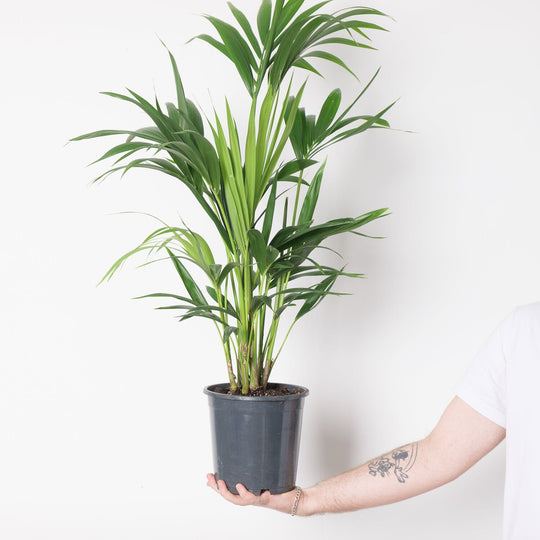
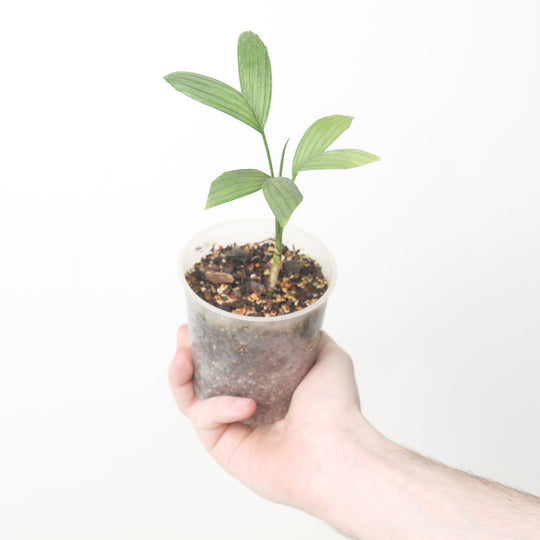
For a touch of luxury, the Kentia Palm (Howea forsteriana) has been a staple of hotel lobbies and stately homes for over a century. It tolerates low light, dry air, and occasional neglect. For collectors, Chamaedorea metallica offers unusual, undivided dark blue-green leaves unlike any other palm.
How to Care for Indoor Palms
Most indoor palms prefer bright indirect light but tolerate moderate shade. Water when the top 2 to 3 cm of compost feels dry; palms dislike sitting in waterlogged soil. Brown leaf tips are common and usually caused by dry air or inconsistent watering rather than anything serious.
Feed every two to four weeks with a balanced liquid fertiliser during spring and summer. Palms are slow growers and rarely need repotting more than every two to three years. Avoid cutting the central growing tip, as palms cannot regenerate new stems from it.
Palms for Low Light
The Parlour Palm and Kentia Palm are two of the best palms for lower light conditions. Both originate from the understorey of rainforests and are naturally adapted to filtered, indirect light. They will grow more slowly in shade but remain healthy and attractive.
Pet-Friendly Palms
The good news for pet owners is that most true palms (Arecaceae family) are considered non-toxic to cats and dogs. This includes the Parlour Palm, Areca Palm, and Kentia Palm. Always check individual product pages for specific safety details.