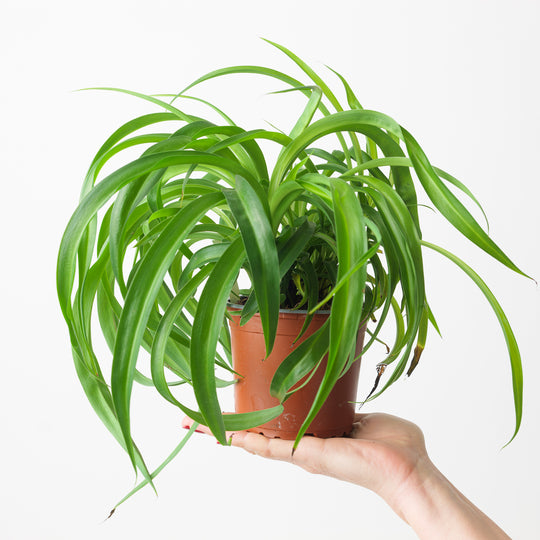
About Spider Plants
Chlorophytum comosum, the spider plant, is a perennial herb native to tropical and southern Africa. It produces rosettes of long, narrow, arching leaves and sends out long stolons (runners) tipped with small plantlets, which hang down in a cascading display that gives the plant its common name. In the wild it grows in a wide range of habitats, which explains its exceptional adaptability to different indoor conditions.
Varieties of Spider Plant
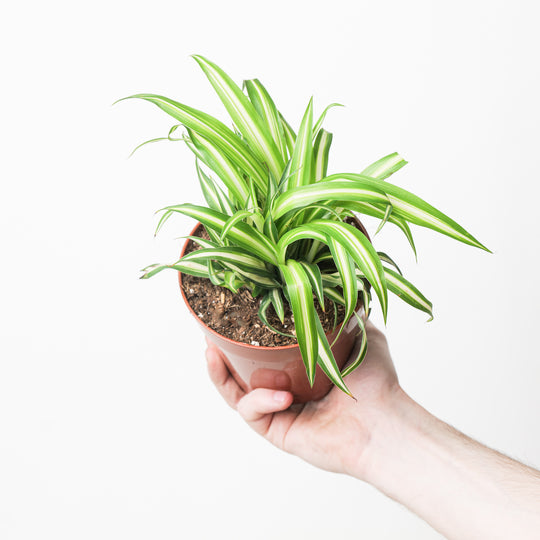
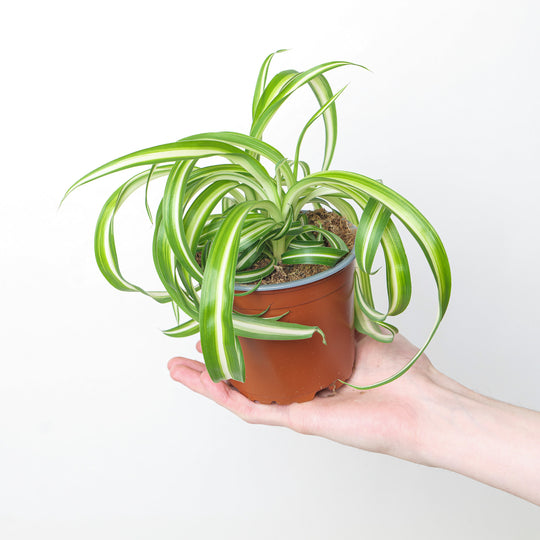
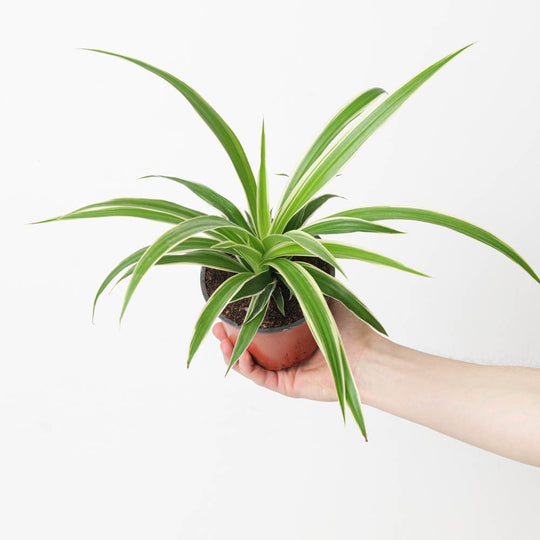
The most familiar form is the variegated Chlorophytum comosum 'Variegatum', with green leaves edged in white or cream. The reverse variegation, 'Vittatum', has a central white stripe on green leaves. 'Bonnie' is a naturally curly-leafed form that creates a more compact, textured display. 'Ocean' is a more compact variegated variety. All-green forms are less common but make an attractive change from the standard variegated type.
Light and Temperature
Spider plants thrive in bright, indirect light and are tolerant of a wide range of light conditions. They cope with lower light levels but grow more slowly and produce fewer plantlets. The variegated forms show their best colour contrast in brighter conditions. They prefer temperatures of 13-27 degrees C and cope with cooler conditions better than most tropical houseplants.
Watering and Feeding
Water consistently during spring and summer, allowing the top few centimetres of compost to dry between waterings. Spider plants are somewhat drought-tolerant but prefer not to dry out completely. In winter, reduce watering. Feed monthly with a balanced liquid fertiliser during the growing season. Over-feeding can cause brown leaf tips.
Propagation
Spider plants are among the easiest houseplants to propagate. Once plantlets on the runners have developed small roots (visible as tiny white nubs), they can be pinned into a separate pot of compost while still attached to the mother plant, or cut and placed in water until roots develop. Each plantlet will establish quickly and produce its own runners within a few months.
Pet Safety
Spider plants are non-toxic to cats and dogs, making them one of the best choices for pet-friendly homes. Cats in particular are often attracted to the plant, possibly because it has a mild hallucinogenic effect similar to catnip. While not dangerous, frequent chewing can damage the plant, so positioning out of reach or growing a spare for the cat to enjoy is a sensible approach.