


Packaged with Care
Every order is hand-packed in eco-friendly, protective packaging - refined through thousands of deliveries to ensure your plant arrives healthy, hydrated, and looking its best.
Backed by our Live Arrival Guarantee.


FREE tracked delivery on orders over £60
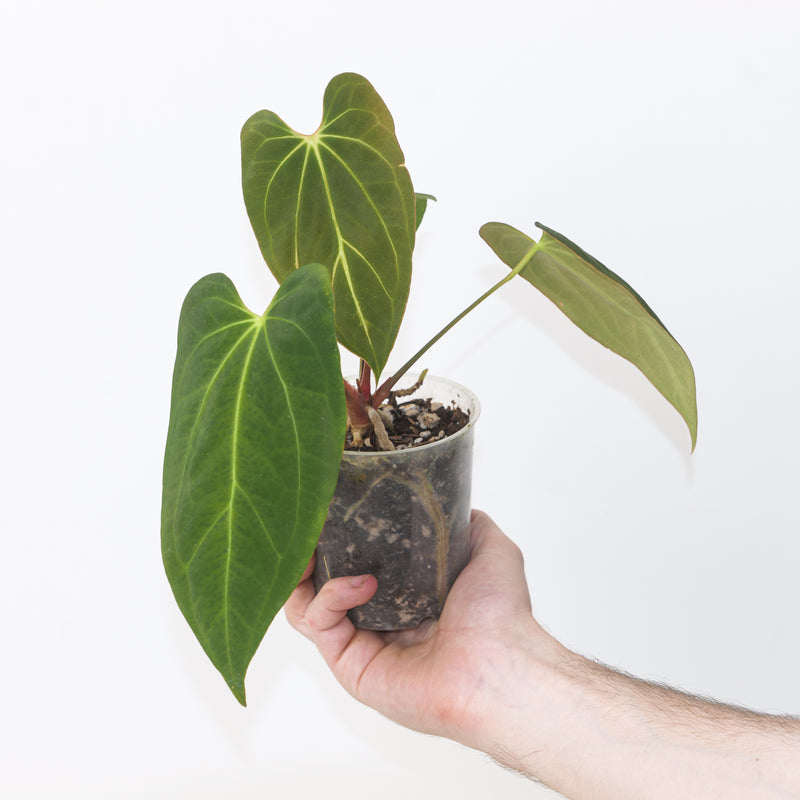
Anthurium ‘Dark Phoenix’ × ‘Fort Sherman’ is a hybrid between Anthurium Dark Phoenix and Anthurium Fort Sherman. The plant shows strong influence from both parents: rich, dark velvety foliage from Fort Sherman and especially dramatic venation from Dark Phoenix. Leaves may have subtle variation depending on light (emerging leaves often more intensely coloured), and the shape tends toward broad heart or spade‑forms with a slight arch or gentle pendant effect in mature growth.
Because both parents are “papillilaminum‑type” selections (with Fort Sherman being a prized dark form and Dark Phoenix contributing strong veining and contrasting tones), this hybrid rewards good conditions: deeply saturated colours, strong vein contrast, and leaf texture.
Native to:
This is a cultivated hybrid; ancestors are tropical rainforest understorey species / selections native to Central and South America. The parental forms grow in shaded, humid, warm forest habitats with dappled light and rich organic soil. The hybrid retains preference for similar indoor conditions: warm, humid, low direct light, and a substrate rich in organic matter.
Water:
Water when the top third of the substrate has begun to dry; don’t allow the soil to stay soggy. Use a chunky, well‑draining mix (orchid bark, perlite, maybe a little fine sphagnum or coarse coco coir) to give air to the roots and avoid waterlogging. Let excess water drain out fully. Overwatering causes root issues; letting things get too dry will reduce leaf vibrancy and may slow growth.
Light:
Bright filtered light is best. Avoid harsh direct sun (especially afternoon sun) that can scorch or bleach the velvety surface or fade red veins. Morning or late afternoon light (filtered) or light through a sheer curtain works well. If light is insufficient, venation will be less distinct and leaf colour more uniform and muted. Supplemental lighting in winter months may help maintain colour and growth.
Humidity:
High humidity (about 65‑80 %) favours best growth and colour expression. Dry air causes browning at leaf edges, loss of sheen, and dulling of contrast. Given its size (not enormous), this hybrid can be grown in a humid enclosure or greenhouse‑style cabinet, or in moist microclimates (humidifier, grouping plants) indoors.
Temperature:
Maintain warm stable temperatures around 18‑27 °C. Avoid letting the temperature drop below ~ 15‑16 °C. Cold drafts or sudden dips in temperature will stress the plant and may reduce leaf quality or cause damage. Consistent warmth helps with bright vein contrast and healthy leaf emergence.
All plants are covered by our 7-day live arrival guarantee. We pack every order in protective, sustainable packaging designed to keep your plants safe in transit, and every plant is checked before it ships. On the rare occasion something is not right on arrival, we will make it good, provided the plant is still in its original nursery pot.
Order by 1pm Monday to Friday for same day dispatch. Every plant travels in protective, plant-safe packaging with tracked delivery.
Changed your mind? See our Return Policy.
Arrived just like the photos - maybe even fuller. Healthy, well-acclimated, and straight into my collection with no issues.
Flawless leaves, stunning variegation, and clearly cared for by experts. It’s already a talking point in my home office.
Hard to find rare plants that are pet-safe. Ours arrived in perfect condition and looks amazing without any worry.
Harmful if chewed or swallowed. Keep it out of reach of pets and small children, and wash your hands after pruning.
Araceae
We could not find a close match for that. Ask us directly and a real plant person will reply.
Contact usIf you're growing for huge, velvet leaves and deep venation, foliage Anthuriums require a slightly different approach than the standard flowering Anthurium care guide. Popular foliage species like Anthurium regale, A. warocqueanum, and A. crystallinum stil...
More about Anthurium care
Every order is hand-packed in eco-friendly, protective packaging - refined through thousands of deliveries to ensure your plant arrives healthy, hydrated, and looking its best.
Backed by our Live Arrival Guarantee.

From rare collector’s pieces to easy-care favourites, our plants arrive fully potted and ready to enjoy. Add a personalised note at checkout for a thoughtful finishing touch.
Delivered fresh, beautiful, and gift-ready.

All plants are ethically sourced from trusted growers, never wild-collected. Every order ships carbon-neutral in minimal-waste packaging.
Good for your home - and the planet.
