


Packaged with Care
Every order is hand-packed in eco-friendly, protective packaging - refined through thousands of deliveries to ensure your plant arrives healthy, hydrated, and looking its best.
Backed by our Live Arrival Guarantee.


Pre-order from our partner lab. Delivery dates are in the timeline below.
Monstera 'Devil Monster' is grown for extreme fenestration, with leaves that cut so deeply from the margin towards the midrib that the blade breaks into narrow, ribbon-like segments. The effect is skeletal and architectural, quite unlike the tidy oval holes of a standard deliciosa. As a hemiepiphyte it climbs towards light in the wild, and it needs a support to produce its most heavily cut foliage. Young plantlets have simple entire leaves, and with time these develop the deeply divided adult form.
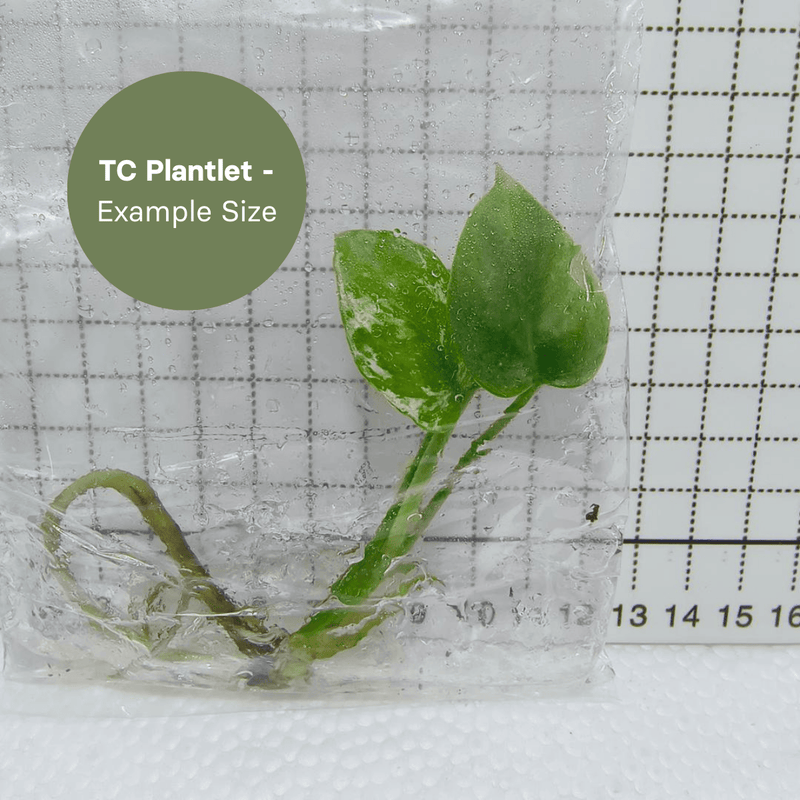
Please note: This is a pre-order from our partner lab, see the timeline below for expected delivery dates.. The plant will arrive in a single package as per the image and will be fresh out of flask. Please read the section on how to acclimate TC before purchasing. With variegated plants there is some variability in the first leaves, please see the images as examples of what you will receive. Devil is a cultivar that develops its variegation with maturity. The plants shipped will be the highest variegation selections from each flask.
All plants are covered by our 7-day live arrival guarantee. We pack every order in protective, sustainable packaging designed to keep your plants safe in transit, and every plant is checked before it ships. On the rare occasion something is not right on arrival, we will make it good, provided the plant is still in its original nursery pot.
Based on your basket total, confirmed at checkout. Free delivery: Economy over £60 · Standard over £100 · Express over £150.
This is a pre-order. Plantlets are requested from our partner lab once the pre-order closes and ship on the dates shown in the timeline on this page. They travel fresh from the flask in protective, plant-safe packaging with tracked delivery.
Changed your mind? See our Return Policy.
Please note: This is a pre-order from our partner lab, preorders open around 30 days before plant delivery.
The plant will arrive in a single package as per the image and will be fresh out of the flask. Please read the section on how to succeed with TC before purchasing.
With variegated plants there is some variability in the first leaves, please see the images as examples of what you will receive, rather than the exact specimen.
Pre-order opens
19th October 2026
Pre-order closes
2nd November 2026
Plant requested from lab
Once the pre-order closes
Plants shipping
Mid-November
Follow these essential steps to ensure your tissue culture plantlets thrive in their new home. Watch this video for an in-depth acclimation tutorial.
Once you remove the plantlets from the package, you must wash off the plant so it's completely clean.
You need to recreate the flask's humidity while slowly introducing airflow. Use a sterile, airy mix. A blend of fine moss and perlite or small-grade tree fern fiber works best. Avoid heavy potting soil for now.
Over the next 2 to 4 weeks, you will slowly lower the humidity each week to harden the plants.
A quick dip in a diluted, systemic fungicide before planting can prevent "damping off" (sudden rot).
Resist the urge to tug on them to check for root growth. TC plants focus on root establishment first; if the top looks stagnant, the bottom is likely working hard.
The plantlets are stressed. Wait until you see the first "post-flask" leaf emerge before using a very diluted (1/4 strength) fertilizer.
Arrived just like the photos - maybe even fuller. Healthy, well-acclimated, and straight into my collection with no issues.
Flawless leaves, stunning variegation, and clearly cared for by experts. It’s already a talking point in my home office.
Hard to find rare plants that are pet-safe. Ours arrived in perfect condition and looks amazing without any worry.
Monstera Devil Monster (TC Preorder Plantlet)
We could not find a close match for that. Ask us directly and a real plant person will reply.
Contact usMonstera deliciosa is one of the most popular houseplants in the UK, and for good reason. It's tolerant, fast-growing, and develops those distinctive fenestrated leaves that make it such an iconic plant. But "easy" doesn't mean "thrives on neglect," and mos...
More about Monstera care
See behind the box with these awesome unboxing videos from some of our favourite Youtubers.


Every order is hand-packed in eco-friendly, protective packaging - refined through thousands of deliveries to ensure your plant arrives healthy, hydrated, and looking its best.
Backed by our Live Arrival Guarantee.

From rare collector’s pieces to easy-care favourites, our plants arrive fully potted and ready to enjoy. Add a personalised note at checkout for a thoughtful finishing touch.
Delivered fresh, beautiful, and gift-ready.

All plants are ethically sourced from trusted growers, never wild-collected. Every order ships carbon-neutral in minimal-waste packaging.
Good for your home - and the planet.
