


Packaged with Care
Every order is hand-packed in eco-friendly, protective packaging - refined through thousands of deliveries to ensure your plant arrives healthy, hydrated, and looking its best.
Backed by our Live Arrival Guarantee.


FREE tracked delivery on orders over £60
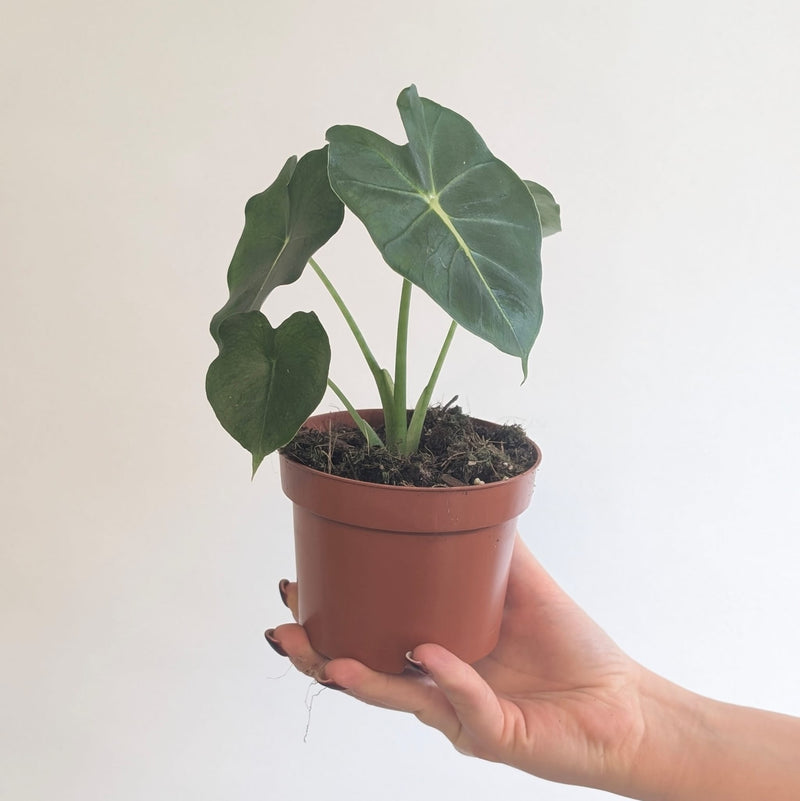
Alocasia ‘Meclizine’ is a very special, unique cultivar of the genus Alocasia noted for its heart‑shaped leaves and compact form. It's origin is currently unknown to us but it's peltate leaves are amazing and would add something to any Alocasia collction.
Native to:
While the cultivar ‘Meclizine’ itself does not have a clearly documented wild origin, the genus Alocasia is native to tropical and subtropical regions of Southeast Asia and Eastern Australia. The leaves of this cultivar are broadly heart‑shaped, emerging often a lighter green before maturing to a deeper green tone. The growth habit is clumping with new leaves rising from a central rhizome or tuberous base.
Water:
Keep the substrate moderately moist, ensuring a well‑draining mix so water does not stagnate at the roots. Allow the top few centimetres of the soil to dry before watering again; avoid letting the plant sit in waterlogged conditions. During the cooler months in the UK, growth slows, so reduce watering frequency accordingly.
Light:
Provide bright filtered light, near a window with indirect daylight is ideal. Avoid strong direct midday sun, which may scorch the leaves. A little gentle morning or late afternoon sun, if diffused through a sheer curtain, can be tolerated. If light is insufficient, the plant may become leggy or produce smaller, weaker foliage.
Humidity:
This cultivar enjoys elevated humidity, ideally around 60‑85%. In a UK indoor environment, this means using a humidifier, using a plant cabinet, placing the pot on a tray of pebbles and water (ensuring the pot base sits above the water level), or grouping with other moisture‑loving plants.
Temperature:
Maintain indoor temperatures between 18 °C and 28 °C. Avoid letting the temperature drop below about 15 °C and protect the plant from cold drafts (such as near open windows or AC vents). Sudden temperature fluctuations may trigger stress or dormancy behaviour.
All plants are covered by our 7-day live arrival guarantee. We pack every order in protective, sustainable packaging designed to keep your plants safe in transit, and every plant is checked before it ships. On the rare occasion something is not right on arrival, we will make it good, provided the plant is still in its original nursery pot.
Order by 1pm Monday to Friday for same day dispatch. Every plant travels in protective, plant-safe packaging with tracked delivery.
Changed your mind? See our Return Policy.
Arrived just like the photos - maybe even fuller. Healthy, well-acclimated, and straight into my collection with no issues.
Flawless leaves, stunning variegation, and clearly cared for by experts. It’s already a talking point in my home office.
Hard to find rare plants that are pet-safe. Ours arrived in perfect condition and looks amazing without any worry.
Harmful if chewed or swallowed. Keep it out of reach of pets and small children, and wash your hands after pruning.
Araceae
We could not find a close match for that. Ask us directly and a real plant person will reply.
Contact usAlocasia are some of the most striking houseplants you can grow. Bold, architectural leaves on slender stems that immediately draw the eye. They're native to tropical and subtropical forests across Southeast Asia, where they grow on the forest floor in warm...
More about Alocasia care
Every order is hand-packed in eco-friendly, protective packaging - refined through thousands of deliveries to ensure your plant arrives healthy, hydrated, and looking its best.
Backed by our Live Arrival Guarantee.

From rare collector’s pieces to easy-care favourites, our plants arrive fully potted and ready to enjoy. Add a personalised note at checkout for a thoughtful finishing touch.
Delivered fresh, beautiful, and gift-ready.

All plants are ethically sourced from trusted growers, never wild-collected. Every order ships carbon-neutral in minimal-waste packaging.
Good for your home - and the planet.
